

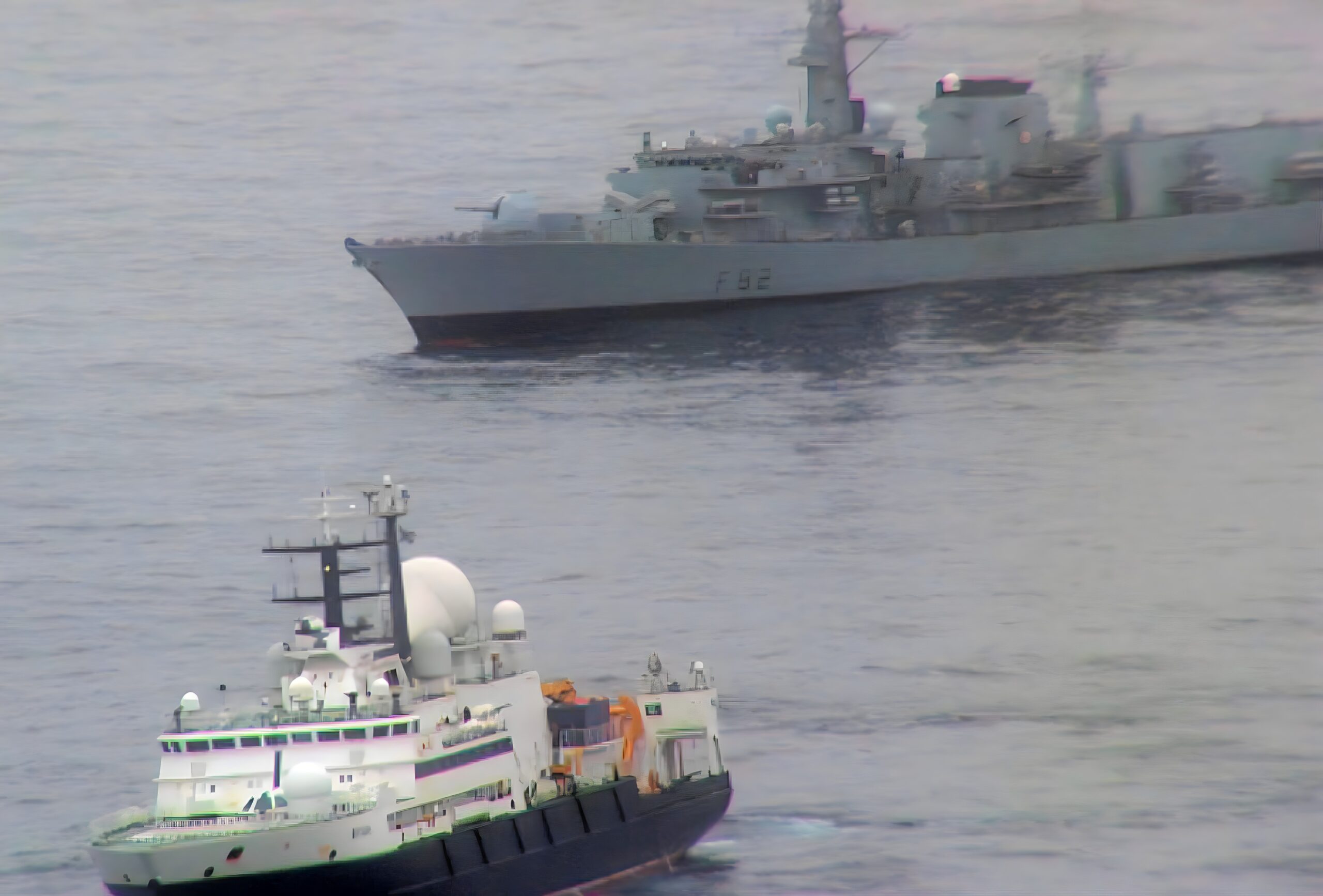
Russia is already challenging NATO below the threshold of armed conflict and could seek to test the alliance directly, with the Baltic states a likely theatre, former senior allied officials have said.
Speaking at a Center for European Policy Analysis press briefing ahead of the Ankara summit, Jan Lipavský, the former Czech foreign minister, said a stalling front line in Ukraine could push the Kremlin towards escalation elsewhere to sustain its war narrative. “Vladimir Putin will be seeking some kind of solution or escalation in a different kind of theatre, and that might be the Baltics,” he said.
“We are living in times when things which are possible are also happening. The fact that we don’t like it and we don’t want to see it doesn’t mean that Vladimir Putin won’t decide to test NATO.” Many such scenarios, he said, begin “under the red line,” spanning hybrid warfare, disruption in the maritime and electromagnetic domains and information warfare, and he noted that Russia is known to be planning a strengthened military posture in the region.
Asked about reported German assessments that Russia could be ready to challenge NATO in some form by 2029, Laura Galante, formerly the US intelligence community’s cyber executive, argued the framing understates the present. “Russia is already challenging NATO,” she said.
“Russia is actively contesting systems in the alliance all the time,” pointing to persistent attacks on the fused civilian and military infrastructure on which the alliance runs, from data centres and undersea cables to airports and rail, much of it in private hands and targeted not only by Russia but by China, Iran and criminal proxies. The shift from episodic incidents to permanent contestation, she said, means allies “are going to feel warfare below the threshold” that previous generations grew up recognising, and defending against it is “not a cyber problem, that’s an alliance problem,” requiring the 1.5 per cent infrastructure element of the alliance’s 5 per cent spending commitment to be married to genuine resilience under Article 3 of the treaty.
David Cattler, NATO’s Assistant Secretary General for Intelligence and Security from 2019 to 2023, said he was not aware of any published alliance assessment behind the 2029 date, but that the geography of concern is consistent. “The closer you are to the eastern front with Russia, the more you feel like they could do something on a smaller scale, on a shorter timeline,” he said, warning that such action would strain not just the targeted nation but the alliance’s political and military decision-making and its corresponding response.






Flipping heck, hold on there, I can’t keep up with all these new articles !
Deterrent credibility demands that NATO becomes more aggressive.
Turkey set an example not so long ago of shooting down, after multiple warnings, a Russian military aircraft incursion into its airspace. Consequences? Zero!
As a bare minimum, Russia’s shadow fleet of rusty false flagged oil tankers should be impounded as a matter of the utmost urgency.
The problem is, of course, not just that Russia perceives a lack of necessary willpower and hardware but also that there really is such a lack of both, underlined by the principled resignation of Britain’s Defence Secretary and others.
It is pusillanimous inactivity that leads to war, clear action, obvious intent that prevents it…
Lol…. You’re back !
Anyway, yes, a cracking Idea, lets Impound 500 rusty old Tankers In Weymouth Bay, arrest all the Captains and keep the crews all fed and watered……. then what ?
The Smyrtos Is still anchored In the Bay.
The Captain is fined. The ship owners are fined.
What happens? Deterrence…
The tanker will be released on payment of the fines.
😂
‘Between August 2024 and February 2026, Uninhabited Aerial Vehicles (UAVs) were flown in the airspace of a dozen NATO member states and Ireland, forcing
repeated closures of major commercial aviation hubs, disrupting military operations and penetrating the
perimeters of some of Europe’s most sensitive defence installations – among them nuclear-sharing sites hosting American B61-12 gravity bombs and France’s ballistic-missile submarine base at Île Longue. This report assesses it is highly likely that the Kremlin conducted a UAV campaign over Europe. We assess it is likely that Russian-linked vessels and the ‘shadow fleet’ were used as launch/recovery platforms for UAVs as part of the Kremlin’swider unconventional war on Europe. The UAV campaign (largely in the latter part of 2025) operated with substantial impunity
across European airspace – representing both a series of tactical successes for the Kremlin and a strategic failure of allied air defence’
Nah, It was just “Dave Cullen Photography”…. he has a history of getting In trouble flying his Drones over secretive bases…. 😁😁😁
Funnily enough, he used to post on here but seems to have vanished now. 🤔
“uninhabited”.. 😆
Yes. Sorry about that. It’s a quote from IISS.
‘Uninhabited Aerial Vehicle (UAV): Academics and organizations (such as NATO) often prefer this term. They argue it more accurately describes the aircraft, as the operators are simply piloting from a ground control station rather than the vehicle itself being entirely pilotless.’
Could sell the cargo and/or ship (for scrap if necessary) – to pay the fines obviously and to buy the crew air tickets home
Well it will provide some work on Weymouth over the winter I suppose
|I’d hate to see the Russians “Pulling the plug” on all that Oil out of spite….. another “Black Death ” event would put paid to Tourism once and for all !
Implausible.
‘China’s imports of Russia’s Eastern Siberia-Pacific Ocean (ESPO) grade crude saw a 14% month-on-month rise — the second-highest volume since the full-scale invasion of Ukraine.
India’s imports of Russian crude oil doubled month-on-month. The biggest shift was in state-owned refineries’ imports from Russia, which saw a massive 148% increase, presumably due to Russian barrels being more available in the spot market, which serve as their primary source of imports.
In March 2026, almost half (48%) of Russia’s seaborne oil was transported by ‘shadow’ tankers under sanctions. A further 44% of the volume was transported by G7+ tankers. The remainder was transported by non-sanctioned ‘shadow’ tankers.
In March 2026, 48 ‘shadow’ vessels were operating under false flags at the end of the month.
The number of vessels operating under the Russian flag has grown sharply since mid-2025, rising from 217 at the start of 2025 to 297 by March 2026 — an increase of 80 vessels (37%).’
Mate…. Get with the plot… I was referring to the Oil Tanker sat Off Weymouth Sea Front, full of Black Crude… Weymouth was also reputed to have been where the Black Death first came ashore.
Give yourself a gentle Head Slap !!! 🤦♂️😁
Equally implausible.
‘It is being monitored by national and local agencies.
Dorset Council said the 24 crew members from India and Georgia remained on board the Smyrtos and the Department for Transport had been carrying out daily welfare checks, ensuring they had access to food, water and essential supplies.
The council said the men were not under arrest but would be subject to UK immigration requirements if they came ashore…’
The skipper is back in the dock next week.
He meant the Russian literally pulling plug on the oil in the tankers … turning Weymouths golden sands.. yuk black.
There aren’t any Russians on board.
I admire your dogged determination and style. 👌😁
According to the Department for Transport…this latest detention will add significant costs to Russia’s oil trade and war economy.
The department thanked local partners including Dorset Police, Fire and Ambulance services and the Maritime and Coastguard Agency for their work so far.’
Well done the Dorsetshire Fire Brigade, an old and trusted friend!
Yup…. It’s a tad hard to get through on his wavelength truth be known !
He seems to have a rare tenacity to avoid seeing the bleeding obvious In his efforts to veer somewhat off coarse.
Great entertainment though. 😂
(wait til he gets on to Renewables !)
‘…veer somewhat off coarse.’
‘…rare tenacity…’
Well done anyway…
Meanwhile trumpie has taken the hump after those pesky Belgians spoilt his WC and is threatening Greenland and pulling troops from Europe again🙄he must have a phone call from his handler!
Don’t worry, America will re-write history and make a film about how they won the World Cup, single headedly, against terrible odds with Trump scoring the winning goal.
Hybrid war in all domains is ongoing especially information warfare. In the context of weak US media regulation the misinformation has been sufficient to enable a Presidential candidate so open to foreign interference that his actions have been indistinguishable from an FSB asset. His narcissistic sociopathy was fertile ground for manipulation by a life long FSB officer that he described as having “a really great relationship”
Meanwhile in the UK there is resistance to these foreign interference attempts :
publications.parliament.uk/pa/cm5902/cmselect/cmfaff/269/report.html