

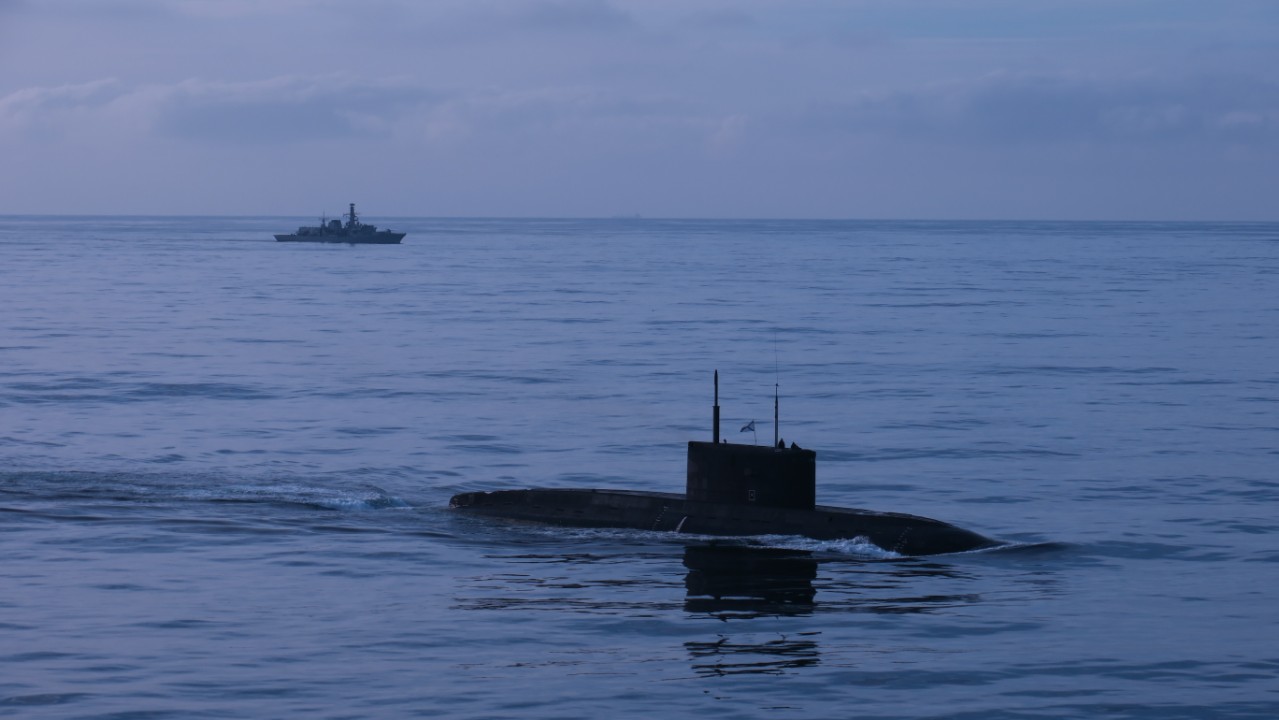
Britain should regard itself as already being in a sustained confrontation with the Russian state, Graeme Downie has told the House of Commons, listing ten hostile Russian activities against the UK and challenging the government to say which of them, if any, would sit above the threshold of conflict.
The Labour MP for Dunfermline and Dollar, speaking in the Commons on Wednesday, described “not a conventional shooting war, but a prolonged campaign of hostile activity directed against our people, our infrastructure, our economy, and our democratic institutions,” and put the definitional question directly: “We often hear the phrase ‘below the threshold’. But what exactly is the threshold? The answer to the question matters because it is the hard line in deterrence and key when considering rearmament.”
Citing the written answer he received from the Ministry of Defence this week, in which a minister said detail on how the department would respond to certain activities versus others could not be provided as it would assist adversaries, Downie said he would not burden the department with further written questions and instead put his examples to the House. He asked whether it is sub-threshold to use a cyberattack to steal the electoral register, to steal the email addresses of Foreign Office diplomats, to use ransomware to disrupt NHS patient care and contribute to the deaths of UK patients, to use lasers to threaten the safety of RAF pilots, or to target a major UK business with a cyberattack costing hundreds of millions of pounds and meaningfully affecting Bank of England interest rate decisions.
“One has to assume the government does consider all of these sub-threshold because Russia has undertaken all of these activities in recent times,” he said, before going further and asking whether poisoning UK citizens on UK soil, launching drones from shadow fleet vessels to monitor UK airbases, recruiting activists over messaging apps to commit arson attacks against property, endangering a UK aircraft carrier by dropping sonobuoys in its immediate vicinity, or attempting an arson attack against the British Prime Minister sit below the threshold, noting that “once again, Russia has undertaken all of these activities.”
Each item on the list corresponds to previously unprecedented events, from the Salisbury poisonings and the Synnovis ransomware attack linked to a patient death, through the lasers directed at RAF P-8 crews monitoring the Yantar and the Jaguar Land Rover attack attributed to a Russian group, to the Tu-142 that dropped tens of sonobuoys close to HMS Prince of Wales in the Norwegian Sea last week. Downie pointed listeners to the tracking work of Emma Burrows of the Associated Press for those wanting to follow the pattern across Europe, and closed the passage with the question underneath all ten examples: “At what point do governments in the UK say enough is enough?”
He argued that clarity is itself a component of deterrence, saying “Preparedness for war is not warmongering. War fighting readiness begins long before the first shot is fired, but it must start with an honest assessment and acknowledgement of the threats that we face,” he said, calling for the government to make clear to the public and adversaries what it means by sub-threshold, because preparedness and public clarity “are the best way to ensure that Vladimir Putin and those around him never conclude that Britain lacks the capability or the determination to defend itself.”
Responding, Calvin Bailey, Parliamentary Under-Secretary of State for Defence and Minister for Veterans and People, agreed with the argument and made the case for greater openness with the public. “I believe he’s absolutely right. I actually think one of the ways we can go about building trust in government and building trust in how government responds to a crisis is by trusting the people with the information,” the Labour MP for Leyton and Wanstead said. “The people will be the ones who can press us to take the action that they know requires to be taken. I think we must use our secrets more effectively.”
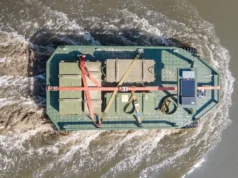
The minister argued the debate should move beyond percentages, saying “the central question cannot just be whether we spend 3 per cent or 3.5 per cent, or some other percentage of GDP. The real question must be what capability are we creating,” and crediting the Defence Investment Plan, despite its delay, with “a commitment to fighting the next war and not the last one,” citing improvements in pay, housing and support for serving personnel and their families that he said are lifting recruitment, retention and morale, and welcoming the decision to build six Common Combat Vessels as part of the move to hybrid warfare.
The speech delivers on the pressure Downie has applied through the week, following his written questions asking the MOD to define sub-threshold and to say which activities would sit above it, which drew the answer that such detail would assist adversaries, and his comments to the UK Defence Journal after the theft of government login credentials, in which he called for the government to rapidly increase UK preparedness and ensure the public know the impact of these attacks on their daily lives.





At which point does the Government come clean with the British people? The recent DIP addressed only 60% of what some say the UK needs to spend on defence; the remaining 40% will have to come at a huge cost to the population. A horrible budget will be needed to reach Healy’s target, and Burnham knows the hot issues surrounding the DIP will only multiply if Russia steps up its aggression against the UK. Some recent Tory leaders should reflect on their diabolical defence record and how naked we are today due to them.
It’s actually time the government stopped some of the nonsensical projects it has, like foreign aid and welfare for migrants, and focus on our nation and it’s needs.
The money doesn’t have to come from the population. We are taxed enough as it is, and the top 1% wealthy need to contribute more. It’s time to stop them avoiding tax by “donating” to their own “foundations” and “charities”. They have a moral responsibility to those who made them wealthy … this nation.
Also, another tool the government could use is tell Russia that if attacks continue, then laws will be passed to permanently confiscate any Russian Assets that are currently frozen. This could also help provide towards what our armed forces need.
Britain cannot say enough is enough over Russia because this country is no longer in control of its own domestic and foreign policy.
We know this because Mr Johnson was forced to change his domestic pandemic policy in 2022 by the United States and France and Starmer was forced to change his Chagos Islands foreign policy by the United States.
Our dependence on the United States stems from the weakness of our defence forces. Our dependence on France stems from our reliance on France for 15% of our electricity.
Both could be solved by the abandonment of the profoundly stupid and unevidenced pursuit of a ruinously expensive ‘net zero’.
Dependence goes both ways. The US may not appreciate it, but they need the rest of NATO – including the UK – for things like bases, intelligence and ‘moral support’.
AI Search re US (Note: UK companies – make the Bradley and supply engines for B52….) ‘The US relies heavily on the UK to supply specific high-value, advanced manufacturing and chemical products. Top imports include machinery and mechanical reactors, automotive vehicles, pharmaceuticals and packaged medicaments, and gas turbine engine components.The US and UK maintain a deep, multifaceted trade relationship, exchanging over $370 billion in goods and services annually. While the UK is often associated with exporting cultural items, the foundational economic reliance lies in industrial and technical manufacturing.Key UK exports the US depends on include:Aerospace & Machinery: The US imports billions in gas turbines and related mechanical power generators, which are vital to both the civil aviation and defense industries.Pharmaceuticals: The UK is a leading supplier of packaged medicaments and pharmaceutical products, accounting for billions of dollars in medical imports.Automotive: The UK is a critical source of supply for cars and motor vehicles, commanding strong demand in the US luxury and commercial markets.
15% of our energy from France? Fine. France depends on the UK as well:
AI search : France relies on the UK for key industrial, mechanical, and agricultural goods. Top UK imports into France include gas turbines (vital for aerospace), automotive components (specifically for luxury vehicles), pharmaceuticals, and high-value food products like Scottish salmon and lamb.Specific UK supplies to France include:Aerospace Components: UK original equipment manufacturers (OEMs) supply roughly 30% of the foreign inputs used in the French aerospace industry, with Gas Turbines ranking as the top UK export to France.Automotive Parts: French automotive manufacturers rely on UK-made components for their luxury models, making cars and vehicle parts a multi-billion dollar export.Pharmaceuticals: Essential medications and medical supplies are highly traded, with the UK exporting over $2 billion worth of pharmaceutical products to France annually.Agri-Food Products: The UK supplies the French market with premium agricultural goods, most notably Scottish Salmon and British lamb.’
The Bradley fighting vehicle is manufactured in York, PA and the Rolls Royce engines for the B-52 are manufactured in Indiana at the Rolls Royce plant where more Rolls Royce products are built than any place else in the world.
One of the main objectives of Trump’s tariff policies was to move as much as manufacturing to the United States as possible; a policy, that has had considerable success. Nothing built in the UK can’t be built in the US.
Another objective was to force pharma companies to manufacture drugs in the United States, charge Americans reasonable prices for them and stop America’s subsidies of them. That policy has had less success but is still in its infancy. Major Pharma Companies have pledge $480 billion to US production of drugs but it will take years to see if they fulfill their promises.
Unfortunately, the British commentators on this site are so consumed by their hatred for the United States and Americans that they can’t see that Trump is revitalizing the American Empire. He was right on tariffs and the world was wrong. Cue the nut jobs.
They are built by America subsidiaries of British companies. As for reasonable prices for drugs, quite right – drugs companies make large profits in the US, as do private hospitals/doctors, ambulance companies, insurance companies etc – you have a lousy health system run for profit, please don’t blame Brits for your money grabbing healthcare companies.
Most people in the UK look on MAGA as the nut jobs. Incidentally, nice for you to notice that Trump considers the Republic to be dead and that he’s now emperor.
And you are the ones paying the tariffs. As for them ‘working’ – sorry, ‘Economic data and macroeconomic analyses show that recent US tariffs have not significantly increased manufacturing employment, and have had a mixed or negative effect on attracting industry and finance. While intended to boost domestic production, the measures have frequently caused job losses in downstream industries due to higher input costs.’ As I said, in the UK most people think MAGA and MAGA sycophants are the nut jobs.
Of course there in interdependence regarding trade…but 15% of our electricity supply equals partial control of our critical infrastructure. Consequently, when the French President said ‘Jump!’, Britain’s government had no choice:
“…we had to clearly threaten him to make him finally budge..French political sources also told the BBC that President Macron was ready to close the border with the UK on Friday…It was going to happen, we were all set up for it,”…French Prime Minister Édouard Philippe…said: “It goes without saying that if neighbouring states, such as UK, spend too long continuing to avoid these containment measures, then we’d have difficulty accepting British nationals who move freely in their own country, and then come to ours.” BBC 22 March 2020
Britain’s dependence on the United States for our national security weakens our government’s policy independence. The U.S. has 12 primary bases in Britain and has announced a $4.2 billion infrastructure investment at the three major operating hubs of RAF Lakenheath, RAF Mildenhall, and RAF Fairford, home to 120 USAF aircraft.
‘…the US intends to ‘stand up for genuine democracy [and] freedom of expression’ by ‘cultivating resistance to Europe’s current trajectory’.
It appears that part of this strategy involves the US government financing policy discourse to promote ‘American values’ abroad…The UK’s Online Safety Act (OSA) has also been a flashpoint, with the legislation being cited as a key obstacle in the UK’s trade talks with the US…’ RUSI Feb 2026
This state of affairs can only be remedied by increasing the independence of our national infrastructure and spending more ourselves on national security.
Why do we source 15% of our electricity from France? Net zero…the export of our ‘carbon footprint’ in the frankly dotty, unevidenced, pursuit of net zero…
Tom Greatrex, Chief Executive of the Nuclear Industry Association, said:
‘We shouldn’t have to rely on other countries to keep the lights on, and we certainly shouldn’t leave our energy future up to their decisions. We desperately need more baseload power, so we need to get on with a full new nuclear programme, starting with Sizewell C and then stations big and small at Wylfa and other sites. That way, Britain gets the jobs, the energy and the investment, and not just the bill.’
Monro, you wrote: “Britain’s dependence on the United States for our national security weakens our government’s policy independence. The U.S. has 12 primary bases in Britain and has announced a $4.2 billion infrastructure investment at the three major operating hubs of RAF Lakenheath, RAF Mildenhall, and RAF Fairford, home to 120 USAF aircraft.”
Do you really think that the 12 US bases, especially the three airbases, are to provide some sort of aerial security bubble over the UK? They are there as part of NATO forces for deterrence and if necessary defence of NATO’s Euro-Atlantic region, in just the same way that BAOR and RAFG in their day was not there just to protect West Germany with that state being dependent on Britain.
Fair to say that we are reliant on NATO for our (layered) defence.
I am making a different point.
Of course we have a NATO first defence posture as set out in SDR 2025.
But the U.S.A. has contempt for the weakness of Britain’s defence forces and uses that to influence/dominate Britain’s foreign and domestic political decision making.
Our government”s volte face on its ‘pandemic’ response in 2020 was one example. U.S. power politics regarding the Chagos islands arrangement is another.
If we wish to regain our national sovereignty, which most voters erroneously assume we still have, then we must first regain absolute control over our own nationsl security. NATO is no threat to that and the Helsinki Accord is clear in support for that.
All that is required is the political will/backbone…
But Energy is the berock of an economy. The germans know it too well.
Sure. But goes both ways – sometimes we export. It’s a cost thing as much as need – and yes, we can make do without the extra…
Successive Tory and Labour governments have removed our ability to react meaningfully. Enough is enough when Russia decides.
Not before 2035, otherwise we’re toast (perhaps literally).
I’d like to propose a toast, to not fixating on numbers that the government has run out of ways to manipulate. Instead it’s far more important to be able to lie freely to the British people who are too stupid to notice, hiding as much as possible under the excuse of state secrets. That’s the way to build trust. So here’s to another glass of Bailey’s Balderdash.
Yep we have a problem and our leader elect does not see it. Closeted in his Labour bubble what does he do get one of his sycophants to raise the Chagps deal. A fur ball to the only man who can actually defend these islands if it becomes a shooting match. We cannot defend ourselves. Article 5 only offers assistance not direct involvement. Ukraine may not have signed the paper work, but in effect is a member of NATO
“Don’t Panic”…. there’s a T45 In the channel.
I think the answer to the question is, and do what? Russia is playing silly git and I’m sure we are doing the same behind the scenes. Entering into the Ukraine war would be a huge risk, is their nonsense worth the gamble?
Putin sees the UK as weak right now. And he’s not entirely wrong, this is the weakest Britain has ever been.
He knows that the UK won’t do anything anyway.
🏃♀️➡️
Britain’s well Known aversion to a large standing military will be ous Downfall ..We got away with it in WWI AND WWII but we no longer have the industrial base we had then to react to changes rapidly….
The striking aspect of much of this is how petty Russia is. True it tried (and succeeded at least once) to murder its own citizens on U.K. soil, but these other threats cited in the report above are as nothing compared to what the United Kingdom has dished out to Putin’s ‘Special Operation’ via known and suspected direct assistance on the battlefield in Ukraine before any other country got involved. In the medium and long term the real threat to the United Kingdom is internal and grows steadily day by day.
We’re stuggling to rewind the SIRIA 2013 VOTE …
which turned Britain’s Foreign Policy into one of a
non-ntervention Pacifist position….
Soft Policy was king..
Britain can say “enough is enough” when it can get ships or submarines to sea in any meaningful quantity…..we wont even go near conducting a deterrent test that actually works. Talk quietly while holding a big stick……instead of moyhing odd meaningless platitudes to please the continent.