


With the plan now expected before July’s NATO summit, the debate has settled on which programmes will survive and which will slip. The more demanding question, and the one most of us keep returning to, is whether the forces those programmes produce could actually be kept fighting in a serious war.
The government intends to publish the Defence Investment Plan before NATO leaders meet in July. Promised since the Strategic Defence Review landed last June, it has been put back more than once, and the defence readiness minister, Luke Pollard, told Parliament this month that the Prime Minister was “determined” to publish before the Ankara summit on 7 July.
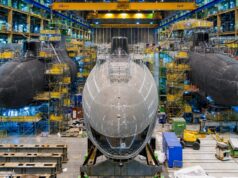
When it arrives, most of the attention will follow the money, and which of the headline programmes survive intact. The questions across Whitehall concern whether GCAP, the next-generation combat aircraft, is delivered on schedule or pushed to the right, what becomes of the surface fleet and the Army’s numbers, and how the AUKUS submarine commitment is to be paid for. The former defence secretary Ben Wallace has predicted the Treasury will fudge it, arguing it cannot fund submarines, a new combat aircraft and the Army at once, and that the likely result is a slow hollowing out dressed up as a plan.
There is little reason to doubt his reading of the politics. The most probable path, in my admittedly outsider view, is partial funding: the nuclear deterrent and GCAP protected, money found for munitions and drones, the savings taken from conventional equipment and personnel through stretched schedules and a trimmed order book. The result would be a two-tier force, a few exquisite platforms above noticeably thinner provision.
This focus on which programmes survive obscures the more important lesson of the war in Ukraine. Acquiring equipment is the comparatively straightforward part of building military power; sustaining it through a prolonged, high-intensity fight is far harder, and far more expensive.
After two decades of expeditionary campaigns fought by small, high-end forces, the prevailing view now is that quantity carries a military value of its own, since a war in which shells are expended in the hundreds of thousands and drones consumed almost as readily as ammunition turns as much on endurance and replacement as on manoeuvre. Ministers have absorbed this, and now speak fluently of scale, of an Army made “ten times more lethal” and of fielding drones at the front in significant numbers.
That instinct is correct, since a force unable to generate weight of fire or replace what it loses offers no real deterrent to a capable adversary. The difficulty is that the mass on paper is not the mass that can be generated and maintained in the field, where Britain has been losing ground for some years.
Malcolm Chalmers of RUSI has given the condition a name now in common usage, the “hollow force”, meaning a military that presents well on paper while lacking the endurance, stockpiles, industrial resilience and mobilisation depth needed to keep fighting once a conflict is under way. The Royal Aeronautical Society put it more sharply in its implementation-gap assessment, judging the realistic danger to be less a sudden collapse of capability than a slow erosion of depth and resilience, which is the hollowing out the review set out to reverse. It noted that, were Britain required to generate high-intensity air operations within six months, it would be critically short of trained F-35 pilots and the RAF would struggle to sustain them.
Munitions are where this hollowness is felt first, and RUSI’s work on magazine depth is candid about how long any remedy will take. Because successive governments let the stockpile run down, it will take successive governments to rebuild it, since production cannot be surged at the moment of crisis. Complex weapons in particular rely on long, fragile supply chains, including the MBDA-led missile teams, that cannot be conjured up at short notice, and the most sophisticated could not be replaced within a year whatever the budget.
The government has, to its credit, recognised the problem. Last year’s Defence Industrial Strategy committed around £1.5bn to munitions and set out an ambition for “always on” production, with half a dozen new energetics factories meant to keep the lines warm between orders. The instinct is sound, but “always on” works only for as long as the orders keep flowing; a single injection followed by a quiet drawdown would leave industry where it began, unwilling to invest in capacity whose future use it cannot count on.
Personnel are a related difficulty, at once the least glamorous line in any budget and the first to be raided when savings are demanded. RUSI’s analysis of how to deliver mass for the British Army argues that genuine depth means more than the front rank, requiring a second echelon to follow and the structures to generate a third, and concludes that the review and the Treasury cannot fund extra regulars alongside the equipment programme and the munitions at once, which leaves a properly resourced reserve as the only affordable way to add it. Sustainment also reaches well beyond fighting troops to the spares, maintenance, fuel and trained crews that decide whether a fleet is available or stuck in a hangar awaiting parts.
All of this returns to the money, and to the reported £28bn shortfall driving the standoff between the Ministry of Defence and the Treasury. When the books cannot be balanced, the temptation is to protect the flagship programmes that carry headlines and industrial jobs while pushing the less visible sustainment into later years, to become a future government’s problem. One independent modelling exercise framed the trade-off well, observing that spending too little does more lasting harm than spending too much ever undoes, since a hollow force forms far faster than a capable one, so plans that defer the hard spending look convenient now and prove costly later. The point is sharper still given NATO’s benchmark of 3.5% of GDP for core defence, and 5% once wider security spending is counted, which presses the UK to do more just as its own affordability gap is widest.
The plan should be judged less by the platforms it lists, or how its headline figure compares with allied nations, than by what it provides for the capabilities that decide a long campaign: deep magazines, replenished stockpiles, warm production lines, spares, and enough trained people to sustain a fight well beyond its opening weeks.
Mass will always attract the headlines and the political credit, yet it is the ability to sustain a force through a prolonged conflict that decides whether it can fight at all, and a plan that defers that sustainment to protect its flagships will leave Britain with armed forces that look formidable on a published chart yet would be exhausted within weeks of real combat. The more honest measure of the government’s ambition is the endurance it is prepared to pay for, and that, rather than the length of the procurement list, is the figure a capable adversary will trouble to study.
This article is the opinion of the author and not necessarily that of the UK Defence Journal. If you would like to submit your own article on this topic or any other, please see our submission guidelines.










The messages coming out are that defence spending is going to be supported by shifting money from benefits budget, capital funding and the net zero budget.. the mood music sounds like the minister of defence has won the battle that has clearly been going on for the last 6 months.
Hopefully that means the DIP will not be as disappointing as the author feels it will be.
Im sure it’s not going to be completely optimal, but hopefully it will not be a 2010 level disaster.
I hope you’re right mate, i get a sinking feeling it’s going to be clusterfuck as Starmer is too weak to get anything over the line. I want to be wrong and ideally see the SSNR program protected along with GCAP and a steady long term order for the skimmers.
I’ve gained $17,240 only within four weeks by comfortably working part-time from home. Immediately when I had lost my last business, I was very troubled and thankfully I’ve located this project now in this way I’m in a position to receive thousand USD directly from home. Each individual certainly can do this easy work & make more greenbacks online by visiting
following website—.,.,.,.,.,.,—>>> PayAtHome1.Com
I was reading today in the telegraph and some other sites that Starmer is thinking of delaying or scrapping T83. So much for building out the RN.
All clickbait so they can spam you with ads when you hit their website.
T83..? MRSS ..? T32 …? Typhoon ..? AJAX.?
Perhaps the Toys Win..?
I would love to think that you are right, but I suspect that the DIP budget is going to be balanced by a combination of moving right several of the biggest programmes – pushing £billions of costs beyond 2035 and thus outside the DIP (e.g. GCAP, AUKUS, T83) – and finding excuses to reject some of the lower cost ambitions (e.g. more A400’s, P-8A’s and E-7A’s) that SDR had suggested.
Of all the DIPs and investment decisions of the last 40 years this one is the most critical in determining whether we win or lose the next war. Control the air control the battlespace.
Yes this is a real crunch moment, there are no other chances.
The government to me are ideologically incapable of spending what is required on Defence.
And this lot are supposed to be moderate centralists according to commentators.
As Mcfadden admitted, which was an open secret anyway, they’re only interested in taxing to give benefits to their voter base.
So I’m expecting a fudge. Apparently it’s delayed again, according to SM reports, as the money comes nowhere near what was seen as the bare minimum of 28 Billion.
Starmer with a huge majority utterly incapable of putting his foot down, probably scared of upsetting somebody.
So weak. The country deserves so much better than this generation of charlatans.
DIP May land up like The budget.!..Once you Blow Away the Froth.!.Whats Underneath may Not Add up to Much.!.. Blairite Creative Accounting…?
Perhaps.. A case of The PM Giveth With One Hand And Taketh Away Wih The Other…!!
Or Future Promises beyond the Next Election..!!!
Will the Media be fasr Enough to be up to the Scrutiny…??
! Wonder What our NATO Allies Will Make of it All…?? Are We Thar Serious About Defence…?
Hope I’m Wrong..!!!!
agree Nig e. Thing is no politician or senior leader has experienced/ suffered a serious military defeat resulting in mass casualties, significant numbers of starving and abused British PoWs, national humiliation, £bns in reparations. If they had they’d ensure they either wind their necks in on the world stage or fund the military properly.
We’re used to being winners or on the winning side but no-one considers the consequence of defeat.
Simply put we’ve no mass and in no fit state for peer conflict.
So it seems the every one including RUSI agree that the only affordable solution for more mass in the British Army is a properly resourced reserve force, yet the British Army appears to be making zero attempt to increase reserves in a meaningful way all while telling everyone we are in a state of war and we need to gut the NHS, pensions and infrastructure spending to pay for a bigger army.
The Army continues to give off the distinct impression that retention of cap badges and sacred cows are its real goal. If we are in a state of war as they keep saying then why is the army not pouring money into GBAD and costal missile batteries to defend the UK with five proper TA brigades like we had in the Cold War.
Which Cap Badge are you referring too?
Depends on what’s up for the chop post review to pay for new capabilities . The Army appears to want to do lots of new things like drone warfare, cyber etc but it appears not want to give anything up.
They are telling us warfare has changed yet they are not changing the existing force. Does that not strike you as being inconsistent.
And if we in a time of near war like they keep saying then where is the massive expansion of the reserve?
Nope.
You claimed the army was prioritising retention of cap badges.
What Cap Badge?
Also the the reserves shouldn’t be prioritised over the Regulars.
We have the smallest number of reserves relative to regulars of any other army in NATO including the USA. The USA has a reserve to regular ration more than doubled ours.
Any idea why?
Hey I asked you a question. Care to answer it before posing your own?
And I answered your question, it will depend. Examples of what can or should be cut to help expand additional capabilities
Helicopter aviation
Airborne forces
Attack helicopters
Light artillery
Armoured recce
Most of these capabilities are struggling in modern warfare, Ukraine doesn’t operate any in their actual role, none of these capabilities are on the cards for reduction or removal by the army as far as we know.
We also have a greatly expanded special forces section primarily due to the war on terror with a Ranger force as well as special forces support group. Again none of its on the table as far as the army is concerned. Why is that? Why are our reserve forces half the size they should be compared to other NATO militaries yet we have the heights percentage of Special Operators in Europe and a high proportion of airborne and helicopter borne forces even though these forces will be of little use in a pier conflict.
Is it because almost the entire army brass come from these parts of the army and it is because that’s the kind of colonial policing action they like to fight, not some big nasty war in Europe with loads of artillery and infantry largely made up from civilians and reservists.
Nope. Again.
You said cap badges where being protected.
Name the Cap badges you think are being protected.
Or are you admitting you are chatting absolute bollocks?
Don’t get upset Dern 😀
I have answered your question twice. The term cap badge in defence spending speak is reference to military units company, battalion, regimental or brigade sized primarily with historic affiliations or “unquestionable” military capability. It’s based on the term derived from the actual badges carried on the head dress of historic British army regiments. I have outlined the military units that can or should be restructured given the state of war the Army believes we are in and the apparent necessity for larger budgets to generate new forms of warfare.
Now stop being and asshole and back up what you said, Can you tell me why the reserve should not be prioritised for more funding given its small relative size to other western forces?
Nope.
A cap badge is specifically a regimental or corps identity. It has nothing to do with company or brigade affiliations.
Sorry you feel like being called out is “being an asshole” and that you are trying to ad hom me by pretending I’m upset because I’m holding your feet to the fire.
You haven’t mentioned a single cap badge you think is being protected, which is why I said to Daniele that I don’t think you know what a cap badge is (reflected in your reply here).
So again I ask: please name a cap badge you think the army is protecting. And do please note: a capability is not a cap badge.
I’ve gained $17,240 only within four weeks by comfortably working part-time from home. Immediately when I had lost my last business, I was very troubled and thankfully I’ve located this project now in this way I’m in a position to receive thousand USD directly from home. Each individual certainly can do this easy work & make more greenbacks online by visiting
following website—.,.,.,.,.—>>> JobatHome1.Com
Ukraine doesn’t have other commitments or the interest in being able to deploy far from their borders.
We do.
Thus 16AA Brigade, which covers Airborne forces and Light Artillery.
Heli manoeuvre also figures in this, so the AAC.
Armoured Recc, if you have Armoured Brigades with tanks you’ll need Armoured Recc, even with Drones. You have both.
Armoured Regiments and Armoured Infantry Battalions have integral recc assets, as do Light Mech using Jackal.
Cutting the UKSF Group, one of our remaining aces Army wise, is also utter madness. They’re deployed all over the world and have been a game changer in Ukraine, which you yourself highlighted.
An Army needs a mix of capabilities, not chuck all away just to have Drones, GBAD, Cyber.
Then the next conflict will arrive and hey presto we cannot do Jack as we dropped it all.
Finally, all those things also existed in the Cold War, which would have been even nastier.
And a good job they did, we couldn’t have used the 3 Armoured Divisions of the BAOR to retake the Falklands, they’d have been redundant.
As I said, Jim doesn’t understand what a cap badge is, and is confusing a cap badge with a capability. Which is kind of why I’m trying to hold his feet to the fire because the calls about Cap Badge Mafia are so easy to spout, but when you try to make those people nail their colours to the mast they twist and turn and can’t actually point to any.
But yes, like you said, even if we argue capability, not actual cap badges, the need for these capabilities is not going away (Jim’s also ignoring a lot of data in Ukraine such as the role KA-52’s played in breaking up the Ukrainian ’23 Tokmak offensive, or the use of Armoured Recc (or IFV’s operating in Armoured Recc roles) units in fast response tasks).
Hi Daniele, all valid points, but the reality is with a fixed head count in the Army something has to give to make way for new capabilities even in a rising budget environment.
Cavalry was still very useful in niche recce and colonial policing roles in 1939 but it all had to go because we needed to fight a large mechanised war in Europe for survival.
The UK has few if any actual commitments outside of NATO. Any it does have (FPDA etc) are overwhelmingly air and naval none require 5 separate major special forces groups.
16AAB is now basically slotted in alongside 4th and 7th brigades in 1 Division. Ukraine is forging the war of the present and future. They have plenty of airborne brigades and they are operating mechanised vehicles. Neither side can use helicopters much now and certainly not for manuvere and definitely not for logistics. Helicopters are gone and we have not done a combat parachute assault for nearly three quarters of a century.
The UK has always had top quality special forces, however during the war on terror the size and capability of these forces ballooned at the expense of conventional forces.
How did the SAS manage to get through WW2 and the Cold War without a special forces support group? Does it still need such a large and expensive support force? Are we willing to give up a GBAD capable of ballistic missile defence to maintain four Ranger battalions and a an SF support group on top of the SAS, SBS, Commandos and Para’s?
Are we willing to forgo deep strike in order to maintain the largest helicopter transport fleet in Europe? How much point is there in keeping light artillery like L118 when even AS90 155mm is out ranged on a modern battlefield.
Our Army still has a tendency to find what ever niche capability they think the USA wants us to have. They focus on that as well as what ever cap badge they grew up in wearing and for many of them today, those cap badges were not in the armour or artillery as they were before but in special operator units. That ‘s where the reluctance to change comes from. They want to build a new force that’s 10 times more lethal blah blah blah but they are not willing to sacrifice anything from the old force.
This is exactly what happened in the 30’s with the cavalry and it’s exactly why we ended up with cruiser tanks and why we got our arsese handed to us by Rommel so many times in 1942.
Our army needs to stop thinking as it’s a niche capability insert to a US coalition and start thinking like a modern western European army that may have to conduct a major operation on its own against an enemy with the ability to use ballistic and cruise missiles to completely close down any air or logistics centre with in hundreds of miles of the front line.
It needs to shed its self of its light force colonial policing role dominated by a very small number of highly trained operators and start focusing on mass, long range artillery, ballistic missile defence, deep fires and the ability to deploy large forces which are heavily augmented by civilians and reserves.
Hi mate. Well this is turning into a good debate, isn’t it.
I’ll give my thoughts in reply to each of yours.
“Cavalry was still very useful in niche recce and colonial policing roles in 1939 but it all had to go because we needed to fight a large mechanised war in Europe for survival.”
We still have Brigades, and some have a Light Cavalry or an Armoured Cavalry Regiment of valid armoured vehicles! That need won’t change. On the Army adapting to new roles, I understand there is also talk of giving the Cavalry Drones as well. Makes sense to me, as they are recc troops?
“The UK has few if any actual commitments outside of NATO. Any it does have (FPDA etc) are overwhelmingly air and naval none require 5 separate major special forces groups.”
The UK is a P5 UNSC member with territories around the world that potentially need defending, or expats that need extracting. Thus 16AA and helicopter aviation.
“none require 5 separate major special forces groups.”
“during the war on terror the size and capability of these forces ballooned at the expense of conventional forces.”
“How did the SAS manage to get through WW2 and the Cold War without a special forces support group? Does it still need such a large and expensive support force?
Ah, one of my main interests, this one, so it needs further study, comment.
All existed in one form or another in the Cold War bar the SFSG, which was formed to save tier 1 forces from having to do that task after Sierra Leone.
SAS, SBS, obviously.
SRR has formed from the remnants and collective expertise of 14 Company/The Det/JCU ( NI ) due to the wider war on terror, as you referenced. It also saves 22 and the SBS from doing it’s particular specialist niche role, which they had to do before. ( It was the SAS who first trained the Det. )
The Grey Zone is not diminishing, it is expanding, so it makes sense that the UKSG Group has expanded accordingly so conventional forces do not have to, who often lack the training and enablers.
18 UKSF Signal Regiment’s role has expanded for the same reason. Its role existed in the Cold War, as 264 Signals Squadron, and its reserve, 63(V) Sqn.
To note, all also have a ENATO Wartime role against Russia.
“during the war on terror the size and capability of these forces ballooned at the expense of conventional forces.”
As explained why above.
“How did the SAS manage to get through WW2 and the Cold War without a special forces support group? Does it still need such a large and expensive support force? ”
In the Cold War the SAS did the role of the SFSG itself, and had a Signal Sqn ( that 18 Reg now provides. It also had 21 and 23 supporting it to do stay behind relieving 22 so they could do Strategic roles into the Soviet Union. Op Barras in Sierra Leone showed the need for more elite Infantry. In the Cold War the Grey Zone did not exist to the exist it does now.
“Are we willing to give up a GBAD capable of ballistic missile defence to maintain four Ranger battalions and a an SF support group on top of the SAS, SBS, Commandos and Para’s?”
I am! As they all have valid roles that need a response, as outlined above.
Commando’s – UKCF – Grey Zone, and Northern Flank/Arctic.
Paras – 16AA – global, as explained.
SFSG – as explained, to support the DSF Tier 1 units. The SFSG also has a UK CT role, also valid in this day and age.
On GBAD, MRAD is to double and SHORAD triple according to the CGS, we await the results of that, but I’m sure it won’t result in culling our elite units, and if it does, someone needs trial for treason.
“Are we willing to forgo deep strike in order to maintain the largest helicopter transport fleet in Europe? How much point is there in keeping light artillery like L118 when even AS90 155mm is out ranged on a modern battlefield.”
Defo! As that helicopter fleet is a strategic enabler, as the RAF transport force is. The lack of assets when it deployed to the crisis in Sudan springs to mind.
Said helicopter fleet also directly supports the Army in conventional ENATO roles, the northern flank, 16AA, UKCF.
Point in Light Artillery. Well if we didn’t the majority of the Royal Artillery Reserve would have literally nothing to fire and train on, and 16 AA and the UKCF would have no guns, so yes! L118 can be underslung, and those formations need fire support. At the moment, beyond Switchblade ( I suspect ) that is all they have.
“Our Army still has a tendency to find what ever niche capability they think the USA wants us to have. They focus on that as well as what ever cap badge they grew up in wearing and for many of them today, those cap badges were not in the armour or artillery as they were before but in special operator units. That ‘s where the reluctance to change comes from. They want to build a new force that’s 10 times more lethal blah blah blah but they are not willing to sacrifice anything from the old force.”
Ah, service tribal loyalties, I cannot comment on that. Yes, most DSF’s and plenty of CGS I think have been in SF, they tend to see a lot of action. They are in vogue for a reason.
US? Yes, as NATO’s main power and our ally we do tend to slot in with them.
Ten times more lethal is spin, from whoever says it be their background SF or RAC or Infantry. I think it natural for anyone to want to protect their parent regiment, I don’t blame them for that. Mike Jackson and 1 Para is an oft suggested example, and good job he did. That he used 1 PARA does not negate the valid need for the SFSG though, it fitted a need at the time with elite infantry who often go on to join DSF anyway.
“This is exactly what happened in the 30’s with the cavalry and it’s exactly why we ended up with cruiser tanks and why we got our arsese handed to us by Rommel so many times in 1942.”
YEs, old ways of thinking, fighting. We differ in that the examples you give, I don’t agree with.
I’d suggest that Rommel would have handed most people their arses, regardless, considering his skill and that of the soldiers of the Deutsches Afrika Korps.
“Our army needs to stop thinking as it’s a niche capability insert to a US coalition and start thinking like a modern western European army that may have to conduct a major operation on its own against an enemy with the ability to use ballistic and cruise missiles to completely close down any air or logistics centre with in hundreds of miles of the front line.”
I don’t believe it does, as it is mostly ( the warfighting part ) part of the ARRC, that is not American, but a NATO reserve Corps.
I’d also not Asgard, 1,3, and 9 DRSB’s, and the various OWE’s and the expansion of MLRS to 76 ( 61 paid for ) as part of Deep Fires, which exists, and as I have mentioned before might be hamstrung by bloody Labour and their political games with German missiles, if funding for PRSM does not come through and is diverted.
On BM defence, is that even an Army responsibility? For Home Defence, I’d suggest not.
“It needs to shed its self of its light force colonial policing role dominated by a very small number of highly trained operators and start focusing on mass, long range artillery, ballistic missile defence, deep fires and the ability to deploy large forces which are heavily augmented by civilians and reserves.”
This is the ground zero of the debate. It does, to an extent it is, but where you are happy to drop entire capabilities I would not be, as all are still relevant.
Long Range Artillery. So MLRS expansion, reformation of 39 RA, PRSM, Asgard, DRSBs, OWE’s, Brakestop, Modini 250 Dart, Lenz Nyan. It is doing it.
BM defence, that will be an inter service spat, I’d suggest it isn’t a sole Army responsibility.
Deep Fires -as above!
“ability to deploy large forces which are heavily augmented by civilians and reserves”
Discussed above with Dern, ABC, and John, we are not set up that way and to do so would not, in my opinion, be even desirable if it means losing conventional capabilities. The Reserves we should have expanding should me more for Home Defence KP/CNI roles, not entire units for expeditionary roles into Europe. Europe has plenty of soldiers.
Cheers! This one will rumble on and on I feel.
Hi Daniele, thanks for all your insight and historical reference. You truly are a fountain of knowledge sir 🫡
If memory serves 21st and 23rd were both TA formations. It seems to me we did a lot more with reserves and the TA in the Cold War than the army is doing today.
Some estimates put the cost of a special forces soldiers as high as 10X more than a regular and it’s estimated you can get roughly five reservists for the cost of one regular. For the price of every tier 1 operator you can get 50 reservists. That’s the kid of maths we need to be facing if as the Army says we are on the cusp of war. (Personally I believe they over conflate the security situation to justify ever larger budgets, if the security situation was as bad as they make it they woukd be operating in a different manner)
As for ABM capability, I don’t think we can fight any form of war now without GBAD and ABM capability. Even with it, its almost impossible to run an airbase with in 1,000 miles of a conflict zone. The question is not do we need it, it’s who will supply it and if that answer is American then all we are doing is continuing to double down on a strategy that sees us unable to deploy anywhere with out the USA.
Given the ballistic missile threat to air bases as well as the threat posed by drones, EW and air defence systems I don’t think an aircraft like a chinook will be able to go with in 100 miles of a combat zone when facing a major enemy.
Russia started this war with a massive helicopter force, it’s facing what was one of the most underfunded badly equipped army’s in Europe (at the start). Russia no longer flys helicopters of any type any where near the front line. Even the USA is loosing helicopters of the coast of Iran. Their airbases were all heavily attacked and severely damaged even with the best ABM systems on the planet and massive stocks piles of interceptors.
The cost of purchasing and maintaining our very large chinook fleet is vast. Its utility is less than it was and it’s reducing all the time. Their bases and large logistic footprint make them vulnerable to drone and missile attack, their relatively short range and slow speed means they can’t be deployed outside of the ballistic missile threat zone like fixed wing aircraft can. You can buy literally hundreds of trucks for the price of one chinook.
If we are building an army to fight in Europe which has the best roads, railways and ports in the world then very expensive logistics capabilities like Chinook are probably the place to be looking for savings to fund the new capabilities we desperately need.
Even if there is more money on the table, man power resources will always be stretched. New systems and capabilities will need people to run and implement them and that means people will have to be moved from other capabilities.
Few points for you Daniele;
21 and 23 are generally not hugely utilised by UKSF. They’ve only deployed as a formed Squadron during the GWOT, and where taken away from UKSF aftewards. During the Cold War, as you said, they where to form stay behind parties, and didn’t really contribute to the sort of unconventional non-warfare operations that 22 did.
I’m going to push back on this “YEs, old ways of thinking, fighting. We differ in that the examples you give, I don’t agree with.
I’d suggest that Rommel would have handed most people their arses, regardless, considering his skill and that of the soldiers of the Deutsches Afrika Korps.”
Rommel frequently over extended himself and in numerous cases put himself in positions where had the 8th Army reacted faster and more competently, would have seen his command ripped to shreds. The issues the British Army faced where in part leadership based; O’Connor (Infantry: Cameronians) was probably the best armoured warfare officer the British Army had, but he was captured. Neame (Royal Engineers) was completely ineffective, Beresford-Peirse (Royal Artillery) was underwhelming. Cunningham (also Royal Artillery) was probably a bit hard done by during Crusader since he did really well in Somalia. Ritchie (Black Watch/Kings own Lancashire) should never have been put in command and was out of his depth. Auckinlech (1st Punjab Regiment- Infantry) should equally never have been commanding the 8th army.
In addition to the point about the 8th Army/WDF having a string of pretty mediocre commanders I’m also deliberately including their cap badges, because when you actually look at the backgrounds of the Corps and above officers of the WDF, almost none of them had cavalry backgrounds (I think the only Corps commander during the entire desert campaign with a cavalry background was Norrie, even Monty, despite wearing a RTR capbadge was from an Infantry background). Honestly I think part of the issue was that the British Army had a fairly small cavalry wing pre war (and the cavalry had mostly mechanised by the outbreak of war, the only actual cavalry where Yeomanry Regiments, and they got dismounted pretty quickly when the division got to Palestine).
Hi Dern, thanks for that.
“21 and 23 are generally not hugely utilised by UKSF. They’ve only deployed as a formed Squadron during the GWOT, and where taken away from UKSF aftewards. During the Cold War, as you said, they where to form stay behind parties, and didn’t really contribute to the sort of unconventional non-warfare operations that 22 did.”
Yes, into the short lived 1 ISRB. I understand they have since returned to DSF?
Not hugely utilised, yes, I’d read that they simply do not have the ability to gain the real high end specialist skills that 22 have with their weekend or more regular training, no matter how good individuals may be. I think my point was, despite that, they are used more than they were for just the stay behind role? I’d read of IBC replacements in the Gulf for 22, the Sqn deployed in Afghan that you noted, and wider liaison and training roles as well? I think the guys who died in Afghan were in that “hearts and minds role”?
On the DAK / Rommel points, all fair comment, my knowledge is primarily German based, and far less on our side ironically. I know of those commanders, but not a clue about their wider backgrounds. So I can only applaud and accept your far superior knowledge on the 8th Army there. On both Rommel’s big pushes east from El Agheila, before Crusader and before the Battle of Gazala, I recall he shocked even the OKW with the distances he covered. Wasn’t that endemic in many a Panzer commander, though, from Rommel to Manstein to Guderian to Koch.
Needed an organised enemy to stop him.
Still, he didn’t do bad, considering the amount of his supplies interdicted from Malta and the often unreliable Italian allies.
What fantasy world is this pulled from? Ukraine use helicopters, both transport and attack. They use light artillery, we actually donated 105mm guns to them! Oh, we donated armoured recce vehicles as well…
The army remains overwhelmingly expeditionary based, Jim, remember.
Coastal missile Batteries?
ISTAR and Cyber are getting attention, through things like Asgard, the 3 DRSBs, Ajax with it’s sensors, to enable the deep battle, Cyber as well isn’t a new thing.
On sacred cows, which? There are a mere 3 Regiments of Tanks and 4 of Armoured Infantry left, neither are sacred, they’re needed.
There’s no real expansion of anything bare Deep Fires and Drones, again, due to government choices.
Expansion of GBAD and the RA generally would be good.
If people start moaning about royal duties that’s a red herring as well, those troops are all combat soldiers.
Me thinks Jim doesn’t actually know what a Cap Badge actually is since when pressed he can’t answer.
Answers above, awaiting your response 😀
Genuinely interested to hear why you don’t think we need to prioritise reserves.
Nope. You still didn’t. As I said: you seem not to know what a cap badge is.
Answer my question and we can shift to a topic that I didn’t bring up.
I do note that Daniele did, unprompted answer your reserves point, and you chose to ignore him instead trying to discuss it with someone who is calling you out for claiming the army protects cap badges.
Agree with the description of a Cap Badge, never heard it linked to Bdes and Companies before! Its ethos, identity and history, not a capabilty.
The changes required to create an Army Reserve structured along the lines of usable Brigades in an expeditiinary context would be immense. We’re not organised that way, it would utterly imbalance the small professional Army that we have. And take away funds which I’d prefer go on the regulars.
From my knowledge and understanding, the really well trained and usable reserves we have, usable as entire units or sub units, are only the HAC and 21 and 23.
The bulk are paired with regular formations as BCR and most of the CSS area committed to enabling 101,102, and 104.
19 as you’ve noted before is in effect a “Golfbag” of Infantry, not a deployable formation in it’s own right. The reports that 2 Reserve Brigades will be formed to “train as they fight” are of interest here? Though might only be the common fluffed up spin we often get.
If the money were available I’d rather spend it on fully enabling 4 Bde with a full set of CSS.
I see 3 Cdo was officially defunct as of yesterday ( even though I’ve been calling it the UKCF for aome time ) I wonder if 29, 24, and elements of the CLR might be a basis to enable 4 Bde?
Two other thoughts on the Reserve subject, I think it much easier having la bigger Reserve for purely territorial defence, like the Finns, which we do not need, at least at that level vs actual invasion.
And also, the Regular Reserve, hopefully that will be formalised and resurrected in some manner, maybe as “framework” Bdes akin to the old 2,4,and 5 Divisions.
Splitting 19 into two brigades makes absolute sense. 8 infantry battalions and 2 light cav regiments splits neatly into two actual formations of 1 and 4. But yes, without CS and CSS (104 and 105 RA maybe support via 1 and 3 DSRBs) how deployable are they?
Regular Reserve is still on the books, it’s just not exercised. Like a muscle, not used so how well it works who knows? Big reserves for territorial defence work really well yes. Or for things like the Heimatschutzdivision the Germans are creating, which has an emphasis on supporting NATO forces transiting through Germany. Neither really apply to the UK.
Assume each Bde allocated to a Division. So much needed rear area support for 1,3,9 DRSB’s and 101,102?
A bit of an attempt at a rerun of the lines of communication role of the TA Brigades in 2 Division?
With the other Reserve Battalions remaining in their roles as is, directly supporting 3 Division.
I’m very curious to see what they do with them.
Home Service/defence people are needed yesterday, in big numbers. The old HSF was a model, but even then we could hardly protect all vital infrastructure. Also the question of homeland defence is the big elephant in the room for me. Internal security, the “sleeper” element that we are importing daily poses a large threat imo. Major civil disruption via proxy will be a reality one day, and you need numbers to counter that, UDR springs to mind there, not just numbers but local knowledge of players.
For me, local county militia being raised would be a good starting point, then what spineless politician would even consider that?
Look to Finland, The Baltics and others to see what can be done. You just need political will and strength.
Agreed, equipped accordingly to guard KPs.
On a County basis, as we’ve discussed before. I’d volunteer if I could be of use, despite no military background.
But not for homeland defence as in actual invasion like the Finns are set up for.
Assume QRF would remain the preserve of any regulars locally.
I don’t actually think we need to fear invasion mate. It’s logistically nigh on impossible. I don’t have a problem with a militia reacting to civil disturbance either. The National Guard is an example of citizen soldier l admire.
It is, mate, I did not suggest it was. This is purely for KP/CNI defence, with a QRF each county for mobile stuff.
Cyber using the “geeks” and CUAS is also highly desirable, and I wonder if this non military side would be an area the likes of me and others might be of use, if willing.
Invasions? There is a form of that going on right now, and it is gradual and potentially insidious. All courtesy of HMG.
Civil disorder would be the biggest problem. Its all simmering due to immigration. Just imagine what it’ll be like if we start having things like fuel rationing to prioritise military supplies and essential services etc. I have little faith in the public of the 21st century knuckling down in the manner seen in 1939. People are too selfish now.
Hi M8
As you know Green just isn’t my colour (Big Black with Rust Highlights) but I do wonder if this “Reserves” argument isn’t confusing Apples and Oranges.
I just think there is a blind spot where folks look at the idea of a Reserve as a drain on the regulars but forget that the tail has to be guarded in Wartime and putting regulars on Stag at an RAF / Army / Naval base or infrastructure needs to be done by someone. So who ?
As I see it !
Apples being Fully Trained / Equipped and deployable units that can be quickly mobilised and deployed with the regulars.
Oranges being a Local Reserve of Trained basically equipped “Light Infantry” or “Tech Geeks” the former to be used for other non combat duties such as guarding critical infrastructure / bases etc and assisting a very depleted Police Force with dealing with the inevitable Asymmetric warfare Russia and it supporters will inflict on us. Just remember that one of the things that saved the Ukraine was in the early days of the invasion their “Home guard” did a hell of a job of dealing with issues in their localities.
The latter is a way of adapting to the need for far more Tech Savvy bods than we can actually afford to pay peacetime wages for in the regulars. But there a 000’s of kids who would never pass an Army Medical but stick them behind a console and they are bloody lethal.
Food for thought we have a completely open land border with a country that has issued nearly 15K visas to Russians since 2022, there are no border checks what so ever. And do we actually know if some of the Ukrainian refugees we took in (quite rightly) are on our side ?
Quite agree mate, as I said to John above. That is a different reserve to the one Jim proposes in his debate with Dern.
We already have MDP, MPGS, RAF Police, but nowhere near enough to cover existing let alone other designated KPs.
Which is why I mentioned a regular QRF above as well, who would have to potentially respond to a wider area. Something that, shamefully, the MDP now have to do in some places with the cuts.
Love how Jim thinks the world of you now, but absolutely refused to have a conversation with you until I made it clear I wouldn’t entertain him until he answered my question.
Well, I think that conversation has run its course mate. The thread had ended without me being able to reply, but, I don’t see the need, we differ substantially.
I agree with him on the need for a lot more GBAD and BM defence, but on BM I don’t see it as just an Army responsibility and cost.
I think the idea of throwing away the Chinook fleet nuts! ( Sorry Jim ) Considering its utility in all manner of Defence tasks, but yes, all assets are increasingly vulnerable. I also think counters are always found.
And the idea of cutting the UKSFG an even greater act of folly.
And on this comment, Jim, for info.
“If memory serves 21st and 23rd were both TA formations. It seems to me we did a lot more with reserves and the TA in the Cold War than the army is doing today.”
Well, the TA was a lot lot bigger then, and had entire Brigades as part of 2 UK Division to reinforce the BAOR.
And 21 and 23 ARE still reserve formations, not were, and I’d suggest are in even greater demand, with a wider role now than they had when they formed, along with the HAC, part of BAOR’s Corps Recc Force, allocated to sit in a hole while GSFG rolled over them.
Another point regards all this and the spats.
I have a lot of knowledge on all sorts of stuff defence wise. But, I’m still a nobody, and I’m non military. That matters to me, I just refuse to stick my neck out and argue the toss with serving military like yourself. I won’t tell people their business. I don’t have that sort of ego, and happy to respectfully give way every time if need be.
Don’t forget some non military sites are Key Points, some are hidden in plain sight and interestingly some are connected to your line of work and have their own BTP onsite.
I know many mate, and suspect others through common sense. All the intelligence and national police sites should also be included, to add to the wider industrial and utilities CNI.
Yes, some ROCs I know are not even signposted.
My way of thinking that. And a far left nightmare. As for our guest’s? Canvass and razor wire followed by deportation. It would make people understand what war footing means.
I’m awaiting your response Dern, not anyone else’s. You have also completely ignored what I said three times now.
If you can’t have an adult conversation then this ain’t the place for you.
You ignored my question which was a legitimate question that I wished to get your honnest feedback on as you do occasional have something informative to say about the army then you said started being a w**nker to hide that you can’t back up what you said.
I will happily answer your question Jim, when you can answer mine. I’m not going down a rabbit hole you are trying to drag this conversation down to avoid the question I asked.
Hilarious that you are talking about adult conversations when, last I checked, all I’ve said is insisting on you answering my question before I answer yours, while you resort to calling me upset, an asshole and a wanker.
Or are you conceding that you can’t name a cap badge the army is treating as a sacred cow? I’ll happily move on to talk about the reserves if that’s what happening.
I know what a Cap Badge Is…. If that’s any help 😁😁😁
No one will bite here mate, too serious a disagreement underway.
Glad you do though, Boy Scouts?
You see the thing Is Mate, I know how serious this discussion is, I see the exact direction and Intent, I see the battle of “wits” and I see how every word Is written In all seriousness to add depth to the subject which you all take so very seriously.
That’s why I take the Piss.
Nothing written here makes any difference In the big scheme of things. Nothing.
I try at times to just add some serious thoughts but It gets me nowhere, this I learned early on when I first joined and that’s why I just add stupid stuff now (mostly) to add another level to this brilliant site that can diffuse the seriousness.
Never take anything I say seriously, It’s just Banter.
During the Iraq War of the Three Reservists in the Factory only One was deemed fit for Service…!!!
It will likely be an overall disappointment with some bright areas so Starmer has something to point to. For full funding a change of government at the GE will likely be needed, but I will be happy to be wrong on this one.
I can’t see much coming out after all this time, but I do want to be wrong! Unless there is a sizeable chunk of money introduced we will be looking at the next government, be it Tory/Reform (!!!!) or Green/Labour/Liberal (****) to sort it out. Heaven help us.
Whatever comes out, I will be here to point out the lies, the discrepancies, the cuts, and the spin.
Me? I agree with Jonathan, I hope, as always, there is always hope.
But our politicians are utterly obsolete. Just who in the Labour Cabinet has any collective knowledge in running a business, for example?
Who?
They currently run one of, what, 1.3 trillion?
Government is run like the Generation game, bribing people with freebies to vote for them, rather than cross part agreement of long term plans to improve the nation.
I predict all big ticket items ( so maximum money to the MIC ) protected at the expense of the usual..
GCAP cannot be pushed to the right, as Japan will walk. They have already accepted one significant delay. The Japanese will not accommodate a second significant delay, as it goes against their business ethos and culture. If those that are in power and making the decisions to push GCAP to the right don’t understand this, then Japan will leave the program. Japan has already delayed the official visit from their PM, due to to financial delays. She is only going to come on the firm belief that the UK will fully finance the program and not in drips and drabs.
Japan urgently need to replace their F15Js, which are being seen as obsolete against the more modern Chinese and Russian jets. More so now that they have seen the performance of the Chinese PL15E.
agree, japan getting annoyed with uk dragging its feet on tempest. an important project for our industry / sovereignty
Isn’t it rather odd that the only 3 items in the equipment budget that are safest from cuts are the 3 that involve a significant partner country that just will not put up with UK Political shenanigans.
The simple reason is they know that HMG / HMT and MOD have a never ending History of under late funding projects to pay for short term savings. And that has resulted in Snails pace Project delivery, obsolescence issues and massive overall cost overrun’s and they quite simply have clout to hold our Governing Elite to account when we the Taxpayers can’t.
AUKUS (Australia and to a certain extent the US).
GCAP (Japan backed by Italy). Interestingly both those countries have a History of actually delivering projects on budget and on time and cared reaping the benefits to their industrial base due to exports.
Dreadnought / Trident (USA) OK not anyone to lecture anyone on how to run projects / procurement but do not mess with their Political / Corporate MIC.
It will be interesting to see if we add Norway to that list due the T26 export contract. This week it was announced that the RN T26 was pretty well ring fenced from any “Cuts”, which means that other than the 3 above mentioned it’s the only other project guaranteed.
Being an old Cynic (Realist) I do wonder if they had a quiet word about the reasons they chose the T26 in the 1st place and the knock on effect of a reduced RN buy ! “If you cut your numbers it reduces the overall force level, reduces long term force integration advantages and increases our unit costs so we will walk away”.
How About JAPAN and ITALY Unite With GERMANY
To Produce a Fighter Aircraft WIth Maybe SPAIN as a Satellite Member…?????
Simply Drop Pathetic OLD BRITAIN…!!
Little Ironic Perhaps..!!!
Does Germany want a long range bomber, would it use it? They have weird relationship with Russia
Hint…WWII Axis Alliance…
As for Long Range Bomber…!
Germany will Look at Strike Missions Deep into Russia With Serious Intrest..!
Unless Starmite and the Treasury pull their finger out, there is a very real chance something like what you have outlined could happen.
Well Tom Tugendhat just gave a speech saying the British military has provisions for 8 days of high intensity combat. It was NOT refuted by MOD.
We without any doubt are not prepared for combat in any way.
That long…? Like a Recount..!
More chuff, way late, most likely totally irrelevant and full of spin and nonsenses. Legacy platforms will (certainly for the Army) will be quietly removed, being replaced with a fanfare claiming the ONLY way forward is drone/UAV/UGV and cyber! The treasury will be arguing that they are funding defence enough, while knowing they are not, and the PLP will be demanding more cash to be given away to its voter base. This DIP, which should have been a step change will now be an ideological fudge, by a group of low skilled/mediocre politicians and people who have an inbred dislike for this country, and its history, and with a view that they couldn’t really care as they more than likely wont be in power by 2029, and therefore purposely make it harder for those taking over. Never have I seen such a low standard of MPs across the board, in positions of responsibility and power.
👍
Process suggests that the big decisions have been made. The DIP will be sent back to MOD and the Treasury for i’s to be dotted and t’s to be crossed. The hurly-burly’s done, the battle’s lost and won, and the civil servants will grit their teeth or hoist a jar. In three weeks or so we’ll all see the results of a political war that has been fought for the best part of a year, and we’ll wonder what all the fuss has been about.
Irrespective of whether the Treasury or MOD call this a victory, it will prove in the long run to have been nothing but a skirmish. The world will continue to get more dangerous and if our politicians want to play on the global stage, the pressure will continue to mount for a return to Cold War spending levels, or at least something close to it.
Things are difficult for sure. I ask myself, do we want an at-sea nuclear deterrent and how much would it cost – someone might know – to have two submarines where one is available & operational? It is the only thing we have that really deters and deterrence is key.
Two subs won’t give a deterrent as you can’t have one available and operational at all times. Even with three, that stretches the resources to the maximum as we saw when Vanguard was out of the picture for several years. There’s absolutely no contingency. We’ve had to increase the lengths of deployments to cover and that has caused submariners significant hardship, perhaps enough for some to leave. It’s even arguable that we should have 5 SSBNs, which would allow for the possibility of two operational submarines during the final build up of nuclear war addressing the issue that Russia might gamble on none of our missiles getting through to Moscow.
FYI It’s always been a fact that 5 was and is the optimum minimum number for a fleet of SSBN, that’s based on rotation, refit, training and refuelling schedules and that goes all the way back to Polaris. It was supposed to be 5 then Healey wanted it down to 3 and we ended up with 4.
France has the same issue and did actually get up to 5 at one point but at a massive cost which was unsustainable.
Yes yes and more yes! With the US now an unreliable ally the UK and French subs are more important now than they have ever been!
Maybe we need a rethink on how much of the budget is spent on DNE. What is the point of planning to increase the SSN fleet when we cannot keep existing boats operational?
AUKUS may not survive changes in government partly because it is not necessary for any country. Australia has committed $A7b to upgrading ithe Collins class SSKs. The US is struggling to keep its SSNs at sea and maintain Virginia class production, and UK problems are even more severe.
Obviously, Dreadnought and the production of warheads will remain a large cost. But the major reason for the 2023 equipment plan lurching back into deficit was the bringing forward of costs connected with AUKUS.
At this point, I would settle for the Treasury taking back funding for the nuclear deterrent, removing it from the MoD core budget.
George Osborne – in a Conservative government – pulled an underhand move back in 2010 and one from which the MoD has never really recovered. The nuclear deterrent takes up approximately 13% of the MoD budget and I read this could be as high as 19% by 2030.
Think how the state of our Armed Forces could be radically changed with that 13-19% back!
Add in pensions, Afghan resettlement and the £3bn annual cost of 61k civil servants in MoD you can see the pittance left for conventional capabilities and mass. This will be our undoing in any conflict and is our Achilles heel.
Exactly. The biggest elephant in the room.
Firstly the costs being brought forward was started due to Dreadnought due to the Industrial Submarine side of the DNE being completely on its knees after 3 decades of zero investment, everything was completely clapped out. We were pretty well at the point where there couldn’t be a U.K SSBN without investment for renewal of the infrastructure / recruitment and training.
The cost of that is @£3.4 Billion over 10 years !
What AUKUS did was then put that issue in the Political spotlight and effectively boosted that investment due the necessary capacity uplift needed for the higher volumes that now have to be produced.
One thing you have omitted is a lot of that uplift hasn’t been funded out of the UK MOD budget but courtesy of Australia who have put in an extra £2.4 Billion on top of ours which brings it up to the £6 Billion OA total.
It’s like owning a house if you don’t do the maintenance and just leave it for decades the overall cost to rectify it is way more than it would have been if it had been maintained ! Big difference is Granny wants a Granny Flat but has happily offered to pay for it (and we get to keep it).
As for the MOD budget the Strategic SSBN / Trident and Warheads part of the DNE should never have been included in it. You can argue that the SSN should still be in the RN budget because it’s Tactical and also because the Heavy Lift investment to develop and build the SSBNs has largely covered that part off. FYI each of our last 2 SSN generations have piggy backed the basic design ethos and PWR1,2,3 from them proceeding SSBN class.
For me, the only part of CASD, DNE that makes sense to come from MoD budget is the operational running costs of the SSBN, associated land side fire chain ( CCC, NOTC, DCMC, CTF345 —>all military staffed apart from CCC ) and the SSNs, being actual weapons of war beyond a nuclear one.
I’d be Happy with that, the worst thing is this was so avoidable all it needed and will need to avoid this happening again is a constant trickle of investment in the DNE infrastructure of £100 million pa. Over a 30 year cycle it’s £3 billion which is about half of what we are having to stump up in one all mighty lump. The reason it’s so high is it’s a Sellers Market there just aren’t enough firms to be able to tackle the backlog at one massive go unless they pay very high prices.
On another subject I take it you have heard the rumours about DIP being out on Friday and the speaker of the house going ape as it avoids Parliament being able to ask anything !
I think this rumour may be true but I suspect it’s for the very worst reason it’s pure Politics. Starmer may well have Burnham challenging him after next week, with Streeting and Raynor putting their hats in the ring (and possibly Milliband as a compromise left wing candidate). So wrapping himself in the flag and going to the right may be a way of him surviving.
I had, mate. I take it all with a pinch of salt, it’s an embarrassing pantomine.
He’s useless, but I fear the others more.
We need stability in this country, not changing PM every 5 minutes.
A real test is if its ever published and what is in it,
‘…the Treasury cannot fund extra regulars’ should read: ‘the Treasury will not fund extra regulars.’
Britain’s net zero target was agreed in Paris in 2015
‘Since then, The international committee responsible for the official scenarios that feed into climate modelling that are the basis for most projective climate research and the assessments of the Intergovernmental Panel on Climate Change (IPCC) has just published the next generation of climate scenarios.
The new framework has eliminated the most extreme scenarios that have dominated climate research over much of the past several decades — specifically, RCP8.5, SSP5-8.5, and SSP3-7.0.
RCP8.5, the highest — came to dominate the literature to a degree that is impossible to overstate. RCP8.5 accounted for more than half of all RCP references in the 2018 U.S. Fourth National Climate Assessment, nearly 60 percent in the IPCC’s Special Report on the Ocean and Cryosphere, and about a third of all RCP references in the IPCC Fifth Assessment Report.
By early 2020, researchers were publishing studies invoking RCP8.5 at a rate of roughly 20 per day. So far in 2026, studies using RCP8.5 (or its even more extreme successor, SSP5-8.5) are being published at a rate of ~30 new studies per day.’
So Britain’s Paris Agreement targets, based, as they were, on alarmist scenarios now rejected as implausible by the IPCC, can now be jettisoned.
That frees up £25.8 billion a year, a sum equivalent to nearly fifty per cent of UK annual spending on defence, derived from the removal of subsidy to renewable electricity generators which currently now comprises about 40% of the total cost of electricity supply in the United Kingdom.
That will also reduce industry production costs and the cost of living.
It won’t happen. Why?:
‘The unstoppable rise of stupidity’
What we pay for electricity in this country is utter fucking insanity..
30% of all of our electricity is generated by wind.. that cost about 6.5p per KW to generate and yet your Average consumer pays 26.1 p per KW 400% mark up on the cost of production.. and that’s before the standing charge of about 55p a day is added..
As the average uk household uses about 8-10 kws a day we are paying about 32p per Kw so about 500% more than the generating cost of the biggest segment of our power production…
That’s it! How does this make any sense? Plainly economic suicide but here ‘The unstoppable rise of stupidity’ kicks in. It is quite clearly, as we have recently seen, political suicide as well.
We can only hope that it is not national suicide as well; but, if Russia moves, as they plan, on the Baltic States within the next five to ten years, it may very well prove to be so…
suspect all energy infrastructure is always loaded or future loaded onto uk consumers, it takes borrowing off any chancellors books. we could end up with 100% uk generated wind & nuclear and still be paying world mkt prices.
It’s Goverment Policy to Bankrupt the Buisnesses and People Of this Country using as Many Taxes and Regulations As Possible.
To Put As many People as Possible on the Dole and Have as Many People as Possible on Welfare.!..To Destroy the Rural Communities And to Drag as Many Immigrants into this Country as Possible..!
And to make us as Defenceless as Possible..!.
Well FCAS has now officially gone belly up so there are only 2 western 6th generation fighters left in the game and the US have told everyone that wants one of theirs will get a nerfed export special.
Three, I think. The USN isn’t out of the game, or maybe is back in it depending how you view these things. If FCAS is really dead, the main export country for a carrier-ready 6th gen should be France, but they’d die before buying American.
The temptation has to be to invite Germany and Spain to join GCAP as their contribution to the development costs would help bridge the gap between what the MoD wants to spend and what the Treasury thinks can be afforded.
I’m coming round to this more.
I’d rather not, but if it means saving cuts elsewhere it might well be necessary.
Yes I agree, I know Germany would probably be a bit of a pain on the export front.. but in the end we are not going to want to sell our lovely six generation plane to all and sundry and Japan is always going to be ethically driven… so we may as well let Germany in especially if they bring Spain.. after all a plane that’s the backbone of the airforce of the UK, Germany, Japan, Italy and Spain would not need huge extra sales.. because that’s essentially a good 600-800 fighters and a good percentage of the world’s possible GDP covered market.. China and the US being closed markets.
Are you Suggesting Problems we had With Germany and The A400M…!!!
I don’t actually think inviting them to join GCAP as it is would be a good idea, it’s just too complicated and it could be self defeating in the long run.
The main issue is the Germans and Sweden Historically want something a bit smaller, nimbler, more affordable and preferably single engined with significant short take off / low maintenance. TBH for a long time I have been thinking of what would happen if there were 2 separate but connected projects with as much crossover and commonality as possible.
Sweden, Germany and Spain develop a single engine, 6th Gen Aircraft (a sort of son of Gripen) but use the same Engines, software, radar, cockpits, landing gear etc etc. Sweden actually has one of the best and most flexible weapons integration and handling packages I’ve ever seen, it has a common architecture and can just about handle any modern missile going !
That is actually my ideal European / Japanese solution to 6th Generation as it provides a High / Low mix and opens the market to countries who will want a Gripen, Rafal, F16 replacement but can’t afford a full on GCAP.
Best bit it would really an answer to Trumps whinging about us not doing enough ourselves.
I’m completely with you on this. Redividing work-share would delay the project even more than HMT reticence.
If the technologies are what’s difficult and expensive to deliver, why shouldn’t Europe/Japan create two or even three different GCAP planes that reuse those same technologies? Wasn’t that the original plan with the UK/Italy and Japan? I can’t see us doing a jump jet that way, but working with France on a catapult carrier jet and Sweden on a lightweight lower-cost jet seems very reasonable. That way Germany, Belgium and Spain can join in on either of the other planes at very much lower cost, provided they can avoid all the arguing.
Interestingly one of the key issues it seems that developed between France and Germany is that France wanted a lighter smaller 6th generation aircraft for carrier operation’s and Germany actually wanted a large heavy long range air superiority fighter.
The RN had to offer up IMMEDIATELY £5-6 bn of cuts between now and 2035, and the least worst option seems to have been deemed T83 and FCAS. This effectively saves the second aircraft carrier; the T26 class being reduced from 8 to 6 ships; and the cancellation of the three Multi-Role Strike Ships (MRSS). Thankfully the PM has put the UK on “war-fighting readiness” or the cuts would have been even worse.
More fiction stated as fact…
Times Radio is touting £13.5bn extra. I presume that’s over 4 years still, although they never bother to say that. MOD has said we need £28bn over 4 years just to fund what we’ve agreed to, so £13.5bn is still in the realms of plugging less than half the black holes rather than buying anything new. The extra amount has been leaked as £18bn, then £12.5bn, then £15bn and now £13.5bn.
Starmer wanted to cut £15bn out of other departments’ budgets. Hard to get that past the cabinet. Rachel Reeves is now talking about increased taxes to pay for Defence.
They Ain’t Got a Scooby Doo..!!!
Interesting how this is Calculated…
Creative Accountig Was a Favourite of Blair…!
If he cut it out of the Net Zero Budget and announced the 2 Oil / Gas Fields are being opened up, he’d probably get the Unions onside, the Labour right wing and his polling figures up.
Milliband would resign and promptly find out just how unpopular he is !
Maybe it’s a choice between upsetting the Japanese by delaying GCAP or the Australians by putting back SSN-AUKUS? Delaying either or both is not really the end of the world for the UK but for them quite serious. Is geopolitical impact a factor complicating DIP?
Or inviting Germany and Spain to join GCAP to reduce the cost of development for the U.K.
I’ve gained $17,240 only within four weeks by comfortably working part-time from home. Immediately when I had lost my last business, I was very troubled and thankfully I’ve located this project now in this way I’m in a position to receive thousand USD directly from home. Each individual certainly can do this easy work & make more greenbacks online by visiting
following website—.,.,.,.,.—>>> JobatHome1.Com
Total waste of resources is gcap.
F35 is good enough to command drone aircraft from.
Sure it helps to underpin and encourage innovation and high tech development but it is unnecessarily expensive overkill to plan and finance a manned 6th gen aircraft on the backs of struggling health and social care workers and piss poor health and welfare provision.
It’s not needed and should not be funded at the expense of the poorest in society – which it is
“It’s not needed and should not be funded at the expense of the poorest in society – which it is”
Nonsense.
The UK government is forecast to spend £333.7 billion on the welfare and social security system, which accounts for roughly 10.9% of the UK’s GDP and represents about a quarter of all public expenditure.
For the 2024/25 financial year, the UK spent £60.2 billion on defence.
TBF, nearly £166 billion of that is the state pension
Of course, it’s all welfare.
Health and welfare provision is not poorly resourced. Rather, the resources are poorly spent.
Defence spending is not dissimilar.
Systemic reform is required.
How to save billions on health spending?
Why not read the IEA Paper: ‘Universal healthcare without the NHS’
Your figures don’t back up your claim that I have written “nonsense’…
Health and welfare is of more immediate importance to the well being of society and it’s individuals than gcap or indeed most defence spending.
I think that in this particular forum you are a solitary bird chirping away despite the deafening chorus who are drowning you out. But fair play to for voicing your opinion. 😉
Wrong forum at best.
Russian, Chinese, home grown SWP Troll planting an agenda at worst.
Short-termism is the bane of modern political thought. Even though you may be right about what we need today and there’s a lot more nuance to get into, it’s worth remembering that at the height of WW2 we were spending over £1.6tr a year on Defence, translated into today’s GDP equivalent. That doesn’t do poverty or health much good, given how many would be conscripted and killed; war isn’t a healthcare programme. It’s worth spending enough today to avoid war tomorrow.
Na….
I’m in the right place……
This machinery and the politics and strategy of war are quite an immersive hobby for me….
Some of it I agree with. Some of it I don’t.
The health and welfare test as it exists in my reality helps me contextualise.
If you have no response but ‘troll’ then you need to grow a brain for yourself which would be more important than gcap and potentially much more expensive😉
Reply tab is available, one for you to learn.
Continue to waste your life. Drive by shooting poster and you’ll be gone as quickly as you arrived.
Carry on posting, I won’t be wasting my time replying to you.
Nighty night, watching Engerland. 👋
Oh yeah ta
Context matters.
Why do uppity.
I’ve read many of your informative posts. They get a thumbs up from me.
….but yes….if you can’t be civil and don’t appreciate fair context and probing then best you leave me be.
Cheers
There is your DIP problem right there:
‘Ed Miliband is resisting pressure from Sir Keir Starmer to cut his Department for Energy Security and Net Zero’s capital budget by at least 1%, which could redirect over £600m to defence. The Prime Minister’s team is reportedly eyeing deeper cuts to net zero spending, including £9bn for carbon capture, to help finance the Defence Investment Plan (DIP). Miliband’s stance is seen as undermining the defence funding effort’
As someone remarked, what is the point of energy ‘security’ from renewables if you cannot defend renewable energy sites?
Is it Blob week on here or something ?
Jeees fellas, stop being so serious, life’s too short to spend It all on here getting Irate with each other.
Get a Bike, go for a ride, it’s all about having fun. Then we can all rest In Peace.
Mr Healey has taken your advice and is on his bike as we speak…
Of course everyone is serious. There are Russian ICBMs targeted at cities across the country and senior members of the Russian government threatening to use them. We’ve had British citizens killed and seriously injured in Britain by Russian use of CBRN agent, arson attacks, porous borders, islamic terror attacks, cyber attacks…
Levity always has its place but individuals across the defence sector up to and now including the Defence Secretary have had enough.
John Healey’s resignation and the comments in his resignation letter over the lack of investment in defence in the upcoming DIP is the mark of an honourable man and it reflects the poor state of our defences and the Government’s lack of seriousness regarding the threats and the damage to the reputation of our country among our allies.
Defence today is a product of nearly 40 years ‘ uncontrolled’ privatisation.
John Nott in 1981 started the hollowing as part of Maggie’s slashing of defence (Argentina invaded in 1982 not realizing had they waited another year, the Tories woukd have got rid of both carriers by then).
From this 1979 era, private defence companies retained total duty to their own shareholders profits, and functionality came second.
Just look at the cheap products defence companies produced at massive costs: Daring destroyers defects, Boxer defects, Challenger 3 in neutral, QE class ongoing shaft issues, All Astute awaiting repair, shipyard closed, ordnance stocks depleted, steel mills rolled etc. Abysmal.
Anyone who says that the state of British defence in 2026 after 40 years privatization is superior to pre 1979 needs to visit their medical specialist.