

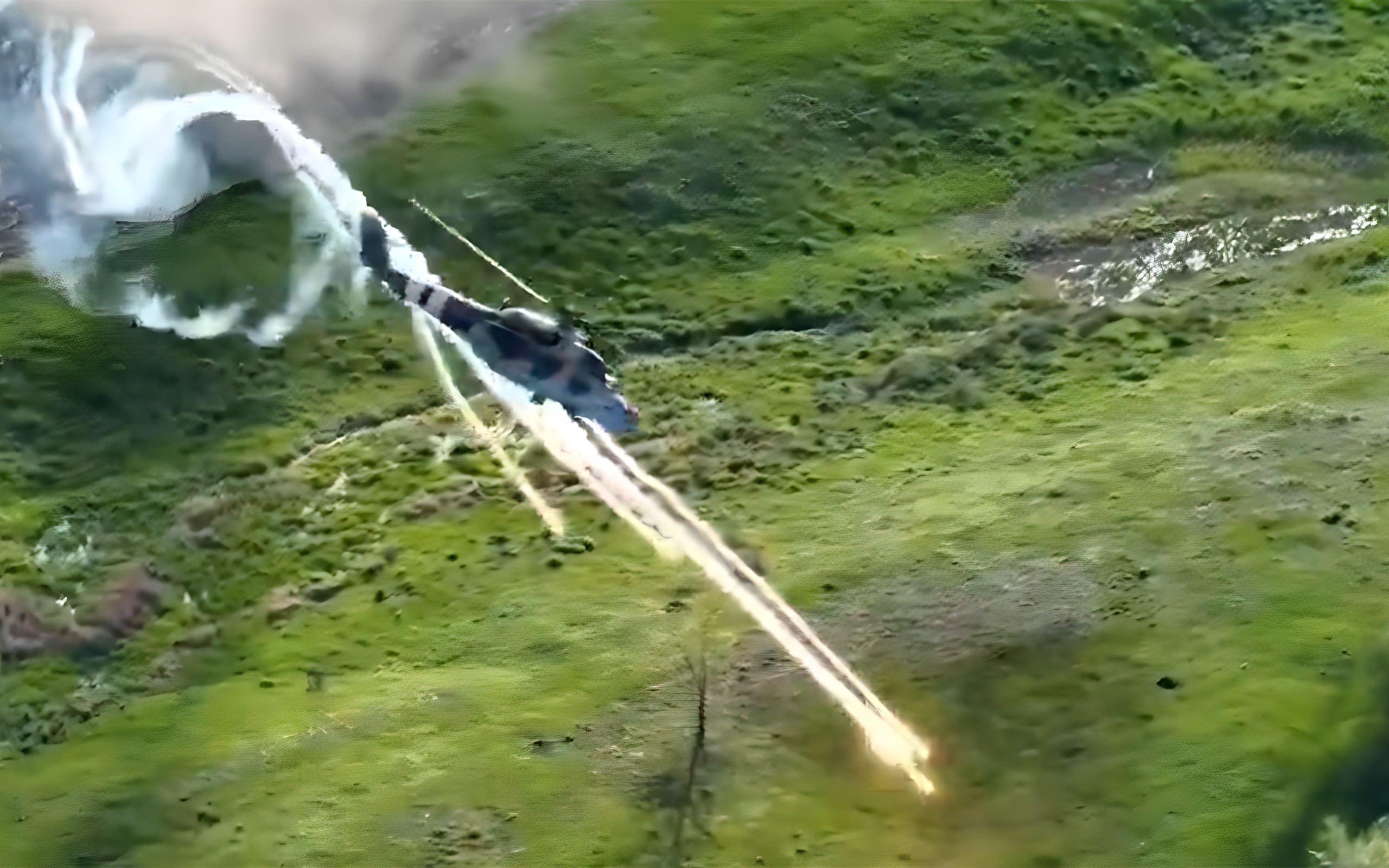
Russia’s invasion of Ukraine has forced a reckoning across modern militaries. The character of war is shifting at a pace that legacy training systems cannot match.
Dispersion, specialisation, and speed now define the battlefield. Small, agile units equipped with drones, sensors, and precision fires routinely deliver effects that once required brigades. Yet many armed forces still train as if mass and heavy armour were the decisive factors.
The gap between how wars are fought and how warfighters are prepared is widening, and the consequences are becoming harder to ignore.
A recent Wall Street Journal commentary by Jillian Kay Melchior captured this tension vividly. During a major alliance exercise in Estonia in May 2025, a small opposing force of Ukrainian soldiers, battle-hardened and fluent in drone-enabled tactics, neutralised the equivalent of two NATO battalions in a single day.
Their success was not an accident. It was the product of relentless adaptation under fire. Ukrainian innovation is rightly praised across NATO, but Ukrainian commanders themselves point to the real engine behind it: training that is continuous, improvisational, and aligned with battlefield reality.
This is where many Western forces fall short. Modern battle formations are breaking down into smaller, more specialised units that depend on distributed operations and cognitive agility. Training, however, still leans heavily on large, choreographed field exercises that reward movement and coordination more than judgment and adaptation. Traditional physical simulators, while useful, remain immobile and slow to deploy. They are poorly suited to a world where tactical innovation cycles run in weeks, not years.
The challenge is not limited to ground forces. Air forces are entering an era of manned and unmanned teaming that pushes human cognition to its limits. Pilots and operators must track and act on large volumes of data in contested airspace where seconds decide outcomes. Conventional training environments struggle to replicate this complexity, including the cognitive load that defines it.
Economic pressure sharpens the dilemma. Fuel, ammunition, maintenance, and logistics costs are rising faster than budgets. Large-scale live exercises consume resources at a level that is increasingly difficult to justify, especially when they fail to reflect the operational realities of modern conflict. Militaries are already shifting toward lighter, more affordable platforms. Training must follow, and evidence suggests it already delivers results where adopted. The U.S. Air Force conducted a three-year study following the introduction of virtual simulation into undergraduate pilot training in 2020. Students showed measurable improvement across all 40 evaluated flight manoeuvres before their first real flight, with 33 of those improvements statistically significant. Embry-Riddle University found in 2022 that student pilots reached their first solo flight 30 percent faster after integrating virtual training.
The evidence extends beyond initial training. A 2024 study presented at the Interservice and Industry Training, Simulation and Education Conference examined 198 B-52 pilots training for air refuelling at Barksdale Air Force Base. Pilots who trained with virtual reality required on average 1.35 fewer sorties to reach proficiency than those who did not. Given that one hour of B-52 operation costs approximately $88,000, a reduction of one to two sorties per student per class translates to an estimated cost saving of $10 million per training class. These are not marginal gains. They represent a shift in how quickly and cost-effectively competence can be built.
Extended reality offers a practical path forward by addressing both the cognitive and economic dimensions of the problem. Forces can train more often, adapt faster, and rehearse complex scenarios, including manned and unmanned teaming, degraded communications, and multi-domain operations, without burning fuel or risking airframes.
Units can iterate, fail, and learn at speed, mirroring the dynamics that define today’s battlefield. Ukraine provides a clear example. Immersive extended reality has been integrated into its operational infrastructure, addressing gaps where access to physical platforms and safe training environments has been limited during mass mobilisation.
In recent weeks, a Nordic defence technology initiative funded through Norway’s Nansen Support Programme for Ukraine and contracted by the Norwegian Defence Materiel Agency has delivered extended reality training systems for Ukrainian soldiers operating land vehicles, including the Leopard 2 A4 main battle tank. The use of these systems extends beyond land platforms, supporting early-stage F-16 pilot training and preparation to counter unmanned aerial systems.
In the UK, mixed reality is playing a growing role in RAF fast jet pilot training. Trainee pilots are using it to practise circuits, formation flying, and low-level navigation in realistic virtual environments, saving up to £4 million annually in training costs.
Scepticism toward virtual training persists, often based on the belief that only live training can prepare forces for war. Live training remains essential. Relying on it as the primary method leaves forces underprepared for the conflicts they are most likely to face. Advanced virtual simulations are not replacements. They are force multipliers that cultivate adaptation, judgment, and speed.
As the battlefield becomes more asymmetric, training must evolve. Militaries that cling to outdated methods risk producing forces that are technically capable yet operationally unready. The way wars are fought has already changed. Military training must catch up or accept a widening gap between preparation and reality.
This article is the opinion of the author and not necessarily that of the UK Defence Journal. If you would like to submit your own article on this topic or any other, please see our submission guidelines.
Timo Toikkanen is CEO of Varjo. He originally joined Varjo as an investor and board member in 2016 but quickly started working full-time in the role of President and COO, leading Varjo’s global business until becoming CEO in summer 2020. Before Varjo, Toikkanen was Executive Vice President, Mobile Phones, at Nokia (later Microsoft) and responsible for the business and product development of Nokia’s global mobile phone operations. He joined Nokia in 1995, and has spent much of his career in a variety of executive roles spearheading Mobile Phones sales growth in Europe, Asia-Pacific, the Middle East and Africa. Toikkanen has a L.LM from University of Helsinki and King’s College London. He also serves as board member at Framery.
Nico Lange is the founder and director of IRIS (Institute for Risk Analysis and International Security) and a senior advisor at GLOBSEC. He is the former chief of staff of the German Federal Ministry of Defense (2019–2022) and also works as a senior fellow at the Munich Security Conference in Berlin and Munich. He teaches at the Chair of Military History at the University of Potsdam and at the Hertie School of Governance.







I agree with this premise. Last month there were two joined shows at the Excel Centre: Undersea Defence Technology (UDT), heavily advertised on the UKDJ, and International Training Technology Exhibition and Conference (ITEC), held in adjacent halls over the same three days. You could wander from one to the other, and if there was a common takeaway it was this: both undersea technology and training technology can not keep pace with the Ukrainian battlefield. Very little in modern Western Defence is geared up to change that quickly. The problem is known, but the money and will to change the processes are not there.
I am not sure that the authors convinced me that military, naval and air training is lagging behind that required to fight in the modern battlespace. On the contrary they pointed to numerous examples of advanced and modern training using new tech.
There seems to be much made of the Ukrainian drone crews operating on last years NATO Ex HEDGEHOG, acting as OPFOR. First reports said that they decimated a brigade. More recent reports say that they rendered two NATO battalions combat ineffective. Apparently they ‘destroyed’ 17 AFVs with drones. Two armoured/mechanised battalions have between them perhaps 150 or more AFVs, so 17 is not such a big deal. Much is also made of the fact that NATO units drove around non-tactically and did not cam up when halted – I heard that they had been ordered to do so, to give the Ukrainian drone crews easier targets. A deeper analysis of this exercise is required!
We both know also that the exercise’s goals where unknown and unlikely to simply be a sporting match “who will win” event. I don’t know about NATO unit’s being ordered to move non-tactically, we *are* bad at cam and concealment now after a few decades of complete air superiority, so I think that’s probably somewhere we can tighten our TTP’s for real, but I have heard that Ukranian hits where counted as dropping markers within 2m of a vehicle (for safety reasons) and any hit was considered a kill.
I also note that the guy working in tech thinks that the military should invest more in tech based training…..
‘Small, agile units equipped with drones, sensors, and precision fires routinely deliver effects that once required brigades.’
Until they don’t…your drones have been shot out of the sky by AI-guided interceptors with autonomous targeting and navigation not requiring satellites or a remote operator. Low level battlefield air superiority achieved, massed enemy armoured formations deploy in strength to your front…armoured engineers are clearing your defensive minefields…their offensive fireplan, including bomblet munitions, intensive counter battery fire, has commenced…
What do your small, agile formations do then?
I know what I would do…
Still, their are things to learn I believe. The sequence of operation has changed. Clearing the sky is important, clearing mines as well, but their may be a few other actions to take about controling the electromagnetic spectrum, recon operations, disperse tanks, ensure air coverage in depth, etc, etc.
Second big thing is what you put upfront to break lines? MBT? IFV? Something else? To wistand what? What kind of armor is relevant? A few interesting questions I guess.
In my view, the principles of (fire and) manoeuvre warfare remain the same.
All that has changed are the equipments and techniques of battlefield close air support/low level air defence.
Combined arms manoeuvre warfare has always required battlefield air superiority for success.
The biggest change to the battlefield is likely to be AI C2. But, as problems with self driving cars indicate, that is very much work in progress.
Ukraine is still acquiring/building tanks, IFVs, armoured engineer equipment etc. For the time being, neither side appears to possess the necessary logistic support, air superiority, AFVs, training, C2, in order to be able to conduct offensive combined arms manoeuvre operations at scale.
Consequently, limited, very local and small scale fighting patrols by infantry, increasingly supported by remotely operated ground vehicles, would appear to remain the order of the day.
Very difficult to see any exit route for this conflict at the moment.
Ok, but even if they try, it seems to be difficult to achieve local air superiority. So what do you do in this case? It is not a rethorical question. If nobody has the means to break the line, what do we do? Saper technics from underground like in the good old days?
The path to victory is clear but it is still a long one:
‘Ukrainian production of small drones appears to exceed Russia’s, with at least 3–4 million units produced in 2025 and a goal of up to 7 million in 2026. This is within spitting distance of the 10 million per year that Ukraine estimates it will need to completely overwhelm Russia and achieve decisive victory. It’s also a tremendous advantage. Drones are the dominant force on the lines today, causing approximately 75–80 percent of all casualties. Ukraine now has 1.3 drones at the front line for every 1 Russian drone, and they are of better quality. Additionally, Ukraine has reportedly begun operating AI powered small drone “swarms” that are semi-autonomous and coordinate their attacks.’
‘There has been a qualitative change in [unmanned aerial vehicles] UAVs at the front; in essence, Ukraine has introduced a new generation [drone], which is creating serious logistics challenges…these drones operate day and night, and are inaudible (except in the final seconds, when they’re diving, as in the video). They are undetectable by conventional detectors and are protected from electronic warfare. They are extremely high-quality, mass-produced military-grade. And there’s a theory that they’re controlled not by human operators, but by AI. If they’re dropped by a Starlink-powered relay wing, their range is very long. They’re very fast (they’re winged), and you can’t escape at any speed,” reported Russian war correspondent Sergey Kolyasnikov in an April 6 article’
I saw a Ukrainian reel recently about drone tactics. They said each new development lasts about 3 weeks before it gets countered and that trend is getting shorter.
Is it me or is this very clearly written/partially written by AI?
‘Dispersion, specialisation, and speed now define the battlefield. Small, agile units equipped with drones, sensors, and precision fires routinely deliver effects that once required brigades. Yet many armed forces still train as if mass and heavy armour were the decisive factors.’
In fact massed drone swarms clear the way for conventional combined arms manoeuvre warfare.
That is the new ‘schwerpunkt’.
British and French air superiority, built up over two or three years, together with intense counter battery artillery barrages, first cleared the way for armour to sweep to victory at the Battle of Hamel and then Amiens in 1918. Massed drone swarms now perform that close air support role in 2026.
But massed drone swarms, like air forces, are an expensive way of accomplishing certain battlefield tasks that can be more cheaply performed by tanks, IFVs, tube artillery, armoured engineers and so on.
Massed drones are a now indispensable adjunct to combined arms manoeuvre warfare and not a replacement.
For all militaries interested in offensive operations but concerned about the heavy casualties inherent in the offense, this really does offer a critical means of mitigating that risk.
The procurement systems of many established military powers are not, however, yet optimised for the innovative R&D, swift and flexible specifications, modern, adaptable, automated massed production facilities that dominance within this new arm of manoeuvre warfare will require.
Whoever achieves that dominance (if verifiable) will, arguably, possess the most credible conventional deterrent since the establishment of the Allied Powers Europe Command in 1951.