

In Kyiv, people go about their day to the noise of alarms. During my visit last month, a siren would sound every few hours. Some establishments, restaurants, for instance, are already operating underground so customers don’t have to hurry for shelter every time an enemy raid is detected.
This is the new normal, strange to someone from a country that isn’t at war, but a feature of ordinary life for many Ukrainians.
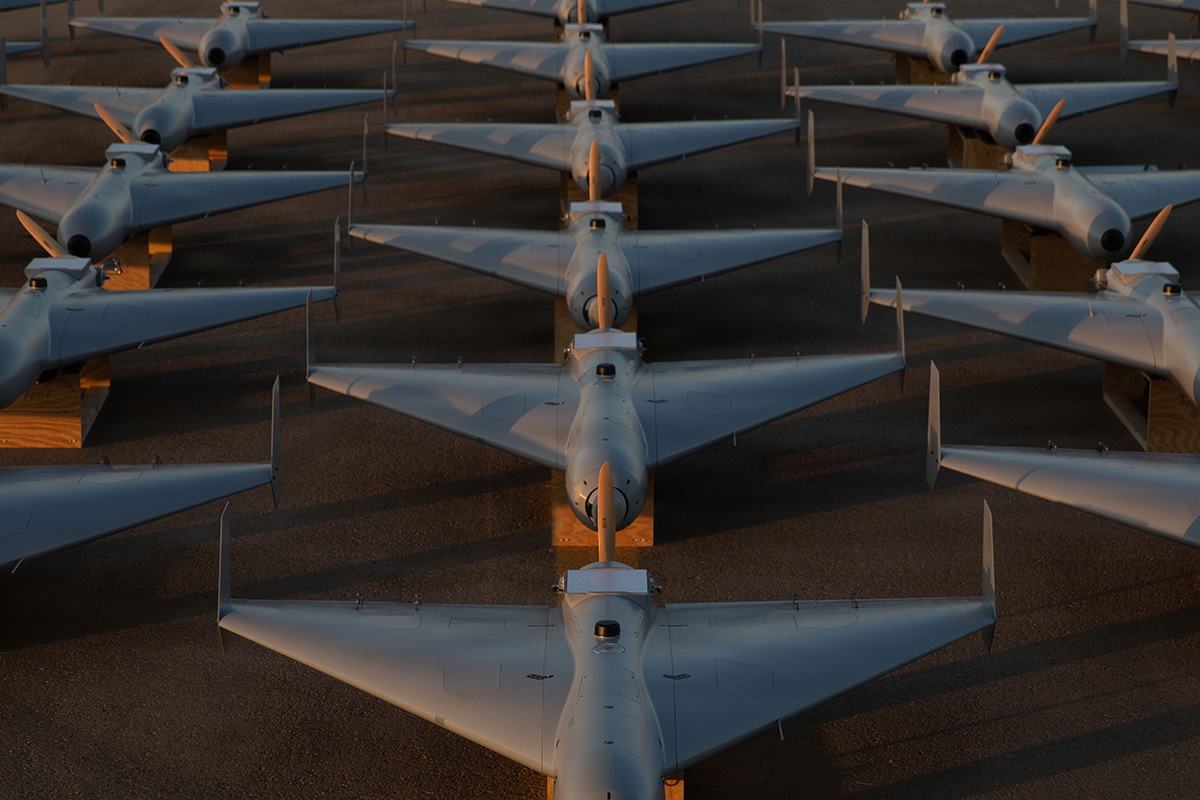
Closer to the front, however, things look stranger still. What struck me most when I was there was not just the danger, which remains considerable, but the pace of change. I visited a drone factory where designs evolve within days, rather than years. Engineers work alongside soldiers and make adjustments in real time. As a result, a problem found early in the week is often fixed before it ends, and production lines change quickly to accommodate new models. That speed is now a core advantage.
This is a different model of innovation to the one that many, particularly in defence, are used to. It isn’t characterised by a period of planning followed by long delivery. It’s defined by constant testing, failure, feedback, and improvement. Cheap drones are built, used, lost, and rebuilt better. 3D printing allows parts to be changed without delay and software updates happen all the time. Each gain is small, but they add up quickly
Boxers say speed kills. The faster you punch, the harder you land. War follows the same rule. In Ukraine, advantage goes to the side that can design, build, deploy, and improve faster. Perfection is irrelevant. Each new tool triggers a counter. Progress is a cycle of action and reaction, and tempo decides who gains ground. Europe once understood this. In the Middle Ages and Renaissance, innovation was fast. Small workshops iterated constantly: armour countered swords, crossbows pierced armour, firearms eventually displaced both. Change came from many small actors competing and adapting.
But Western Europe has now drifted the other way. The system favours large, established contractors. They deliver scale, not speed. That mismatch now shows. Drones, cheap and iterative, are reshaping the battlefield. They destroy large, expensive platforms with ease. Russia has learned this directly. Europe has not.The system, as it is, inclines towards the big, established contractors. These firms have a role to play; but they’re not set up to innovate at speed. And that’s now the name of the game. Moreover, drones, now central to how wars are fought, can do enormous harm to the kinds of large, expensive platforms that Europe still prefers. This is a lesson Russia has learned the hard way: that a big, impressive tank can be destroyed by a drone worth next to nothing in comparison.
Some may see this as a caricature of Europe’s defence culture. And it’s true that there are indications that things are changing. At the same time, it isn’t unusual now to hear very senior figures at the big defence contractors disparage the Ukrainian war effort as unsophisticated or crude: only recently, Rheinmetall’s Armin Papperger dismissed Ukrainian drone production as ‘housewives with 3-D printers in the kitchen’. This is revealing, because it implies that complexity and sophistication are in some way better than their opposite. That’s false: simple, adaptable, cheaply made systems are the reason why Ukraine has held back the Russian Bear for so long. Rather than condescend to the Ukrainians, we should humbly be learning the lessons they have paid for in blood.
Money matters. Large numbers of low-cost drones can drain supplies of expensive missiles. It isn’t sustainable to trade high-cost interceptors for cheap UAVs. Given the financial struggles that almost all Western European countries have, this is significant. People do not want to see their money wasted. A new approach is sorely needed.
To return to Ukraine, they have shown what a truly modern model of defence innovation and procurement looks like. It’s one that joins the government to startups and to frontline units. Engineers get feedback from soldiers in the field; designs are improved quickly; the system rewards what works in practice, not theory, and not what was done in the past. All that matters is what works.
This is what Europe has to learn. We do not need to replace existing defence companies; their expertise is essential. But the system has to open up. New firms need direct access to funding, contracts, and the military. Procurement must become faster and more flexible. The priority is to let companies work with Ukraine now: to test systems in real conditions, iterate quickly, and absorb a culture of constant improvement.
Ukraine adapted because it had to. It has built a model of rapid feedback between front line and factory. Europe and NATO have not. That gap is the key. If Europe enables companies to plug into Ukraine’s system, it can learn at speed while strengthening Ukraine’s position. That is the fastest way to build forces that can respond to any threat, and make any attack on NATO a losing bet.
This article is the opinion of the author and not necessarily that of the UK Defence Journal. If you would like to submit your own article on this topic or any other, please see our submission guidelines








Start now generating extra home based cash by doing very easy and simple job from home. Last month i have earned $19753 from this job in my part time. This job is just awesome and its earning are greater than 9 to 5 office job. Join this right now by follow instructions here…
>>>>>>>>>>. http://www.giftpay7.vip
Great Article Thanks.
I’ve gained $17,240 only within four weeks by comfortably working part-time from home. Immediately when I had lost my last business, I was very troubled and thankfully I’ve located this project now in this way I’m in a position to receive thousand USD directly from home. Each individual certainly can do this easy work & make more greenbacks online by visiting
following website—,,,,,,,,,,,,…—>>> JobatHome1.Com
I recall my father saying that during WW2 they took pictures of returning aircraft at Filton in Bristol. They modified the planes with armour where there were no shell holes and ignored the shell damage as they had returned! Innovation in real time.
I’ve gained $17,240 only within four weeks by comfortably working part-time from home. Immediately when I had lost my last business, I was very troubled and thankfully I’ve located this project now in this way I’m in a position to receive thousand USD directly from home. Each individual certainly can do this easy work & make more greenbacks online by visiting.
following website—,,,,,,…—>>> PaYatHome1.Com
Good article on innovation and procurement because the key difference in Ukraine is that formal procurement, designed primarily to safeguard public money and also to engage the customers at a senior level, has instead to create the conditions for engineers and front line customers to work effectively. So it’s understood that in existential conflict efficiency is secondary to combat effectiveness and scaling up delivers acceptable efficiency.
Having less resources means doing more with less is inevitable so doesn’t need to be enforced by formal purchasing processes, and there’s no need to run trials or selection as the battlefield decides over time. So long as funding enables everyone to try, and what is successful to scale, the system works..
As Ukraine has shown, this applies to Sea, Air and Land, mostly on weapons but less on the platforms that deliver the weapons because those are long term and more expensive. So Artillery, MBT, Fast Air, Blue Ocean and Strategic are likely to remain with the large organisations that have the capabilities and capacity to deliver them. Their success as a whole probably depends on openness to integration with the more specialised or smaller suppliers willing to step forward to front line collaboration and innovation.
It seems that the Strategic Defence Review already understands that Attritable assets and Ammunition needs a new approach not building a stockpile of inevitably outdated weapons.
How much can be learnt from collaboration with Ukrainian weapons suppliers about their management and commercial framework will be key to enabling SMEs to deliver their potential and the lethality that SDR aspires to.
It doesn’t make sense to give up current or imminent advantages but leading improvement with combat effectiveness proven in real life would deliver the taxpayer value that MoD has struggled to achieve. Simplify all the other stuff to focus on what matters.
Very useful stuff Ukraine is on top of the world now
Weapons-systems that take a decade+ to enter service simply aren’t acceptable any more. Looking at something like Ajax or even the F-35, we’ve become like pre-WW1 officers obsessing over the design of new cavalry sabres.
We should move instead to simplifying the platforms we have and make more of them. Ajax and the F-35 now exist and it would be a waste not to use them, but we also need to simplify them and make them cheaper and more numerous. The plan to simply up-grade Challenger 2 hulls to Challenger 3, without any increase in numbers (indeed, actually a *DECREASE*) needs to be seen in the light of new circumstances where any such platform is going to experience attrition in high intensity warfare and therefore what is needed is more of them.
Drones have revolutionised warfare and we also need to be prepared for that. They need to be integrated in the army down to platoon/section level. We also need to be prepared for drone warfare against our energy, oil, transport, and shipping infrastructure of exactly the kind that Russia has launched on Ukraine – again, this is a case of more weapons rather than whatever the latest technology is.