

Britain’s investment in homeland air and missile defence will mostly buy better warning that an attack is coming rather than the means to stop it, General Sir Richard Barrons has told the Defence Committee, warning that the iron dome type system many people assume protects London “is not even remotely there.”
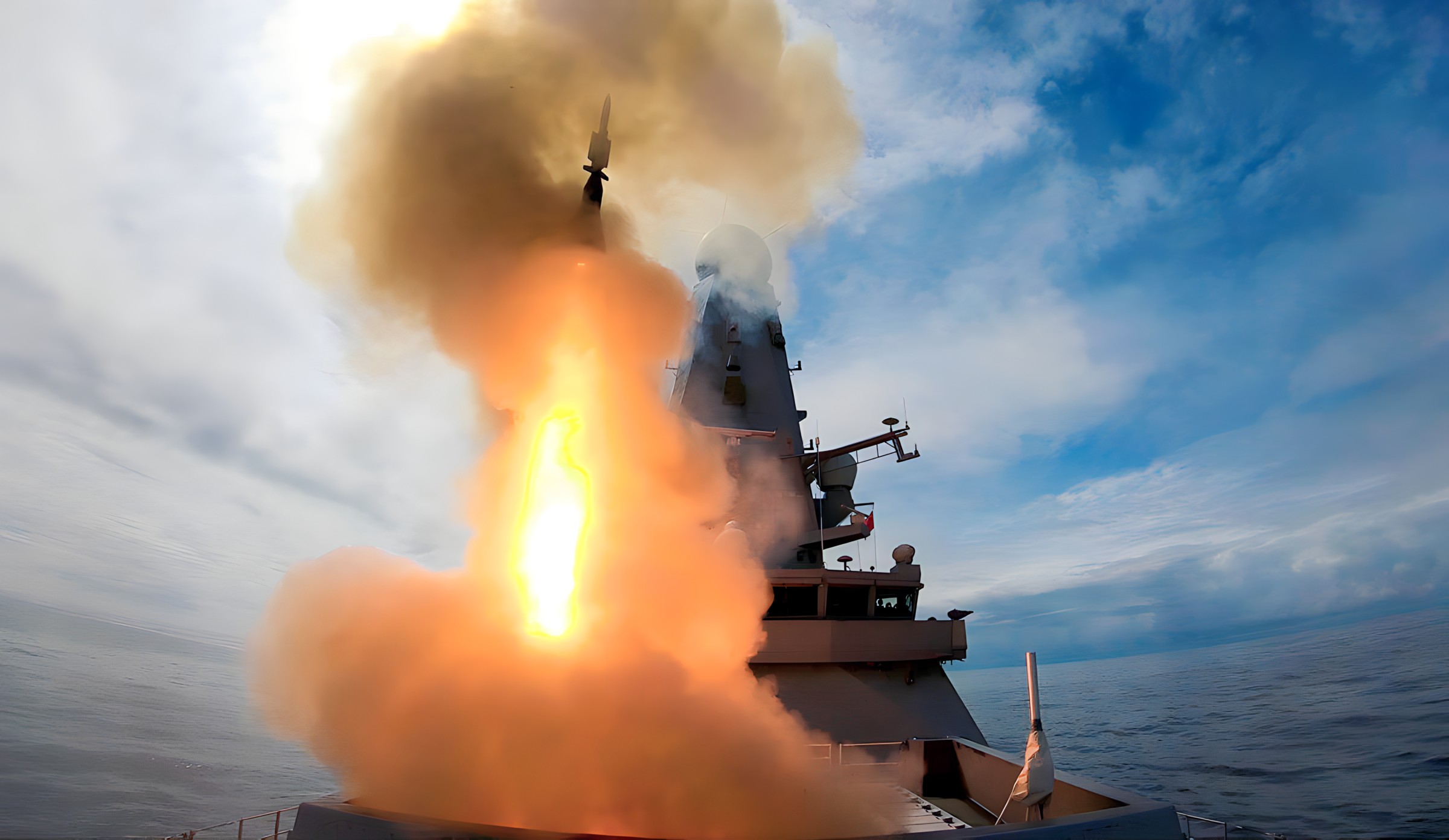
Giving evidence on the Defence Investment Plan alongside Lord Robertson, his fellow Strategic Defence Review author, the former Commander of Joint Forces Command was asked whether the roughly £790 million the plan provides for homeland integrated air and missile defence is enough to be ready for possible Russian aggression against NATO by 2030. Setting out what the money actually purchases, Barrons said the bulk of it goes on improved command and control. “You’ll know better that you’re going to be hit by a missile,” he told MPs, alongside “some improvements for the Air Force’s ability to shoot down cruise missiles” and improvements to the Type 45 destroyers “so it has a better capability against ballistic missiles.” The distinction matters because command and control determines how well a country can detect, track and warn of incoming threats, while the capacity to intercept them depends on launchers, interceptors and directed energy weapons held in numbers, and it is that layer, on the general’s account, that the plan barely touches.
“I think many people in the country assume there’s a sort of iron dome over London, at least, and it’s not even remotely there,” Barrons said. The reference is to Israel’s Iron Dome, the layered system that intercepts rockets and missiles over Israeli cities, and no equivalent protects British population centres or infrastructure, with the air defence of the UK homeland currently resting on Quick Reaction Alert Typhoons, a small number of the Army’s Sky Sabre batteries, and whatever Type 45 destroyer is available at sea.
Even embracing the technological change that is cutting the cost per interception, through directed energy weapons such as DragonFire and cheaper missiles from newer entrants, Barrons put the price of a genuine defence far beyond what has been allocated. “Entry level, probably 80 billion pounds over 10 years. Entry level IAMD of my dreams, probably 120 billion pounds over 10 years, and we got a billion,” he said, describing integrated air and missile defence as “the iconic thing that didn’t make it into the review.”
The shortfall sits, in his framing, in the unaffordable half of the defence iceberg. The review and the plan represent only the top half, he told the committee, with at least another £60 billion to £80 billion hole in defence infrastructure, spanning falling-down airfields, ports, housing, reserve forces and cadet facilities, that never made the cut because it was not remotely affordable, and he cautioned that arguing over the margins of the plan should not be mistaken for fixing defence.
Lord Robertson told MPs the homeland threat has transformed since his 1998 review, when Britain considered itself an island with a moat, a long way from trouble. Pointing to Iran’s attempt to fire a ballistic missile at Diego Garcia, 2,000 kilometres away, using an out-of-date Russian system, he said: “We are now within range in a way that we weren’t before.”
Barrons also identified defence medical services as “the most hollowed out bit of defence,” telling MPs that any plan to deploy the Strategic Reserve Corps on the continent must account for mass casualties reaching NHS beds with a system to move them home, and “I can’t see where that exists. That’s not in the DIP.” Munitions spending across the plan, he added, will buy substantially less than the 30-day stocks the services would want to hold. On the government’s claim to have already met NATO’s 1.5 per cent resilience spending target, both witnesses were unpersuaded, with Robertson saying it has never been explained how the figure is met and Barrons observing that the money has visibly not been spent on securing bases such as Brize Norton, mending military ports, gearing the NHS for mass casualties or enabling mobilisation. “Whatever the money has been spent on, it’s hard to see in the military lane,” he said.











Isn’t Sky Sabre being doubled?
Supposedly, yes. And SHORAD to “triple.”
They use the “double” as the headline grabber, to try to divert attention from the fact that there are so few to start with.
Sounds good, which is all part of the spin.
If you have a handful of systems, you still have a handful if you double.
And in war, and I keep repeating this until I’m blue in the face, they might not even be in the UK. They are for the deployable Field Army, so the ARRC.
3x nought is still nought.
Not even close to necessary, due to geo relief coverage maybe even not enough to cover all London and obviously is not a proper system against ballistic missiles and too expensive against Shaheed types.
Side note
Iran to Diego Garcia is about >3500km per Google maps.
Iran to London is about 3700km
Sky Sabre is short range battle-field AA
We need long-range and anti ballistic missile defences to defend stategic places like:
Government buildings
Military HQs and bases
Critical Military industries
Ports and storage
Utterly pathetic – dereliction of duty by governments of whatever colour.
Anyone who knows anything about defence would have known that the figure would buy very very little.
As for the rest of the DIP, it is so full of holes and buried bad news that eventually will come out in the wash through FOIA and written answers, as it remains vague in the details – how many.
By design.
Starmer got his moment to grandstand, I PRAY he is utterly humiliated by NATO shortly. And that goes for the next one parachuted in to save Labour’s neck if he does not improve matters.
No Iron dome over London ?
Well, at least that’s a bonus then….. 😊
Telling us what we already know …
You usually have a grey dome…
It’s always “Jam tomorrow” with the UK it seems…all over our faces!
The DIP wasn’t really aimed at tackling the immediate issues and this is quite a damning intervention by Barrons and Robertson on a gaping whole in our defences. You can see why Healey and Carns resigned.
hole
If we’re in a war serious enough for ballistic missiles to be heading our way, chances are the US will have moved THAAD and Patriot batteries over here to protect their own assets and personnel.
Anyone know of any nice campsites around RAF Lakenheath or Mildenhall? 😅
Phew! Thank goodness for Number 10 North, then.
Well if the people of London survived one blitz they can do it again (Labour logic)
There is in the DIP a commitment to long-range ballistic missile defences for the homeland, but it’s not funded yet.