

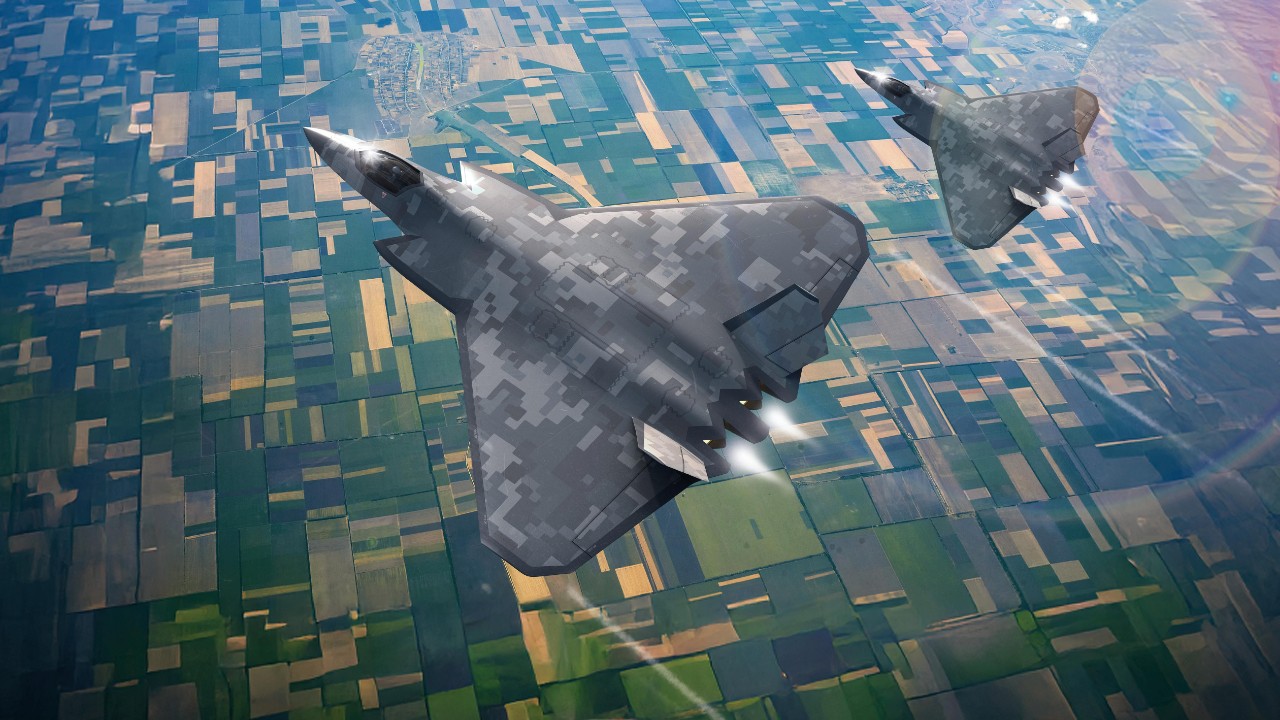
The programme to deliver Britain’s next-generation fighter jet has been awarded a £4.6 billion contract, the second joint international contract placed under the Global Combat Air Programme between the UK, Italy and Japan, the GCAP Agency and Edgewing have announced.
The 18-month contract, awarded by the GCAP Agency, which manages the programme on behalf of the three governments, to Edgewing, the trinational prime contractor and design authority for the aircraft, will enable completion of the advanced concept and assessment phase and further joint detailed design and development. It runs from 1 July 2026 to 31 December 2027 and is jointly funded by the three nations, following an initial £686 million contract placed in April 2026.
GCAP, launched in 2022, aims to deliver a next-generation stealth fighter by 2035, replacing the Typhoon in RAF service and Japan’s F-2 fleet. Edgewing, the joint venture established a year ago by BAE Systems, Leonardo and Japan Aircraft Industrial Enhancement Co, is headquartered in the UK and ramping up to operate in all three nations, and will remain the design authority throughout the life of the aircraft. Wider delivery is supported by trinational industrial consortia, including the GCAP Electronics Evolution grouping developing the aircraft’s sensing and communications system and the power and propulsion consortium working on the engine intended to give the jet extended range and persistence.
Masami Oka, GCAP Agency Chief Executive, said: “I am delighted to sign this international contract on behalf of the three GCAP nations. It will enable the GCAP Agency and Edgewing to continue making huge progress in all areas of delivery. The programme is vital for global security and defeating future threats, while sharing costs, technological advantages and creating highly skilled jobs in all three nations. With this long-term funding, the future of GCAP has never been more assured.”
Marco Zoff, Edgewing Chief Executive Officer, said the contract “represents the trust placed in us by all three nations and our GCAP Agency partners, trust fostered by the rapid progress made under the first international contract.” He added: “This momentum is being driven by our disruptive new model of defence collaboration: the first time that three countries have come together to create a single engineering prime, working on behalf of our national industries, with a single empowered customer.”
The award follows confirmation in this week’s Defence Investment Plan of £8.6 billion in UK funding for GCAP over the next four years, which a senior defence official said would carry the project through its concept and into its design phases alongside Japan and Italy. The programme is overseen by the GCAP International Government Organisation, established in 2024, whose steering committee directs the GCAP Agency from its headquarters in Reading.






It’s a vast amount of money but other than nuclear weapons Tempest is probably the most important capability Britain can provide the west right now, with the collapse of FCAS we are on the verge of being in a world where the US is the only western country that can make aircraft and they will be limited to one option from Boeing and one from LM.
Hopefully we can bring others in like German and Canada to share to cost.
Bringing new customers along would be a fantastic expansion of GCAP. Germany must be looking closely after the collapse of FCAS and the ongoing drama with the US and the F35. With the exception of Dreadnought and SSN AUSKUS Tempest is the most exciting thing to come out of the DIP.
Germany are certainly reviewing their options. They already have 35 F-35As on order to replace the Tornado in the nuclear sharing role, and there has been talk about expanding that fleet by around 15 aircraft. Following the collapse of FCAS, there are a few clear paths they can take to replace the Typhoon. They could go for more F-35s in the near term to boost capability, join GCAP, back Airbus’ ‘Team Gen 6’ effort for a German led design, or end up blending these options.
Sorry but totally unrealistic. The Germans were a drag on Typhoon and before that Tornado. Give them a place somewhere sure but not leadership or the project will be delayed and the Japanese wont stand for that. Its a shame Private industry has little left in the UK. Reason Taxation. So difficult to pass anything on to the next generation. Thats why you see very few family businesses yet which experience is invaluable.
I don’t want any more delays or complications from Germany joining the programme at this stage, especially considering we caused the latest delay ourselves. I’m just outlining Germany’s options as I see them. They have their own industrial base to think about, so simply buying the jet without being involved from an early stage and agreeing a workshare isn’t an attractive option for them.
And let’s be honest, HMG would probably jump at the chance to spread the cost across more partners and would secretly appreciate any delay if it helped reduce the financial burden.
“It’s a shame Private industry has little left in the UK. Reason Taxation. So difficult to pass anything on to the next generation. Thats why you see very few family businesses yet which experience is invaluable.”
Inheritance tax is the reason we’ve seen a decline in our defence manufacturing base? I haven’t seen that line of argument before. Could you provide some evidence in support of this assertion? As it stands, it sounds like one of those standard right-wing urban myths which have no basis in fact.
I would have thought that most defence companies were PLCs so while inheritance tax may have forced some very wealthy families to given up majority ownership that shouldn’t have, on its own, led to the demise of the company as a going concern in the UK.
South Korea has much more onerous inheritance tax laws which require careful tax planning by the controlling family group but they manage to maintain control of the entity (Samsung are a classic example) so I fail to see why it’s such an issue for UK families, unless of course they’re just incompetent or simply decide to cash out.
Really? UK is social almost non democratic country where taxes + borrowing are probably north 50% of GDP and are still claiming government do not have money.
Jim, You need to be more consistent. 🫡
Some of us remember your previous comments 😊
Let’s just make It with the Partners we have and sell loads to the rest.
Exactly Halfwit. I believe the three partners have the strength to complete the task as Leonardo is becoming a prime military force supplier across the World and together with the UK’s experience with Typhoon and Japan’s honourable signatory, it will prove to be a winner. Of course, the US will try every trick in the book to make Tempest trip and fall, but unlike TSR2 the US aircraft industry ain’t what it was. I believe that as we get to the demonstration stages a F35 moment will happen in the industry, and the dividends will begin.
Lol.
The Germans? And find restrictions placed by them on who Edgewing can sell it to? By all means Canada, Australia and New Zealand. But if Germany, and Spain come on board, they must be purchasers, not dictators of whom it can be sold to (Typhoon to Turkey etc).
That I’m sure won’t happen. If they come on board they may be allowed some input particularly around a variation of a German version perhaps with German tech and foot the cost, but no way would they be allowed to fundamentally affect the core aircraft or deviate it from its path this time around, they made their choice and have few cards beyond the loyal wingmen to play now. So a lead on loyal wingman and some access to essential IP for the jet itself to preserve Airbus capabilities, would probably satisfy them, it’s what they were expecting from FCAS but Dassault resisted. Canada might want some input for its own version too especially if as expected it does a deal to build Gripens. It doesn’t want to be tied to the US anymore so is looking for some tangible if modest national capability. The core partners are in a strong position to get the deals they feel most beneficial to them.
Unless there is another Jim on this site this is a direct quote of a comment you posted on the last article about GCAP. Normally I like your comments as they are generally factual and not extreme like most comments on this site but this is feeling a bit sus.
“I don’t think many people will be buying £200 million regional bombers from us.
It’s got as much export potential as TSR2.
Anyone who will buy it will want work share.
We are paying £16 billion+ in development for a third share on an aircraft we don’t really need”
🤣 wait until David Lloyd sees this!
I heard he was having a week away with his wife to try to re-build their relationship….🫡😊
Whose wife though… 👀😬
Ouch, how long ago was that? Who ever wrote it was either having a laugh, deluded or must have been overdosing on US supplied extra strong koolaid to have had any conviction on claims of that nature. Regional Bomber? How very 1960s and certainly a weird description of Tempest which is anything but. None of the core partners would be putting such efforts into this project to produce a ‘specialist bomber’ and who the hell would build one as a replacement for Typhoon or Japan’s aging fighters. Nonsensical description.
I get where Jim is coming from.
I too have questioned it. Not for not wanting it, I’m just horrified at the cost to Defence.
If this is such a money spinner for UK PLC why does Defence alone fund it?
Buy, fine, military kit, but not sevelop too.
That’s 12 billion less kit elsewhere.
It should be a national endeavour that’s paid for more widely, nukes the same.
Otherwise, go Tempest.
While it is good the know how continues this is not not aircraft to be sold around, this is a long range maybe a cross size between a Tornado and a Vulcan.
What i am afraid is what kind of world will be when it arrives in 10-15 years, If missiles keep increasing their range and missile versions improve every 5 years cycle what is the point of an attack aircraft? We dont need this to drop dumb bombs or laser guided ones from a very expensive kit like this.
I can see this being useful to launch heavy AAMs with 1500km rane against enemy AWACs, maybe aeroballistic missiles like Israelis but other than that i don’t see the point. Airbases are a significant weakness and an aircraft of this size is doubtful that can be employed from highways.
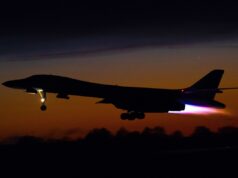
One can argue about the viability of aircraft in modern warfare, though ships or tanks are probably even less of a convincing argument on that scale. However if you are going to build a modern warplane (beyond a relatively short range interceptor perhaps) it really has to be an aircraft of this nature. You need stealth, long range especially to keep tankers out of range, the ability to stay on station and fly deceptive paths and to be able to store internally as much ordinance as possible with exceptional stand off capability be it in air defence or strike missions. Fighters don’t need to be dog fighters anymore and being capable of flying off roads etc will be far too debilitating to other crucial capabilities. Ironically TSR2s early problems (it flew beautifully) was almost entirely down to trying to give it such short rough runway capabilities, the complex under carriage being the major problem to the point that it actually caused its own vibration problems when it flew from traditional runways. We need to get our heads around the fact that fighting aircraft if they exist at all are going to have to evolve, the F-35 is already seen as not truly fit for air warfare in the next decade, too limited in range, weapon fit and even performance due to its compromised aerodynamics. The Americans even pondered adapting B1s to an air defence role that certainly fits the Vulcan/Tornado definition rather more than Tempest ever will. Tornado was a specialist low level bomber, nothing like Tempest and Vulcan designed as a very large high level bomber that though designed for modest supersonic performance couldn’t due to aerodynamic problems too costly and complex to eradicate, so a bit like the B1 there. Germany’s cooling on FCAS too was in part because modern thinking is as I say, moving away from smaller traditional fighter/bombers simply because of the reasons I have spelled out. Again argue as to the validity of a new manned fighter all you like (though dangerous at this point to dismiss it even if it’s role becomes more of a command station eventually) but if you are going to build one it has to be of the nature of what Tempest aims to be, simply to contain all the elements required to give it the effectiveness and survivability required of such a platform.
I was pointing the severe conundrum, increase the size means making it more expensive, restrict exports even more and reduce own build numbers.
Being bigger also means much more difficult dispersal when airbases, unmovable assets are now under a giant threat from drones/missiles.
So how to make it cheaper and easier to develop and build?
– does it need Mach 1+ ? i am aware that faster you get the longer ranger your missile will have, but i just say put a better,bigger engine in your missiles.
– does it need 9.0 G?
– podded engines make it much easier o replace them, besides the extra survivability of well distanced ones.
– conformal not only for fuel but also weapons, sensors.
The core point here is that nothing must slow the project down.
I agree with stick to the three core partners, especially in regard to Germany, who along with Fance launched ‘their’ cancelled Gen6 programme with much fanfare and a very deliberate middle finger pointed in our direction.
So screw them quite frankly.
Perhaps consider other lower tier partners, with limited input.
I tend to agree, though in the end a lot depends upon the deals you can negotiate, but on the basis it cannot affect the timeline or design philosophy the core partners have agreed. There is a great opportunity here considering the nature of World events that have developed literally in the last couple years and especially recent months that have so affected the competition.
Spot on, when you consider GCAP, its a particularly good fit for Canada, squint a bit and it looks like a 21st century Arrow too!
Same for Australia.
Re Germany, my suspicion is the US will reach an Airbust Military final assembly deal, with German content and procure F35A in quantity.
Considering its already being procured, its the obvious direction of travel.