

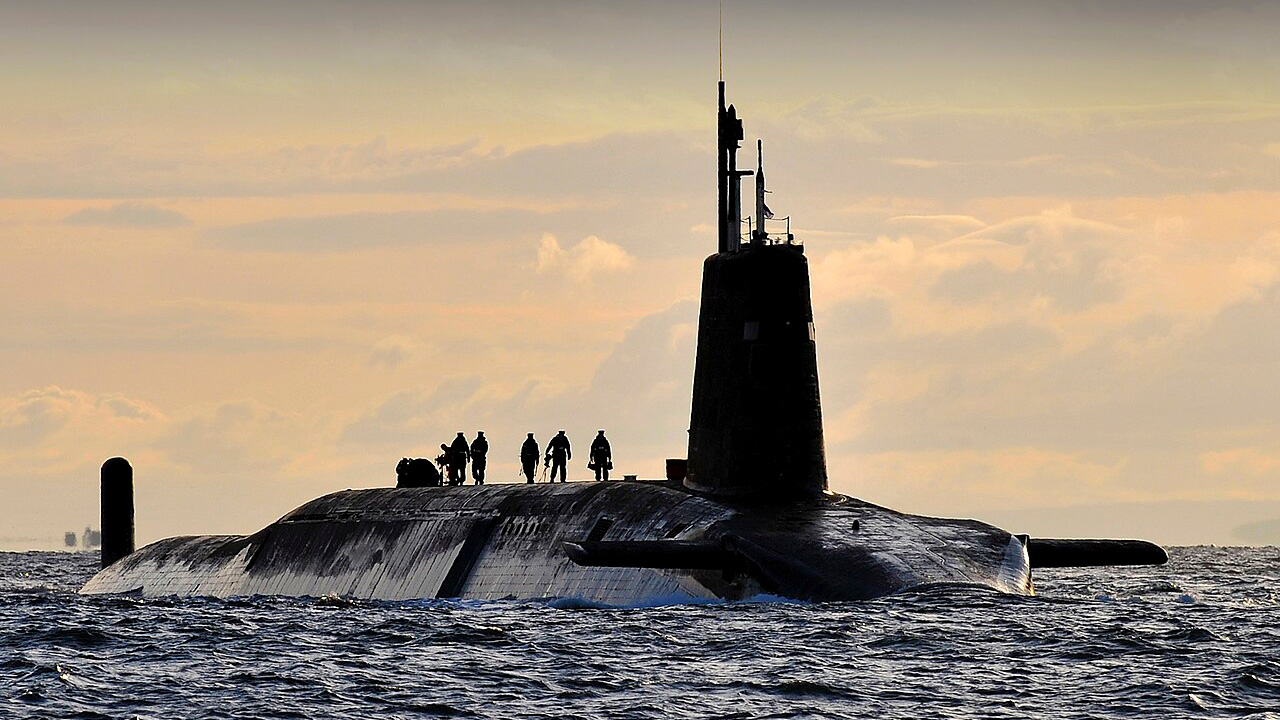
Submarine refit work that might previously have been carried out at Devonport is now taking place at Faslane, Defence Minister Luke Pollard has confirmed, reflecting the pressure of upgrading the fleet while the Clyde base simultaneously undergoes the largest transformation in its history.
Speaking to journalists today on Project Royal Oak, the £26 billion naval base modernisation programme described by the MoD as the largest naval infrastructure investment since the end of the Cold War, the Minister was asked by the UK Defence Journal about the main purpose of the £15.1 billion allocated to Faslane.
In his answer, he set out how the base must absorb additional maintenance activity on top of its existing role. “We’re seeing more refit work taking place in Faslane that perhaps in the past might have been done in Devonport, but because of the requirements to upgrade as many submarines as we have, needs to be done now in Faslane as well as Devonport,” he said. The shift “doesn’t in any way remove the importance of Devonport for deep maintenance for submarines, but reflects the requirement of the fleet that we have to be upgraded.”
Pollard was pretty frank about the roots of the problem, pointing to the consequences of historic underfunding for submarine availability. “It’s that lack of investment over the last decade that means that we haven’t been able to have some of those ships and submarines go through the programmes as they might have done previously,” he said, telling the UK Defence Journal that the lack of investment in physical infrastructure “has a knock-on effect on the availability of our platforms.” Improving warfighting readiness, he argued, means addressing contracts, people and skills shortages alongside the hard infrastructure that Royal Oak targets, with the MoD saying the programme will transform the bases into warfighting-ready facilities that directly improve Royal Navy readiness, availability and lethality.
The additional refit burden lands on a base already facing an intense decade as Programme Euston will new floating docks and shoreside infrastructure, while the existing ship lift, which Pollard said has “served us really well for a very long time,” is due for replacement. All of that must be delivered while Faslane, the home of the UK’s nuclear deterrent and what the MoD calls the Royal Navy’s submarine centre of specialisation, continues to sustain the continuous at-sea deterrent, receives the final Astute-class boats, and prepares for the arrival of the Dreadnought class and, in time, SSN-AUKUS.
Devonport remains central to the deep maintenance picture, receiving £7.1 billion under Royal Oak with work on 10, 14 and 15 Docks among the projects identified, part of a programme the MoD says will support thousands of skilled jobs in Scotland, South West England and on the Solent. The Minister, who represents Plymouth Sutton and Devonport, drew on his own constituency to illustrate the availability problem, saying earlier investment would have allowed more submarines through the upgrade process than has been possible.
Alongside modernised waterfront infrastructure and new docking facilities, the wider programme will deliver new accommodation, training facilities, out-of-water engineering infrastructure and research and development capability across the three bases, with further detail on individual projects expected through the summer and into the autumn.
“The threats facing the United Kingdom are real and they are growing. This Government is not waiting – we are acting now to ensure our Royal Navy has the bases and infrastructure it needs to be ready to fight,” Pollard said, as quoted in the earlier announcement.








Does this mean that the ship lift replacement is separate fro the 3 Dock Euston Project…???
Glasgow has easily the largest ship building and fitting industry in Britain. It makes sense to concentrate as much of the refit work there as possible. Plymouth is a small city quite isolated from the rest of the country and located in a high income southern area.
This entire submarine mess was caused by the Major government’s decision in the 90’s to cancel the half built Rosyth docks for Vangaurd. If these had been built we wouldn’t be in this situation today, instead the work was hived off to Devenport to a facility too small and too old to deal with it resulting in the mess we find ourselves in today. All to pro up a few marginal Tory constituencies.
Faslane is now the most important NATO naval facility in the world. It will be the key to winning any future battle of the Atlantic.
To be fair Jim, the UK defence strategy has historically been about propping up marginal constituencies, with procurement about feeding MIC, instead of actually procuring the equipment needed.
Defence has only on a few occasions been taken seriously since before WWI…. And Only when a serious threat does threaten our well off political elites life style…!
True…
Having this conversation on the Storm Fighter thread as we speak!
Whether right or wrong about where this work should be based, it’s hard to see how Plymouth is “more remote” than Glasgow.
Plymouth is not a high income area either, it’s below the national average, and wages in Glasgow are higher.
Any of our poorly boats back yet?
Let us hope the additional refit work is not just changing a lightbulb and such. Politicians and spin – just saying.
Good job