

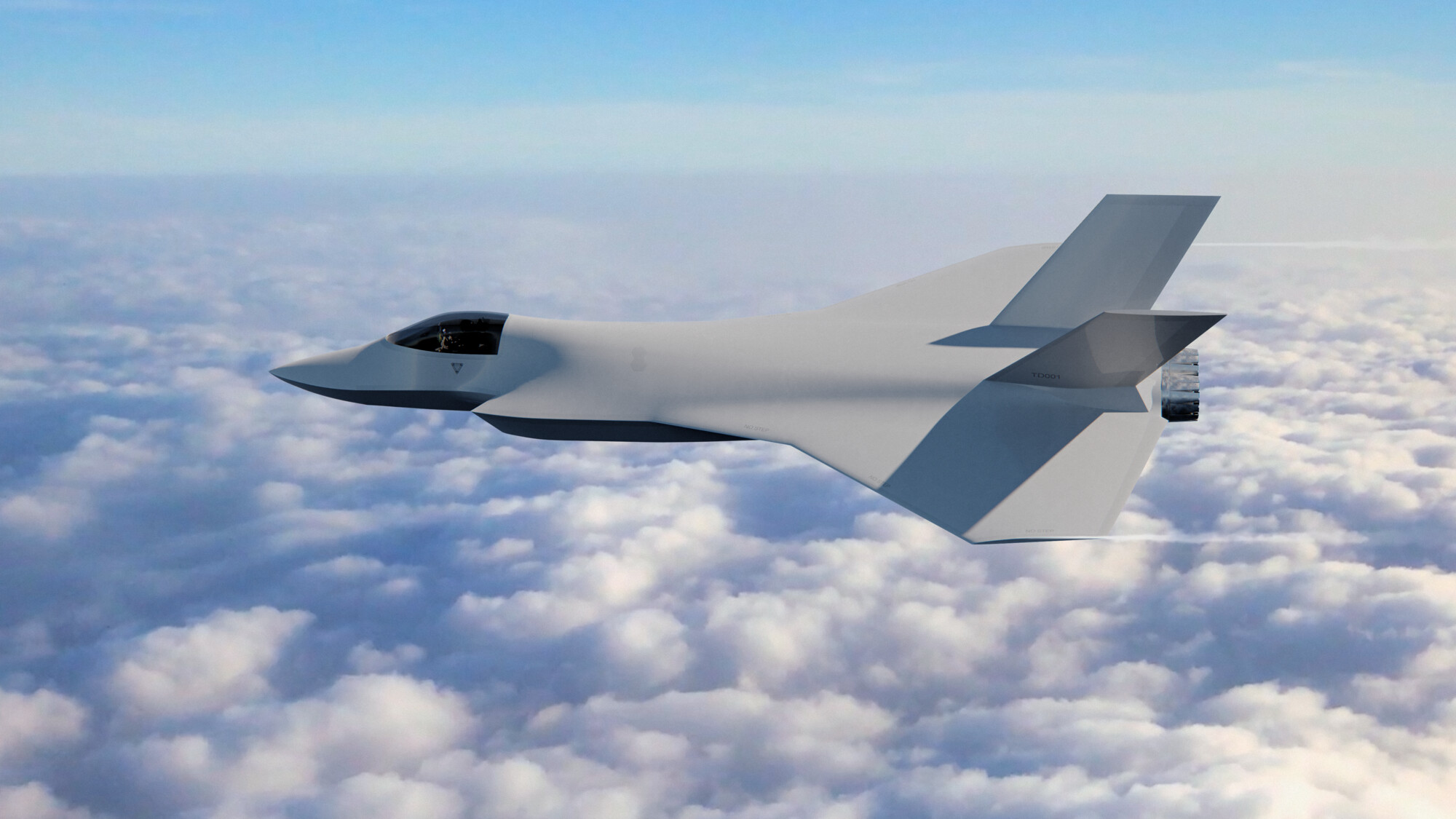
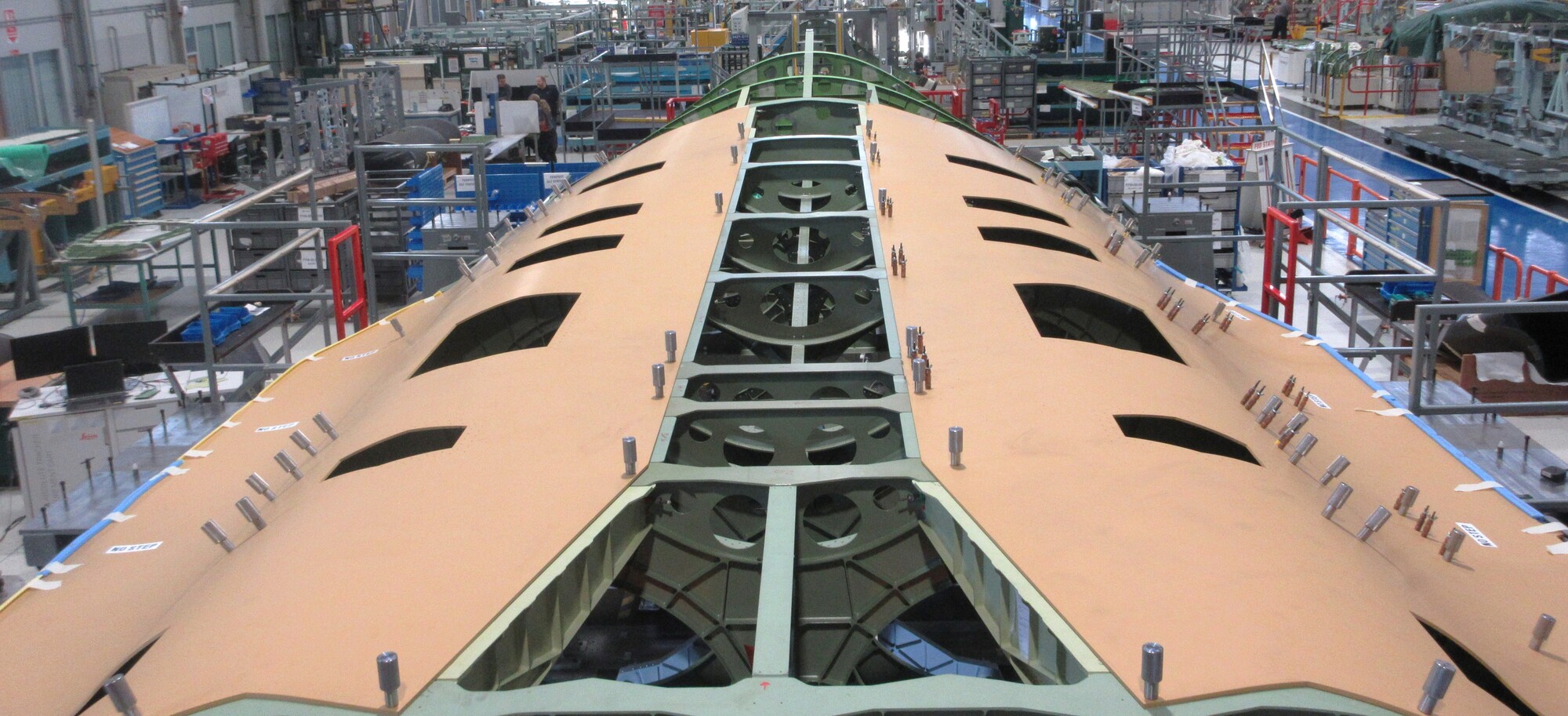
Around half of the main aircraft structure for the UK Combat Air Demonstrator is now in final assembly, marking progress on the first crewed combat aircraft to be built in Britain in four decades, BAE Systems stated.
The update came as the Team Tempest partners, which bring together the Ministry of Defence, BAE Systems, Leonardo, MBDA and Rolls-Royce, announced a set of milestones across technology programmes feeding the UK’s Future Combat Air System and its role in the Global Combat Air Programme.
According to the partnership, more than 11,500 parts have been designed to date, accounting for around 90% of the aircraft’s overall weight, with many developed through the UK supply chain.
The partners also reported completion of the first robotically assembled component in what BAE Systems describes as its Factory of the Future, an achievement the company characterises as a first for UK industry. The component is scheduled to undergo structural testing later this year alongside one of the wings.
Richard Berthon, Director of Future Combat Air at the Ministry of Defence, was quoted in the press release as saying: “These achievements demonstrate the pace and scale of progress being delivered through the Team Tempest enterprise. From advanced digital manufacturing and flight testing to next-generation propulsion technologies, we are maturing the critical capabilities needed to deliver a world-leading Future Combat Air System for the UK. The expertise, skills and technologies being developed today are not only reducing risk for GCAP, they are strengthening our sovereign combat air capability and ensuring the UK remains at the forefront of air power innovation for decades to come.”
The demonstrator is being built by the Ministry of Defence and BAE Systems, with Rolls-Royce and MBDA, to prove aerospace engineering, digital design and manufacturing techniques intended to shape the next-generation fighter delivered through GCAP. According to the partnership, the aircraft is the UK’s first flying combat air demonstrator in more than 40 years, designed and built domestically.
Team Tempest was launched in 2018 and now involves more than 4,500 people across the industry partners and the Ministry of Defence. The wider Tempest programme is expected, according to a PwC assessment published in October 2024, to contribute an estimated £37 billion to the UK economy between 2025 and 2070 and to support an average of 16,000 jobs a year over the next decade. GCAP, the trilateral effort under which the UK is working with Italy and Japan, is aimed at fielding a sixth-generation crewed fighter around 2035.






Excellent news!!
Does this mean that, in theory, if GCAP were to fall apart, Britain could turn this demonstrator into a production aircraft?
Where does it sit in relation to the GCAP agreement.
No. Demonstrator is not even a prototype, lots of work to do . I dont know what engines the demonstrator will have i suppose 2 EJ’s from Typhoon?
It will be interesting t know if could take the GCAP engines later
Interesting. In my book prototype is a test to see if a product or part will work in the eyes of the development team with the aim of correcting any problems in the design. A demonstrator is a step beyond that where you can demonstrate the product to a client, investor etc.
From Google AI
“In the aircraft industry, a demonstrator tests specific, unproven technologies to prove a concept. A prototype is the first full-scale, functioning version of a proposed new aircraft, designed to undergo rigorous testing for final certification and production”
A prototype will resemble the aircraft that will actually go into production. The demonstrator might look pretty different from a production standard Tempest. Look at EAP to a Typhoon. Very similar looking. But fundamentally different aircraft.
Update from RR on the engines was in a later announcement. The GCAP model looks a lot like the demonstrator just 30% larger, the GCAP model being displayed at Farnborough had Stealth engine exhausts not the non-stealth exhausts shown for the Demonstrator at the start of this article. Tempest is going to be a beast! Look at how smooth that fuselage being built is, being Tier 1 of F-35 is now showing to paying off!
Compares favourably to the exposed rivets and panel gaps on the Su-52!
We wouldn’t be able to go alone and develop GCAP, Typhoon was seen as an £18 billion dev cost alone before any airframe was bought. Luckily about £20 billion has been signed off by the 3 partner nations. I think out of the big 6 nations that could collaborate we got the best of the Bunch, Germany really chose badly with France. Japan is going to push this through as a political force, Germanys timelines just don’t match with the project. Would Germany put money into it seeing as they are looking at the 2040 timeframe, if they did they’d have to put development costs into it want manufacturing share but not purchase any airframes until 5 years after Japan, UK and Italy deliveries would start.
Which probably is fine. Given that production capacity never meet demand anyway.
It would be possible but it wouldn’t meet the RAF’s requirements any more than a production EAP would have done. GCAP will be substantially bigger than the demonstrator (which still doesn’t have a publicised name, so we’ll go with UKCAD). To answer another question, yes UKCAD will be powered by twin EJ200s in much longer, more serpentine ducts than Typhoon uses. And yes, a demonstrator is a technology proving vehicle, not to be confused with a customer demonstrator like ZJ101.
The ducts will be serpentine but I don’t think the Demonstrator will have stealthy exhausts from the pictures I’ve seen and the Full on mockup of GCAP that’s at Farnborough. The mock up is showing concealed V exhaust ducts
Those ARE LO nozzles! But no, I’ve not seen chamfered petals in any UK CAD illustrations either. Eurojet do offer them, but I don’t think they’ve ever been flight tested.
Maybe this is the Naval version to replace F35B.
No, it isn’t. There will be no naval or STOVL version.
Great news not seen too many pictures so far?
So will each individual country make there own demonstrator then pool what they have learnt into the prototype? Do we also know who will build the full prototype as im guessing there will be at least two production lines, one in Europe (maybe two) and one in Japan?
FAQ:
1. Can Britain turn the Tempest demonstrator into a production aircraft if GCAP falls apart?In theory, yes—but it would be a massive strategic compromise.The UK’s national flying demonstrator is designed to prove out advanced digital manufacturing, stealth shaping, and aerodynamics. If GCAP collapsed, Britain could theoretically attempt to scale up and weaponize the demonstrator concept alone (much like how the UK’s EAP—Experimental Aircraft Programme—in the 1980s directly birthed the Eurofighter Typhoon).However, doing so would forfeit the immense financial and industrial pooling of Japan and Italy. As your post notes, developing a next-generation fighter from scratch is prohibitively expensive (the Typhoon cost roughly £18 billion in baseline development alone). Going it alone today would strain the UK defense budget to a breaking point, meaning the resulting aircraft would likely be less capable, produced in smaller numbers, and heavily delayed compared to the trilateral GCAP fighter.2. Demonstrator vs. Prototype vs. GCAP RelationshipYour distinctions between a demonstrator and a prototype are spot on historically and aeronautically:The Role of the Demonstrator: The UK’s flying demonstrator (currently being assembled by BAE Systems in Lancashire) is not a production prototype. Its sole purpose is to de-risk technologies—testing flight controls, proving digital design tools, and validating stealth aerodynamics. Think of it as a scientific testbed to learn how to build a 6th-generation jet, mirroring how the aforementioned EAP paved the way for the Typhoon rather than matching it feature-for-feature. Relation to GCAP: The actual operational GCAP aircraft (the trilateral UK-Japan-Italy fighter entering service in 2035) is roughly 30% larger than the UK national demonstrator and incorporates more mature, combat-optimized features like advanced stealth exhaust ducting. The UK demonstrator feeds data directly into the digital engineering models being used to design the final GCAP standard. 3. What Engines Are in the Demonstrator? Will they be Rolls-Royce?The Demonstrator Engines: Because the dedicated, all-new trilateral GCAP powerplant is still progressing through joint development and ground-testing phases (led by Rolls-Royce, Japan’s IHI Corporation, and Italy’s Avio Aero), the initial flying demonstrator uses existing or interim propulsion technology to get the airframe safely into the air for flight trials. The Final GCAP Engine: Rolls-Royce is indeed developing an advanced, clean-sheet power and propulsion system tailored for the production GCAP standard. This engine features embedded generators capable of supplying unprecedented levels of electrical power for directed-energy weapons and advanced sensors. While the demonstrator validates the physical airframe integration and thermal management ducts, the full-scale production GCAP jets will field the mature, jointly-developed Rolls-Royce/IHI powerplant architectures currently moving toward rigorous ground tests.
No. Team Tempest is a separate programme from GCAP, albeit developing technology for that effort. Japan already flew a demonstrator, the Mitsubishi X-2 Shinshin a decade ago. They’re not about to design another! Italy has no equivalent project.
FAQ:
1. Can Britain turn the Tempest demonstrator into a production aircraft if GCAP falls apart?In theory, yes—but it would be a massive strategic compromise.The UK’s national flying demonstrator is designed to prove out advanced digital manufacturing, stealth shaping, and aerodynamics. If GCAP collapsed, Britain could theoretically attempt to scale up and weaponize the demonstrator concept alone (much like how the UK’s EAP—Experimental Aircraft Programme—in the 1980s directly birthed the Eurofighter Typhoon).However, doing so would forfeit the immense financial and industrial pooling of Japan and Italy. As your post notes, developing a next-generation fighter from scratch is prohibitively expensive (the Typhoon cost roughly £18 billion in baseline development alone). Going it alone today would strain the UK defense budget to a breaking point, meaning the resulting aircraft would likely be less capable, produced in smaller numbers, and heavily delayed compared to the trilateral GCAP fighter.2. Demonstrator vs. Prototype vs. GCAP RelationshipYour distinctions between a demonstrator and a prototype are spot on historically and aeronautically:The Role of the Demonstrator: The UK’s flying demonstrator (currently being assembled by BAE Systems in Lancashire) is not a production prototype. Its sole purpose is to de-risk technologies—testing flight controls, proving digital design tools, and validating stealth aerodynamics. Think of it as a scientific testbed to learn how to build a 6th-generation jet, mirroring how the aforementioned EAP paved the way for the Typhoon rather than matching it feature-for-feature. Relation to GCAP: The actual operational GCAP aircraft (the trilateral UK-Japan-Italy fighter entering service in 2035) is roughly 30% larger than the UK national demonstrator and incorporates more mature, combat-optimized features like advanced stealth exhaust ducting. The UK demonstrator feeds data directly into the digital engineering models being used to design the final GCAP standard. 3. What Engines Are in the Demonstrator? Will they be Rolls-Royce?The Demonstrator Engines: Because the dedicated, all-new trilateral GCAP powerplant is still progressing through joint development and ground-testing phases (led by Rolls-Royce, Japan’s IHI Corporation, and Italy’s Avio Aero), the initial flying demonstrator uses existing or interim propulsion technology to get the airframe safely into the air for flight trials. The Final GCAP Engine: Rolls-Royce is indeed developing an advanced, clean-sheet power and propulsion system tailored for the production GCAP standard. This engine features embedded generators capable of supplying unprecedented levels of electrical power for directed-energy weapons and advanced sensors. While the demonstrator validates the physical airframe integration and thermal management ducts, the full-scale production GCAP jets will field the mature, jointly-developed Rolls-Royce/IHI powerplant architectures currently moving toward rigorous ground tests.
Lots of rumours at Farnborough that Germany and Airbus are seeking to join GCAP as a full member. UK and Italy are inclined to agree, but Japan is not. The CEO of Leonardo is quoted as saying that this must be decided by the end of this year. After mid-2027 any change to the agreed work shares will apparently delay the 2035 ISD demanded by Japan.
Germany has been known to overstate the number of aircraft it requires in order to increase programme workshare only to reduce the quantity once signed up eg Tornado. Could be risky.
And the UK doesn’t?? Typhoon/ F35 anyone
Germany shenanigans added 5 years, £Billions and a mid project redesign to Typhoon.
At this stage Airbus should be treated as the Typhoid Mary of the aviation world, this has disaster written all over it, if airbus join they will just screw the pooch, it will be another FCAS fiasco all over again and Airbus will be the cause
FCAS was doomed by Dassault, not Airbus.
why would you say that??
Because it’s quite obviously true! How can you not know this?
Well in the interest of fairness, blame probably rests with both parties:
Dassault Aviation: Refused to Share Know-How
Monopolized Leadership: As the designated lead contractor for the New Generation Fighter (NGF) component, Dassault reportedly demanded up to 80% of the core workshare, treating Airbus like a subordinate subcontractor rather than an equal partner.
IP Hording: Dassault utterly refused to open its core design patents and flight-control source code to Airbus. Dassault argued that sharing its hard-earned, sovereign stealth and fighter tech would permanently dilute its competitive edge as an independent manufacturer.
The “National” Pivot: Dassault was openly accused of being uncooperative because it always maintained a viable backup plan: building a sovereign French fighter alone based on the Rafale F5.
Airbus: Demanding What It Had Not Earned:
Conversely, French officials and defence analysts place the blame squarely on Airbus Defence and Space (representing German and Spanish interests) for trying to fundamentally alter the original rules of the program.
Changing the Deal: When the project launched in 2017, France was the agreed leader for the jet, while Germany (Airbus) was to lead the accompanying drone systems. However, after Spain joined the project via Airbus, Airbus aggressively lobbied for an equal 33% industrial return across all areas, trying to wrest control of the cockpit, flight controls, and stealth systems away from Dassault.
Industrial Espionage Accusations: French commentators argued that Airbus—which has never built a cutting-edge combat aircraft completely from scratch—was using political leverage to force a massive technology transfer. They believed Airbus wanted to absorb Dassault’s military intellectual property to boost its own German and Spanish facilities.
Political Weaponization: Airbus was heavily criticized for using German political structures, trade unions and the Bundestag to block development funds whenever Dassault refused to yield on technology sharing.
Indeed, but the thing is that’s what Dassault ALWAYS does. They tried to do the same on FEFA and eventually left. They couldn’t do it on Jaguar, so sidelined it. They couldn’t do it on AFVG so left that programme as well. Dassault just doesn’t do partnerships.