

A man in Luton found with extremist material on his digital devices, including guides on how to make explosives, has been jailed, Counter Terrorism Policing stated.
Abdullah bin Yassir, 23, was sentenced to two and a half years in prison at a Central Criminal Court hearing on Friday 3 July, after detectives found several documents in his possession containing instructions on manufacturing explosives, alongside other content linked to Islamist terrorism.
Yassir was arrested in July 2025 as part of an investigation led by the Eastern Region Special Operations Unit. A search warrant was executed at his home in Elmwood Crescent, Luton, with detectives seizing several digital devices. Forensic examination of a phone revealed detailed documents setting out how to prepare explosive substances, including information on ingredients, safety measures and how to avoid detection.
According to Counter Terrorism Policing, further evidence retrieved from other devices illustrated an extremist mindset, including a video describing different methods for carrying out attacks and the use of vehicles, knives and firearms. The investigation also recovered messages in which Yassir expressed support for violence and justified previous terrorist attacks.
He was charged with three counts of collecting information likely to be useful to a person committing or preparing an act of terrorism, between 1 January and 7 June 2025, under section 58 of the Terrorism Act 2000.
His Honour Judge Anthony Leonard, addressing Yassir at sentencing, was quoted as saying: “You had more than a passing interest in Islamic extremism. It is not possible to look at your offending as an isolated event due to the material found on your electronic devices. The offence is so serious that only custodial sentence is justified.”
Assistant Chief Officer Hannah Wilkinson was quoted in the press release as saying: “This case highlights the serious risk posed by individuals who actively seek out and retain extremist material online. Through this investigation, officers recovered content that went beyond ideology, including detailed and practical instructions that could be used to carry out acts of serious harm.”
She added: “ERSOU’s Counter Terrorism Policing teams work closely with partners across the region and nationally to identify, investigate and disrupt this type of activity at an early stage. We would continue to urge the public to trust their instincts and report any concerns, as information from our communities remains a vital part of keeping our region safe.”
The Eastern Region Special Operations Unit is the counter terrorism policing body covering Bedfordshire, Cambridgeshire, Essex, Hertfordshire, Norfolk and Suffolk, working alongside regional forces and the national counter terrorism network. Section 58 offences, which cover the collection or possession of information likely to be useful to a person preparing an act of terrorism, have featured in a growing share of counter terrorism prosecutions in recent years, reflecting the volume of instructional material circulating online.
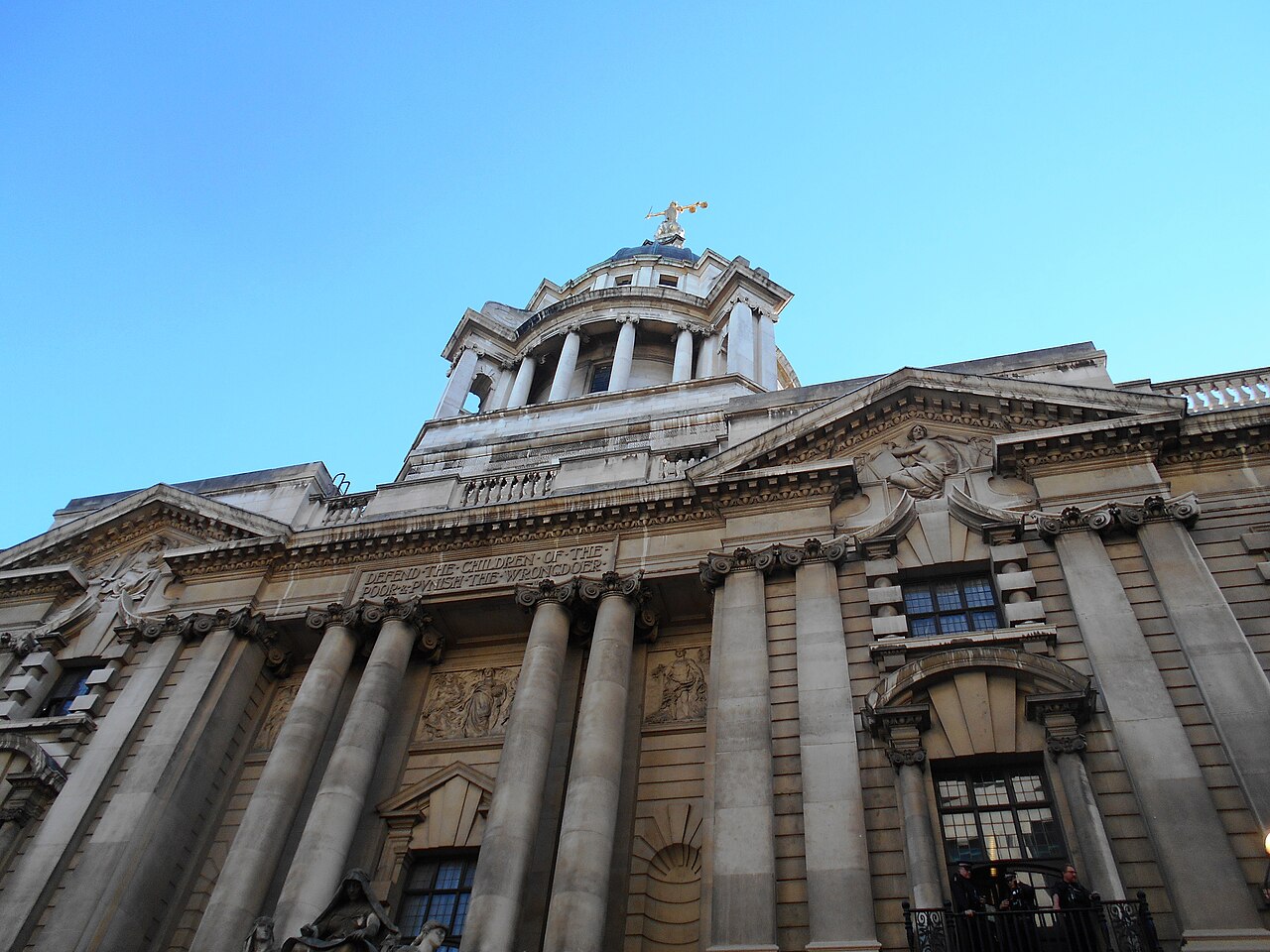
Image The Central Criminal Court, Old Bailey by Bill Henderson, CC BY-SA 2.0, via Wikimedia Commons










What can be said about Trump’s renewed hostilities against the Iran regime? The Americans have been bombing some targets for the second and even the third time. Despite this, the IRGC have been able to attack numerous US bases in the region, including in Saudi Arabia, Kuwait, Jordan, Iraq, Bahrain and UAE. Sadly, yet again, American service people have lost their lives.
The problem opsec and Trump’s mouth. He just cannot keep it shut when it comes to making threats against Iran. Almost every military option is telegraphed in advance, which gives the IRGC time to move their assets, disguise them, put in place decoys etc
Yesterday, it came to light that they have successfully managed to strike secret CIA bases in the region with precision missiles. The targeting information can only have come from Trump’s chum, the war criminal Putin and his Russian intelligence services. Reuters and other media have reported — and U.S. officials have acknowledged — that Russia has provided targeting and other support for Iran in its strikes on U.S. targets in the Gulf region
But it’s OK. Yesterday Rubio had a meeting with his foul-mouthed counterpart, the Russian Lavrov, who took the opportunity to reiterate Russian maximalist demands for the capitulation of Ukraine. Lavrov complained that the Americans were not complying with an “agreement” that was reached with Trump at his Alaska summit with Putin last year
Maybe it’s time that one of Hegseth’s Pentagon leakers told us what was agreed.
Oh look the bots back.
Hows Tehran this time of year?