

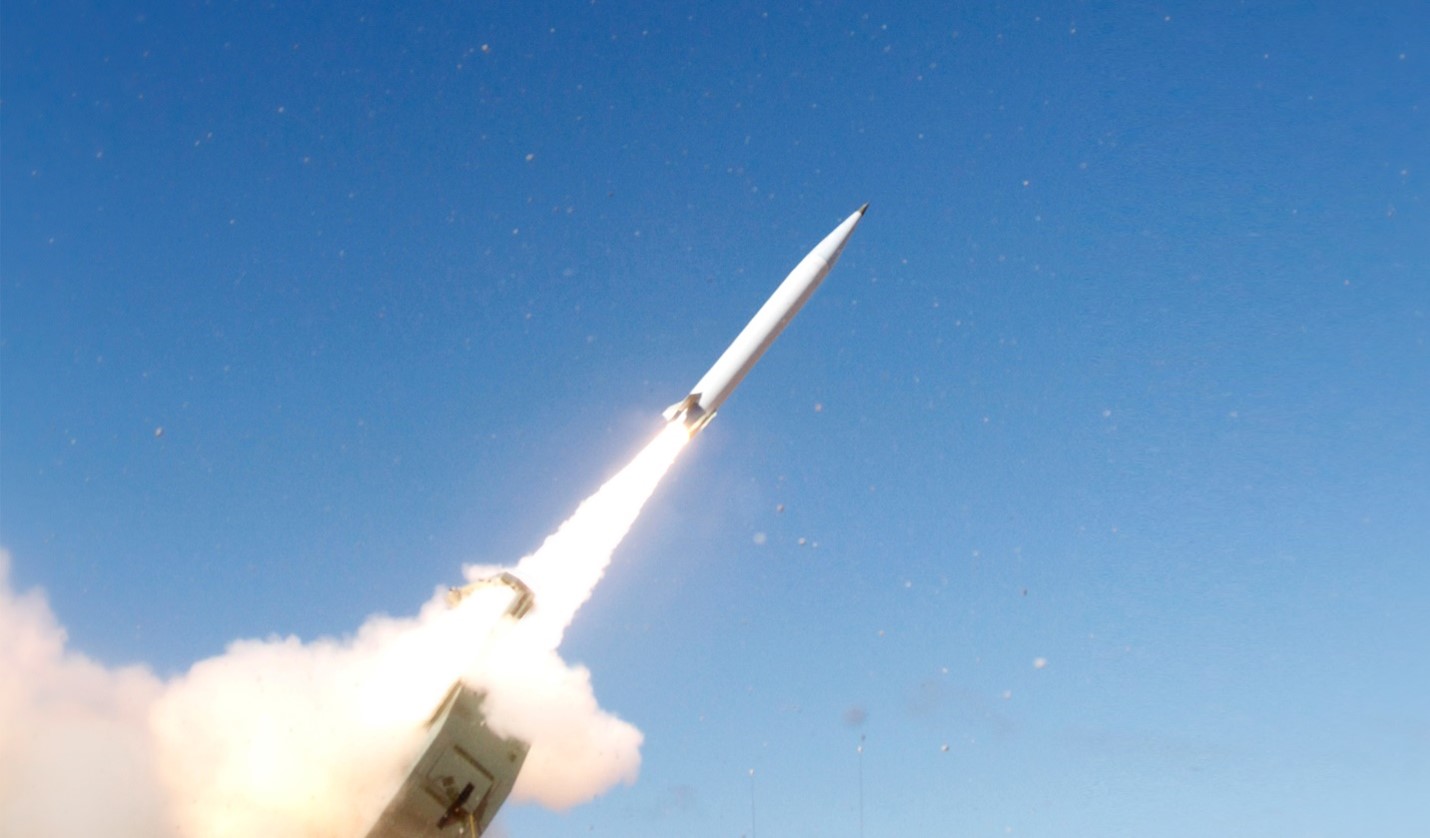
The United States Army has used up much of its stockpile of long-range precision missiles during the five-month war with Iran, according to an exclusive report by Reuters, raising questions about readiness for future conflicts.
Reuters, citing three people familiar with the data, reported that the weapons concerned are principally the Army’s surface-to-surface systems, the Army Tactical Missile System and the newer Precision Strike Missile. Two of the news agency’s sources said the United States has used “virtually all” of these weapons.
The agency reported that the extent to which the US military is running out of ATACMS and Precision Strike Missiles had not previously been made public, and that its sources declined to say how many of each munition remain.
According to the Reuters report, the three people familiar with the matter expressed concern that falling missile supplies could limit the American ability to deter adversaries including Russia and China, with the war having run considerably longer than President Donald Trump anticipated when he launched it jointly with Israel in February.
The munitions in question allow accurate strikes from beyond the reach of most defensive systems. ATACMS is the long-serving surface-to-surface ballistic missile fired from the tracked M270 rocket artillery family and the wheeled HIMARS launcher, with variants reaching around 300 kilometres. US-supplied ATACMS have played a significant role in the war in Ukraine, enabling Ukrainian forces to strike targets well behind Russian lines and, after restrictions were eased, inside Russia itself.
The Precision Strike Missile is its intended replacement, developed by Lockheed Martin and offering greater range alongside a smaller diameter that allows two rounds per launcher pod rather than one. Early increments entered fielding in recent years, with successive versions intended to extend range further and add a seeker capable of engaging moving targets at sea.
Reuters noted that analysts consider such weapons, which cost over $1 million each, would also be important in any conflict with China.
Stockpile depth has been a recurring concern across Western arsenals since the start of the war in Ukraine, with production rates for guided munitions consistently identified as a constraint on both sustaining allies and holding reserves for a major conflict. The issue has driven investment on both sides of the Atlantic, including the recent British commitment to build new energetics and munitions factories and American efforts to expand precision-guided munitions production, among them a seven-year framework agreement with BAE Systems to quadruple output of the infrared seeker for the THAAD interceptor.
The Ministry of Defence has separately warned in general terms about the pressures a protracted conflict places on munitions holdings, and the UK’s Defence Investment Plan allocated £11.1 billion for munitions and weapons, which the department said would increase stockpiles and ensure the Armed Forces have the right mix of capabilities.
The full Reuters report can be read here.











One thing both the Ukraine war and now the Iran war has remained the world, is just how incorrect the western warfighting paridgm has been for a long time.
What was an essentially reasonable conclusion made during the Cold War that a peer on peer war with the USSR would be short.. morphed into the unreasonable conclusion that all peer wars would be short, with every bit of evidence proving this wrong. The Cold War assumption of the short war was never based on victory it was based on mutual assured destruction from nuclear fire, the war would end in a short timeframe or everyone would die.. this was essentially made because of two very specific geopolitical realities and assumptions 1) west Germany was not a deep country and Russia has greater weight of manoeuvre forces, the assumption was always the NATO armies in west Germany would die and that at some point within weeks Russia would hit the french boarder, 2) The moment the USSR massed on the French boarder France would launch a sub strategic nuclear attack, this would be a last desperate declaration before the west pressed the everyone dies button. So essentially the wests warfighting paradigm moved to the idea of the short all out conflict. Essentially it ended quick or everyone ended.
Post the collapse of the wall and the end of history, that western paradigm warped into a we will only fight short wars because we are simply overwhelmingly powerful and any nation we fight will collapse within weeks..
His was re enforced by quick tactical victories in the two Iraq wars and Afghanistan… then reality hit, winning battles does not win wars only strategic depth in men, materials, industrial capacity and most importantly political will to fight..only these win strategic “ war winning victories”.
Ukraine and Iran have hammered that further. A large millitary power can expend almost its entire arsenal on a smaller nation and if that small nation has the will to fight it will stick two fingers up and go fuck you it’s a flesh wound.. we forget that the allies dropped 2.7 million metric tons of high explosives on the third Reich and it still went “ fuck you” and kept fighting until 14 million allies soldiers had died in combat…
A modern nation state can take an immense amount of damage if it’s willing to suffer the millions dead..
I don’t think it’s down to military doctrine alone.
The WW2 generation were tough, determined, and patriotic, and could endure long attritional war as they thought the sacrifices made were for the ‘greater good’
News and media generally rallied to the national effort without question. The Government heavily censored dissent.
No empathy given, or effort made to gain insight into your opponent’s suffering
Subsequent generations in the West have little or no tolerance for long conflicts.
International media and press often question the motive for war, empathise, or appear to side with the opponent. This can have a huge influence on
public opinion.
To fight a long war of attrition you need: Big military industrial capacity, a strong economy, and fiscal reserves as well as public support for it
It is easier fro autocratic regime such as Iran to fight a long war, because public and international opinon/events have no effect on their leaders/politicians.
They can spend money on what they need to fight a war without question or contradiction.
This illustrates the futility of relying on complex and expensive but limited systems, without the necessary resupply capability. We have got too used to low level asymmetric ‘police’ actions and failed to put in place the means of maintaining sufficient stocks for the biggest potential threat of a peer level warfare. The lessons of the Ukraine and perhaps a looming China v Taiwan conflict have laid bare our inadequate capacity. And now Nigel Farage’s Reform Ltd is suggesting we use the precious few Naval assets that could be put to sea as Channel patrol vessels!
Exsquite systems that cost $5-10 Million a pop doing a job a good enough $500k – $1 Million missile can do 99% as well.
Why worry about which window you can fly the missile though when knocking the whole building down achieves the same effect.
There is nothing new about shortages of munitions. In WW1, artillery regularly used up ammunition stocks during preparatory bombardments, the worst being the shell crisis of 1915. What is new is the comparatively shorter shelf life of modern precision munitions. So investing in large stocks of PGMs that become unusable within 20 years.
The obvious lesson is not to start a war until you have built up the stocks you will need.
” within 20 years is potentially a massive waste”