

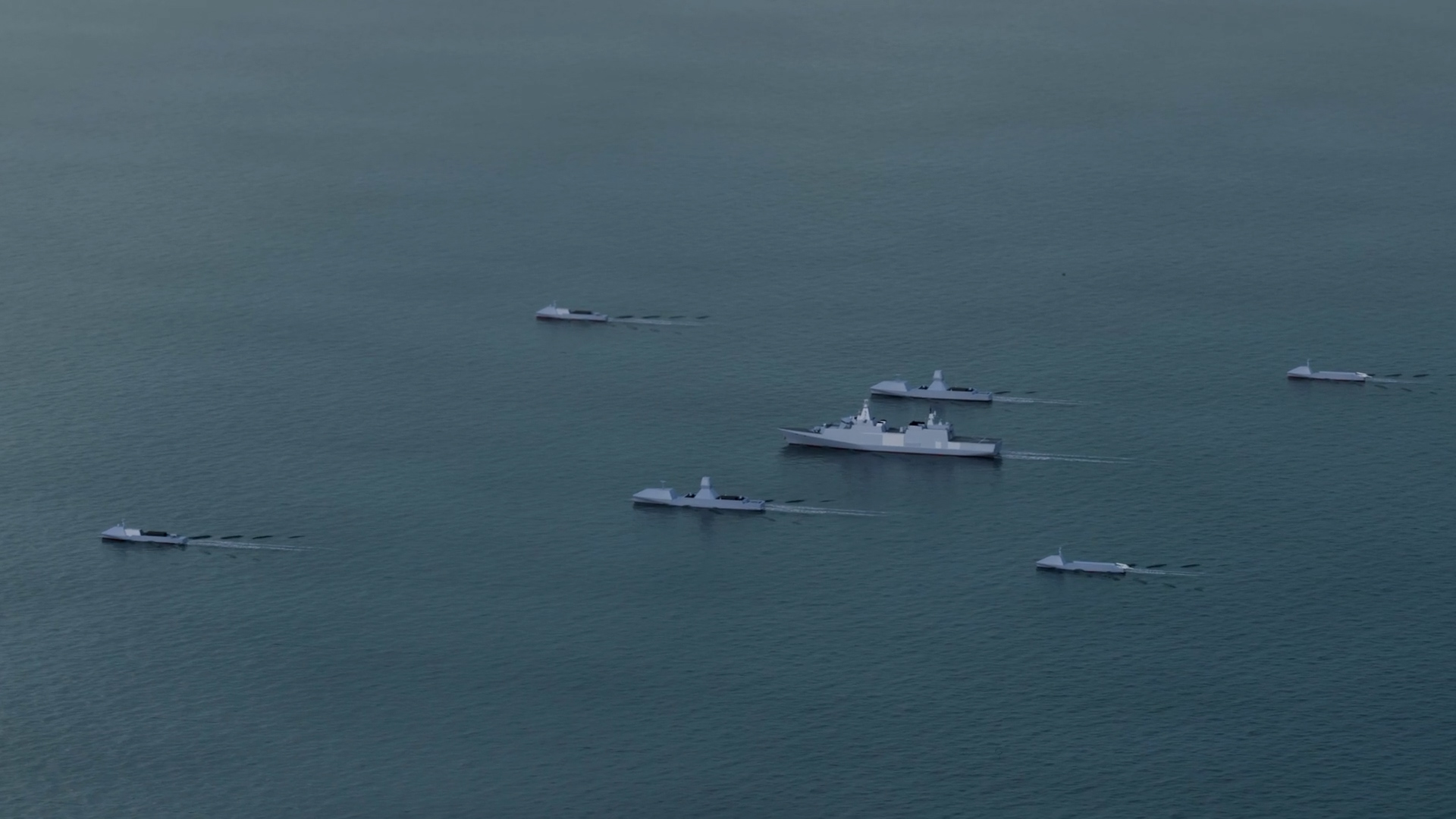
Babcock has signed three agreements with Danish companies covering uncrewed systems and modular mission equipment, work aimed at a Danish fleet in which crewed ships and autonomous systems operate together, the company stated.
The memoranda of understanding were signed this week at DALO Industry Days, the Danish Defence Acquisition and Logistics Organisation’s annual industry event.
Two are with technology companies STORMBORN and CUBEDIN, examining future hybrid naval capabilities and the integration of autonomous systems. The third is with SH Group, exploring collaboration on ship and naval platform systems, which Babcock says is intended to strengthen the joint UK-Denmark offering and maximise Danish involvement in platforms built for and exported from Denmark.
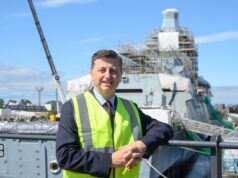
Sir Nick Hine, Babcock’s chief growth officer and a former Second Sea Lord, said: “The relationship between Babcock and Denmark is built on shared maritime heritage, trusted defence cooperation and world-class engineering. The Arrowhead 140 is a powerful example of that partnership, taking the proven Danish Iver Huitfeldt design and developing it into a successful international frigate programme.
“At a time when European security challenges demand closer cooperation between allies, these agreements strengthen an industrial relationship that can deliver capability, jobs and long-term value for both nations.”
The Arrowhead 140 is the design underpinning the Royal Navy’s five Type 31 frigates now being built at Rosyth, and has since been selected by Poland and Indonesia. It began as the Danish Iver Huitfeldt class, so the arrangement returns a British-developed export design to the country that originated it.
Frederik Søndergaard Hansen, founder and chief executive of STORMBORN, said: “Building a Hybrid Navy to combat the threats of today and tomorrow requires innovative solutions, system interoperability and rapid production at scale. STORMBORN’s cooperation with Babcock gives us an opportunity to explore how our uncrewed technology can be integrated in larger naval programmes and create new capabilities for Denmark and our allies.”
Danny Ingemann, chief executive of CUBEDIN, said: “Future naval operations require crewed and uncrewed systems to work closely together. Through this cooperation with Babcock, we will explore how standardised physical and digital interfaces can simplify the integration of mission systems and autonomous capabilities, enabling a more flexible and adaptable fleet.”
Kaare Vang Jensen, chief executive of SH Group, said the agreement marked a significant milestone for SH Defence and reinforced a commitment to modular mission solutions. He said: “We see great potential in partnering with Babcock International Group, whose global reach, engineering excellence, and deep understanding of naval capability align closely with our own ambitions. Together, we look forward to strengthening the supply chain and supporting the Royal Danish Navy with adaptable, future-focused capabilities.”
The thinking behind all three sits with what the Royal Navy calls the Hybrid Navy, crewed warships commanding dispersed, AI-enabled autonomous systems, which the service has committed to as its way ahead. Babcock says the Danish partnerships are intended to help develop and deliver those capabilities alongside the Royal Danish Navy and the wider Danish defence sector.
Denmark has been rearming rapidly. Copenhagen has committed to substantial increases in defence spending, has moved to acquire new surface combatants to replace ageing vessels, and has taken a leading role in Arctic and North Atlantic security as attention has shifted to Greenland and the Faroes.
Both countries are founding NATO members and work together through the alliance, the UK-led Joint Expeditionary Force, support to Ukraine, and security activity in the North Atlantic and Arctic.









Always good to link up with one of our JEF allies, particularly if thet are considering the T31. Also, given the geography maybe joining the new programme?
Sounds good, we should look at doing more with jef Allie’s I just feel we all seem to be on the same page more than others, I’d like to see more jef coming together more with autonomy aswell could come out with some crackin gear.
Looking for the off set agreement for T31 build.