

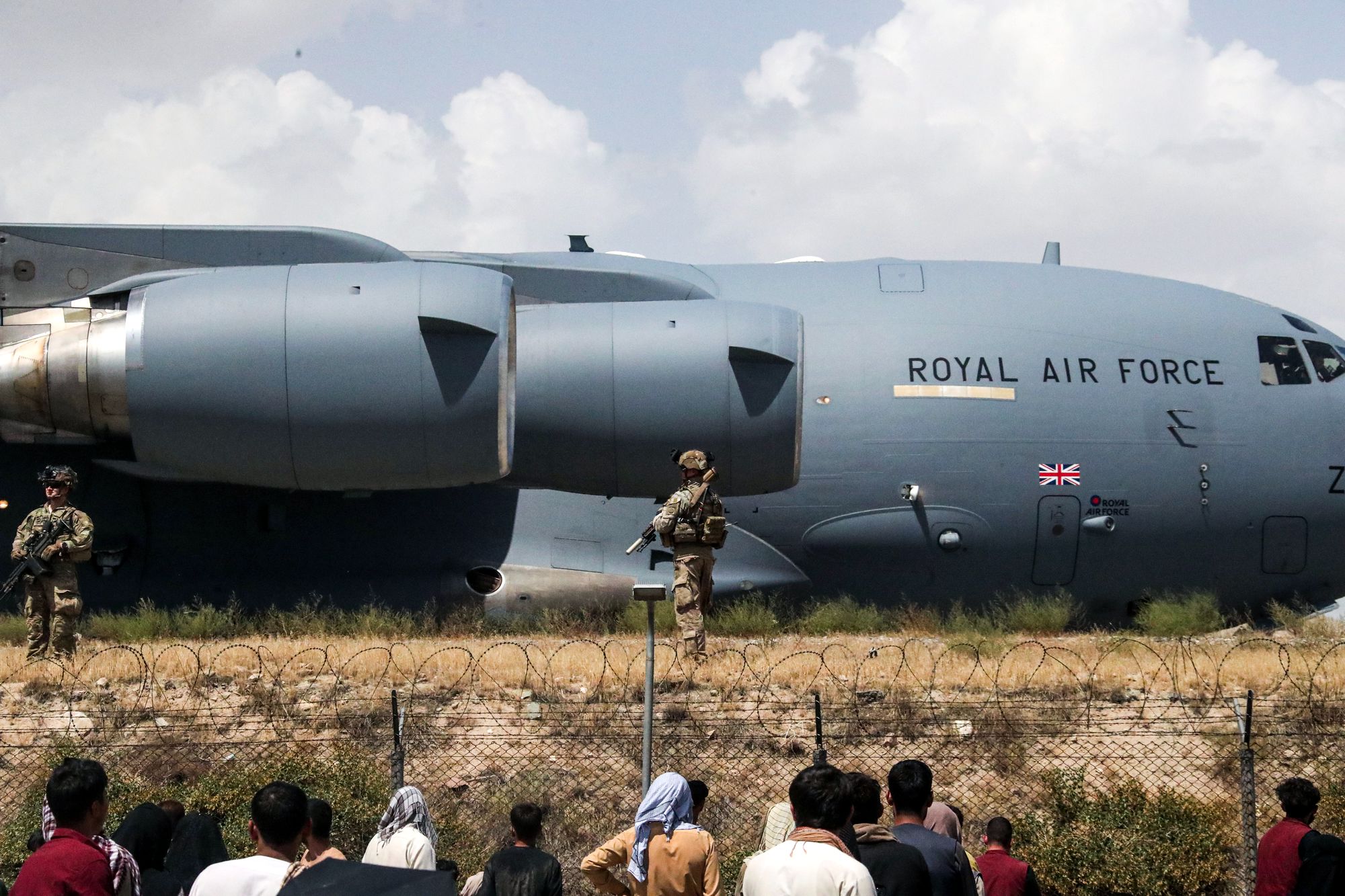
General David Petraeus has said the United States and its allies did not need to withdraw from Afghanistan when they did, arguing that the Western military commitment had reached a sustainable level and that the loss of coalition support helped undermine Afghan forces, the UK Defence Journal understands.
Petraeus, who commanded NATO and US forces in Afghanistan before later serving as Director of the CIA, made the comments during the Lord Speaker’s Lecture at the House of Lords on 1 September. He rejected the argument that the length of the conflict itself meant involvement had to end, saying the relevant question was whether the continuing human and financial cost remained proportionate to the interests involved.
He said: “And here, allow me an aside to observe that I do not believe we had to leave Afghanistan when we did. Nor do I believe we should have done so.”
Petraeus continued: “For years I disagreed with the increasingly fashionable argument that we simply had to ‘end endless wars.’ That formulation asks the wrong question. The issue is not how long a conflict has lasted. It is whether the commitment required to sustain it remains proportionate to the interests being protected and the costs being borne.”
He contrasted Afghanistan with Vietnam, which he said had become unsustainable in terms of lives and expenditure. Afghanistan, he argued, had by 2020 reached a comparatively modest level of Western involvement.
Petraeus said: “We obviously have to end wars that are not sustainable. But sustainability should be measured principally by the expenditure of our blood and our treasure. Vietnam, by those metrics, clearly became unsustainable. By contrast, the effort in Afghanistan by 2020 had become sustainable at a relatively modest level.”
He cited approximately 2,500 American troops and 8,500 coalition personnel remaining by the time of the final withdrawal and said Western forces were no longer engaged in front-line combat. Their principal role, according to Petraeus, was advising and assisting Afghan forces and providing capabilities which those forces could not yet supply themselves.
He said: “The Taliban controlled no major population centers, and our forces were no longer engaged in front-line combat. Their principal role was to advise, assist, and enable Afghan partners and provide capabilities the Afghan security forces had not yet developed for themselves.”
Petraeus also criticised the requirement for the Afghan government to release Taliban prisoners during the process leading to the withdrawal. He said: “Nor should we have required the Afghan government to release some 5,500 Taliban detainees merely to secure from our adversary an agreement confirming what it already wanted us to do—to leave.”
A central part of his argument concerned the withdrawal of civilian contractors alongside military personnel. Petraeus said more than 15,000 Western contractors departed, removing specialist support required to maintain American-supplied Afghan aircraft and helicopters.
He said: “The consequences of withdrawal should have been foreseeable. It removed not only American and coalition forces, but also more than 15,000 Western contractors who were indispensable to maintaining the sophisticated American aircraft and helicopters we had provided the Afghan forces.”
Those aircraft had provided mobility for around 35,000 Afghan commandos who were used to reinforce conventional forces facing Taliban attacks around the country. Petraeus argued that the disappearance of aviation maintenance support consequently affected the ability of those commandos to move rapidly between areas of fighting.
He said: “As that maintenance capacity disappeared, so did the mobility upon which some 35,000 exceptionally capable Afghan commandos depended to respond to attacks around the country.”
Petraeus continued: “Without that air mobility, those commandos could no longer reinforce front lines held by much less capable conventional soldiers and police. The essence of the Afghan strategy was therefore fatally undermined—and once that capability eroded, the collapse accelerated.”
He used Afghanistan to make a wider point about how military capability should be assessed, arguing that personnel and equipment numbers alone provide an incomplete measure of combat effectiveness.
Petraeus said: “Military effectiveness cannot be measured simply by counting soldiers, aircraft, ships, or weapons. It depends upon the institutions, logistics, intelligence, technology, industrial capacity, and professional relationships that enable those capabilities to function.”







Just goes to show how important NATO members were in Afghanistan, outnumbering US force 4 to 1 in the end.
All that sacrifice simply to be mocked by a man who dodged the draft.
Can anyone imagine a British Prime Minister or French President mocking the sacrifice of American GI’s in WW2 coming to our aid.
America should be ashamed of itself.
Not really fair to compare overall forces. The US commitment was it’s air assets both offensive and survalliance, something the rest of NATO struggles to provide, plus intel overall. But agreed other nations involvment is brushed over by the US.
Well it may be controversial but he is correct! We had drawn down front line combat roles, had a large number of Afghan specialists doing jobs they could not have done 5 years before and the Taliban were generally disliked and not trusted by the people! However as always the withdrawal was lead by western politics and political expediency, in order to feather certain self interests by politicians.
The question we will never know the answer to, is would the Afghan government still have failed if the US/nato hasn’t left. Had their draw down in forces meant that it was going to happen just a matter of time, or was their presence preventing it.
We will never know, but as someone who went there in uniform a number of times during the 2001-2010 period, and after 2010 in civvies, the country was a vast improvement in both life and decency. However as I’ve alluded to many times we cannot force our so called western values on countries that in reality don’t want them, or want a bastard version which includes the dominance of a religion. Either way, it’s done now and we have to go along with the choices made 👍
As I recall the withdrawal of US forces was first considered by President Biden. In February 2020, the first Trump administration and the Taliban signed a deal in Doha, Qatar, stipulating fighting restrictions for both the US and the Taliban, and in return for the Taliban’s counter-terrorism commitments, provided for the withdrawal of all NATO forces from Afghanistan by 1 May 2021. Thus Trump deigned to speak for NATO which was probably ‘news’ to NATO HQ.
There seemingly was little to no consultation with US military chiefs, let alone allies of the Coalition. Apparently many senior US officers considered that the Afghan forces needed more time to fully assume security roles in their country. Given that is was a NATO operation, HQ NATO should have planned and implemented this. The US set a date, an arbitrary date, and all other nations were obliged to conform to the timings, as the collectiv emission would not be credible with a sudden egress of US forces.
General Petraeus rather confirms this. Apparently the withdrawal of US forces was chaotic and reminiscent of leaving Saigon in 1975. USAF did not even tell the Afghan base commander at their Bagran AFB, let alone plan withdrawal jointly with him. He arrived for work one day to find the Americans gone and most of their kit left behind.
The final pullout was delayed until late August 2021.