

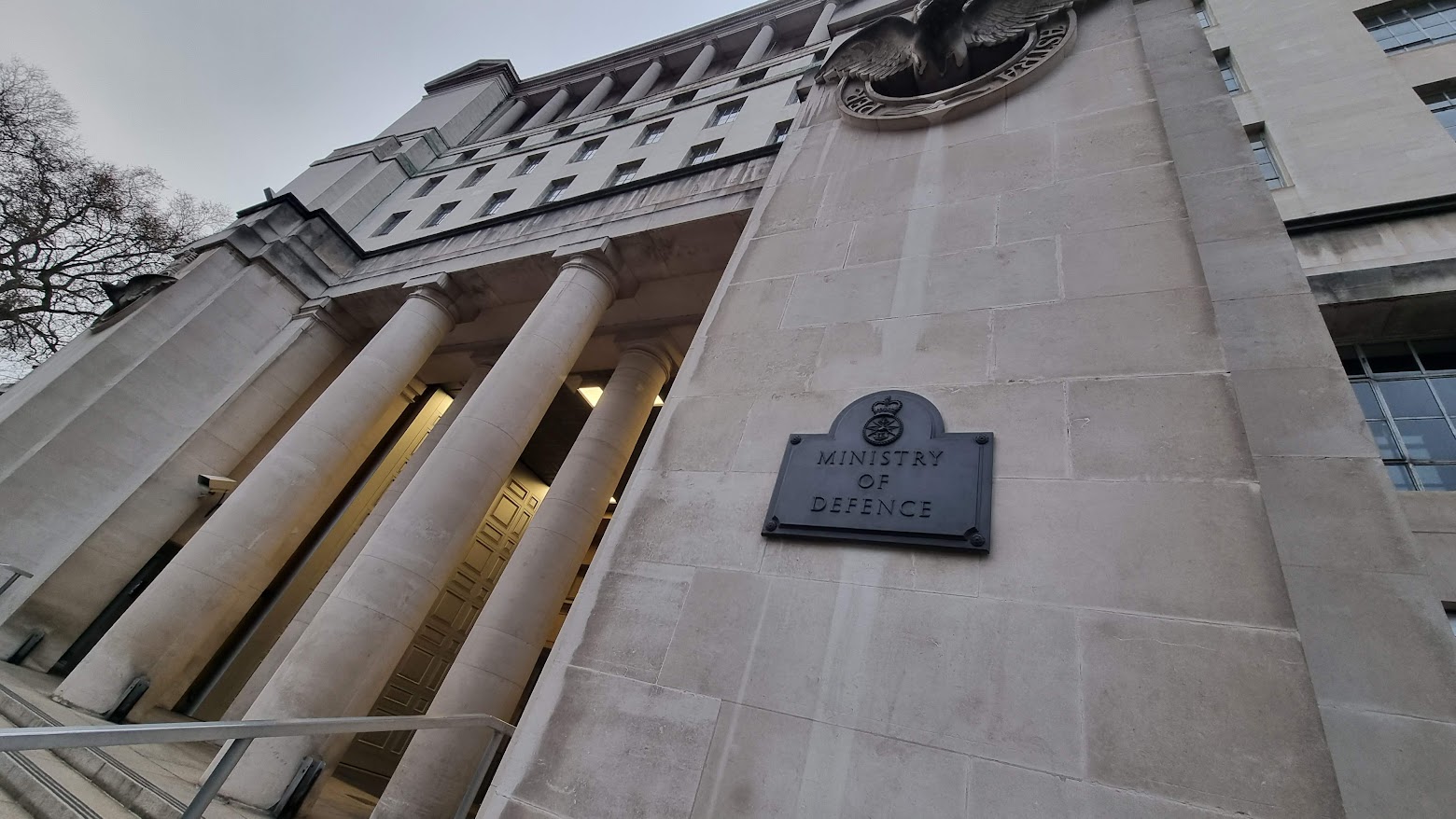
The Ministry of Defence has set a target of reducing the average time to first contract for major platforms such as tanks, frigates and aircraft from six years to two, alongside faster targets for upgrades and uncrewed systems, according to a written answer published this week.
Luke Pollard, Minister of State for Defence Readiness and Industry, was responding to Stuart Anderson, the Conservative MP for South Shropshire, who had asked about the planned reforms set out at paragraph 27 on page 64 of the Defence Investment Plan.
Mr Pollard said the National Armaments Director Group launched a segmented approach to procurement on 1 April 2026, tailoring acquisition routes to the type of capability, the supplier and the level of risk.
Three segments have been established, the Minister says. Major platforms, covering tanks, frigates and aircraft, carry the target of moving from six years to two. Pace-setting modular upgrades, covering communications, sensors and weapons improvements, are to come down from three years to one. Rapid commercial exploitation, which the answer illustrates with uncrewed systems, carries a target of three-month acquisition cycles.
On the commercial machinery behind that, Mr Pollard said: “These reforms are supported by the Accelerating Commercial Pathways (ACP) programme, which aims to improve the Ministry of Defence’s ability to harness flexibilities in the commercial process and ensure that commercial approaches are tailored to the needs of individual procurements, including through the use of flexibilities provided by the Procurement Act 2023. The programme has launched six Commercial Pathways and, since March 2025, over 300 procurements have self-selected one or more pathways.”
What the targets mean
Time to first contract measures the period between a requirement being identified and a supplier being placed under contract to deliver it, which is the stage before any metal is cut and where a great deal of British procurement time has historically been consumed.
The three-month target for uncrewed systems is the one that departs furthest from existing practice, and it reflects a problem the war in Ukraine has made unavoidable, where the useful life of a small drone design is measured in months before countermeasures catch up.
The segmented approach is the same framework that appeared in a market engagement notice published on 18 August, which set out a £1.9 billion requirement running from 2028 to 2037 and described the department as considering multi-supplier frameworks alongside individual contracts, with details of the competition promised no later than the first quarter of 2027.
The National Armaments Director Group was established on 1 April 2025 as one of the four groups now making up the Ministry of Defence, bringing together Defence Equipment and Support, the Defence Infrastructure Organisation, the Defence Science and Technology Laboratory, Defence Digital and the commercial, international collaboration and exports functions.
Rupert Pearce took over as National Armaments Director on a five-year fixed-term contract from October 2025.
The Procurement Act 2023 introduced the notice structure and the competitive flexible procedure now used across British public contracting, replacing the previous set of public contracts regulations, and the flexibilities Mr Pollard refers to include the ability to design a procedure around a particular requirement rather than following a fixed process.










Let’s be frank about why the Ukraine war has dragged on so long. Four and a half years now. The casualties on both sides have reached levels not seen since WW1. British intelligence estimates of Russian losses place total Russian military casualties between 1.3 million and 1.45 million, including approx 480,000 fatalities.
When the war began Biden was obsessed that any American actions could be considered “escalatory”. Biden was clearly terrified of the frequent Russian threats to launch a nuclear attack on NATO, should he provide Ukraine with sufficient lethal aid to enable them to throw the war criminal Putin’s conscript army back
Enter Trump. Trump and Zelenskyy have history going back to a formal 30-minute phone call Trump made with Ukrainian President Volodymyr Zelenskyy on July 25, 2019. Trump demanded that Zelenskyy dig up dirt on Biden and Biden’s son Hunter to help his election campaign.
The conversation occurred while Trump was withholding roughly $400 million in congressionally approved military aid to Ukraine. Details of the exchange surfaced two months later through a whistleblower complaint, which sparked Trump’s first congressional impeachment inquiry. Zelenskyy declined and Trump was impeached. For the first time
Since then, Trump has stopped all military and financial aid to Ukraine, while providing $billions and $billions of aid to Israel and the devious Netanyahu. His latest intervention was to deny Ukraine the intellectual property to produce their own Patriot missiles, after previously agreeing to do so. This has extended to instructing the very odd Pete Hesketh to divert Ukraine lethal weaponry – already paid for by the EU – to his failed Iran campaign
Trump, the Vietnam war draft dodger, has frequent “very good” telephone conversations with his “good friend” the war criminal Putin. He has sent envoys to Moscow no less than 8 times, while bravely refusing to visit Kyiv himself to see the damage his anti-Ukraine policies have done. He has repeatedly threatened to leave NATO and is currently “reviewing” American force levels in Europe. None of this benefits anybody except Putin.
Trump has alienated America’s NATO allies, making threats to annex Canada and Greenland. Trump has destroyed the “special relationship” between America and Britain with his threat to support Argentina over the Falklands. The Five Eyes intelligence sharing network has been seriously damaged.
Trump is being completely outplayed by Putin. The question has to be asked, what is the hold that Putin has over Trump? Trump is behaving exactly as you would expect a Russian asset to behave and indeed, many Americans are waking up to the fact that their president may be actively working against American interests.
If the budget is there, two years seems too long. If the budget is not there, two years seems too short. Good luck anyway. It’s going to be hard to manage an average time target if multiple people are responsible for the different elements, but at least the timescale has shortened towards the average length of time responsible people stay in post. I hope this is averaging over major projects only, as it’s always faster to make decisions on smaller projects because the procedures are less burdensome.
‘“These reforms are supported by the Accelerating Commercial Pathways (ACP) programme, …’
It has it’s own acronym. Fatal. Just speak plain English and mean what you say.
🥱
April 1st arrived early🤔