Northrop Grumman has signed new agreements with companies in Estonia and expanded cooperation with Polish industry as it pushes its air and missile defence, weapons and surveillance systems further into Central and Eastern Europe, according to the company.
The agreements were announced during the MSPO defence exhibition in Kielce, Poland, and cover work ranging from Integrated Battle Command System integration and sustainment to medium-calibre weapons production and airborne surveillance.
In Estonia, Northrop Grumman has signed memorandums of understanding with Go Craft and DefSecIntel. Go Craft will work on defence system integration, while DefSecIntel will support specialised mast fabrication and production linked to systems including the Integrated Battle Command System, or IBCS.
IBCS is already operational with the US Army and Poland and is being positioned by Northrop Grumman as a wider European command-and-control solution for integrated air and missile defence. The system is designed to combine information from different sensors and connect them with available weapons through a common battle-management architecture, allowing commanders to select what Northrop Grumman describes as the “best shooter” for a particular threat rather than tying individual sensors to individual interceptors.
Ben Davies, corporate vice president and president of Defence Systems at Northrop Grumman, said: “Central and Eastern Europe is at the forefront of efforts to strengthen NATO’s collective defence posture. By deepening our collaboration with local industry and aligning our advanced, modernised capabilities with the needs of regional allies, we are helping to build a more integrated, resilient and effective defence architecture across domains.”
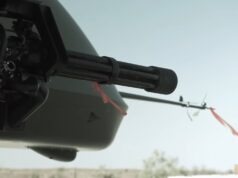
The company is also expanding cooperation in Poland around its Bushmaster family of Chain Guns.
Northrop Grumman said it was deepening work with Polish vehicle manufacturer Huta Stalowa Wola on technology transfer, service and support for Bushmaster cannons, which are already fitted to Polish Rosomak and Borsuk armoured vehicles.
The aim is to increase European support and production capacity for the weapons as demand for medium-calibre firepower grows across NATO.