US Marines have operated two separate expeditionary advanced bases at the same time, combining coastal surveillance, drones, command and control and forward aircraft refuelling during training off California, according to the US Marine Corps.
The 13th Marine Expeditionary Unit carried out the training while operating with the Makin Island Amphibious Ready Group in the US 3rd Fleet area, testing how dispersed Marine forces can sense activity at sea, direct operations ashore and sustain aircraft without concentrating those functions in one location.
At one site, Marines established what the service describes as a sensing expeditionary advanced base, using coastal surveillance radars, electronic sensors and small uncrewed aircraft to extend awareness beyond the sensors already operating aboard naval ships offshore. When the shore-based systems detected vessels in nearby sea lanes, drone operators launched small uncrewed aircraft to identify and track the contacts visually. Sensor information and imagery were then transmitted across the Navy-Marine Corps command network to commanders elsewhere in the force.
Sgt Javier Guzman Granados, an sUAS operator with Battalion Landing Team 2/4, said: “We pull those grids, capture the imagery, and send that critical data directly back to the MEU commander.”
The push is on moving information quickly enough for commanders to act before a maritime contact has moved beyond the area being watched. Miles away, the Marines established a second expeditionary advanced base containing a forward command-and-control element and a Forward Arming and Refuelling Point, or FARP.
The command node linked the two shore positions with the MEU’s afloat operations centre and aircraft operating overhead, while aviation personnel at the adjacent FARP maintained fuel and ordnance support for aircraft.
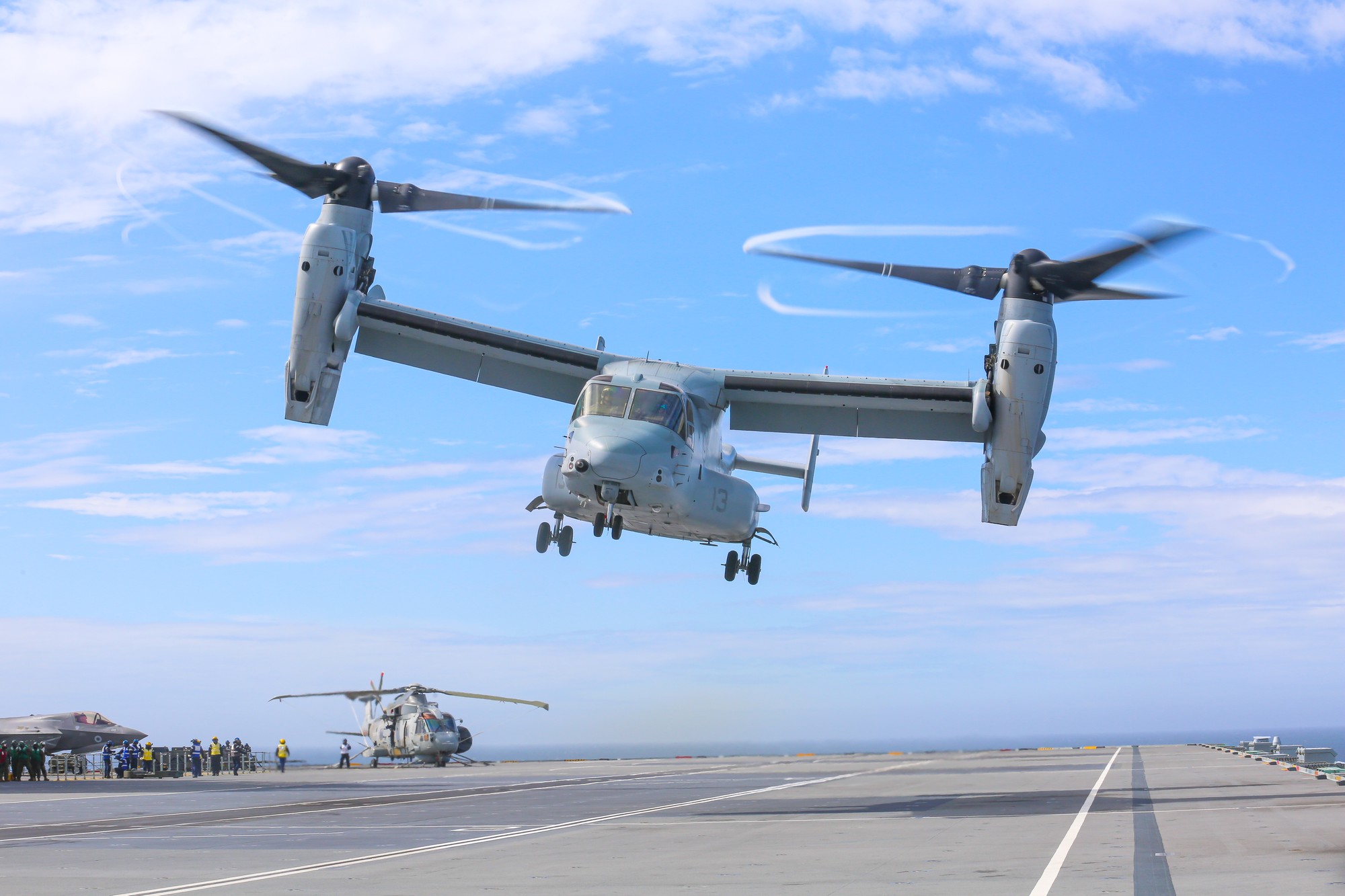
Sgt Cody Quittner, a bulk fuel specialist with Marine Medium Tiltrotor Squadron 364, said: “Forward arming and refueling points minimize the time aircraft spend out of the fight and maximize their time in the air.”
He added: “Instead of flying all the way back to the ship or a main base for fuel and ordnance, aircraft come directly to us, rearm, refuel, and immediately return to supporting the infantrymen on the forward line.”
The concept is intended to spread sensors, logistics and command functions across multiple locations rather than concentrate them at a large permanent base. That creates a more complicated logistical problem for the Marines themselves, with transport, security and sustainment resources divided between separate positions, but also makes the force less dependent on a single site.
Quittner said: “One of the major takeaways from this training evolution is the sheer number of moving parts required to establish a site and deliver that capability.”
The expeditionary advanced base concept has become increasingly important to Marine Corps planning in the Pacific, where relatively small forces are expected to operate from dispersed coastal positions while remaining connected to ships, aircraft and wider joint forces. The sensing base demonstrated during the exercise effectively pushed the fleet’s surveillance network ashore, while the second position provided command facilities and the ability to keep aircraft operating from a forward location.
First Lt Joseph Nameth, a platoon commander with Battalion Landing Team 2/4, said: “Connecting the land and sea is where the Marine Corps makes our money.”
He added: “Flexibility is the biggest advantage to what we provide.”
The exercise was designed to show that the MEU could operate both types of position simultaneously while maintaining communications with commanders aboard ships operating miles away.