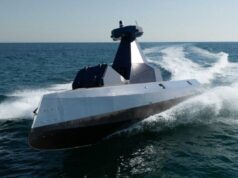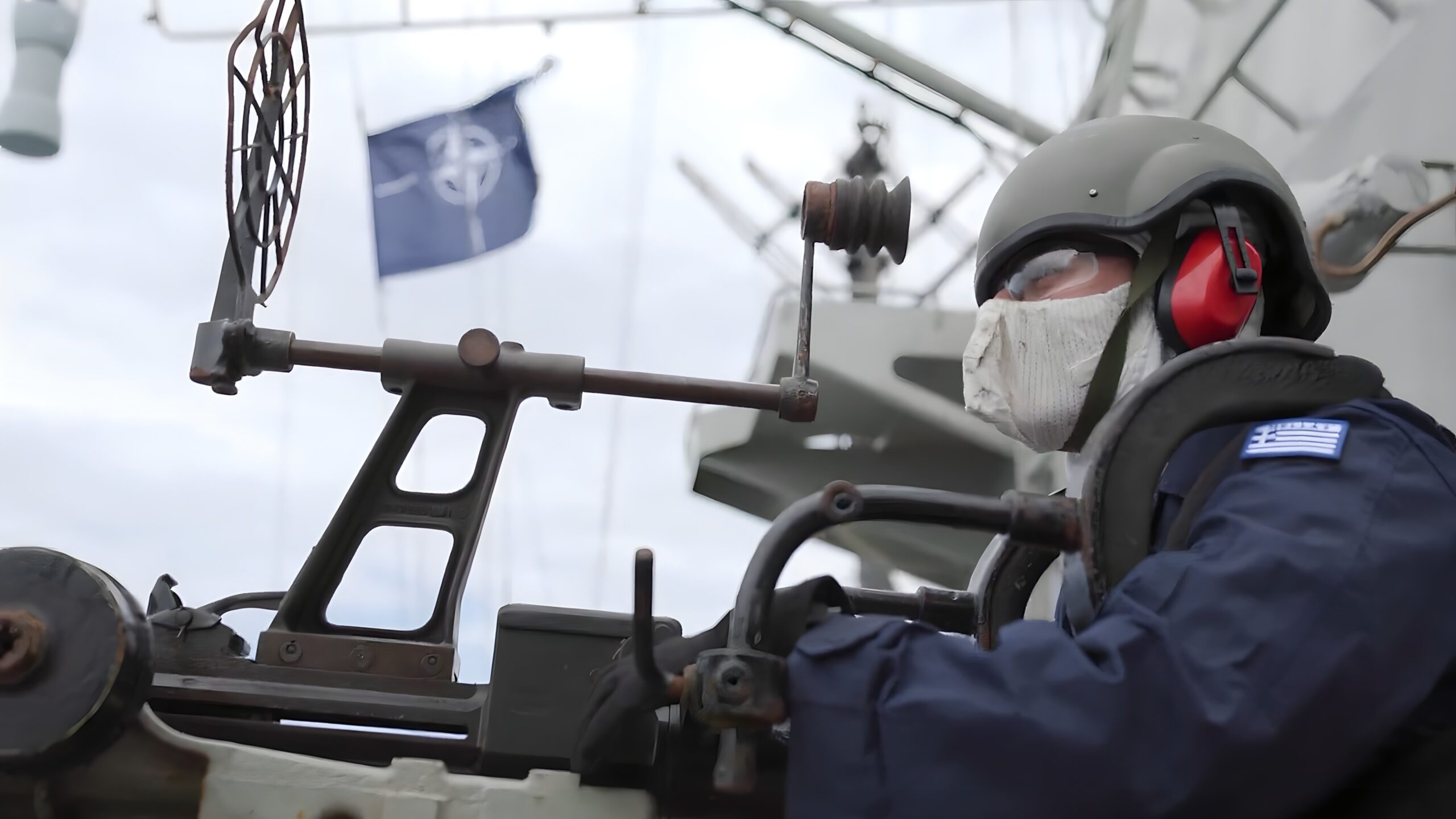
A small uncrewed boat is now capable of inflicting serious damage on a warship, and NATO’s Mediterranean task group has been retraining its air defences to deal with drones as well as aircraft, the commander of Standing NATO Maritime Group Two has said.
Commodore Georgios Kypriotis of the Hellenic Navy, speaking in an interview released alongside the conclusion of Exercise Dynamic Guard 26-2, set out how quickly the picture has moved. “In the latest years we have seen that the unmanned, the big drones or even USVs, is an emerging threat, but we are preparing also to defend ourselves against such threats,” he said.
“Dynamic Guard is a very specific example of that. We are training to defend ourselves against the UAS, and as a matter of fact, during the first day of the exercise we showed the ability to transfer our air defence capability against jets to defence capability against drones.”
What has changed, in his account, is what a cheap hull can now do to an expensive one. “Now, with a small USV, you can accomplish a significant hit to your enemy, and this is something different,” the commodore said. “That’s why we keep training ourselves in that perspective.”
He described the group as teaching itself a new way of fighting, and said of its progress: “I am pretty sure, I’m confident that we are doing very well.”
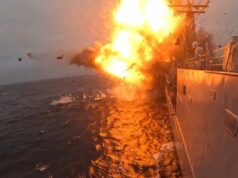
Dynamic Guard is the alliance’s premier live exercise for electronic warfare and anti-ship missile defence, and this iteration was the first to incorporate counter-drone warfare alongside the two. The five-day event began on 21 September and concluded at Taranto in southern Italy, drawing in warships, aircraft and electronic warfare specialists from across the alliance.
Crews practised the full defensive sequence, from early detection and tracking through to coordinated responses using both soft-kill and hard-kill counter-uncrewed systems techniques, alongside electronic warfare and anti-ship missile defence procedures. The training tested how ships share information, coordinate their defensive actions and adapt when communications or sensors are disrupted, with simulated threats covering communications jamming, radar jamming, anti-ship missile attack and uncrewed aircraft.
In his formal statement on the exercise, Kypriotis said: “Exercise Dynamic Guard represents a vital opportunity for our units to rigorously test and refine their electronic warfare capabilities, in a highly realistic operational scenario which includes multi-domain threats from drones of any kind, to missiles and fighter jets. It demonstrates that NATO forces are trained and prepared to confront and, in modern naval warfare, controlling and defending the electromagnetic spectrum is crucial. Our multinational forces are fully prepared to train alongside Allied partners, strengthen interoperability, and demonstrate NATO’s collective readiness to deter and defend against any threat.”
Gerald Poppinga, an expert with the NATO Communications and Information Agency’s joint intelligence, surveillance and reconnaissance branch, described the contest as one that never settles. “Electronic warfare is not new. We have a long history of operating in and understanding the electromagnetic spectrum,” he said. “But as we have developed new ways to detect and defeat systems, those systems have also evolved to overcome their vulnerabilities. It is a constant cycle of adaptation. That is why we must continue to train, learn and keep pace with the rapid development of technology.”