

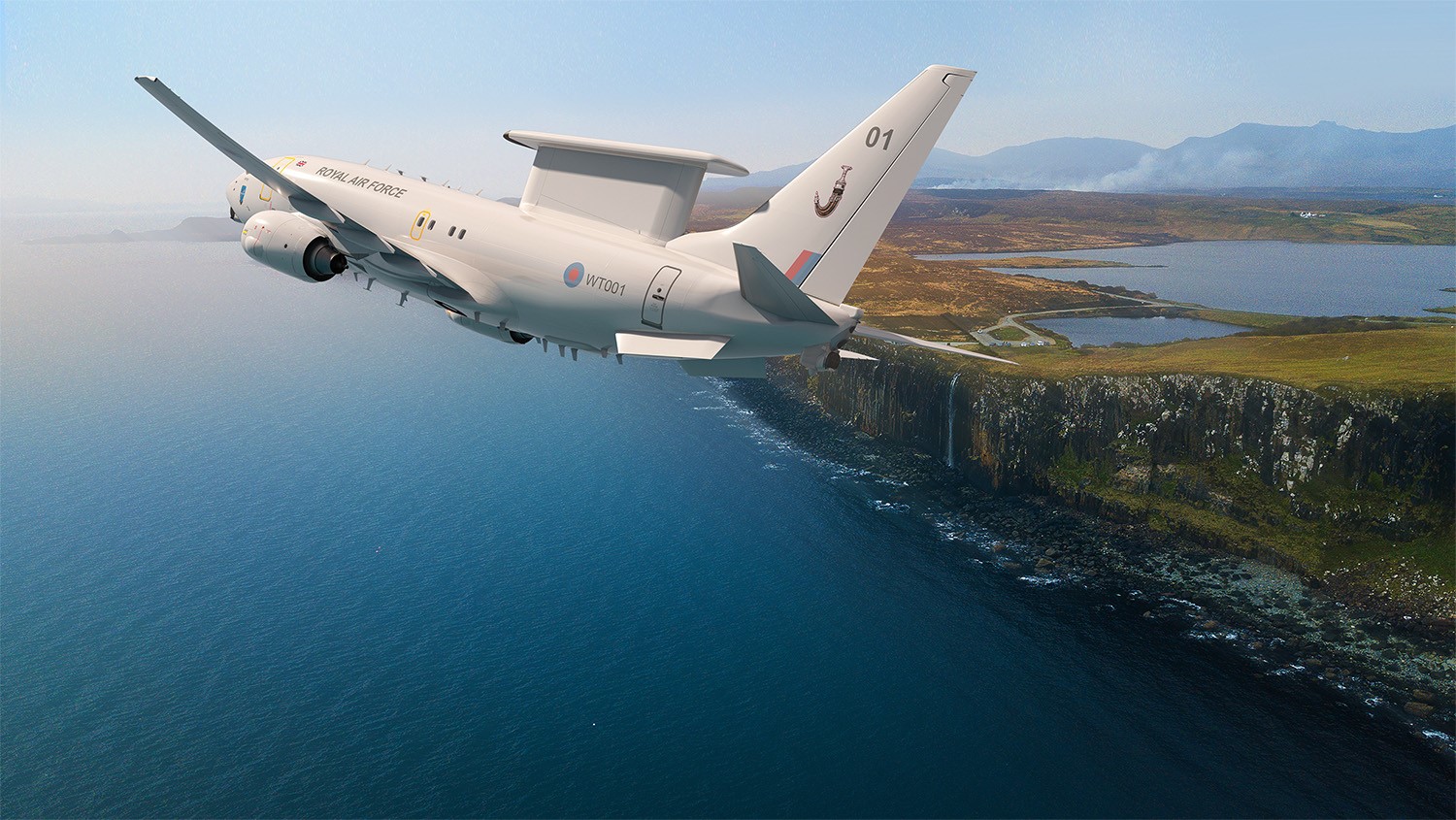
Certain items within the E-7 Wedgetail programme required re-design and consequently re-certification, with further detail on specific military systems and certification activities withheld for reasons of operational security and commercial sensitivity, according to an answer given in Parliament.
Ben Obese-Jecty, the Conservative member for Huntingdon, asked what equipment within the programme has required re-design and what has required re-certification, following an answer given on 8 September.
Defence Minister Luke Pollard said: “The E-7 Wedgetail programme is a complex military aircraft acquisition programme involving the integration and certification of mission systems, communications equipment, aircraft protection systems and airworthiness-related modifications.
“Within the programme life-cycle, certain items required re-design. In accordance with international certification practice, items that are re-designed are required to undergo re-certification. For reasons of operational security and commercial sensitivity, further details on specific military systems or certification activities cannot be disclosed.”
Wedgetail gives Britain its airborne early warning and control capability, carrying the Northrop Grumman Multi-role Electronically Scanned Array radar on a converted Boeing 737 airframe, and it replaces the Sentry fleet retired in 2021. Three aircraft are being delivered against an original plan for five, with the reduction taken in the 2021 defence command paper.
The first aircraft arrived at RAF Lossiemouth in May, where 8 Squadron operates the type, after a conversion and modification programme that ran years beyond its original schedule. Part of the work was done at Birmingham before Boeing took the aircraft back for mission system installation.
Re-design inside a conversion programme usually means something that worked on the drawing board did not survive contact with the airframe, and each change pulls certification back to the start for the affected system. Airworthiness certification for a military aircraft carrying a radar of that size involves structural, electromagnetic and safety cases that interact with one another, so a change in one can force revalidation in another.
The three-aircraft fleet has been the subject of sustained argument, since generating continuous coverage from three airframes with maintenance and training to absorb is difficult, and this publication reported that ministers have signalled support for expanding the fleet. Obsolescence has been raised as a further concern, with components specified early in the programme reaching end of life before the aircraft entered service, which is a common consequence of a long conversion schedule.





I would love to see the RAF get another one or two E-7, but I can see the cost is high. Each of the 3 RAF E-7 will cost £750m each. USAF benefits from the modernisation work for the RAF planes, but even the USAF is being quoted $725m each E-7.
I read that the Australians rate the platform and it has electronic attack and jamming capability as well as ELINT function. Is that Aus specific or would it provide similar roles for us to complement Rivet joint and P8?
For the cost you would hope so .