Britain must address serious military capability gaps in the High North, and should consider whether the British-led Joint Expeditionary Force ought to focus more on threats in the region, particularly if it has to plan for uncertainty over American support for NATO, according to a report by the Defence Committee.
The committee, chaired by Tan Dhesi, the Labour member for Slough, published its findings after an inquiry that took evidence between March and July this year and included visits to Norway, Denmark and Greenland.
Dhesi said: “The High North poses a major strategic challenge for the UK’s security. This is a demanding, hostile environment, and one that our greatest adversary, Russia, is seeking to dominate for military advantage.”
He said: “The UK needs to be willing to address a hard truth: it does not currently have all the capabilities to operate successfully in the High North. Russian submarine and sabotage forces in the High North pose direct risks to the North Atlantic and the UK, including the nuclear deterrent. Despite this, the Ministry of Defence has accepted a serious anti-submarine warfare gap. Publicly available evidence of low availability among destroyers, frigates and attack submarines calls into question whether the UK can meet its commitments in the High North.”
He added: “And if the UK government means what it says – that Russia could attack NATO as soon as 2030 – then work to rectify these vulnerabilities cannot start soon enough.”
The report warns of serious consequences if the region is left inadequately defended. Failure to deter Russia there, particularly from underwater threats, would put subsea data cables and energy pipelines in and around British waters at particular risk during peacetime. In the event of hostilities, failure to counter Russia in the High North would threaten the British population, military and civilian critical national infrastructure including the nuclear deterrent, and Atlantic resupply routes from the United States.
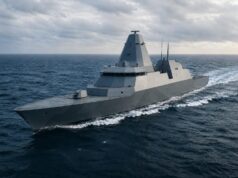
On the capability gaps themselves, the committee sets out that the Royal Navy has a requirement for eight of its thirteen frigates to carry the Sonar 2087 towed array for anti-submarine work and currently holds five, all of them Type 23s. It records eleven frigates and destroyers in service against a requirement for nineteen, and calls for no further towed array-equipped Type 23 to leave service until replaced one-for-one by a Type 26.
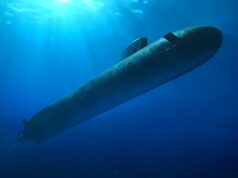
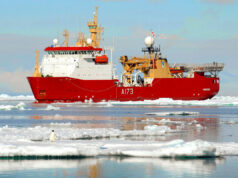
It also finds that Britain has allowed its submarine under-ice capability to lapse just as the region has become strategically more important, leaving it less able to contest Russian freedom of action and at risk of being forced into a more defensive posture.
On the Joint Expeditionary Force, the ten-nation grouping Britain leads alongside the Netherlands and the Baltic and Nordic states, Dhesi said: “Our Defence in the High North inquiry found that the UK-led Joint Expeditionary Force has not yet realised its full potential. Although it was originally conceived as capable of operating across the full spectrum of conflict, and of covering both the High North and Baltic regions, its role has become increasingly focused on countering sub-threshold and hybrid threats.”
He said: “Our report calls for the government to reassess the JEF’s role and consider whether it should focus more on countering threats in the High North, particularly if the UK has to plan for uncertainty over US support for NATO. The UK’s presence in the Baltics, particularly in Estonia, may need to be bolstered to offset the effects of any greater JEF focus on the High North.”
Building the British Army force in Estonia up to brigade strength would match what Germany is already undertaking in Lithuania. The committee also asks the government, within a year of assuming leadership of NATO’s Joint Force Command Norfolk, to reassess the added value the force brings to European security, and either strengthen it and align it more closely with NATO or focus its finite resources on NATO instead.
Sir Keir Starmer, then Prime Minister, said in June this year that it was the British intelligence assessment, and that of other NATO countries, that there could be an attack by Russia on NATO as soon as 2030. The Defence Investment Plan published the same month committed £298 billion over four years to 2029-30.
In evidence to the inquiry the Ministry of Defence described anti-submarine warfare as a core strength of Britain’s armed forces, and said capabilities are held at varying levels of readiness, with every platform going through a cycle of deployment, maintenance, training and preparation, and equipment held at different readiness depending on the capability it is required to meet for NATO.
The government is expected to respond to the report within two months.