

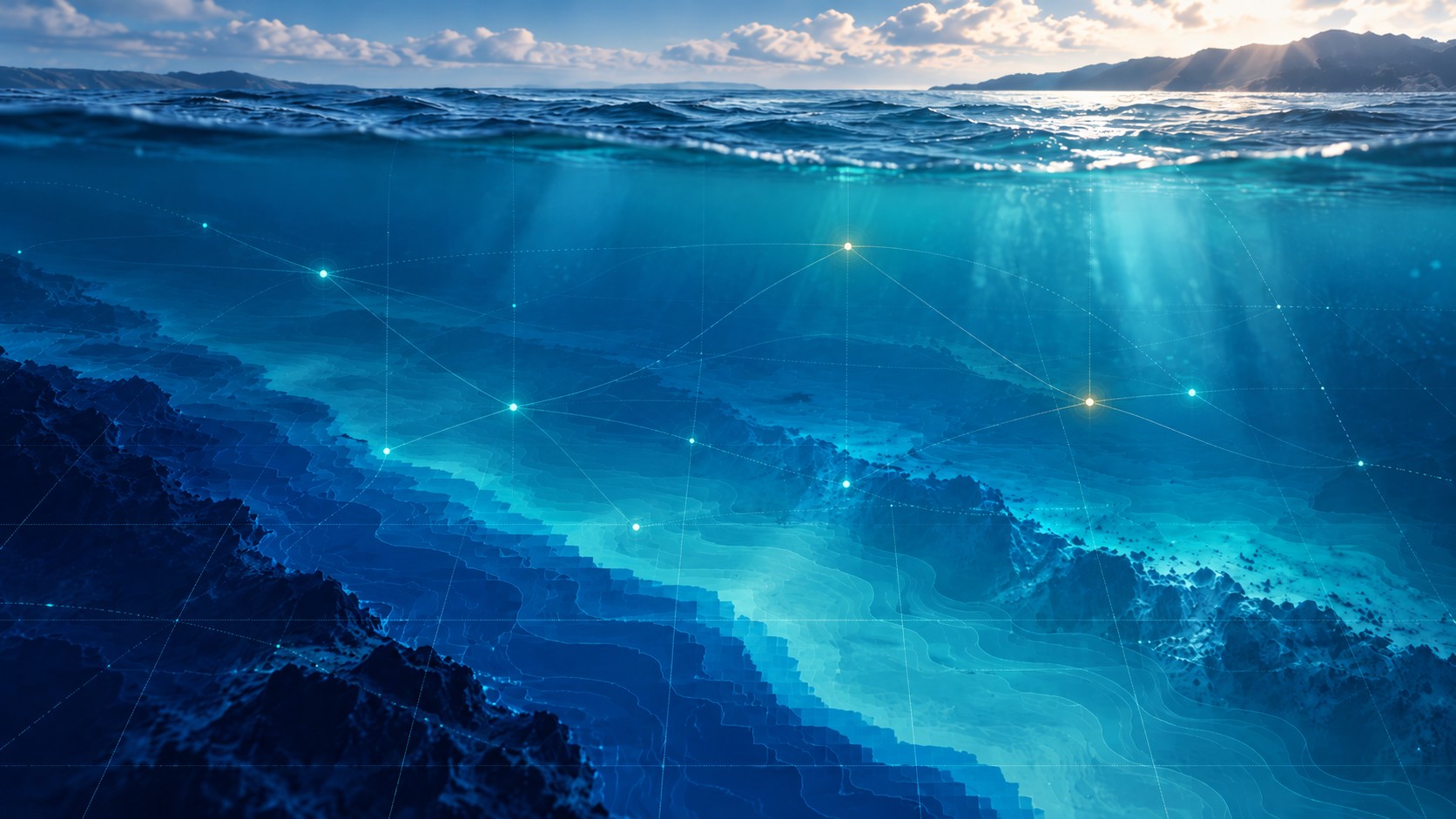
Two British companies funded by UK Defence Innovation have taken underwater communications and autonomy software to Maritime Big Play, the trilateral exercise held off San Diego last week, where innovators from Britain, the United States and Australia put emerging AUKUS technologies into the water together, according to UK Defence Innovation.
SEA Ltd of Frome in Somerset and Decision Analysis Services of Basingstoke both received their funding through the AUKUS Maritime Innovation Challenge, the competition run to find undersea communications and autonomy capabilities across the three nations, and both demonstrated technologies aimed at what happens beneath the surface.
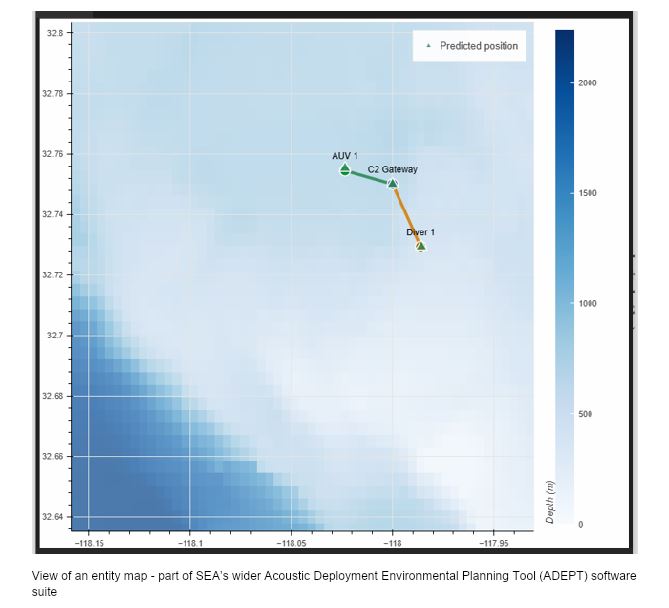
SEA demonstrated its Acoustic Deployment Environment Planning Tool, which uses high-resolution environmental data and acoustic modelling to predict and optimise how underwater communications will perform in a given patch of ocean. The toolset builds on systems that have supported the Royal Navy for more than two decades and was developed further with UKDI support ahead of the exercise.
Marcus Donnelly, environmental data science technical lead at SEA, said: “Underwater communications are critical to modern maritime operations, particularly as navies make greater use of autonomous and uncrewed systems. Building on SEA’s decades of acoustic modelling expertise, our Acoustic Deployment Environment Planning Tool software combines high-resolution environmental data with sophisticated acoustic modelling techniques to help operators predict and optimise communications performance in complex underwater environments, supporting situational awareness, command and control, and more effective operations.
“Demonstrating the capability in an operational environment off San Diego will allow us to further test, refine and evolve the technology alongside other advanced maritime capabilities. The toolset has its roots in proven anti-submarine warfare modelling capabilities, including systems that have supported the Royal Navy for more than 20 years, and we see significant long-term potential as reliable underwater communications become increasingly important to future AUKUS and other maritime operations.”
Decision Analysis Services demonstrated the Autonomous Fleet Task Assignment Framework, software written to let a group of uncrewed underwater vehicles divide work between themselves when the link back to a command node is degraded or gone.
Anthony Dunn, lead consultant at Decision Analysis Services, said: “Our Autonomous Fleet Task Assignment Framework (AF-TAF) enables Autonomous Underwater Vehicles (AUVs) to collaborate with less reliance on C2 orchestration, improving responsiveness and reliability in communications degraded or denied environments. Using distributed decision-making, AUVs dynamically allocate tasks to one another, adapt to changing conditions, and maintain mission effectiveness. Together with an accompanying simulation, AF-TAF supports defence planners in optimising fleet structures and operational scenarios, supporting a more resilient, agile, and capable maritime force for future UK and allied operations.”
Both problems come from the same physical fact, because radio does not travel through seawater. Indeed, submarines and uncrewed underwater vehicles communicate acoustically, at data rates measured in bits where a radio link would carry megabits, over ranges that change with temperature, salinity, depth and the shape of the seabed. A sonar operator who knows how sound will bend that day knows where a message will get through and where it will not, and a fleet of autonomous vehicles that can carry on working while nobody is talking to them removes the dependency altogether.
Both capabilities point at the same future, in which a handful of crewed platforms direct large numbers of uncrewed ones. The Strategic Defence Review’s hybrid navy rests on that arrangement, and the Defence Committee reported this month that the department has accepted a serious anti-submarine warfare gap. Autonomous underwater systems are meant to help close it.
AUKUS Pillar Two covers the advanced capabilities strand of the partnership, separate from the nuclear-powered submarine programme, and undersea warfare has been one of its more productive areas because all three navies face the same problem in the same water.
Sir Stephen Lovegrove, the Prime Minister’s Special Representative on AUKUS, attended the exercise. SEA and Decision Analysis Services will now use what they learned off San Diego to refine their systems.



I don’t believe I’m saying this but is it wise to collaborate with the US on such a highly classified programme, considering Trump’s outward disdain for Europe? Once he’s gone and the last vestiges of his presidency are extinguished (at least five years), then, depending on the new incumbents, should AUKUS go ahead? I don’t doubt Australia’s input for one moment; however, the world has no clue what Trump will do next and that places billions of our pounds at risk.
Well Trump has valid reasons to disdain Europe. That said wait for DSA takeover the Democratic Party…
“Both problems come from the same physical fact, because radio does not travel through seawater”
That is incorrect ELF and VLF work, but require large antennas and data rate is also measured in bits.
Royal Navy VLF transmitter is in Skelton says the wikipedia with the tallest structure in UK Search “List of VLF transmitters”
Hi Alex, Submariner and communications rating here just adding my 2 pence worth. Whilst you’re correct ELF and VLF do indeed penetrate the surface it is only down to a few meters and is received via specialised fin loops. Anything more than a few meters and ZBZ starts to drop from 5 (readable) to 0 (unreadable)very quickly.
In this context ELF/VLF would not be a solution for underwater comms from surface platform to the submerged.