

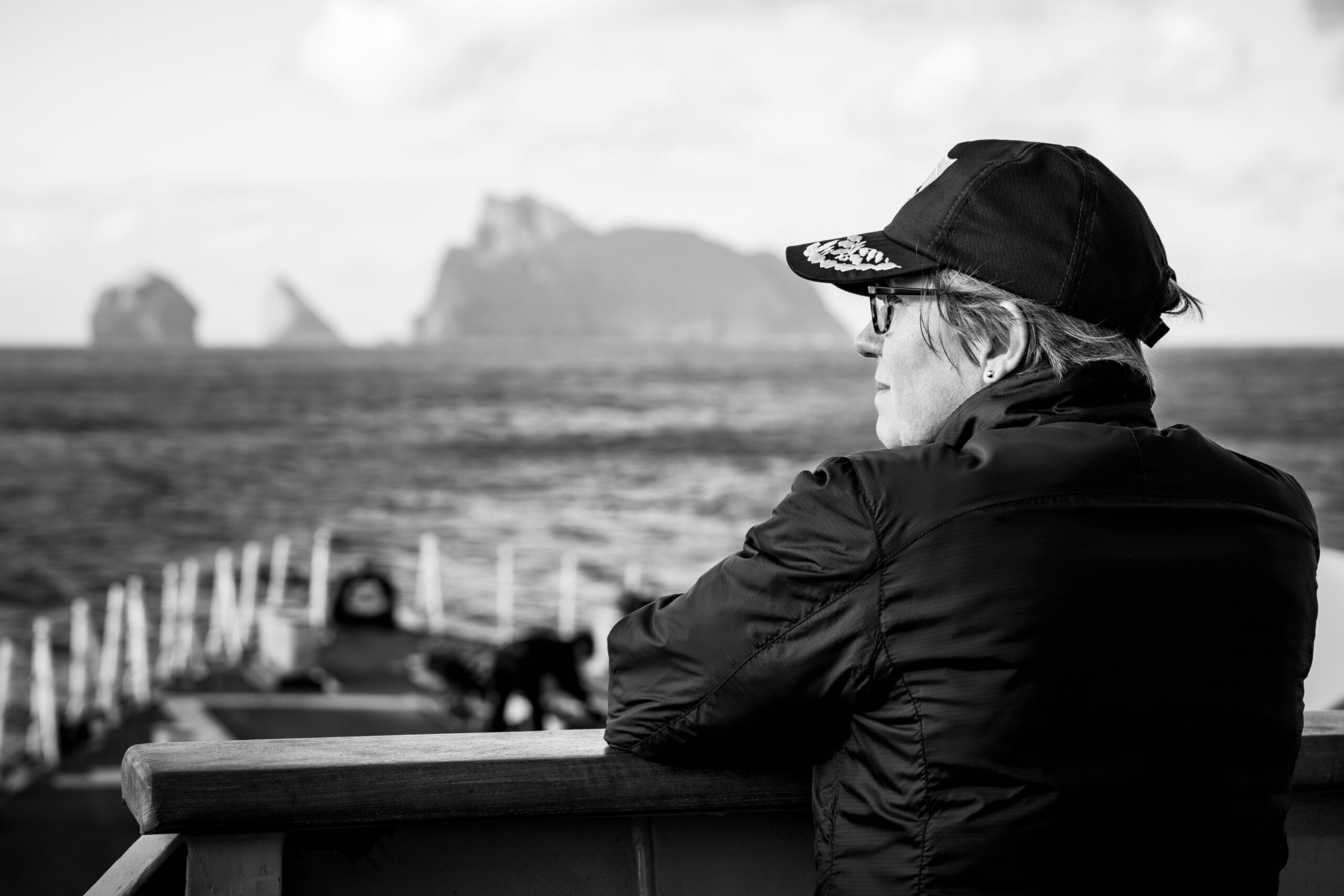
Commodore Maryla Ingham commands Standing NATO Maritime Group One. Speaking from her flagship at sea, she talked about undersea cables, the Russian Navy, and a 20-year-old sailor from Ontario who haabd never seen the ocean until two years ago.
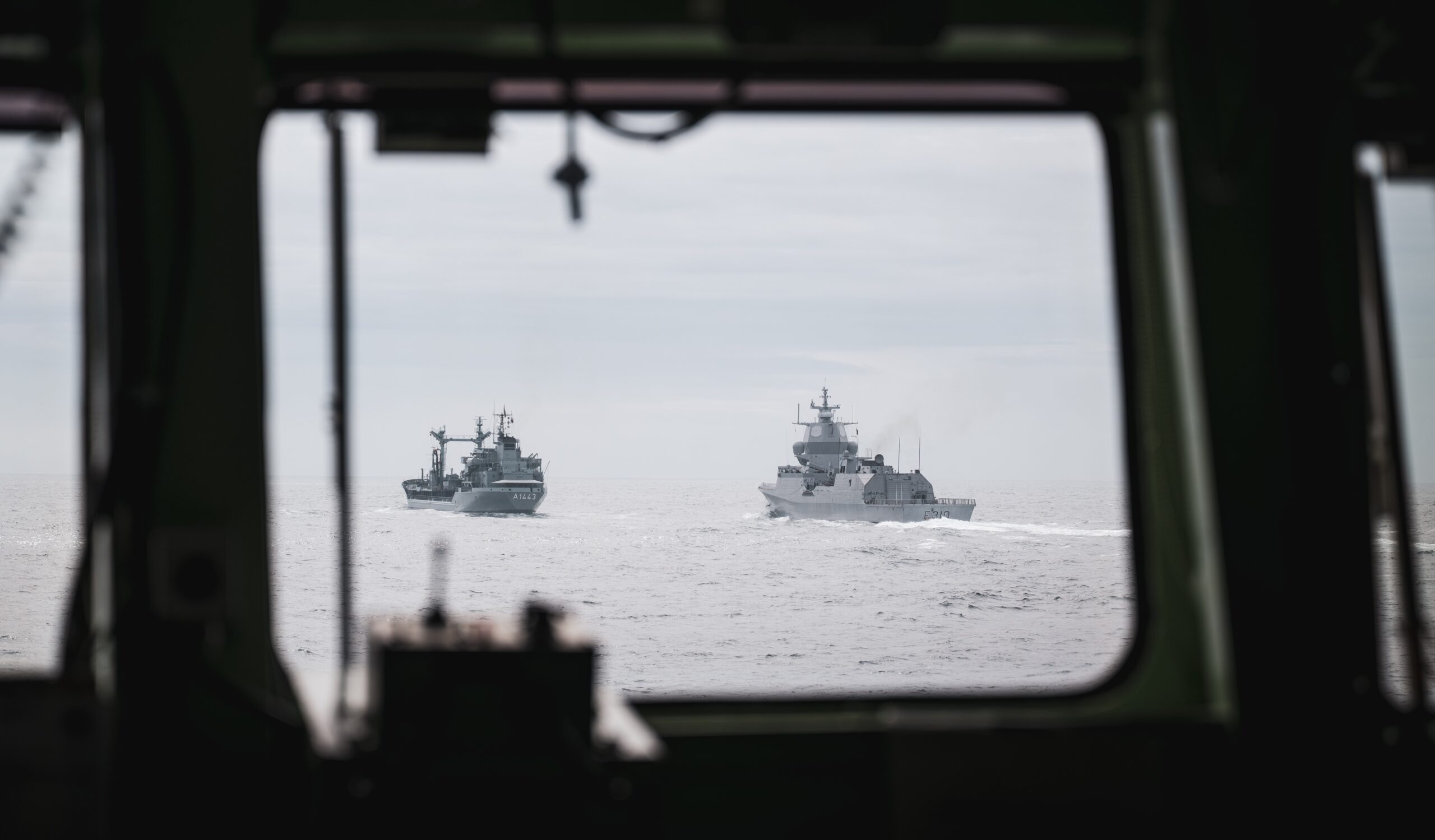
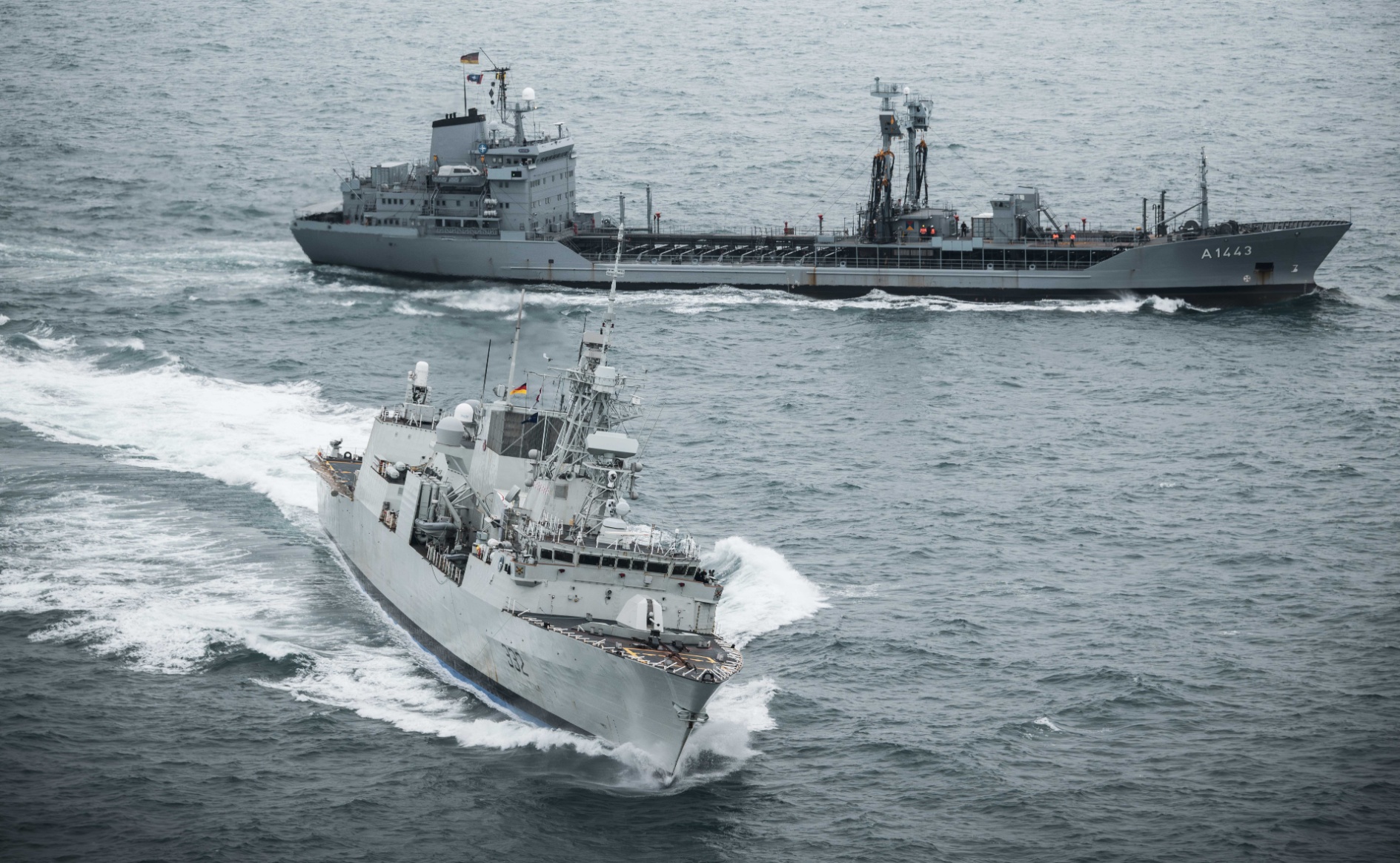
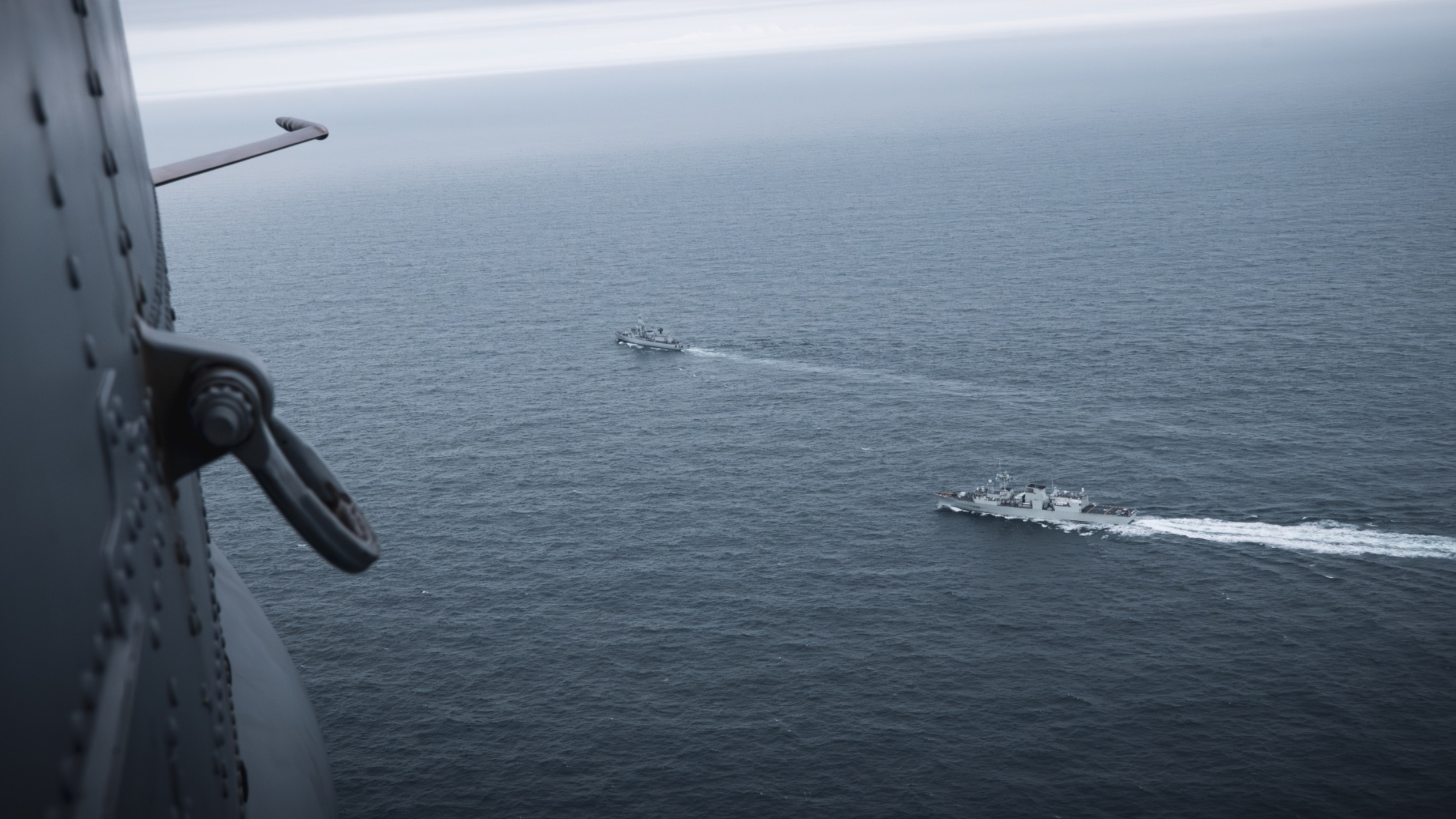
The ships came up the Clyde on Friday morning, first was the Norwegian frigate HNoMS Fridtjof Nansen, assisted past Erskine by a tug, then the Canadian frigate HMCS Ville de Québec behind her, a Cyclone helicopter secured on the flight deck and the ship’s company closed up on the upper deck. Both berthed at King George V Dock in Glasgow. The German fleet tanker FGS Rhön had come in the evening before, further down the river at Inchgreen.
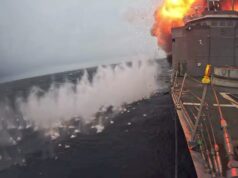
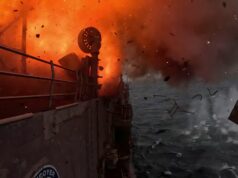
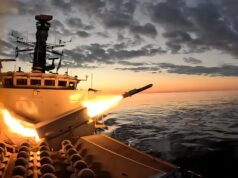
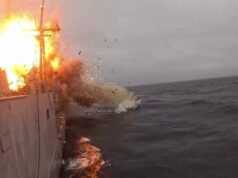
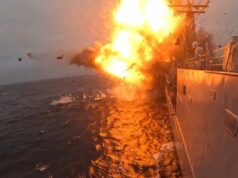
By the time I spoke to the Royal Navy Commodore commanding them, they had gone again. Commodore Maryla Ingham took my call from the flagship, at sea, in the middle of a gunnery shoot. “You probably just heard the gun,” she said. “Can you hear it going off in the background?” I could not, as it happened, though she could not hear my neighbour’s car alarm either, so honours were even.
Ingham has commanded Standing NATO Maritime Group One since April, and in the four months since she took over the task force has covered a great deal of water. Her account of it, delivered in a single unbroken answer, gives some sense of the tempo.
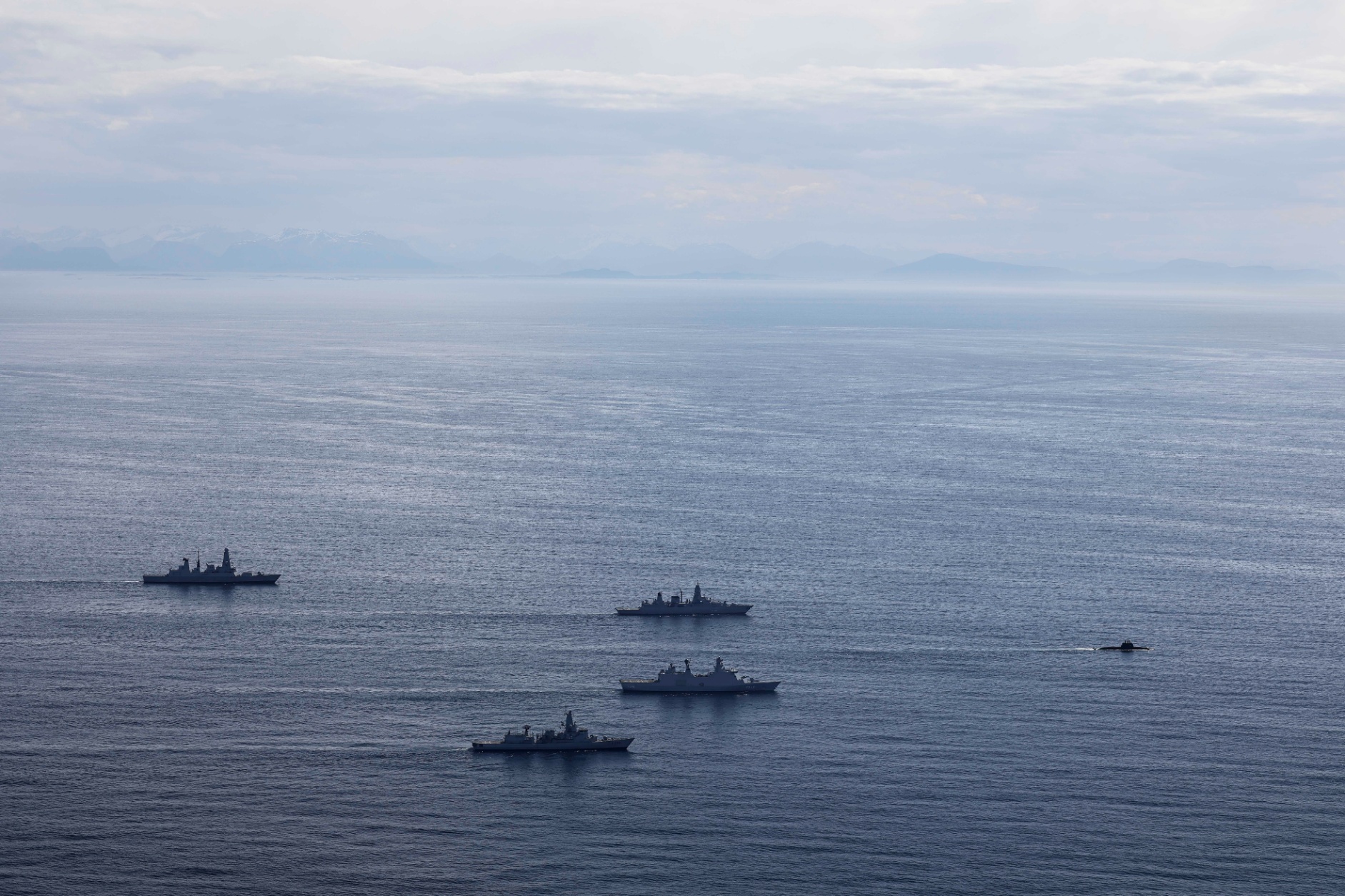
“We started off in April. We went straight into enhanced vigilance activity, Baltic Sentry, which is to protect critical underwater infrastructure, and we were there for about a month,” she said. “Then we went up off Norway, and we were the lead for Exercise Dynamic Mongoose 26, which was a major ASW exercise, multinational, three live submarines, five MPAs. Goodness, I can’t even remember how many ships we had.”
After that came a brief stop in the UK, then the Atlantic crossing. The group took part in FLEETEX 250, a US Second Fleet-led exercise, growing at one point to ten ships, before joining the International Naval Review marking the 250th anniversary of the United States Navy in New York. Since then it has been folded into the Commander Task Force Atlantic activation, led by a Spanish two-star on behalf of SACEUR, with Neptune Strike running through it. That last piece, she said, is more significant than it sounds. It is “all about demonstrating command and control of multinational forces on the sea, in the air, and underwater, and that’s the first time that’s been practised.”
Glasgow was a pause, “We’ve just had a quick pause stop in Glasgow, and we are back out at sea after the weekend, doing gunnery, showing presence, and we’ll be operating now in the high north until I hand over the force.”
Seventeen hours to one
Of everything the group has done this year, the Baltic work is the part most likely to matter to people who never think about warships. Baltic Sentry was launched in the wake of a series of incidents involving cables and pipelines on the seabed, and I was curious whether the operation had changed the environment now that it has settled into a routine. Ingham thinks it has, and offered a number that makes the case. “It’s also reduced our reaction time to critical underwater incidents from around 17 hours to an hour,” she said. “And it’s really enhanced our situational awareness.”
There is now a two-star coordinating headquarters, CTF Baltic, based in Rostock, watching the sea every day. The Baltic straddles two NATO areas of responsibility, and the headquarters exists to cohere across the seam.
“You need to remember that every single nation on the Baltic is a NATO member, with the exception of Russia,” she said, and the effect of that has been to multiply the connections between neighbours, “whether that’s our new members Finland and Sweden or the Baltic states and their neighbours.”
What it adds up to, she argues, is a sea that is now closely watched. “I’m really confident that there is very little that happens in the Baltic without us being aware of it.”
She was matter of fact about the Russian Navy, “Did we have interactions with the Russian Navy? Yes, we did. But they were all safe and professional. At the end of the day, a lot of those areas are international waters, and we all patrol them together, because that’s the nature of the sea.”
The point of it all, she returned to, is what lies beneath. “The main thing that we’re there to do is protect the critical underwater infrastructure, which not only our economy but the economies of the Baltic depend on.” British, French, Spanish and Turkish ships have all contributed. “You don’t need to be a Baltic nation to contribute to Baltic Sentry. It’s a NATO operation.”
The improvement she is proudest of is one of coordination rather than capability. Before, she suggested, the response to an incident could resemble “a bunch of Labradors chasing a ball.” Now the assets get used sensibly. There is also, simply, more of them. “What it also means, and as often with the NATO alliance, is that we have many more ships to call on than, for example, the Russian Federation.”
Nor is it only a surface and subsurface problem, maritime patrol aircraft are up, and the operation dovetails with Eastern Sentry and Baltic air policing. “We had a number of occasions on which we interacted with them as well. So it’s not just under the water, on the water, it’s in the air as well. So it’s a multi-domain operation, and I think it’s been a real success.”
One measure of how far the arrangement has matured is that Ingham has effectively been running two theatres at once. Even while her flagship was in the Atlantic, she retained units in the Baltic operating under the Rostock headquarters. “I kind of provide them with a range of services and overarching support as the task group commander, but they are working for CTF Baltic.”
In, fuel, gone
Ingham is a Royal Navy officer. Her battle staff is British. For three months they operated from a German frigate, FGS Sachsen, before the flag shifted to a Canadian ship during a port visit to Halifax earlier this month. Alongside them at present is a German tanker. I wanted to know how that actually works day to day, beyond the standard line about interoperability.
“Out of the 32 nations in NATO, over 25 of them are maritime nations, and we all operate using the same tactics, techniques and procedures,” she said. “So it’s actually really, really seamless to be able to operate in another ship, and we’ve proven that.”
English is the working language, as much a convention of the sea as of the alliance. But the more telling example she gave was fuel. “Any NATO ship can fuel off any NATO tanker. So we fuelled off the Americans. We fuelled from the Germans, and we’ve got a German tanker with us right now. And any nation, because the fitting is the same, because it’s the NATO standard and the procedures are the same. Everybody knows what to expect. Everybody knows how to do it. Everybody practises it. And so when you need to fuel, you’re literally in, fuel, gone.”
That standardisation extends past the task group itself, as the German tanker now with her had been refuelling HMS Somerset in the Channel shortly before she joined. “Ships that we fuel don’t necessarily need to be in our task group,” Ingham said. “If someone’s passing by and wants fuel.”
She was notably enthusiastic about the new Dutch replenishment ship HNLMS Den Helder, commissioned in April, which fuelled a number of navies including the Americans during the western Atlantic deployment. Each nation, she said, brings something. The Belgians are exceptional mine hunters. The Norwegians know ice and weather in the high north. The Canadians brought strong anti-submarine skills and cold water experience. The Poles know the Baltic. “Everybody brings something to the party, no matter how small their navy is.”
The German tanker currently with the group, she pointed out, has deployed with SNMG1 in every one of the last eight years. “So we’re all actually quite used to operating with each other anyway.”
The sailor from Thunder Bay
There are several hundred people in this task group, from a number of countries, most of them months from home. I asked what she would want the public to understand about that. “At the end of the day, we’re all sailors, and there is a real brotherhood slash sisterhood of the sea,” she said. “We’re all used to being away from our families. We’re all used to how we operate, and it’s just a different group of people.”
If anything, she said, the mix is the appeal. “The more you spend time with people who are from outside your country, the more you realise that we’re all actually just the same. We’ve all got the same values, the same standards. We’re all here to do the same thing.” She traced that back to the treaty itself, and its founding themes of individual liberties, human rights and the rule of law: “Those are all things that we all believe in.”
Membership of a 32-nation alliance means a great many ports to visit, which is how the conversation arrived at a 20-year-old from Ontario. “I was talking at lunchtime to a sailor today. He’s from a place called Thunder Bay in Ontario. I’ve never heard of it, but it’s on Lake Superior. He hadn’t even seen the ocean till two years ago. And he’s 20 years old. He just turned 20, and Glasgow was the first visit outside North America for him.”
Glasgow, by her account, did well by him. “Rangers gave us 100 tickets, so he went to the football. He loved that. They really spoiled us. And the Lord Provost gave us a fantastic civic reception on the afternoon of the day we arrived, which was so welcoming.”
She had asked the young sailor what his parents made of it. “They think it’s the best opportunity that I could have.” And his school friends? “They thought it’s probably a bit boring until they heard what I was doing, and now they’re really jealous.”
The cultural exchange runs in smaller ways too, the Dutch, she noted, hold an Indonesian lunch every Wednesday, which she likened to a curry night. Sailors are routinely cross-decked between ships of different navies to see how others do it. They come back, she said, reporting that it is much the same as home, “but lunch was a bit different.”
Deterrence, legitimacy, reassurance
Ingham has spoken before about working alongside allies toward common goals, and I asked her to say plainly what those goals are. “The first one is deterrence, and we mustn’t ever forget that this is a deterrent alliance,” she said. “I know that’s not how certain nations frame us. But why do you think Sweden and Finland joined?”
Then the argument from dependency, “As a maritime nation ourselves, with 95% of our imports coming by sea, including 50% of our food and 97% of our internet data. Now, I think people think that everything comes out of the sky. It doesn’t matter whether you’re trying to do a banking transaction or you’re trying to watch Netflix. That is coming from underneath the sea. So this is fundamental to our way of life.”
From there she widened it into something closer to national character. “The Brits are very fair people. That’s why we’re so good at queuing, right? We support the underdog, and all of those things that we’re brought up to believe in. Equality in front of the law, fairness for all nations, self-determination. Whether that’s in Ukraine or wherever in the world, we believe in people choosing who their leaders are.”
Legitimacy came next, “We always operate under international law. We have a really strict series of rules of engagement about how we can defend ourselves, what we can do, and we also always adhere to maritime law, whether that’s the rules of the road, the international rules for prevention of collision at sea, or whether that’s acting in self defence.”
Then reassurance, which she framed in terms of what it lets everyone else stop worrying about. “I sleep better at night because we have people on the eastern flank, because we have our ships at sea defending our interests. Whether that’s on a national basis, talking about the continuous at-sea nuclear deterrent, or that is the standing NATO forces who are SACEUR’s very high readiness maritime forces.”
Does everyone in a 32-nation alliance always agree?
“No. But do you always agree with your best friend? Also no. It’s about being able to work together and get along with people, because actually international diplomacy is not dead. Very few wars get solved by military solution. We all know, as Clausewitz tells us, that war is just an extension of politics.” What the navies themselves bring to that, she said, is a particular temperament. “We’re specialist mariners. We are professional, calm, getting on with our jobs. We are not looking for trouble. We’re a defensive alliance here to defend over a billion people.”
Fifth command
This is Ingham’s fifth command at sea, and her first with a multinational staff. Twenty seven years in, she was clear about which part she has enjoyed most.
“What I enjoy is easy. The people. I have genuinely met some fantastic people, many of whom I hope I will keep in touch with.” She singled out the commanding officer of the German flagship she operated from for three months: “What an outstanding flag captain. Not from my nation. Loyal, kind, supportive, amazing fighting spirit, great leadership.”
What has she learned? That the nations all want the same thing, but arrive with different sensitivities and different domestic pressures, some of which they would rather handle bilaterally. That has not translated into obstruction. “I haven’t had a single case of anybody saying no, we can’t do that. No, I won’t do that. And in most of the situations, they’ve come with absolutely no caveats.”
Some of the management is more prosaic than it sounds. When the group is alongside, the tickets to the reception get divided between the nations present so that every ambassador is looked after. In Glasgow, that meant Germans, Canadians, Brits and Norwegians. It also meant the Norwegians and Canadians, both partners in the Type 26 programme, could go and see the frigates being built on the Clyde. Their sailors, she said, were genuinely excited to be shown what they are getting.
Beyond that, she says, command is command, and it comes down to three things she has carried through every ship she has had. “Execute the mission. Two, keep the ship safe. Three, look after your people.” The priority between them shifts with circumstance. In Antarctica, in her time commanding the ice patrol ship HMS Protector, looking after people came first because of the conditions. In ice, keeping the ship safe did.
She goes to see every ship in person when it joins or leaves the force, alongside and then again at sea, “so that they can see who I am, know where their direction is coming from.”
Even at ten ships during FLEETEX, she said, it all ran in plain English, and she was struck by how well. “All these people are doing this with English as a second language, and I have to say, the immaculate level of English amongst even the most junior sailor, fantastic.”
The night before we spoke had been a rough one, sea state seven, nobody sleeping much. By the morning it had calmed down enough for gunnery, the second shoot in two days, with a replenishment at sea the day before and anti-submarine work to come. “When we’re at sea, we work hard,” she said. “But then when we get alongside, people also get to experience the really positive benefits of being in the navy.”
The group is in the high north now, and will be until she hands it on.


Great reading, thank you.
Really, interesting interview George, thanks.
It isn’t that often we get to hear about how a NATO force works together, and whilst I appreciate that it is only one person’s view, it is still interesting and reassuring how well it all seems to hang together.
Sometimes, given the current poor state of our armed forces, it is easy to forget that there is still plenty of NATO activity ongoing and the Royal Navy will recover in time, if we have time.
Cheers CR
Yes George – A very good article showing the teamwork between the many navies, the shared values and the mutual benefits of training together
also the cultural and culinary differences of so many nations to each other
(Sorry I went off on a nostalgic voyage ibelow n my brain after a lunchtime with a few mates)
Brilliant read, and good to have a positive artical.
Yes, really shows what we stand for and what we’ll defend and everyones place and value. As a complete outsider I found the description of cooperation very impactful.
It is good to have a positive and uplifting artical for a change.
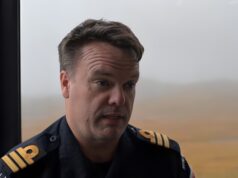
Photo of Commander Ingham looking towards the St Kilda group of islands to the west of the Outer Hebrides with the Island of Boreway and the two highest stacks in the UK showing
Stac Lee on the left is like a massive molar 564 foot high jutting out from the ocean and narrow on the side elevation
I have an eery photo from half a century ago taken from the deck of a yacht with hundreds of gannets circling around it with a weak sun peering from the top
I have been searching my study and albums for it.
We had just sailed down from the Faeroes which are also amazing
Memories!
Incisor not molar
Yes, It’s a great photo and a great article…. I’ve read It a few times now and find It so Informative…. Spot on George.
(I won’t mention Elton John ever again….. I mentioned It earlier and didn’t get away with It so I promise never to mention the likeness ever again).
Yes good article and great picture ( almost). As an RN officer she should be wearing a peak cap and duffel coat 😁.