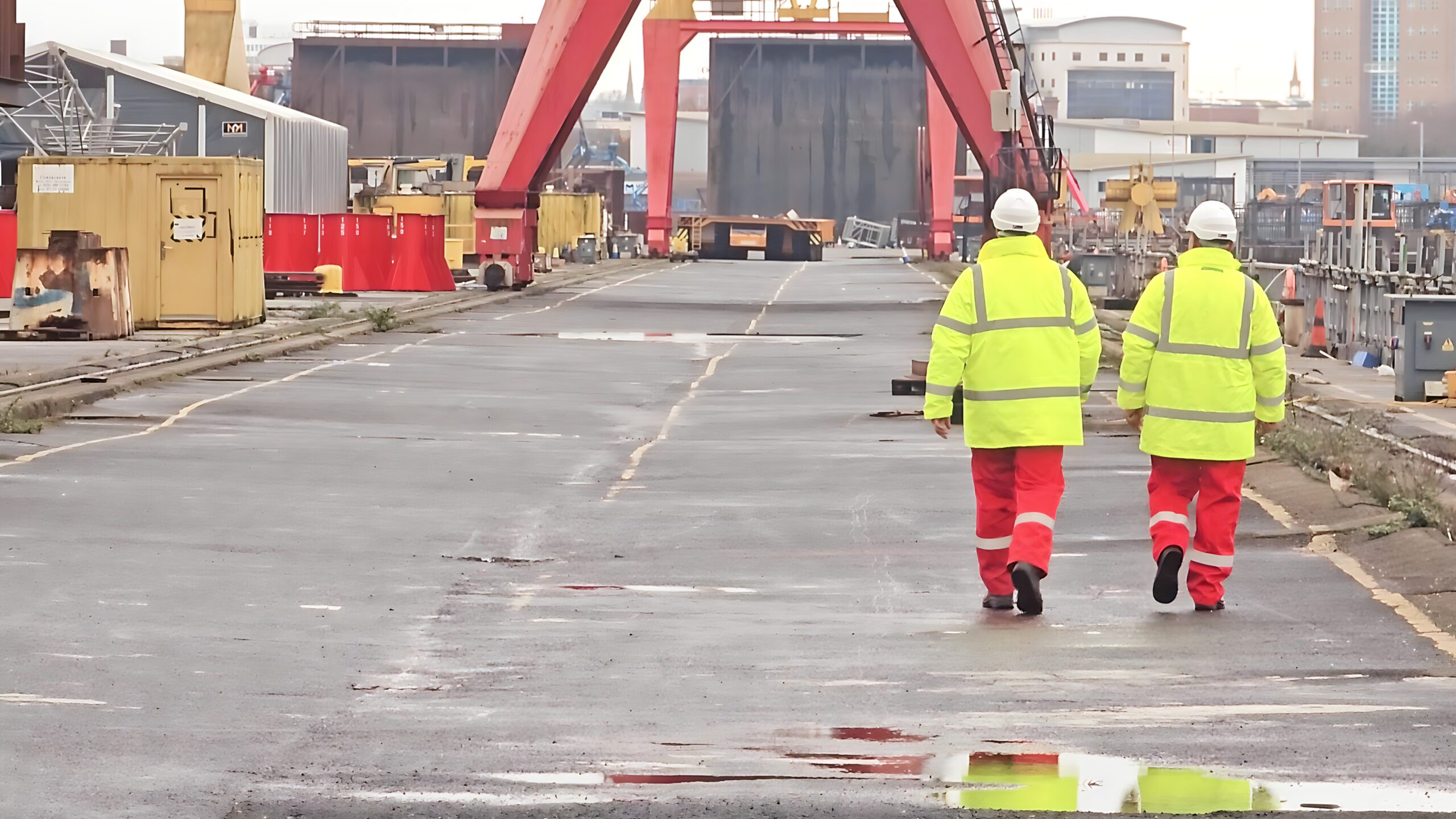
It is easy to look at Harland and Wolff’s Belfast yard and focus on the visible changes: the scale of the site, new equipment arriving, and the familiar outline of the dock and cranes. Less visible is the workforce behind it. Machinery can be installed quickly. Building a workforce that can operate it, stay in the trade, and pass those skills on takes far longer.
Ben Murray, Chief of Staff at Navantia UK, described the investment in those terms. “It’s all well and good having the facilities, but you also need to have the people and the ability to use those new bits of technology and that new kit,” he said. He also outlined the scale of the training pipeline now in place. “We’ve got a huge number of apprenticeships, 222 apprentices now on the books… with a recruitment for a further 90,” he said, describing a workforce plan intended to grow alongside the yard’s physical recapitalisation.
Derek Jones, Navantia UK’s Chief Commercial and Business Development Officer, pointed to the labour market conditions shaping recruitment in Northern Ireland. “The unemployment in Northern Ireland… is particularly low,” he said. In practice, that means the yard cannot rely on a large pool of unemployed labour. Much of the effort goes into helping people already in work move into shipyard trades. “A lot of what we have to do here is upskilling… reskilling people,” he said. Jones also referred to the way defence contracts now include social value requirements. “The programme was one of the first to have such a high weighting for social value,” he said. In Belfast, he said that work is handled by a dedicated team working with charities, schools and community groups. “There’s a whole team focused on it… charities, schools, community groups, bringing people in.”
After the yard tour, Jim McHarg, Chief People Officer at Navantia UK, spoke about how recruitment has widened beyond traditional shipbuilding pathways. “Reinvigorating this yard with people… because the future was… very precarious,” he said, referring to the shift in outlook over the past 15 to 18 months. He described people entering the industry from sectors that previously had little connection to shipbuilding. “Giving people the opportunity… having taken a career in retail or whatever type of other type of work… then they come in and we give them the training to become time served engineers, whether that’s an electrical, mechanical, welding, fabrication,” he said.
McHarg said relationships with further education colleges have existed for many years, though the number of trainees is now increasing. “The relationships have been there for a long time with various colleges,” he said. “Maybe the numbers have been smaller, but now we’re starting to put in kind of substantial numbers where we’re taking up full classes.” The company is also developing more training facilities within its own yards so new recruits spend time in a working shipyard environment early in their training. “We’re trying to also put in training facilities that are fit for purpose into our yards,” he said. “It’s totally different in a shipyard compared to college… it’s not like being at school with the teachers.”
In Belfast, McHarg said the existing training space works but still needs improvement. “There’s been a training centre… a training area,” he said. “There’s room for improvement there… it’s functional.” He described that as part of a wider effort across the four yards, with different sites progressing at different speeds. “Different yards are more advanced than others,” he said, pointing to plans for a new skills centre at Methil. “The plan is to put a new skills centre in the yard… physically active… in Q2 Q3 of this year.”
Public perception of shipbuilding also came up. McHarg said many people still picture the industry as it looked decades ago rather than how modern yards operate. “It’s not the industry that if you speak to your father and your grandfather, they only will have an image of what it’s like,” he said. Open days and family visits are intended to help change that by showing what work in the yard actually involves. He pointed to the number of apprenticeship applications as a sign that interest is there. “For our apprentice intakes… for one job, it might be 15, 20 applications,” he said.
The workforce effort now covers several areas at once: apprenticeships, adult reskilling, college partnerships, training inside the yards and outreach into local communities. The yard’s long-term output will depend on those streams continuing to feed into the workforce as production ramps up and the new facilities settle into regular use.