Author: George Allison

  • MQ-28 fires AIM-120 in autonomous air combat test

    MQ-28 fires AIM-120 in autonomous air combat test

    Boeing and the Royal Australian Air Force have completed an air-to-air missile firing using an MQ-28 Ghost Bat uncrewed aircraft during a live exercise in Australia, marking what the company describes as a first-of-its-kind autonomous engagement.

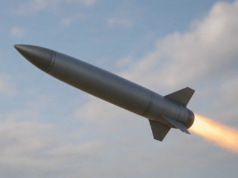
    The trial took place at Woomera and involved the MQ-28 operating alongside a crewed E-7A Wedgetail airborne early warning aircraft and an F/A-18F Super Hornet. According to Boeing, the MQ-28 successfully engaged and destroyed a fighter-sized target drone using a Raytheon AIM-120 AMRAAM missile as part of a coordinated mission linking crewed and uncrewed platforms.

    Boeing said the aircraft launched from separate locations before being brought together in a single mission. An E-7A operator assumed control oversight of the MQ-28 during the sortie, while the F/A-18F provided sensor data to identify and track the target. That targeting information was then shared across the network, allowing the MQ-28 to reposition and conduct the missile engagement after receiving authorisation from the Wedgetail, according to the company.

    Amy List, managing director of Boeing Defence Australia, described the event as a milestone for autonomous combat aviation. “This is the first time an autonomous aircraft has completed an air-to-air weapon engagement with an AIM-120 missile, establishing the MQ-28 as a mature combat capable CCA,” she said in the press release.

    List added that the demonstration highlighted the role collaborative combat aircraft could play alongside crewed platforms, saying the mission showed how such systems can increase operational mass and reduce risk to pilots, according to Boeing.

    Boeing also highlighted the autonomy architecture underpinning the exercise. Colin Miller, vice president and general manager of Phantom Works at Boeing Defense, Space and Security, said the engagement reflected progress in integrating autonomous systems with existing aircraft fleets. “This exercise demonstrates the maturity and sophistication of Boeing’s mission autonomy solution which is built on open standards and government architectures,” he said, adding that it was designed to integrate across multiple generations of aircraft.

    The exercise was conducted with participation from the RAAF, Boeing, the US Air Force and other industry partners. Boeing characterised the event as part of ongoing efforts to develop collaborative combat aircraft concepts intended to operate as force multipliers alongside crewed airpower.

  • Defence chief warns UK security risk demands whole nation

    Defence chief warns UK security risk demands whole nation


    The Chief of the Defence Staff is expected to call for a “whole of society” approach to defence and national resilience, warning that Britain faces a more dangerous and uncertain security environment than at any point in his career.

    Sir Richard Knighton is due to deliver his first annual Royal United Services Institute lecture this evening, where he is expected to argue that responding to growing threats will require action far beyond the armed forces and government alone.

    In the advance extracts, Sir Richard is expected to warn that “the situation is more dangerous than I have known during my career”, adding that the response “requires more than simply strengthening our armed forces.” He is expected to tell the audience that a new era for defence “doesn’t just mean our military and government stepping up, it means our whole nation stepping up.”

    The lecture is expected to frame resilience as a national responsibility, with Sir Richard arguing that defence must be reconnected with wider society. He is expected to say that long term military effectiveness depends on making defence and resilience “a higher national priority for all of us.”

    Addressing the nature of modern deterrence, he is expected to say that readiness alone is insufficient, saying: “Our armed forces always need to be ready to fight and win, that’s why readiness is such a priority.” However, he is expected to add that “deterrence is also about our resilience to these threats” and about how the UK “harness[es] all our national power, from universities, to industry, the rail network to the NHS.”

    Skills shortages are expected to be a central theme of the lecture. An engineer by background, Sir Richard is expected to reference recent findings highlighting engineering skills gaps and recruitment challenges as examples of fragile systems that could undermine the country’s ability to function in a crisis. Drawing parallels with defence workforce pressures, he is expected to argue for stronger links between industry, education and young people to rebuild national capacity.

    As part of this, he is expected to announce £50 million in funding for new Defence Technical Excellence Colleges. According to the excerpts, “five colleges in England, and others across the UK, will gain specialist status and major new funding” to help deliver the ambitions set out in the Strategic Defence Review. He is also expected to note that the funding will support “thousands of short courses so defence employers can upskill existing staff quickly.”

    On defence spending, Sir Richard is expected to say: “I find myself in a position that none of my predecessors during my career have faced, looking at the prospect of the largest sustained increase in defence spending since the end of the Cold War,” adding that “the price of peace is increasing.”

    Russia is also expected to feature prominently. Referring to the war in Ukraine, he is expected to warn that it demonstrates Moscow’s willingness to target civilian populations and threaten NATO directly, stating that “the Russian leadership has made clear that it wishes to challenge, limit, divide and ultimately destroy NATO.”

    The speech is expected to conclude with a warning about the trajectory of global security. Sir Richard is expected to say: “We are heading into uncertainty, and that uncertainty is becoming more profound, both as our adversaries become more capable and unpredictable, and as unprecedented technology change manifests itself.”

  • BAE to supply modular masts for US Navy submarines

    BAE to supply modular masts for US Navy submarines

    BAE Systems has been awarded a $36 million contract to supply Multifunction Modular Mast systems for integration on US Navy submarines, following a production agreement with Lockheed Martin, according to the company.

    The contract covers delivery of the radio-frequency receiving mast for installation on new Virginia-class submarines. According to BAE Systems, the system is designed to detect, identify and direction-find communications signals while the submarine remains submerged, with data fed into Lockheed Martin’s AN/BLQ-10 electronic warfare suite.

    BAE Systems said the mast is intended to support situational awareness in what it describes as contested operating environments. Michael Rottman, programme area director for Maritime Sensors and Systems at BAE Systems, said: “In dynamic and contested environments, stealth is key, and submarines rely on accurate communications signal information to make decisions quickly.” He added that the system enables crews to locate and assess potential threats, according to the company.

    The Multifunction Modular Mast is described by BAE Systems as a secondary sensing capability that complements radar and sonar, contributing to what the company characterises as electromagnetic spectrum awareness. The mast houses a tactical communications receiving antenna within a composite radome designed to withstand pressure and corrosion in undersea conditions.

    According to the company, the system’s low-visibility design is intended to reduce the detectability of both the mast and the submarine while maximising signal collection. BAE Systems also said the mast includes a payload module that allows for the integration of additional sensors to support other mission requirements.

    Work on the programme will be carried out at BAE Systems facilities in Hudson, Merrimack and Nashua, New Hampshire. The company said the contract builds on more than six decades of experience developing maritime sensors and communications systems for submarine operations.

  • UK condemns conviction of Jimmy Lai, calls for release

    UK condemns conviction of Jimmy Lai, calls for release

    The UK has condemned the conviction of Hong Kong media owner and democracy campaigner Jimmy Lai, calling for his immediate release following a guilty verdict announced on Monday.

    In a statement issued on 15 December, the Foreign, Commonwealth and Development Office said the case represented a politically motivated prosecution and accused Beijing and the Hong Kong authorities of using national security legislation to silence critics.

    The statement said the UK “condemns the politically motivated prosecution of Jimmy Lai that has resulted in today’s guilty verdict”, adding that Lai had been targeted for peacefully exercising his right to freedom of expression.

    Lai, the founder of the now closed Apple Daily newspaper, has been prosecuted under Hong Kong’s National Security Law, which was imposed by Beijing in 2020. The UK government said the law has been used to suppress dissent and restrict fundamental freedoms promised under the Sino-British Joint Declaration.

    The Foreign Office reiterated its long standing position that the National Security Law should be repealed, stating that it has repeatedly called for an end to the prosecution of all individuals charged under its provisions.

    In the statement, the UK said it continues to call for Lai’s immediate release, for him to receive all necessary medical treatment, and for full access to independent medical professionals.

    The Foreign Secretary said the case highlighted broader concerns about the erosion of rights and freedoms in Hong Kong since the introduction of the National Security Law. The UK has previously described the law as a clear breach of China’s international commitments.

    The UK government said it will continue to raise concerns about Hong Kong through diplomatic channels and with international partners, stressing that freedom of expression and the rule of law remain central to its approach toward China and Hong Kong.

  • Thales offers first insight into new 76Nano sonar system

    Thales offers first insight into new 76Nano sonar system

    Thales has given new insight into Sonar 76Nano, a compact tile based sonar system developed to support the Royal Navy’s push toward distributed and uncrewed underwater sensing.

    The company briefed UK Defence Journal on the prototype following a rapid ten month development cycle linked to emerging requirements within Project Cabot and the wider Atlantic Net and Bastion concepts.

    According to Ian McFarlane, Sales Director for Underwater Systems at Thales UK, the idea behind 76Nano began to take shape about eighteen months ago. The company had observed a shift in Royal Navy anti submarine warfare activity. As McFarlane put it, “the usage was going up. The operational tempo was increasing” while the number of major platforms was falling. This created an obvious question: “How we fill this gap?” Thales concluded that the answer was a new kind of sensor that could operate from uncrewed platforms and static seabed nodes rather than rely on a shrinking fleet of high value hulls.

    A central feature of 76Nano is its tile based architecture, which replaces fixed flank arrays with modular acoustic panels. Each receive tile measures seventy five centimetres square, and the active transmit tile is a forty centimetre square unit. These can be arranged around curves or assembled into larger panels depending on the host vehicle’s geometry. McFarlane likened the concept to tiling a wall and stressed that aperture and frequency coverage scale with tile count. Lower frequencies travel further underwater, so adding tiles increases detection range and improves signal robustness. Thales has engineered the tiles to butt together with a flush finish to minimise drag and simplify integration. The onboard electronics recognise the number and orientation of the tiles and fuse all returns into a single coherent sonar picture. Depending on UUV size, arrays can range from a handful of tiles on a compact node to roughly forty eight per side on a large vehicle, which, in McFarlane’s view, could approach SSN like sensing performance in environments such as the Baltic.

    Thales says the tiles are designed to minimise impact on space, weight and power, a key consideration for uncrewed platforms with limited margins. While layouts vary by vehicle, the company described a typical array as comprising around thirty six receive tiles, for example arranged in a three by twelve configuration along a vehicle’s flank. Larger UUVs could carry more, while smaller platforms would use fewer tiles, allowing operators to scale sensing performance to platform size and mission need without redesigning the system.

    McFarlane expanded on that point, saying that a medium or large UUV fitted with about forty eight tiles per flank would, in Baltic conditions, offer “almost the same capability as an SSN” and, in deeper Atlantic water, “better than two thirds as good as an SSN”. He however framed these comparisons in terms of physics and environmental assumptions, which play a major role in long range detection. He also pointed to cost and risk. A nuclear submarine is a multibillion-pound asset. A large UUV carrying this sonar would be far cheaper to field, easier to deploy covertly, and carries less operational consequence if lost. McFarlane argued that this differential supports the case for distributed uncrewed sensing alongside the existing fleet.

    The system provides passive listening, active ASW, synthetic aperture imaging, and subsea communications in a single package. The active mode uses a narrow band ping designed for low probability of intercept. The receive tiles are built to interpret weak returns and also support acoustic communications. McFarlane described the transmit function as “a narrow band directional ping” that allows “transmit comms out” and reception of acoustic retasking signals. The synthetic aperture mode gives seabed imagery for infrastructure monitoring or environmental survey.

    Distributed sensing depends on density and placement rather than a single perfect array. When asked how many nodes are needed, McFarlane resisted a fixed number and tied it to concepts of operations. In a choke point, “one or two will be absolutely sufficient” for persistent passive listening. In the North Atlantic, a handful operating alongside SSNs could offer forward cueing. For wide area networks like Atlantic Bastion, he noted earlier estimates requiring hundreds of gliders but suggested higher quality UUV sensors might reduce that mass requirement.

    The direction mirrors the First Sea Lord’s recent emphasis on accelerating delivery and expanding uncrewed mass within a hybrid fleet. He has argued that maintaining credible ASW coverage with fewer major platforms will require distributed sensing and faster industrial cycles. That theme shaped discussion at the Sea Power Conference, where urgency was repeatedly stressed. Thales echoed that mindset during the briefing. McFarlane characterised the ten month development sprint as a response to that demand for pace and remarked that, if a customer were ready to proceed, “I’ll take the order today”. The company is clearly presenting 76Nano as the type of quickly fielded sensing mass that senior leadership says will be needed.

    Integration was a recurring theme. Thales is not a UUV builder, which shaped the design philosophy. The tiles can be arranged around curves or assembled into different rectangles. The onboard electronics understand the orientation and number of tiles and fuse the data into a single sonar picture. This avoids presenting multiple disjointed feeds and supports both ASW and synthetic aperture modes. McFarlane said several unnamed UUV designers have shown interest. From their perspective, UUVs are often “subsea trucks” that carry payloads rather than generate capability themselves. A low drag, low power sensing package widens their utility.

    Testing has been carried out at a Ministry of Defence acoustic facility. Thales used calibrated sources to verify that the tiles detect signals with the expected strength, direction, and frequency. McFarlane said, “the answer to that is yes, we are” when asked whether the prototype meets expected technical performance. The same method was used to test the active transmitter. Sea trials will follow once tiles are arranged on a host platform.

    The prototype is expected to make its first public appearance with the Royal Navy later this month as part of a technology demonstration event. Thales says the demonstration will allow naval personnel to assess the system’s capabilities directly and engage with engineers involved in its development. While the event does not signal a procurement decision, it forms part of the wider effort to explore how rapidly developed sensing technologies might support the Navy’s emerging uncrewed and distributed concepts of operations.

    The AI component of the system focuses on triage rather than autonomy. As data volumes have risen across successive submarine classes, operator overload has become a risk. McFarlane explained, “There’s too much there to physically understand.” The AI sorts acoustic returns, highlights items of likely importance, and acts as a filter to suppress clutter. It also supports post-mission analysis by identifying patterns or signals that might otherwise be missed. Thales frames this as cognitive assistance rather than a replacement for operator judgment.

    Sovereignty is a concern for the UK, and Thales says most of the system is UK built, with some components sourced from partner nations as with 2076. The active transmitter involves Neptune Sonar, a British SME. Thales retains design rights and can license production to allies as required. McFarlane said, “We’ve tried to keep as much of it as possible within the UK.”

    When asked directly what problem 76Nano is intended to solve, McFarlane offered a clear summary. “This solves the problem of getting enough fidelity in your ASW solution” while also supporting seabed infrastructure tasks. The modular tile concept allows UUVs to carry more sensing power than previously practical. “The more tiles you’ve got, the better fidelity, the better the further out you’ll see.” That logic fits the Royal Navy’s interest in distributed sensing and hybrid fleets.

  • AUKUS Pillar Two ‘lacks focus and delivery’ say MPs

    AUKUS Pillar Two ‘lacks focus and delivery’ say MPs


    AUKUS Pillar Two came under sustained pressure from MPs during the Defence Committee’s final evidence session, with ministers and officials repeatedly challenged on whether the technology pillar is producing meaningful capability or drifting into an open-ended process without clear outcomes.

    While witnesses defended Pillar Two as an inherently long-term effort focused on emerging technologies, committee members argued that nearly four years after AUKUS was announced, industry still lacks a clear demand signal and government cannot point to scaled, fielded capability.

    AUKUS Pillar Two is the part of the trilateral pact focused on advanced military technologies rather than submarines, covering areas such as artificial intelligence, autonomy, cyber, undersea systems, hypersonics and electronic warfare. Its purpose is to allow the UK, US and Australia to co-develop, share and deploy cutting-edge capabilities more quickly by removing regulatory and security barriers that have historically slowed cooperation.

    Unlike Pillar One, it has no single flagship product or delivery date, which makes success harder to define and has increasingly drawn scrutiny from MPs concerned about focus, accountability and tangible outcomes.

    Ian Roome MP said evidence heard during the inquiry showed that early enthusiasm among companies across the UK, Australia and the US was now being undermined by uncertainty about what Pillar Two is actually meant to deliver. He warned that firms were investing on the basis of partial information, with significant financial risk for smaller suppliers.

    “No one is telling industry exactly what AUKUS wants them to deliver, and they are spending money on assumptions,” he said, adding that for SMEs the consequences could be severe.

    Luke Pollard MP accepted that criticism in principle, confirming that the government had accepted Sir Stephen Lovegrove’s recommendation to narrow Pillar Two to a small number of “signature” or “marquee” projects. However, he could not provide a timeline for when those projects would be announced, indicating that meaningful clarity was unlikely before 2026.

    Senior officials pointed to experimentation and trials as evidence of progress, including underwater autonomy work and remote-control demonstrations during multinational exercises. Air Marshal Tim Jones acknowledged, however, that these activities had not yet translated into operational capability at scale.

    “We are not scaling these things yet,” he told MPs, describing Pillar Two as having generated promising early work but lacking a clear path to deployment.

    Several MPs questioned whether interoperability experiments should be described as success at all, noting that recent exercises involved different platforms developed independently rather than jointly. Fred Thomas MP said that presenting such activity as a Pillar Two achievement risked lowering expectations compared with the original ambition of co-developed capability.

    Officials also conceded that governance arrangements for Pillar Two remain underdeveloped. Jones said there was clear scope to strengthen oversight, introduce firmer deliverables and improve measurement of progress, while stressing that informal collaboration between project teams often ran ahead of formal structures. Pollard accepted that Pillar Two lacks the clarity of Pillar One, arguing that its diffuse nature reflects the complexity of emerging technology rather than poor management. MPs countered that diffusion was precisely what was preventing accountability and delivery.

    Questions of responsibility ran through the session, with Emma Lewell-Buck MP pressing ministers on who would be held accountable if Pillar Two failed to deliver over the long term. Pollard said responsibility ultimately rests with ministers and the government of the day, a response that did little to reassure committee members concerned about the programme’s multi-national and cross-departmental structure. MPs also raised concerns about UK Defence Innovation, questioning how it would generate a clear demand signal for industry and who would lead it.

    The possibility of expanding Pillar Two to include other countries, including Japan, Canada and South Korea, prompted further caution. Pollard said expansion could only proceed where it delivered clear benefit to the UK and existing partners, while MPs warned that widening participation before establishing focus risked further dilution.

    By the end of the session, there was broad agreement on one central point. Pillar Two has created activity, engagement and experimentation, but without sharper priorities and clearer ownership it risks remaining a pre-capability space rather than becoming a driver of deployable military advantage.

  • UK launches register, qualification for protective security

    UK launches register, qualification for protective security

    Counter Terrorism Policing has announced two new national initiatives aimed at strengthening how organisations across the UK prepare for and mitigate the threat of terrorism.

    The measures include the creation of a national register of verified counter terrorism security specialists and the introduction of a new Ofqual regulated qualification focused on protective security and preparedness in the workplace. Both initiatives respond directly to recommendations made by the Manchester Arena Inquiry.

    From spring 2026, businesses and organisations will be able to access a new Counter Terrorism Security Specialists Register, endorsed by Counter Terrorism Policing. The register is intended to provide a trusted route to qualified professionals who can offer advice on protective security, organisational preparedness and technical implementation.

    The register will be delivered through a partnership between the National Counter Terrorism Security Office, a specialist unit within Counter Terrorism Policing, and the Register of Security Engineers and Specialists, which is sponsored by the National Protective Security Authority. It will be administered by the Institution of Civil Engineers, with registered members bound by a professional code of conduct.

    According to Counter Terrorism Policing, the register is designed to give organisations confidence that advisers meet recognised standards and provide a straightforward way to identify credible counter terrorism security expertise across multiple disciplines.

    Alongside the register, a new Level 3 qualification titled Competent Person in the Workplace is being developed. The Ofqual regulated qualification is aimed at security, health and safety and operational professionals who are responsible for managing protective security measures within their organisations.

    Jon Savell, Deputy Assistant Commissioner for Specialist Operations, said the initiatives were shaped by extensive engagement with industry. “Our aim is to empower organisations to make informed decisions about protective security and preparedness,” he said. “We have listened carefully to industry feedback, which has been very clear: organisations want to be able to access professional and credible advice.”

    He added that the new measures would offer practical tools to help organisations strengthen protective security and protect the public. “Providing businesses and organisations with easy access to get the best advice will go a long way to achieving that goal,” Savell said.

    The qualification is being developed in collaboration with awarding body SFJ Awards and is expected to formally launch in March 2026 at the Security and Policing event. It is funded by the Home Office and is intended to help organisations better understand and mitigate the risks posed by terrorism.

    David Higham, Managing Director of SFJ Awards, said the qualification would address a growing operational need. “The Competent Person in the Workplace qualification will provide a structured, Ofqual regulated pathway to building capabilities in this area,” he said, adding that it would be the only CTP and NaCTSO endorsed Ofqual qualification focused specifically on protecting premises from terrorism.

  • Think tank urges unified maritime strategy for UK defence

    Think tank urges unified maritime strategy for UK defence

    A new analysis from the Council on Geostrategy argues that Britain risks falling short of its maritime ambitions unless recent defence strategies are better aligned and translated into concrete capability, industrial delivery, and sustained investment.

    In a memorandum published this week by Britain’s World, the Council on Geostrategy’s online magazine, Professor Basil Germond of Lancaster University examines what he describes as the “maritime dimension” of the UK’s 2025 strategic triad.

    The paper assesses how three major defence documents published this year interact with one another: the Strategic Defence Review, the National Security Strategy, and the Defence Industrial Strategy.

    The memorandum frames seapower as central to British security, economic resilience, and global influence. It argues that maritime issues now cut across traditional defence concerns, from the protection of sea lines of communication and undersea cables to freedom of navigation and the projection of military power. According to the analysis, the UK’s dependence on maritime trade, energy infrastructure, and data cables leaves it increasingly exposed to disruption from state and non state actors, environmental pressures, and sub threshold activity at sea.

    The National Security Strategy is presented as establishing the core strategic rationale. It links Britain’s prosperity and security directly to global maritime supply chains and undersea infrastructure, casting the Royal Navy and the wider national maritime enterprise as frontline defenders of economic stability and territorial integrity. The strategy commits to protecting territorial waters, defending critical undersea infrastructure, and maintaining freedom of navigation through contested regions, while also emphasising the importance of sovereign maritime capabilities and domestic shipbuilding.

    The Strategic Defence Review, although published earlier, is described as translating those broad objectives into force design and operational requirements. It calls for a balanced fleet that integrates aircraft carriers, destroyers, frigates, submarines, amphibious ships, and auxiliaries, alongside continued support for the nuclear deterrent. The review also highlights emerging requirements such as integrated undersea sensors, agile mine countermeasures, quantum secure communications, and new classes of autonomous and uncrewed maritime platforms.

    According to the memorandum, the Defence Industrial Strategy completes the triad by focusing on how these capabilities should be designed, built, and sustained within the UK. It emphasises sovereign supply chains, ring fenced innovation funding, and regional Defence Growth Deals aimed at anchoring skills and industrial capacity in key shipbuilding and defence hubs across the country. International partnerships such as AUKUS and Five Eyes are also identified as essential to sustaining maritime innovation.

    Despite the apparent coherence of these three documents, the paper argues that they remain insufficiently integrated. While each outlines clear ambitions within its own remit, the memorandum suggests they lack a unifying delivery framework capable of turning aspiration into deployable capability. In particular, it highlights gaps in how budgets, industrial capacity, skills, and technological development are coordinated across government, industry, and academia.

    Read it here.

    Britain’s World, published by the Council on Geostrategy, positions the memorandum as part of a wider effort to shape debate on the UK’s international posture and long term defence priorities, particularly at a time of growing maritime competition and strategic uncertainty.

  • Britain’s new ‘Nightfall’ ballistic missile project underway

    Britain’s new ‘Nightfall’ ballistic missile project underway

    The UK has formally moved ahead with a new tactical ballistic missile effort after the Ministry of Defence published a notice for Project NIGHTFALL.

    The notice, published on 9 December, confirms that the MOD is seeking industry partners to deliver a short term development programme, following earlier confirmation in November that officials were reviewing responses to an initial request for information. Defence Minister Luke Pollard previously told Parliament that the department expected to launch the competition before the end of the year, after assessing industry feedback.

    According to the contract notice, the MOD is seeking to “procure a future tactical ballistic missile through a short-term development programme”, signalling one of the most ambitious missile requirements pursued by the UK in decades.

    The programme is structured around a Competitive Development Phase, during which up to three suppliers may be awarded funded contracts to develop and mature their proposed solutions. This phase is expected to last around 12 months, after which the department will assess options for potential further development or production.

    The published notice provides unusually detailed insight into the performance expected from the NIGHTFALL system. The MOD states that it requires a cost effective, ground launched ballistic missile with a range greater than 500 kilometres, capable of operating in high threat and contested environments.

    In the words of the notice, the system must be “capable of being safely ground launched from a mobile platform in a high threat tactical environment, navigating to and accurately striking a user-programmed fixed target co-ordinate.” It must function day or night, withstand harsh physical conditions, and remain resilient in complex electromagnetic environments, including degraded or denied satellite navigation.

    Each effector is required to carry a high explosive payload of around 200 kilograms and travel at supersonic speed on a ballistic trajectory. The MOD specifies that the missile must achieve a circular error probable of 10 metres for 50 percent of strikes, stating that it should “strike within 10m of a provided target co-ordinate 50% of the time.”

    The system is also expected to support salvo firing. The notice requires the ability to launch multiple effectors from a single ground vehicle, with all missiles fired from the same launcher. Once launches are complete, the launcher and crew must be able to withdraw rapidly, with the MOD stating that they must leave the area “within 15 minutes of launching all effectors.” Strike timelines are also tight, with each effector expected to hit its target within 10 minutes of launch.

    Looking ahead, scalability is a key consideration. Subject to any future contract, manufacturing must support production of at least ten units per month, with the ability to increase output further. The MOD also stresses the importance of upgrade potential, noting that designs should allow future improvements to range, accuracy and manoeuvrability.

    The notice adds that systems should minimise reliance on foreign government restrictions such as export controls, and that suppliers must be able to deliver at least five complete units within nine to twelve months for trials.

    While Project NIGHTFALL sets out a clear and demanding requirement, the MOD also reserves the right to amend or cancel the process at any stage. As the notice states, “the Authority reserves the right not to award any Contract to any supplier at any stage during the procurement.”

  • Forbes backs £14.2m Ferguson Marine funding amendment

    Forbes backs £14.2m Ferguson Marine funding amendment


    The Scottish Government has reaffirmed its commitment to invest up to £14.2 million in modernising Ferguson Marine, with Deputy First Minister Kate Forbes confirming her support for a Labour amendment calling for the funding to be delivered.

    Speaking during a Scottish Parliament debate on the Public Audit Committee’s report into Ferguson Marine (Port Glasgow) Holdings Limited, Forbes said the commitment to modernisation funding remained in place, subject to governance and commercial safeguards.

    “The Government remains firmly committed to supporting the yard to compete for and win new contracts, and to secure its long-term sustainability.”

    She told MSPs that up to £14.2 million had been allocated over two years to support yard upgrades, saying “As part of that commitment, up to £14.2 million has been allocated over two years to support yard modernisation, subject to due diligence and commercial tests. That commitment has not changed, and, in that spirit, I am more than delighted to support Daniel Johnson’s amendment.”

    Forbes said the Government had already approved multiple spending requests from the yard, with funding directed at operational improvements rather than large-scale transformation, “To date, we have received 11 capital expenditure requests from Ferguson’s, all of which have been scrutinised rigorously and approved.”

    She said the approved investments were supporting repairs, safety measures and equipment upgrades linked to delivery of the MV Glen Rosa and future capacity.

    “That targeted investment supports essential repairs, health and safety improvements, and equipment upgrades. It is intended to assist with the delivery of the MV Glen Rosa and to build capacity for the yard to deliver future work more efficiently.”

    However, Forbes made clear that access to the remaining funding was conditional on the yard producing a revised, board-approved business plan, adding “Access to the remainder of the modernisation funding requires a clear, board-approved long-term strategy, which will be evidenced through the revised business plan that is currently being finalised.”

    She stressed that the strategy must come from the board rather than ministers, “It is important to note that that is the board’s business plan, which will then be submitted to ministers”, she also underlined the constraints facing any future public sector contracts for the yard, warning that procurement and subsidy control rules could not be bypassed.

    “Shipbuilding is a competitive global market and any public contract award must fully comply with procurement and subsidy control rules.”

    She said failure to comply would risk legal challenge and delay.

    “If it does not, we will have the worst of both worlds—no work for Ferguson Marine and ships not being built”

    Looking ahead, Forbes said lessons from previous ferry projects were being applied to the remaining build programme, “Lessons from the MV Glen Sannox are being applied to the MV Glen Rosa’s build and commissioning stages.”

    She argued that recent leadership and governance changes had improved the yard’s prospects, while acknowledging further work remained, “There is still much to do at Ferguson Marine, but strengthened leadership, firmer governance, targeted investment and clearer strategic planning provide a more stable foundation for the yard’s future.”