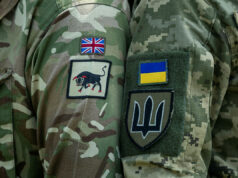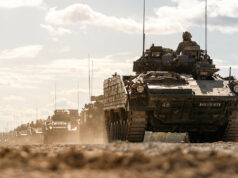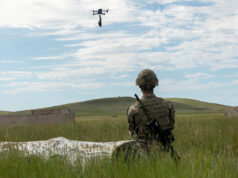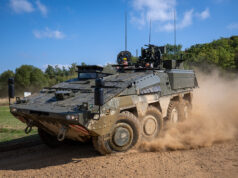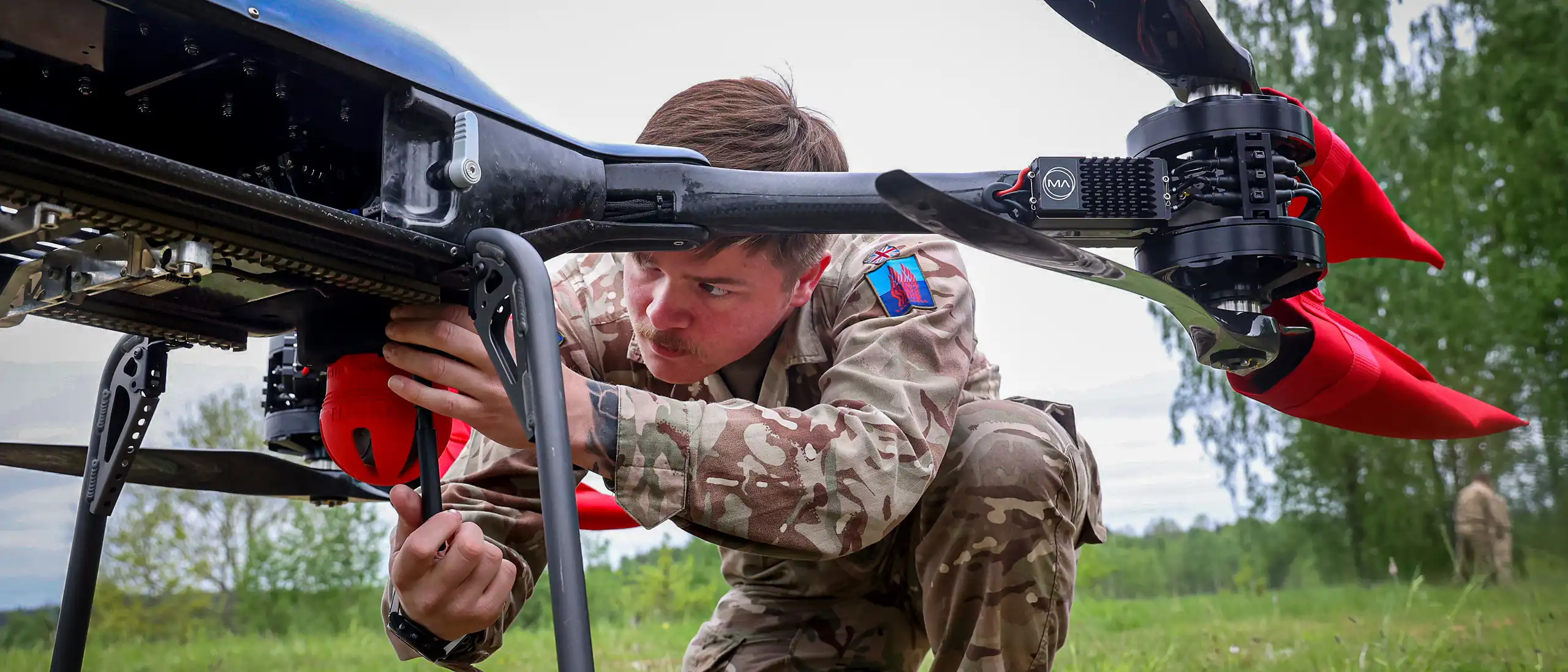
The 2nd Battalion, The Royal Regiment of Scotland became the first British Army unit to test new warfighting technology, including loitering munitions, during Exercise Spring Storm 26, a defensive NATO exercise held in Estonia, the British Army stated.
Operating as part of the UK’s Forward Land Forces, 2 SCOTS supported Estonia’s national and collective defence, integrating into Estonian and NATO defence plans. As part of 4th Light Brigade, the battalion formed the main battlegroup and conducted battlefield training alongside NATO partners, tasked with defending against an incursion in the south-eastern part of Estonia, within 25km of the Russian border.
The exercise took place across public and private land spanning urban, rural and forested environments, and marked the first time the unit had experimented with loitering munition technology.
Captain Lachlan Broad, Adjutant of 2 SCOTS, was quoted describing how the systems changed the way soldiers operate: “It definitely changes the way we are operating. It moves us away from the old school approach of using binoculars and various night sights which we used to get ‘eyes on’ and allows us to see beyond our line of sight to anything that may encroach into our battlespace. Using this technology now means we have sensors that can quite accurately plot out an enemy moving into our area and we can then isolate the target and launch various effectors for prosecution.”
Alongside the loitering munitions, 2 SCOTS were equipped with a Dismounted Data System, a software system used to connect sensors, weapons and a command centre. Captain Broad was quoted explaining its function: “The additional piece of technology we have been using on this exercise is the DDS system. This is very similar to a mobile phone and connects to a radio which allows soldiers to speak and communicate securely during the exercise. It gives soldiers wider situational awareness at tactical level and is another mechanism to plan movement. The concept is similar to using mobile phones and GPS, which people are commonly used to. The soldiers have embraced the technology and its benefits, modernising their warfighting capability.”
According to the British Army, the drones being fielded are designed to increase lethality, with modernisation intended to enhance survivability and defensive capability rather than escalation. The Army describes its presence in Estonia as persistent, proportionate and aligned with international law.