

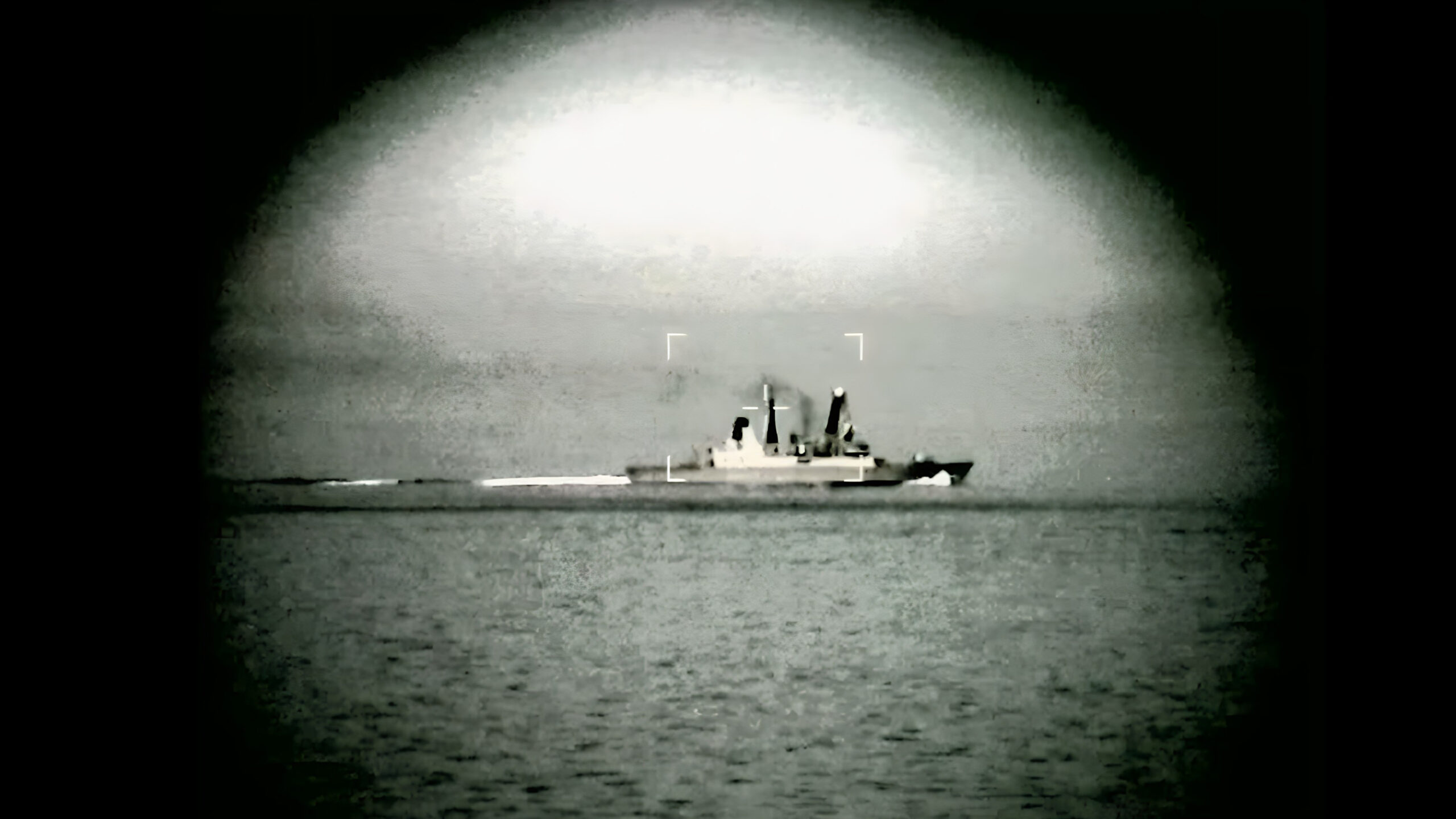
Royal Navy destroyer HMS Duncan has faced a sustained barrage of drone and missile threats during a concentrated 72-hour exercise off the Welsh coast.
The Portsmouth-based Type 45 headed to the Aberporth Range in Cardigan Bay for Exercise Sharpshooter, a scenario designed to place the ship under intense pressure while operating as part of a notional task group defending critical national infrastructure.
During the exercise, the Royal Navy say that Duncan confronted swarms of surface and aerial drones, some travelling at more than 200mph, alongside simulated cruise and ballistic missile threats. The scenario was intended to reflect the pace and complexity of modern operations, including those experienced by HMS Diamond in the Red Sea in 2024 when Houthi forces launched drones and missiles at merchant shipping.
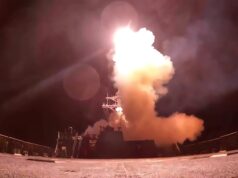
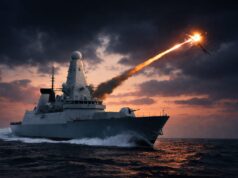
Duncan and her embarked Wildcat helicopter from 815 Naval Air Squadron employed a range of systems to identify and counter the threats. Weapons used included Martlet air-to-air missiles, heavy machine guns, the Phalanx automated close-in weapon system, the 30mm gun and the ship’s 4.5-inch naval gun. The ship also conducted virtual firings of her Sea Viper air defence system.
Commander Dan Lee, HMS Duncan’s Commanding Officer, said: “Sharpshooter was an invaluable opportunity to test our systems and our people in a demanding environment. The ship’s company rose to every challenge, delivering successful layered-defence engagements while simultaneously dealing with realistic damage-control scenarios. I am immensely proud of how the team performed; their dedication ensures that HMS Duncan remains ready to fight and ready to protect.”
Throughout the exercise the destroyer operated in Defence Watches, maintaining high readiness while responding to simulated internal incidents such as fires and damage control events. The ship continued to track and engage external threats while managing those parallel scenarios.
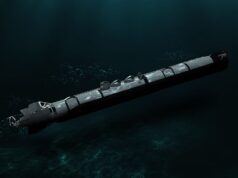
The exercise involved Hammerhead uncrewed surface vessels capable of travelling at up to 50mph, as well as QinetiQ’s Banshee Whirlwind aerial drone. Simulated maritime vessels and aircraft were also introduced into the scenario.
Petty Officer James Ings, responsible for maintaining the 4.5-inch gun, said:
“It was a good week for the gun. We put more than 200 rounds down it and did some proper naval gunfire support as well. The 30mm medium calibre gun threw up a few faults, but that’s engineering – you figure it out and you get it working again. Each time we fixed it, it was back up for the next shoot. That’s the job, and it was good to see it doing what it’s meant to do.”
Exercise Sharpshooter was delivered by the Royal Navy’s Fleet Operational Standards and Training teams alongside QinetiQ and Inzpire, combining live and synthetic threats to test readiness.
Will Blamey, Chief Executive of UK Defence at QinetiQ, said:
“We are proud to deliver dynamic, real-life scenarios that best-prepare our armed forces for the complex warfare challenges of today and tomorrow. Our combination of live and synthetic threats mean we can evolve training scenarios to ensure we are providing the very latest in threat representation, helping our warfighters to achieve mission-readiness at pace.”


Love seeing a mistakenly double uploaded Article… 😀
And the Third one has now disappeared, together with the Hegseth article 🤔
Strange things happening tonight.
Looks like she missed the sub though,,,,,,,,,,,,,,,,,,,,
Noted reference to multiple apparent faults/issue(s) w/ a 30mm mount during the exercise. Typical malfunction rate, or indicative of a systemic issue? If systemic, reasonable to acquire the new 40mm systems for T-45s, at pace? Excellent to learn RN is adapting training to accommodate changes in threat profiles. There are some seriously lethal neighborhoods across the globe. 🤔👍
It is just what happens when you put guns on ship – the salt water works its magic plus some wear and tear and…..
Oh … duh, fortunately, most USAF aircraft do not routinely encounter salt water. However, those doomed to sail in Poseidon’s/Neptune’s realm … 😱
They could also update the 30mm to align it with the USN latest. Most of those on T45 haven’t been updated since Fitted new.
Don’t worry, neither have the “Killer Tomatoes”.
The 30mm problem raises the issue about more complex systems breaking down more often. It’s ok to say it was fixed for next serial but in a real situation that could mean taking damage. That then compounds as modern ships are in many ways more ‘delicate’ than their ww2 counterparts tho often bigger they carry electonics and sophisticated weapon systems which cannot be as easily repaired as their simpler ww2 equivalents.
Loving that IR picture. Reminds me off WW2 periscope images 🙂
You can also the SAMPSON radar light up hinting at the power it is pushing out…
Cheers CR