

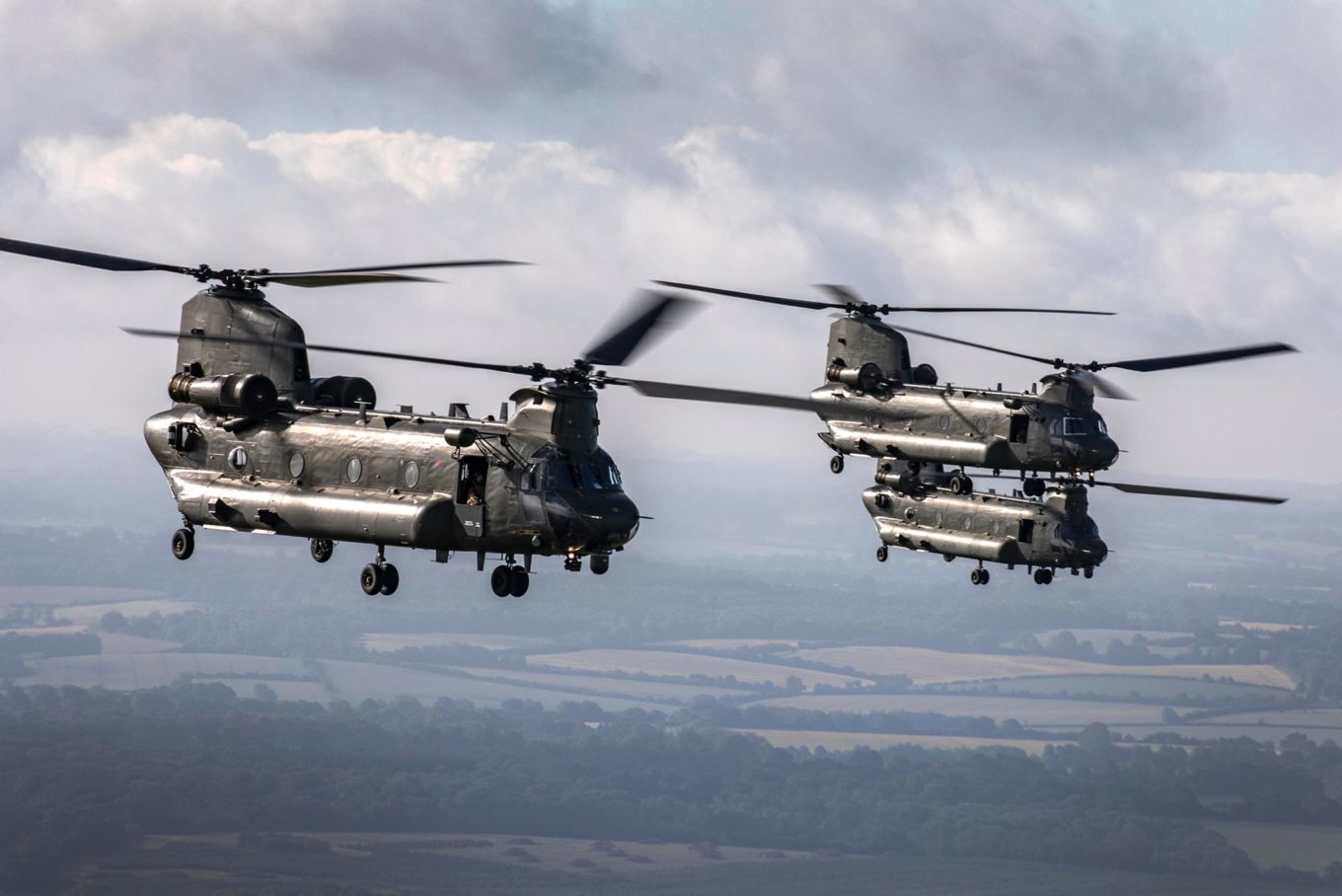
Chinook helicopters have been operating at low level as part of Exercise Kukri Dawn, a training deployment that has taken the aircraft over Fife, Edinburgh and Glasgow.
RAF Lossiemouth set out the detail in a flying notice issued on 25 August, confirming that Chinooks from 28 (AC) Squadron would be operating out of Leuchars Aerodrome from the first of September, and that the exercise would end by the twentieth.
The notice told residents what to expect and how the aircraft would be flown. “The aircraft may be seen operating around Leuchars, Fife, and surrounding areas for the duration of the exercise. Low-level circuits (50-100ft) over rural landscapes will be conducted as part of the aircrew’s training – farms and villages will be avoided at all times,” it said.
Horse riders were given specific advice, the station saying: “We advise horse riders to wear hi-viz during hacks (rider and horse!) so the pilots can see you and divert accordingly during low-level sorties.” Explaining the purpose of the flying, it added: “These training flights ensure Chinook aircrew are ready to secure the skies, no matter the flying conditions.”
A separate Ministry of Defence alert circulated in north east Fife on 24 August had already warned of an increase in day, and occasional early evening, flying between 1 and 18 September, saying that training would take place across Scotland as part of Exercise Kukri Dawn and that activity would be particularly noticeable in areas around Leuchars Station. That notice said: “The ability to operate effectively at low level is essential for Military helicopters in their role supporting troops on the ground. Realistic low-level training is therefore a vital part of preparing aircrew for operational duties.” It also stated that military helicopters would avoid overflying horse riders wherever possible, provided riders can be identified in sufficient time and it is safe to do so.
28 (Army Cooperation) Squadron is the Royal Air Force’s support helicopter training unit, based at RAF Benson in Oxfordshire, where it prepares Chinook and Puma crews before they join front-line squadrons. Deploying students away from their home station for the final phase of that training is a deliberate part of the design, since it obliges the squadron to operate as it would when deployed and puts crews into terrain and weather closer to what they will meet on operations.
Sorties this month have covered a good deal of ground too, one Chinook operating under the callsign KUKRI1 was tracked this morning leaving the Leuchars area and running south west across Fife by way of Cupar and Kinross, before crossing the Forth at South Queensferry and continuing over Edinburgh and the eastern edge of the Pentland Hills. From there it worked west into Lanarkshire and around the southern and eastern fringes of Glasgow, taking in Larkhall, East Kilbride, Rutherglen and Cumbernauld, before turning back north with further orbits recorded near Stirling and Alloa.
Low-level rotary flying over built-up areas of this kind is, of course, less common than the rural circuits described in the flying notice, and it tends to generate a good deal of public interest.
We have asked the RAF for more information.






I feel safer already knowing our £100 million chinooks are keeping the UK safe everyday,
God Bless Boeing 🫡🇺🇸
😂
Seems very quiet in the comments section this last couple of days. Possibly a few people have been down to Dover or Portsmouth 😆
I don’t see any reason to post, getting tired of it if I’m honest, nothing but egos, rows and politics.
If there’s something worth commenting on Defence wise then fine.
There’s only so much one can say about hot air.
The beasts came right over my head this morning. Blessed!
Stunning sight