

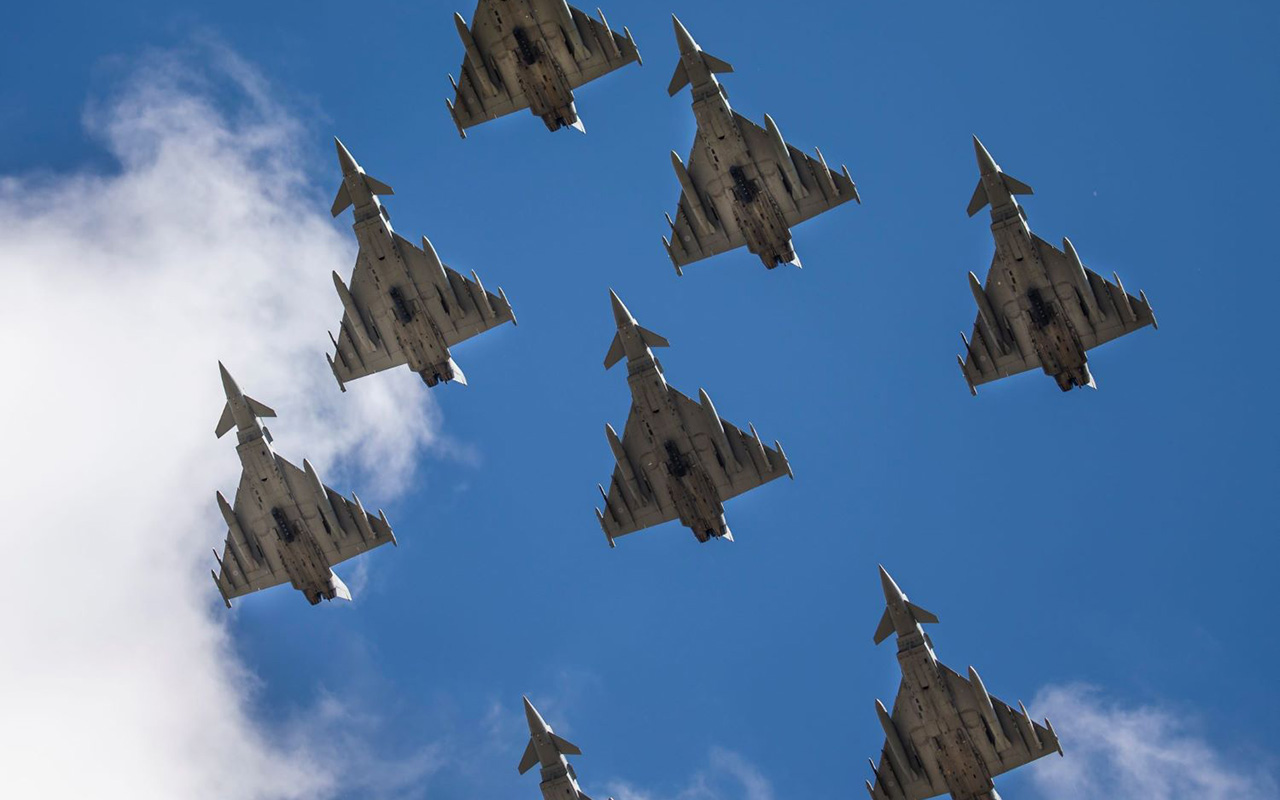
The aerospace, defence, security and space sectors added £46.8 billion to the UK economy in 2025, a 65 per cent increase over the past decade, according to new figures from the trade association ADS.
The data shows the sectors generated almost £110 billion in turnover last year, up 62 per cent since 2015, while employment grew by nearly 40 per cent to reach 468,500 people, including 29,000 apprentices. Productivity across the combined sectors stood at £99,900 output per worker, ADS said, nearly a quarter higher than the UK average.
Exports grew by more than two-thirds over the decade to reach £50 billion, now accounting for 45 per cent of sector turnover, and ADS said two-thirds of the sectors’ jobs are located outside London and the South East, with the largest regional employment in the South East, the South West and London.
Within that total, ADS’s defence sector figures show turnover of £36.5 billion, up 66 per cent over the decade, and value added of £15.8 billion, up 70 per cent, with 189,500 people employed, a rise of 35 per cent. Defence exports, calculated on a five-year average, reached £10.8 billion, up 34 per cent over ten years and now accounting for around a third of the sector’s revenue, while private investment in defence research and development reached £4.3 billion, up 187 per cent over the decade, and productivity reached £83,400 per worker. The aerospace sector recorded turnover of £41.5 billion and value added of £14.3 billion, with 113,000 employees, while the security and resilience sector reported turnover of £27.6 billion and 149,500 employees. Space sector figures, which run on a longer reporting lag, show turnover of £18.6 billion and 55,500 employees for 2022/23, the most recent year available.
Kevin Craven, CEO of ADS Group, said: “After a period of significant economic and geopolitical uncertainty, our industries have demonstrated remarkable resilience and continue to serve as the industrial foundation on which our nations rely upon. The contribution our sectors make to the economy, and to communities across the UK, continues to grow, supported by an expanding and highly skilled workforce.”
Craven also struck a note of caution about what comes next. “We are now at a pivotal moment. To sustain this momentum, industry needs clarity and certainty from government. Rising business costs, constrained access to finance and persistent supply chain pressures continue to hold back the full potential of our sectors. If we are to unlock future growth and drive investment in overseas markets, bold and decisive action is needed now more than ever,” he said.
The figures land in the same week the government has announced a run of new defence commitments, including the UK-led $50 billion European deep precision strike initiative, the £2.4 billion amphibious ship partnership with the Netherlands, and the £4.6 billion GCAP contract, all of which flow through the same industrial base ADS represents. The trade body’s own figures show defence exports rising even as the sector faces what Craven described as rising costs and constrained finance, a tension the Defence Investment Plan’s new £50 billion export finance facility and its energetics and munitions factory programme are intended to address.
ADS’s data is compiled from the Office for National Statistics, Oxford Economics, the Department for Business and Trade, the Ministry of Defence and other sources, with 2025 figures presented as first estimates and the space sector’s data understood to lag by around three years.









Yes and if the politicians and Treasury had released finance earlier it would have been be much better instead our competitors are forging ahead
They have no idea of business
And yet , when welfare and benefits are maximally refed into the economy it is ignored…..obvs a lot of rental income is then taken out of the economy and the usual profit margins also persist for groceries and bills and expenditure all with the appropriate taxes to gvmt….
……my narrow point is that digital pretend money is recycled in both cases and winners and loses are created and penalised without (humanised) thought nor care.
It is a tiny drop in the ocean to insist that 60% of defence spend create jobs in the UK and is too little too late in our massive sold off service economy to achieve an equitable equilibrium.
As an ex NHS nurse (burned out) who experienced suppressed wage growth and cheapened support due to an influx of cheap, foreign nurses and frank understaffing of acute wards and departments. I ask why should defence be differently treated?
Government benefits represent a cyclical redistribution of wealth rather than a driver of economic growth. The process begins by taxing domestic workers and moving that money to benefit recipients who then spend it. When these recipients buy goods made outside the UK, a large percentage of that capital permanently leaves the domestic system, resulting in a net drain on our economy. Even in the absolute best-case scenario where the money is spent entirely on British goods, it merely recirculates existing domestic capital. This makes the system a break-even scenario at best, not a true economic contribution. In contrast, defence exports represent a genuine net contribution to national wealth because they bring entirely new, foreign money into the UK economy. Now imagine if you need to borrow to pay for benefits even break even scenario doesn’t work because you have to pay interest.
ignoring the point that a lot of Universal credit payments go to people who are working, in efect just toping up wages that companies don’t want to pay
I would say defence is not treated any differently. The government of the day distributes tax revenues in feudal fashion in accordance with its political ideology – capital or labour – favouring the sponsors who elected it. That’s how it works in ‘normal’ times. Partisan party priorities and the structure of society get changed only when there is a threat to the survival of the whole of society or the entire economic system which affects all classes e.g. covid or war. Wars and epidemics are the means by which society itself is changed e.g. the Black death changed the balance between capital ( land owners) and labour. WW1 brought universal suffrage and WW2 brought universal secondary education, the NHS and women drivers 🙂
WW3 is currently underway. – it’s just distributed – US and Greenland, Ukraine, Sudan, Gaza, mass people displacement, immigration, famine, China’s fishing fleet etc. Hence the many conflicts being fought for land, energy, food and water and secure borders. The UK is govt is responding with further changes which will favour labour over capital (employment laws, mansion tax, nationalising rail, water), releasing more hoarded land ( planning laws), renewable (secure) energy ( net zero), increased defence spending ( some), partnerships with like minded friends and neighbours ( especially in defence), protecting the vulnerable ( NHS spending, more cheap buses). Buckle up, it will be a rough ride. For what it’s worth I think the electorate are acquiring clearer perception. There’s not much to choose between Labour, Tory and Libdems. I think polls are starting to shift away from extreme right and left snake oil solutions back towards the sober ‘centre’. People are beginning to accept reality.
Anyone know the comparative figures for the @500,000 Civil Servants ? 🤔
The Greens (aka the new Monster Raving Loony party) would ensure this type of info is never give to the public! They must love Labours efforts at restricting free speech when it comes to social media!
While recent export figures are positive news, the UK is sliding in the global defence export rankings, meaning these numbers could have been much higher. A major vulnerability lies in our reliance on joint international projects. While these partnerships sound ideal, they require every participating nation to agree on both export rights and practical operational use. Imagine a scenario where the UK commits to a conflict to protect national interests, and the Prime Minister orders a strategic strike on an enemy vessel. If a partner nation—led by a disruptive figure like Viktor Orbán—disapproves, they could instantly withhold vital components for weapon systems we are burning through at a rapid pace. This risk is far from hypothetical. We have already seen Hungary block crucial aid to Ukraine, Germany halt Eurofighter components to Saudi Arabia, and the United States cancel Turkey’s F-35 purchase.
Note I don’t do replies. Life is to short😀