


British autonomy firms have launched Autonomous UK, a trade body calling for 5% of the defence budget to go on autonomous systems by 2030 and warning that the Ministry of Defence’s budget for new uncrewed systems is set to fall from £330m to £160m, according to the new body.
The body launched at the RAF Club in London on Wednesday morning in front of more than 120 guests from industry, Parliament, government and the Armed Forces, with Will Stone MP, the Labour MP for Swindon North and Chair of the APPG for the UK Defence Supply Chain, giving the keynote address. It has 16 founding member companies ranging from start-ups and scale-ups to established manufacturers across hardware and software, and says it is the first new defence trade body in the UK in more than 27 years and the only one in the world dedicated solely to autonomous systems companies.
Autonomous UK warns that the UK is falling behind allies and adversaries that are rapidly increasing their spending on drones and autonomous systems, and that existing rules written for crewed ships and aircraft are holding the sector back. It says that under the Defence Investment Plan, the MoD’s budget for new uncrewed systems is set to fall from £330m in 2026-27 to £160m in 2029-30.
Its manifesto sets out five asks of government. Under “fund it”, the body wants a published, rising share of the defence budget for autonomous systems, reaching 5% by 2030, with one budget line Parliament can track. Under “buy it”, it wants the ministry to buy at the speed of the threat and make bid and assurance demands reflect contract values. Under “test it”, it wants faster testing, with fairly priced access to ranges, airspace and sea space and fixed turnaround times. Under “certify it”, it wants the development process and safety case certified once, with software updates then allowed without full requalification every time. Under “scale it”, it wants one published calendar of every MoD funding round, from trials to production, so firms can better prepare. Autonomous UK says most of the asks need no new money and can be delivered through changes to policy and process, and it is offering the manifesto as the industry’s input to the 2027 Spending Review.
Will Stone MP said: “The way we do warfare is fundamentally changing. To ensure our soldiers get access to the best possible kit and equipment, we need to address the challenges industry is encountering. Whilst there are some fantastic trade bodies out there representing multiple areas of defence, the autonomous systems sector faces specific challenges and as such requires a trade body like Autonomous UK that can hyper focus in and create policy at an agile rate and keep up with the industry’s rapid pace.”
Michael Martins, Director-General of Autonomous UK, said: “What is clear to our founding Autonomous UK members and companies in the defence sector in the UK is how out of date many of the rules in this space are. We limit the size of autonomous vessels we can test so they can’t be used to patrol the GIUK gap. We restrict how far drones can fly in training to a fraction of the distances seen in Ukraine. And we make firms recertify kit after every software update. These rules hamstring our forces’ ability to train and to confront adversaries who face no similar domestic barriers.
“Our message to government is simple: fund it, buy it, test it, certify it, scale it. Our founding members are building the products that make our industrial base stronger, our deterrent sharper, keep our service personnel safer, and bring the investment and jobs that underpin our national strength.”
Joe Dransfield, Chair of Autonomous UK, said: “Autonomous UK will work with the Government to set the standards, shape the regulation, build the skills and earn the public’s trust. That’s what Autonomous UK members have come together to do.
“Our ambition is simple: to make the UK the place where autonomous systems are safe enough to trust and fast enough to matter.”
The founding members are Arx Robotics, Bittium, DeltaQuad, Evolve Dynamics, Frankenburg, Intelic, Marlborough Communications, Platform Aerospace, Quantum Systems, RSI Europe, Andorite Labs, formerly Saif Autonomy, Saronic, Seeing Systems, Skyports Drone Services, STARK and Vantor.
Vito Tomasi, Managing Director of Quantum Systems, said: “Quantum Systems’ uncrewed systems have been proven where it matters most: in Ukraine, where they carried out more than 19,000 missions last year. What we learn there shapes every system we build. We are bringing that to Britain. We have made a long-term commitment to the UK, with plans to invest up to €50 million over five years in British engineering, training and support. Our aim is simple: to offer Britain’s Armed Forces battle-proven capability across land, sea and air, backed by skilled people based here. Britain needs a specialist voice for this sector, and we welcome the launch of Autonomous UK”
Alex Le Maitre, CEO of Seeing Systems, said: “A small contract carries the same assurance demands as a big one. We need a contract to get our people cleared, and cleared people to win the contract. We design and build our systems in the UK, and scaling those demands to the size of the work would let far more firms like us compete.”
The government has billed the Defence Investment Plan as its largest ever drone investment. Ahead of its launch on 30 June, the Ministry of Defence said more than £5 billion over four years would fund a Hybrid Navy of uncrewed vessels, the Army’s RAPSTONE, NYX and CORVUS drone programmes, a national Collaborative Combat Air programme and Storm Shroud for the RAF, and a new Uncrewed Systems Taskforce to field autonomous capabilities with industry, according to the government.
The plan also gives £310m to the Uncrewed Systems Centre in Swindon, including the DroneTEX facility, which will lead on standards and regulation for uncrewed systems, and opens up 2,700 square kilometres of the British Army Training Unit Suffield in Canada to uncrewed systems activity, as we reported in July. An online test and evaluation marketplace was due to launch this year.
Several founding members already supply Britain’s forces. In September, Evolve Dynamics and Marlborough Communications won parts of a £16 million Army order for more than a thousand small drones under Project RAPSTONE, announced alongside the Tekever AR5 deal to replace Watchkeeper, as this publication reported. In July, Frankenburg was one of three firms to share £3.16 million to develop low-cost drone interceptors, the first contracts placed under the five-nation LEAP programme, as we previously reported.
STARK opened its first production line outside Germany last year, a 40,000 square foot factory in Swindon expected to create more than 100 skilled jobs and build AI-enabled uncrewed systems including the Virtus loitering munition used by Ukrainian forces, as reported by this outlet.

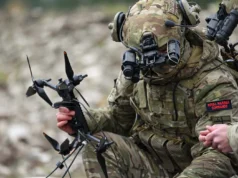




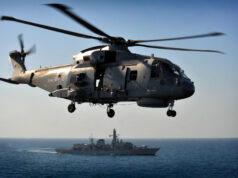


‘We limit the size of autonomous vessels we can test so they can’t be used to patrol the GIUK gap. We restrict how far drones can fly in training to a fraction of the distances seen in Ukraine. And we make firms recertify kit after every software update. These rules hamstring our forces’ ability to train…’
The problem for the defence procurement sector is the same for every industry sector; the reason for the shambolic fankle that the country is in:
Overregulation by a bloated, inefficient and over mighty public sector bureaucracy.