


A German warship has fired an Israeli-made LORA ballistic missile during a live test in the North Atlantic, with the German Navy saying the launch demonstrated a strike capability with a potential range beyond anything it had previously operated.
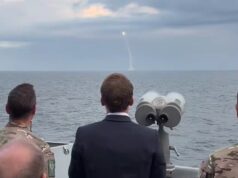
German media reports, citing a German Navy spokesman, said two German frigates had deployed to waters between Ireland and Iceland for the test on Tuesday night. Images from the exercise show a containerised launcher positioned on the deck of a German vessel.
The messaging here could hardly be clearer. By disclosing a test that had deliberately been kept secret, NATO was sending a direct signal to Moscow: European forces are developing longer-range strike options, and not every capability will be visible before it is ready.
NATO Allied Joint Force Command Brunssum said the test had been kept secret until after it was completed and involved a German frigate firing the missile in the North Atlantic.
The command stated: “Kept secret. Now revealed. The German Navy just tested the Israeli LORA ballistic missile from a German frigate in the North Atlantic — quietly, deliberately and with a range of 500+ km.”
Kept secret. Now revealed. 🚀🇩🇪
The German Navy just tested the Israeli 🇮🇱 LORA ballistic missile from a German frigate in the North Atlantic — quietly, deliberately and with a range of 500+ km.
NATO 3.0 looks like this:
Europe is taking more responsibility, building serious… pic.twitter.com/K8x2JE61Gs— NATO Allied Joint Force Command Brunssum – JFCBS (@NATOJFCBS) September 2, 2026
It added: “NATO 3.0 looks like this: Europe is taking more responsibility, building serious capabilities and keeping a few cards close to the chest. Deterrence just got a little more interesting.”
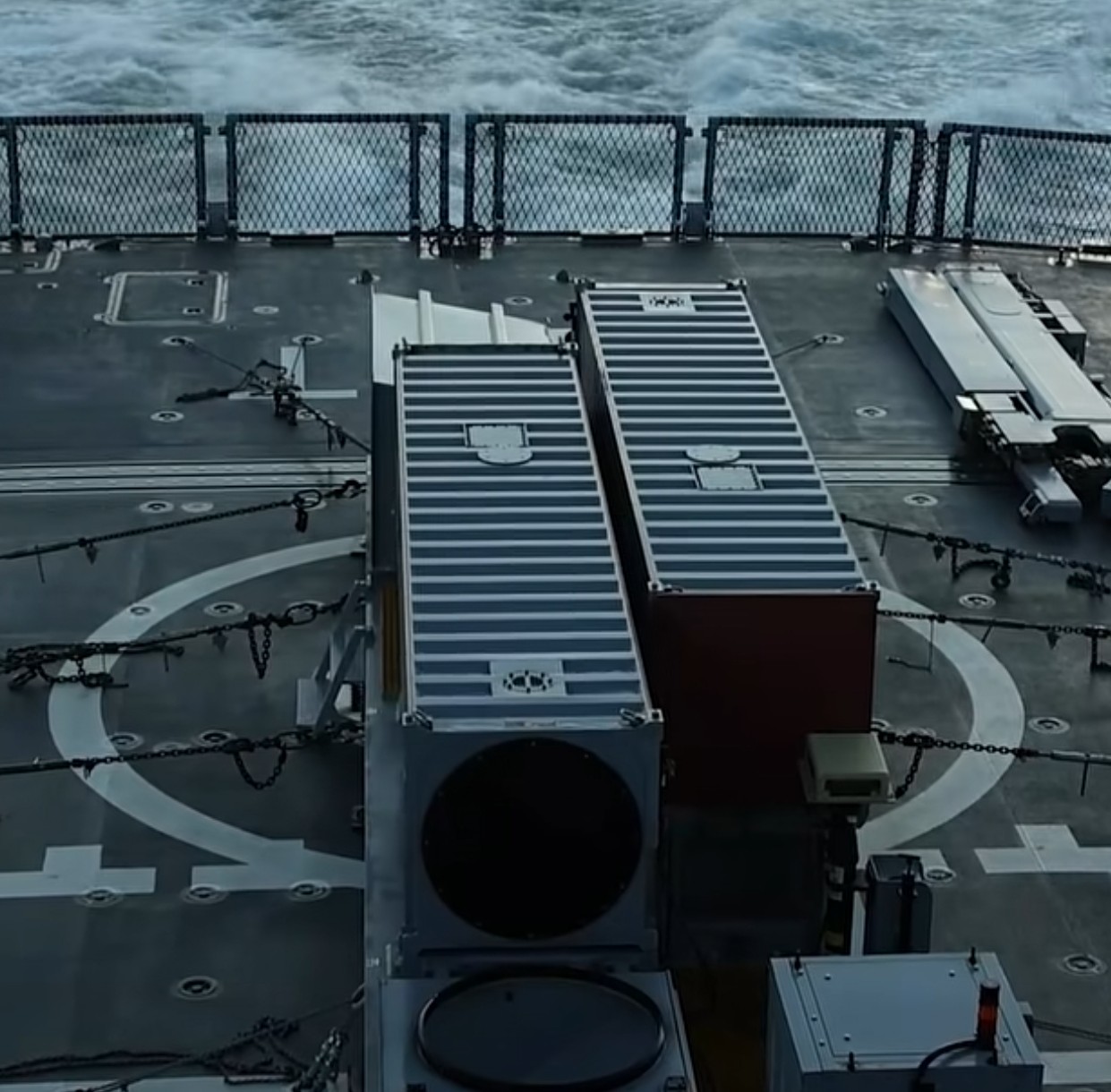
Vice Admiral Jan Christian Kaack, Inspector of the German Navy, said: “With the successful launch of a ballistic missile last night in the North Atlantic, we made naval history. I am extremely satisfied with this achievement.”
Kaack added that the system “can be successfully deployed from our units, and the potential range exceeds anything we have known before.”
In his original statement, the German Navy chief said the trial opened a new chapter for maritime deterrence and readiness, stating that the system could be operated successfully from German units and that its possible reach exceeded previous German naval capabilities.
The test was conducted with Israel Aerospace Industries’ LORA, or Long-Range Artillery Weapon System. According to IAI, the missile has a range of around 400 kilometres and an accuracy of within 10 metres, while NATO’s public account of the German test referred to a range of more than 500 kilometres.
Israel Aerospace Industries said the missile was launched from an operational German vessel equipped with a command trailer and launcher. According to the company, the missile followed its planned trajectory, navigated to the target and successfully struck it, with both the weapon system and missile meeting the objectives of the trial.
Boaz Levy, Chairman of IAI, said: “This is an unprecedented achievement for IAI and the Israeli Ministry of Defense. The successful trial of the LORA missile, launched from a naval vessel and striking its target with exceptional precision, took place overnight in Germany – the country where the world’s first ballistic missile was developed.”
He added: “This trial demonstrates Israel’s technological strength and the unique cooperation between Israel and Germany. It marks another significant achievement alongside the deployment of the Arrow 3 system on German soil, further strengthening Germany’s defense and deterrence capabilities and deepening the strategic partnership between our two countries.”
IAI chief executive Guy Bar Lev said: “Israel Aerospace Industries is proud to take part in strengthening the strategic cooperation between the State of Israel and the Government of Germany. This significant milestone is underscored by the operational live-fire exercise (OPEX) of the LORA system, one of the world’s most advanced and combat-proven ballistic missile systems.”
The German Navy is using its OPEX initiative to trial technologies and operational concepts as part of its Marine 2035 and Beyond programme. The process is intended to allow new systems to be tested rapidly under conditions intended to resemble operational use as closely as possible.

The North Atlantic launch comes as Germany expands its investment in long-range strike and air and missile defence. The country has also begun fielding the Israeli-developed Arrow 3 ballistic missile defence system as part of its wider effort to strengthen national and NATO defensive capabilities.







Umm the RN needs something like this to supplement its sub launched tomahawks and storm shadows..
Germany has the right idea, what can you bring to the table fast that can hurt Russia.. because pain is the only deterrent.
I think there are a couple of gaps in our arsenal, but in particular, the RAF and RN lack something that can hit land targets hard and fast.
An air-launched ballistic missile, perhaps? A copy of the Russian Killjoy? It’d tank the range of the Typhoon, though.
At the upper end of the range, there’s Dark Eagle. Some early T83 concepts had considerations for replacing some Mk41 cells with space for 12 Dark Eagle Missiles.
More realistically, they’d be procured in very small numbers (a stock of 50 or so) in the mid-2030s for the new submarines. The Russians are probably going to try and whack Portsmouth, Devonport and Faslane with submarine-launched missiles in any conflict. It makes sense to be able to threaten Murmansk in the same way.
Way to pricey for everyday use, though.
“An air-launched ballistic missile, perhaps? A copy of the Russian Killjoy? It’d tank the range of the Typhoon, though.”
Israelis use their own ALBM’s in F16 and F15, they operated against Iran which is not close range.
Huh, I didn’t know that. I was aware they used them on their F-15s, but not the smaller F-16s. Thanks!
Air LORA goes on F16, and they also have a sort of air launch GMLRS.
If GCAP can carry Stratus internally, which will weigh around the same as the 1300kg Storm Shadow, then I could see a use for having a pair of absolutely huge external pylons for even larger weapons.
The Israeli F15s can carry at least the 1900kg, 1000km Blue Sparrow missile/target and might (ambiguous, possibly only C130 launch) be able to take the 3130kg, 2000km Silver Sparrow too.
Having 3000kg pylons might well be possible given the chonky delta wing and would allow DPS to include a single stage air-launch missile and a longer-legged two stage surface launch one as well. Would be too big for mk41 and too small for unitary VPM use (4- or 3-pack?) but otherwise a useful long range system from land and air.
Might also reduce dependence on AAR if plumbed for fuel, though they’d be stupidly draggy. I wonder if Falklands air bridge without a trail would be possible?
On second thoughts, perhaps just in-weapons bay tanks for less drag?
I think we should develop our own Dark Eagle equivalent with Germany. We could have a naval version just like PSM which could also be launched from land. They can be tripled packed into the tubes on Common Missile Compartment on the Dreadnaught class or put on the SSN A giving us a handy Trident II replacement should we find ourselves cut off from US supplies in future. The missiles can easily come with different warheads including triple MIRV’s and or a Hypersonic glide vehicles and each can come with a nuclear option. This is exactly what China has with the DF26.
Such a weapon solves so many UK and Germany strategic issues. Hopefully such a weapon is already under development.
It could effectively give us a nuclear triad in one go.
Using a Dark Eagle calibre weapon to replace Trident would not be a good idea, though of course having it as a backup would be nice. 2500-3000km range means no one submarine could hit both Moscow and Beijing, which loses us a lot of nuclear credibility.
But I think we can agree on getting DPS and other ballistic/HGV missiles on as many platforms as possible.
I’m looking at as an emergency replacement for trident that we could develop now with Germany. We can build all the missile as a stockpile for conventional use or as a sub strategic nuclear capability having nuclear armed hypersonic glide vehicles on them.
If we needed a rapid replacement for Trident then it’s very much just a case of Triple packing them into the Common Missile Compartment on the dreadnaughts.
An SSBN armed with 36 missiles capable of carrying either three MIRV’s or a Hypersonic glide vehicle is still a hell of a deterrent against Russia.
We’re going to need our own now Burn’em and Grommet are set on alienating Israel. Not much treading lightly and for what? A few votes here and there for some nonentity.
Germany is working on a Joint Multi-Domain Effects HQ, a 3* HQ that’s entire purpose is co-ordinating strategic level fires across all three services. I think we’ll be seeing much more of this from the Bundeswehr in the future, but ground, and air as well as at sea.
I like this flexibility. i wonder if sometimes will not be good to have just a weapons carrier ship with maybe a bridge and essential sensors and nothing else, Stanflex to the ultimate consequence, a large free level platform like an aircraft carrier flight deck, where varied weapons can be deployed by truck/ crane and attached to the platform by operational needs.
The Israelis congratulating Germany on being the first to develop a ballistic missile is not something I was expecting, somehow.
If only the Bismarck and Prinz Eugen had this capability in 1941
Now everyone had a good giggle at the dip about a deck launched long range missile for the carriers.. Germany now has a deck launched ballistic missile..that’s in a shipping container.. how many shipping container could you stash on a Uk carrier and still keep up flying opps for sea control CAPS.
Slight difference: this is the Helicopter deck of F224 Sachsen Anhalt, and given how much of the helicopter deck the container is taking up it won’t be launching it’s Helicopter any time soon. The big objection to deck launched missiles on a Carrier is that by doing that you can’t operate aircraft due to FOD and obstructions.
For a Frigate with one (or in F224’s case 2) Helicopters, that shortfall can be taken up elsewhere (especially if you are deck launching these from the F123’s instead of the 125’s, since their hangars can’t fit more modern models entering service) so not the end of the world. But for the Carriers? Less so.
Also side note the much maligned F125’s are being very usefull recently for the Germans, testing out Ballistic missiles today, being the test bed for navalised and containerised IRIS-T launchers yesterday, who knows what tomorrow might bring. Guess being a 7,000t hull optimised for carrying SF comes with some advantages.
7000 tons of any warship is useful and if you don’t pact it full of weapons you can do all sorts.. it’s the same with the T31.
Not everyone. When that appeared i said it was a good idea in face of fast weapon development and the constraints of fixed installations. With an aircraft carrier like deck space you can chose between a couple 20m ballistic missiles, more 10m ballistics missiles, hundreds drone launchers, all around gun turrets etc, etc,… it is a work bench.
The real nastiness could be as a strategic range one way drone launcher.. get yourself a 2000km range drone with a 100kg warhead have them so they can be packed for storage and assembled in the hanger.. you could launch an a ton of them at Russian from all sorts of places with a carrier… infact even if you happened to be doddering around the pacific you could hit the Russians hard in that direction as well…
I’m having horrible flash backs from the SDR 2025 Jonathan 😀
The containerize approach is the right way to go with threats and counter threats constantly evolving and ship design, construction and refitting taking years and being very costly, IMO a ship should have atleast 60% of available deck open for modular add-ons such as direct energy weapons, long strike capabilities, additional air defense etc. having specialized vessels is a luxury
That is what i pointed above.
Russia knew about this launch before the ship put to sea.
It is posturing by Germany and brings nothing to the table a bit like the Astutes – all tied up alongside.
Russians understand death – so just enable the ability to stop Russians breath oxygen and then they will take the threat seriously.
The only good Russian is a dead Russian.
This type of capability is another reason why the RN should not entirely ditch the idea of ‘big ships’.
Long range strike, and the ability to counter such weapons, seems to be the way things are going. Some of these systems will be cheap easy to manufacture whilst others will be more capable and expensive but regardless of whether they are cheap or exquisite they will be big so a big platform will likely be needed if sufficient depth of fires is to be carried. Another argument for a big platform will possibly be around stability. These systems may well need a reasonably stable firing platform which will be a challenge in the North Atlantic especially in the autumn and winter months. I can’t see these big systems being easy to launch from a 1500 to 2500 drone in a North Atlantic storm.
So while I think that the hybrid navy is generally a good idea, I just hope that it doesn’t exclude consideration of bigger hulls should it prove to be a reasonable solution to a potential problem. I do have a concern that in breaking the current orthodoxy there is risk of simply creating new orthodoxy that becomes obsolete rather more quickly than many might expect, i.e. small ‘cheap’ drones are the answer to all our problems. I suspect that will prove not to be the case.
We should also be aware that the flexibility of containerised systems, be they drone systems on escorts, missiles or C2 nodes, comes with a cost, namely, the container structure itself which takes up room and weight. This will mean that a containerised system will not be as efficient in payload terms as a conventional missile farm or specialised drone hanger, for example.
So I can still see the need for ‘big ships’ as well as some advantages. This seems to fly in the face of the current (developing?) orthodoxy that big is expensive, but if the ships were built as a container ‘carrier’ most of the ship would be empty space and “steel is cheap and space is free”. This would greatly reduce the cost of the ship, allowing the payloads to be procured as separate programs which in turn could potentially reduce the costs of those systems by allowing the same system to be carried by a wider range of platforms, from special amphibious vessels to general purpose container carriers. The container carrier if designed as an ‘escort’ variant would need to be built to warship standards e.g. survivability, speed and maneuverability, so it will be more expensive than a conventional container ship or the current emerging mothership concepts, but given most of the expensive systems would be procured separately the actual cost of the ship would be greatly reduced compared to the current generation of escorts. The reduced cost of the ship would be further ‘politically’ entrenched because the cost of the systems to be carried would vary from ship to ship, mission to mission meaning that the mission systems would more correctly sit in a separate cost center.
Separating out mission systems into separate cost centers and procurement programs could give rise to further cost savings as there would be the potential for systems to be procured more quickly and in greater numbers as in effect the same system would be deployed across a greater number of vessels. It might also great reduce refit and upgrade costs.
However, the biggest potential saving would be with regards to integration. Plug and play is obviously implied in this approach, which to be fair is simply taking the RN’s POD concept to it’s ultimate level, i.e. a standard set of escort / patrol hulls capable of accepting any POD. The key element would be the digital framework into which every POD system and hull would need to fit. Hopefully the RN is working on this and the MoD is ensuring that these efforts are Joint in nature i.e. all 3 services participate and adhere to the same digital standards.
There are potential complexities, for example, the implications for a completely standard hull when considering the differing requirements between an acoustically quiet ASW platform and GP/AAW ships that would normally accept a lower standard of acoustic isolation, but the choices are pretty straight forward a) full ASW acoustic standards across the fleet, b) mixed acoustic standards, c) lower acoustic standards across the fleet. Each option has their own implications and potential mitigations that could be dealt with either with more money in the case of option a), (unlikely) or by putting the high risk elements of ASW off onto drones in the case of c) and giving the container carrier/escort a reasonable level of acoustic isolation sufficient to provide the ship with a good chance to effectively defend itself.
None of the above would remove the need for the smaller T9x drone concepts. However, big ships going all in POD carriers would provide maximum flexibility whilst allowing the costs of hulls and systems to be separated out and thus properly recognise where the costs truly lie, hopefully, allowing for the better control of said costs. Also by physically decoupling much (but not all) of the ship and system development and build cycles should help with the shortening the time it takes to bring new systems capabilities into service and ship and system refits and upgrades could be separated as well potentially increasing ship availability.
PODS could in effect enable big ships to remain part of the escort fleet allowing big radar masts (and hence big radar horizons) to remain a feature/capability.
Cheers CR
The prerequisite for German reunification was not to remilitarize. Another promise NATO broke.
Proof shot….They’ll need to move these elsewhere to not block their helo pad.
Containerised missiles – and the Batch 2 are singing ”All I want for Christmas is you!!!”
Still an OPV but load a container on it and hey presto, good things come from little packages.