NATO has begun one of its most demanding anti-submarine warfare exercises in the Baltic Sea, with commanders saying ships will also face live drone attacks they do not know are coming.
George Allison in Stockholm
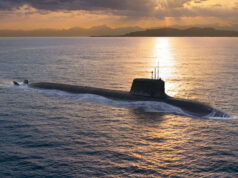
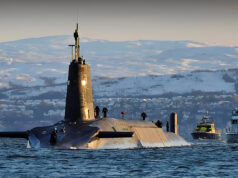
Exercise Dynamic Merlin 26 runs from 9 to 13 November off the coast of Sweden. NATO describes it as “a high-stakes game of hide and seek”, with German and Swedish submarines operating silently beneath the surface while warships search from above and maritime patrol aircraft scan the sea.
Surface ships from Standing NATO Maritime Group One (SNMG1), Canada, Denmark, Finland, Germany, the Netherlands and Sweden are taking part, alongside maritime patrol aircraft from France, Germany, Sweden and the UK, and thousands of military personnel.
The SNMG1 task group is made up of the Dutch combat support ship HNLMS Den Helder, which is serving as flagship, the German combat support ship FGS Berlin, the Canadian multi-role frigate HMCS Ville de Québec, the Danish anti-submarine warfare frigate HDMS Esbern Snare and the Finnish fast attack corvette FNS Hamina.
NATO Allied Maritime Command says the exercise builds on its earlier Dynamic Manta, Dynamic Mongoose and Playbook Merlin exercises, and “introduces new tactics, technologies and operational lessons, helping Allied forces adapt to an increasingly complex undersea environment”.
“A hotspot for some time now”
Speaking on board the Dutch support ship HNLMS Den Helder in Stockholm, the SNMG1 flagship, Rear Admiral Johan Norlén, Chief of the Royal Swedish Navy, described the Baltic as “a very unique and in some ways extreme area”.
“This is, as I said, a hotspot for some time now, and the strong presence [of] SNMG1 and ourselves and our allies in the area makes a very good opportunity [to] show our mutual commitments and also strong resolve to deter our adversary [from doing] anything else in the area,” he said.
He said the exercise was also a chance for Sweden, NATO’s newest member, to “show what we can actually contribute with inside NATO, and in this regard, in the underwater domain”. Norlén added that Sweden was “opting for CTF Baltic here in a couple of years”, calling it “Sweden’s way of also showing very strong commitment to the alliance”.
Norlén explained why the Baltic is so difficult for anti-submarine warfare, pointing to differing water temperatures caused by cold river water flowing into the sea. “The confined area here is actually the tricky part. The bottom is always in play,” he said.
Rear Admiral John Craddock, Commander Submarines NATO, said Dynamic Merlin was now in its third year “as we progress and we continue to evolve the [anti-submarine] warfare tactics”. He praised Den Helder as “an amazing ship” with “incredible capability”.
Rear Admiral Nicolas Molitor, the French officer commanding SNMG1, said the group had arrived in Stockholm on Thursday and held a pre-sail conference on board Den Helder on Friday with all the participants.
“[We talked] about the exercise, […] safety and security, but also [about] what is most important: how to work together, how to sharpen our technical skills, how to have a better interoperability between allies, and this is also building unity between the countries that are participating,” he said.
“This will also show the resolve of NATO of working together and deterring whoever adversary we have. That’s why we are practising here. That’s why we are practising with the experts of the area.”
Molitor said the exercise brought together two different kinds of navy. “We have the blue water navies, which are used to working in the Atlantic Ocean with deep waters, and we are here in an environment where the waters are […] very, very shallow, and this is very specific.”
He added that NATO’s presence in the region had increased “to have a good situational awareness about what’s going on”, and to protect sea lines of communication, “as the Baltic Sea is surrounded by NATO allies, and we have to make sure that all these allies, their interests, their territory, their population is protected”.
Live drone attacks
The commanders said this year’s exercise would go beyond hunting submarines to include anti-drone and anti-missile scenarios.
Craddock said the exercise would build up to scenarios where “the submarines are trying to move without being detected, and then the surface ships are trying to then find them and then report their position”.
“There will be a kind of a counter-drone element to it, because we realise that drone warfare is a real threat to everybody these days,” he said. “And so we need to understand what works and what doesn’t, so that we can go purchase the right [equipment].”
Asked by the UK Defence Journal whether enough is being done on counter-drone defence, given what has been seen in Ukraine, Molitor said the drone serials would be run live and without warning.
“They know that the threat exists during the exercise, but it will be live, so they will be challenged like it would happen in real life,” he said. “We have to practice and train as we fight, and so the ships will be faced [with] real life situations, and they will then just have to react, and we will see if they are able to detect, to react properly, and to destroy these targets.”
Molitor said some counter-drone systems were already fitted to ships and the exercise would show how effective they are. “It’s a domain that is in continuous evolution. So you have to be fast and have your systems improving along the way,” he said.
Norlén said the real challenge was handling threats above and below the water at the same time. “We always talk about drones or anti-submarine warfare or missiles. The bottom layer here is that we are here to test and train together in all three dimensions at the same time. That is what makes it really complex,” he said.
“If we can actually fulfil that, that will send a very clear message about both our cohesion and our strong capability together.”
He added that the exercise would test how ships of different sizes combine their defences: “One ship may not be able to control everything or to defend themselves in every sense, but together […] they have different layers of defence that can actually work much better together.”
Deterrence
Asked by the UK Defence Journal how important it was for deterrence and reassurance that allies see NATO conducting the exercise, Craddock said it demonstrated the Alliance’s ability to assemble forces quickly.
“It shows our interoperability […] the cohesion to being able to bring together eight different nations and have this sort of high-end exercise take place,” he said. “It also is a demonstration that if we need to convene quickly, that we could, because we already have that sort of interoperability and communication hammered out. And it is important for deterrence to show that you can, when necessary, bring together the right forces in the right location.”
He said the Baltic’s strategic importance made protecting the sea lanes into the region “essential”, adding: “To do this kind of rehearsal of concept in this location, where you need to have the mission succeed, it’s very important.”
Last year’s exercise included the Canadian frigate HMCS St John’s. This year Canada is represented by HMCS Ville de Québec, which sailed with the UK Carrier Strike Group in 2025.