

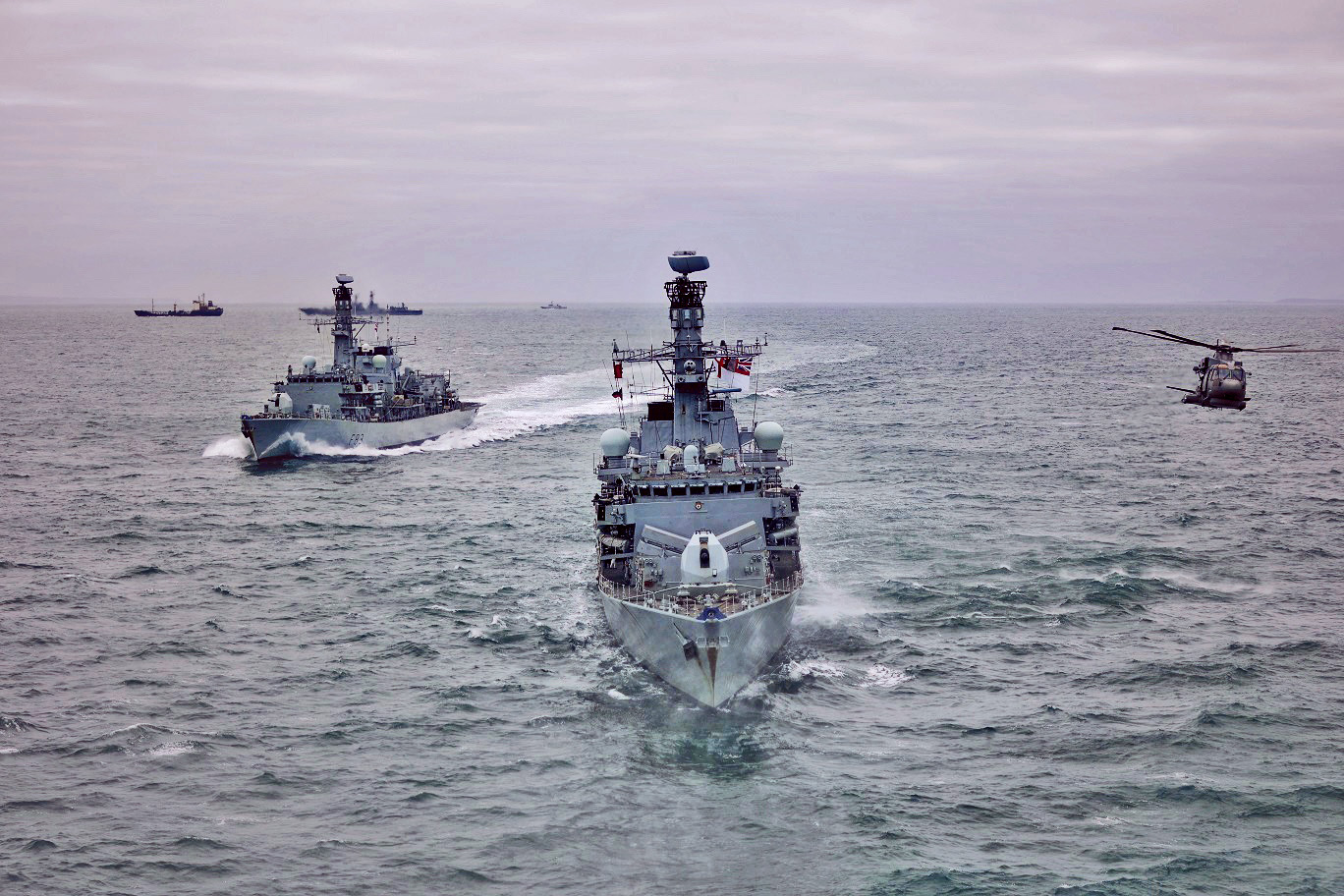
No further towed array-equipped Type 23 frigates should leave service until they are replaced on a one-for-one basis by new Type 26 vessels, and the Ministry of Defence has a serious anti-submarine warfare gap measured against its own military requirements, according to a report by the Defence Committee.
The committee, chaired by Tan Dhesi, the Labour member for Slough, sets out that the Royal Navy has a requirement for eight of its thirteen frigates to be fitted with the Sonar 2087 towed array to undertake anti-submarine operations, and that the fleet now stands at five such vessels.
Dhesi said: “The UK needs to be willing to address a hard truth: it does not currently have all the capabilities to operate successfully in the High North. Russian submarine and sabotage forces in the High North pose direct risks to the North Atlantic and the UK, including the nuclear deterrent. Despite this, the Ministry of Defence has accepted a serious anti-submarine warfare gap. Publicly available evidence of low availability among destroyers, frigates and attack submarines calls into question whether the UK can meet its commitments in the High North.”
The report concludes: “Measured against its own military requirements, the Ministry of Defence has a serious anti-submarine warfare gap. Towed array sonar-equipped frigates are central to detecting and tracking hostile submarines in the High North, the North Atlantic and UK waters, including around the UK’s nuclear deterrent bases. Reducing the fleet to five such vessels against a requirement for eight weakens the UK’s ability to respond to the Russian submarine and underwater sabotage threat and raises questions about whether the transition from the Type 23 to the Type 26 frigate capability has been properly managed.”
Its recommendation states: “Given the critical role of anti-submarine operations in the High North, the government should ensure no further towed array-equipped Type 23 Frigates leave service until they are replaced on a one-for-one basis by the new Type 26 vessels.”
The Royal Navy has had a requirement for nineteen frigates and destroyers since the 2010 Strategic Defence and Security Review, made up of thirteen frigates and six destroyers. The report records eleven in service, five Type 23 frigates and six Type 45 destroyers, which it puts at just over half of the requirement at fifty-eight per cent.
Admiral Sir Tony Radakin, then First Sea Lord, told the committee in written evidence in 2021 that hull numbers would dip to seventeen by the end of 2023 and that the Royal Navy anticipated returning above nineteen by the end of 2026 as new ships entered service.
HMS Richmond and HMS Iron Duke were both decommissioned in mid-2026, and the report notes that Iron Duke went through a five-year refit costing £103 million less than three years before it was withdrawn, and that the department had also planned to fit the ship with the Sonar 2087 towed array. Had both vessels remained in service, the Royal Navy would now hold seven towed array frigates.
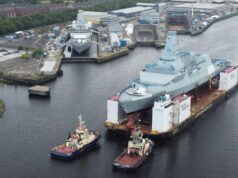
Eight Type 26 frigates will take over the anti-submarine role, with five Type 31 general purpose ships making up the remaining frigate requirement. The report attributes the gap mainly to ageing Type 23s being unable to continue in service to cover what it describes as the extraordinarily leisurely build schedule of the Type 26 ships, with up to ten years between laying down the first ship and its expected acceptance into service.
In written evidence the Ministry of Defence said anti-submarine warfare remains a core strength of Britain’s armed forces, and that it recognises frigates and destroyers as among the key capabilities delivering the Atlantic Bastion strategy and undertaking operations in the High North.








Ah well and good, but if the hulls are beyond economical support then the ship is done no matter what.
Hopefully Portland can have a new refit and extra 6 year of life!
If so we are at 5 type 23s (1 in refit) until 2030.
Then it drops to just 2.
However we will certainly have a good handful of more capable 26s and 31s (cheaper at least running costs )
To keep some sort of force up
Yep, it’s an odd thing for the committee to say it it is totally unrealistic
I’m not sure why “towed-array” frigates are specified as we got rid of the last GP frigate earlier this year: they are all ASW frigates.
Keeping Richmond was never a realistic proposition, and I support getting shut of that. Sutherland and Somerset won’t make it through another refit either, although we should avoid decommissioning them earlier than that. That could be until the end of the decade for Sutherland, but it says less for Somerset, which I think will only last another 18 months. Instead the maintenance money should be doubled up on Kent, Portland and St Albans, the three newest of the frigates, with whatever it takes to get them through a last refit and their following years.
Bizarrely, we first put NSM on Richmond, Somerset and Portland, with Richmond already gone, Portland going into refit next year and Somerset likely decommissioned at the start of 2028.
Right now, all eyes should be on Kent, about which I’ve heard nothing official for quite some time. That’s the canary in the coalmine.
I have a horrible feeling that they’re waiting for Glasgow to go to sea, so that they can use that ‘distraction’ to cover Kent being retired mid-refit.
Question being, when is Glasgow going to sea?
Early next year, by the looks of things.
If Kent goes, they all go, and heads should roll. I know that’s the doomsday scenario Jonathan has been predicting for some time, but I’ll continue to live in hope until the end of this year.
If we’ve heard nothing from Kent by January, I’m switching to his side. We can expect Cardiff to be commissioned early and scheduled for a dummy deployment in 2029, so that HMG can point to the shiny before the general election even though we’ll actually be down to three operating frigates. (When I was born, the number of RN frigates was three figures, not three ships!) HMS Active might also be accelerated, with the chocolate-teapot spec held for a couple of years, as even that will be so valuable the capability inserts will have to be put on hold, to yet more Treasury cheers, sotto voce.
And yet the OPV Batch 1s are still expected to be retired in 2028. Nothing like a frigate, but at least they are hulls and seem to be working.