

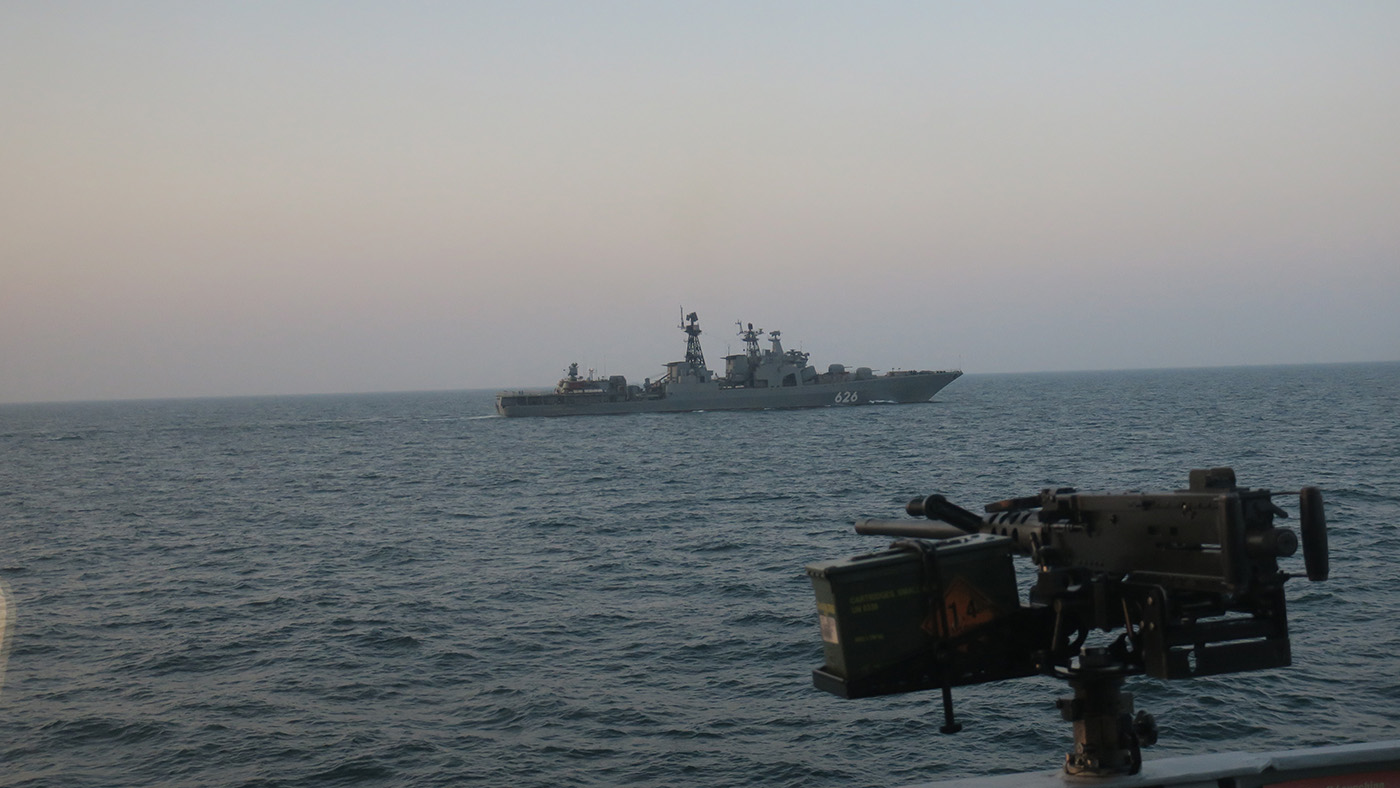
Liberal Democrat MP Jamie Stone has asked to meet Defence Secretary Wes Streeting over whether British warships are based close enough to Russian activity in the North Sea, after reports of a Russian warship jamming flights’ GPS, according to a letter he published on Friday.
Stone, the MP for Caithness, Sutherland and Easter Ross, wrote that most of the UK’s surface fleet is based in the south of England, far from where the activity is taking place, and that it takes a warship 35 hours to sail from Portsmouth to the waters off Wick.
In the letter, dated 26 November, Stone wrote: “As the MP representing the largest constituency in the mainland UK, one directly facing the North Sea, you’ll understand that I am concerned by reports in today’s press that, in recent days, a Russian warship has been jamming GPS (the Global Positioning System), which is vital to flights departing from and arriving into Scotland and other parts of the UK.
There is evidence that around 140 flights over northern Europe and the North Sea experienced this kind of interference on November 9th. This involved approximately 40 aircraft either in or near UK airspace at the time.
This latest activity comes on top of Russian naval activity off the coast of my constituency which I raised in the Commons earlier in the year. I, and many believe, that this earlier activity had everything to do with vital UK subsea infrastructure, such as undersea pipelines and cables.
My reason for writing to you is that the great majority of the UK’s small surface fleets is based in the south of England, many hours and days from where this activity is taking place. Indeed, you’ll recall that when we both took part in the UK Parliament’s Armed Forces Scheme and went to see for ourselves the nature of Russian activity in the Arctic, it was abundantly clear that there was very real Russian military activity on land and sea in this region. This activity is unfriendly to the UK and other countries bordering the North Sea and, beyond that, parts of the ocean that stretch into the Arctic towards the North Pole.
My reason for writing is to request an opportunity to meet with you in order to discuss whether the location of British warships is appropriate to the defence imperatives presented by Russian activity in what is termed the ‘High North’.
The very fact that it takes a UK warship 35 hours to travel from Portsmouth to the sea adjacent to Wick in my constituency neatly sums up the nature of the problem. Response times need to be far faster than this. I sincerely hope that you agree to meet with me to discuss this urgent matter.”
Posting the letter, Stone said: “We must ensure the Royal Navy is properly positioned to protect our waters, defend vital subsea infrastructure and respond swiftly to emerging threats.”
The figures in the letter come from reporting by the i Paper, which found that around 140 aircraft lost GPS over northern Europe and the North Sea on 9 November, about 40 of them in or near UK airspace. In an exclusive on Friday, the paper’s senior reporter Joe Duggan reported that flights to Liverpool and London were “among dozens to lose their GPS” in a fresh spike of suspected jamming off the coast of Sweden last weekend, the i Paper reported.
The 9 November interference lasted about 20 minutes from around 6pm. Dutch air traffic control said seven aircraft landing at Amsterdam Schiphol had navigation problems and were guided down safely, DutchNews reported, citing NRC, which first linked the disruption to Russian shipping. Analyst John Wiseman traced the interference to the sea north of Texel, where a navy-escorted Russian military cargo convoy including the sanctioned Lady R, Lady D and Maia-1 was sailing. Dutch air traffic control called deliberate jamming a “plausible cause”, AeroTime reported, though no proof has been published that the Russian ships were responsible and Dutch investigators are looking into the incident.
Matt Western MP, Chair of Parliament’s Joint Committee on the National Security Strategy, said in a statement on 24 November: “The continued growth of these sorts of actions is deeply concerning. Acts that fall below what would be classed as an act of war, but are intended to cause disruption and sew fear. They are also test runs for offensive capabilities and testing preparedness . The UK needs to not only ensure that it has defensive measures in place, to ensure that both military and civilian domains are robust, but to prepare for every eventuality.
“We cannot assume we are dealing with a rational and proportionate actor, we must ensure we are fully prepared in the event of continued escalation. Public awareness of these risks will also be important as we can all play a role in being prepared for the low level disruption this can cause.”
The Royal Navy’s surface fleet is based at Portsmouth and Devonport, while its submarines and mine countermeasures vessels operate from HMNB Clyde at Faslane. Figures released in Parliament this week show the surface fleet now numbers 49 vessels, including six destroyers and five frigates, and the Defence Committee warned in October that the Royal Navy “does not currently have all the capabilities to operate successfully in the High North.”
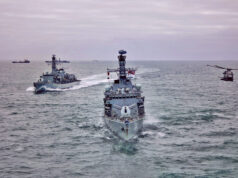
Royal Navy patrol ships and frigates regularly shadow Russian warships escorting cargo vessels through the North Sea and English Channel. In August, three warships and a Merlin helicopter tracked a Russian group for 72 hours, and in April the frigate Admiral Grigorovich was kept under unbroken watch as she escorted Russian-flagged vessels.
Interference with satellite navigation has become routine at sea. About 970 ships a day had satellite navigation jammed in the Strait of Hormuz in June, Western’s committee heard this month, and a study recorded a surge in spoofing near Kaliningrad.





What warships ¯\_(ツ)_/¯
Honestly this is one of the more silly questions asked by an MP. If it was the Russian ship then what it is doing in peacetime may be a nuisance but in war time it wouldn’t be an issue.
It may take 35 hours for a warship to get from down South to the North of Scotland but it takes about 20 minutes for a Typhoon out of Lossiemouth to turn that ship into toast. And to get there in the first place it either has go through the Baltic or Transit down from Severomorsk so pass by half of NATO.
I do wish we had kept another Naval base other than Clyde, Plymouth and Portsmouth but given the size of the RN and the fact the crews families need accommodation / schools etc etc where exactly would he suggest ?
Invergordon, Scapa or Rosyth ?