

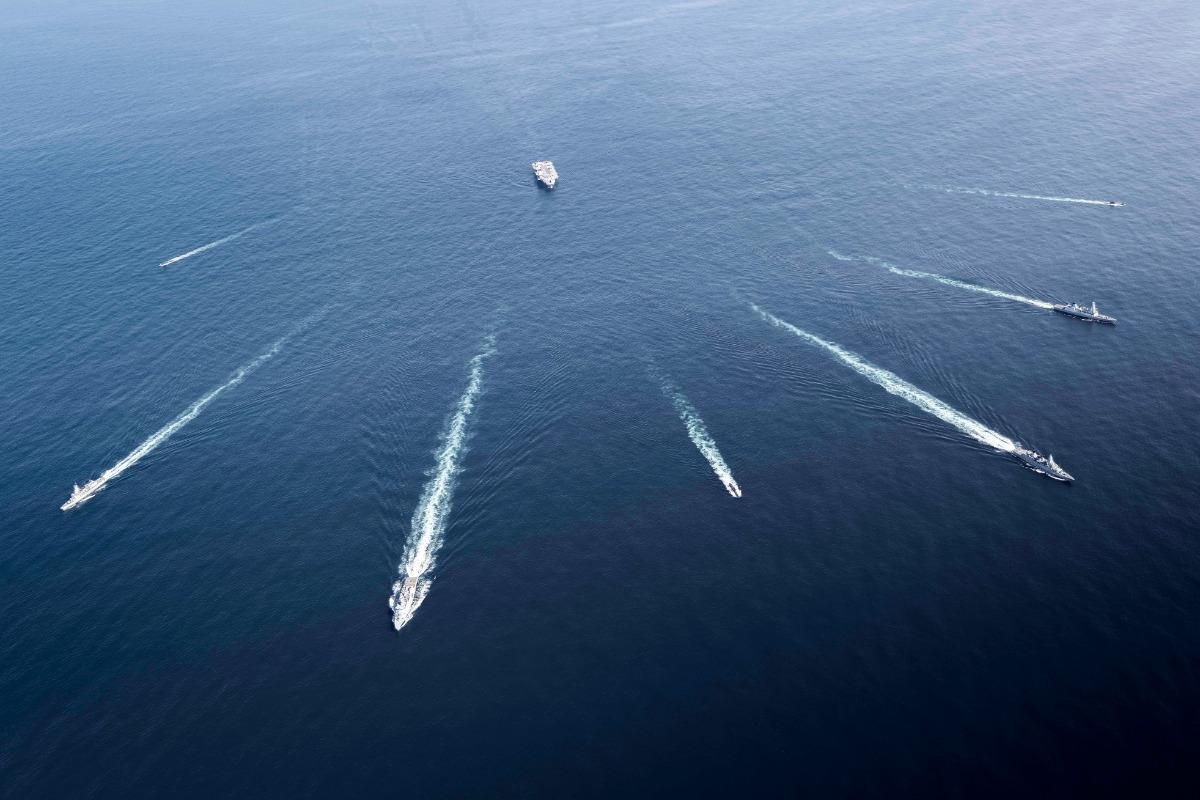
NATO has wrapped up its premier anti-submarine warfare exercise, Dynamic Mongoose 2026, after two weeks of training that pitted Allied and partner forces against live submarines in the Norwegian Sea.
The exercise, hosted by Norway, concluded on 29 May and drew together forces from nine nations under the command of NATO Allied Maritime Command. According to the alliance, the drill was built to sharpen anti-submarine skills and tighten coordination among the participating navies and air arms operating in the High North, integrating submarines, surface ships, helicopters, maritime patrol aircraft and autonomous systems across a series of progressively harder training serials.
Submarines sat at the heart of the activity, alternating between hunter and evader roles in one-on-one sub-surface engagements. NATO described the work as a dynamic game of cat and mouse, with crews rehearsing patrol and detection tactics alongside surface ships and patrol aircraft in scenarios meant to stress coordination, endurance and decision-making. The layering of air, surface and sub-surface assets, the alliance said, created a realistic environment for testing the ability to detect, track and counter threats beneath the waves while working across multinational formations.
Standing NATO Maritime Group One, already deployed in the region, took part alongside the assembled forces. Its commander, Royal Navy Commodore Maryla Ingham, judged the exercise a success. “Exercise Dynamic Mongoose 26 has been a real success for SNMG1, and for all the wider Allies and Partners that have participated,” she said. “We have proved the successful integration of advanced capabilities and technologies, as well as refining and refreshing our tactics, techniques and procedures, during an increasingly complex series of exercises against live submarines.”
Ingham pointed to the strategic value of the waters in which the training took place and the breadth of nations involved. “The area in which the exercise took place is of strategic importance for the Alliance and training in the area helps us understand the environment,” she said, adding that the integration of nine nations had shown an ability to work seamlessly together. “I am proud of the hard work of the sailors and aircrew from every nation which participated. Dynamic Mongoose demonstrates our will and ability to deter and, if necessary, defend the Alliance,” she said.
Beyond the submarine serials, surface ships carried out advanced manoeuvres, force protection drills and replenishment at sea with partner nations. NATO said Dynamic Mongoose 2026 was run as part of Arctic Sentry, the framework under which the alliance has reinforced its presence and readiness across the Arctic and High North.



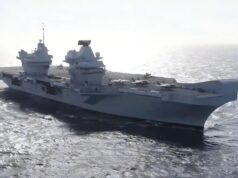
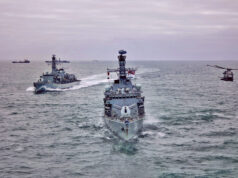


Wow look at all those escorts around Prince of Wales 😀
I’ve gained $17,240 only within four weeks by comfortably working part-time from home. Immediately when I had lost my last business, I was very troubled and thankfully I’ve located this project now in this way I’m in a position to receive thousand USD directly from home. Each individual certainly can do this easy work & make more greenbacks online by visiting
following website—.,..,.,.,.,.,.,.—>>> LIVEJOB1.COM
George please do something about this shit.
The war in the Ukraine has no doubt proven to be the Ideal test bed for a lot of western kit. Russian forces will know that the west’s vastly advanced technology are well beyond that if theirs own man for man, vehicle to vehicle, aircraft, ship submarines they know that what the Ukrainians have done to them will be nothing compared to what NATO A would do to then
Funnily enough, none of the surface assets involved in this Exercise from NSMG1 actually had an equipped towed-array sonar. The Danish frigate is planned to receive one, but that hasn’t happened yet.
Goes to show that a TAS isn’t the only sensor needed for ASW. In fact, unless you intend to be doing open ocean, anti-SSN work, a hull-mounted sonar is probably more useful.
Wrong. For ocean ASW, you absolutely want a towed array sonar. They’re hundreds of meters away from the noise surrounding the ship and can go beyond the thermal layers of the ocean where subs might be hiding. However they may have blind spots near the ships, that’s where hull sonars are effective. They’re also good for coastal ASW where it’s harder to use TAS.
The reality is that submarines are so hard to find that you have to use everything at your disposal for proper ASW: hull sonars, towed sonars, ASW helicopters, maritime patrol aircraft with sonobuoys and more importantly, another submarine.
Mate, read the last sentence of my answer, before deciding that I’m ‘wrong’. You’re literally agreeing with me.
I said: ‘unless you intend to be doing open ocean, anti-SSN work, a hull-mounted sonar is probably more useful.’
You said: ‘For ocean ASW, you absolutely want a towed array sonar. […] hull sonars are effective. They’re also good for coastal ASW where it’s harder to use TAS.’
Did Putin do the West a great favour by invading Ukraine? One thing is clear: the drowsy European states suddenly awoke to smell the coffee and since 2022 appear to be spending much-needed cash on defence. By 2030, conventional weaponry should be able to keep Russia in check and hopefully stave off further adventures. The need to concentrate efforts in the North will pay dividends if exercises such as these continue at pace and further enhancements are sure to arise from today’s AUKUS undersea drone agreement. Though Putin’s invasion did move the needle of innovation, it came at great cost to the people of Ukraine.
Countries like Poland, Finland, Romania and the Baltic states reacted quickly and increased defence spending after 2022. In fairness, many of them were already spending relatively heavily or had plans in motion before the invasion.
Elsewhere, the war drove the initial uplift across NATO, but most members still aren’t doing enough. We have Trump to thank for the 3.5% figure.
at least they have real plans I doubt that they will be able to do their bit. As well as the rest in the baltic
Id expect a good number were detected by the task group.
Aand more of our own to stay with and when needed, dispose of the targets. Russian submarines do appear to be easily found l and that the exact number of western vessels needed now known is now known.