

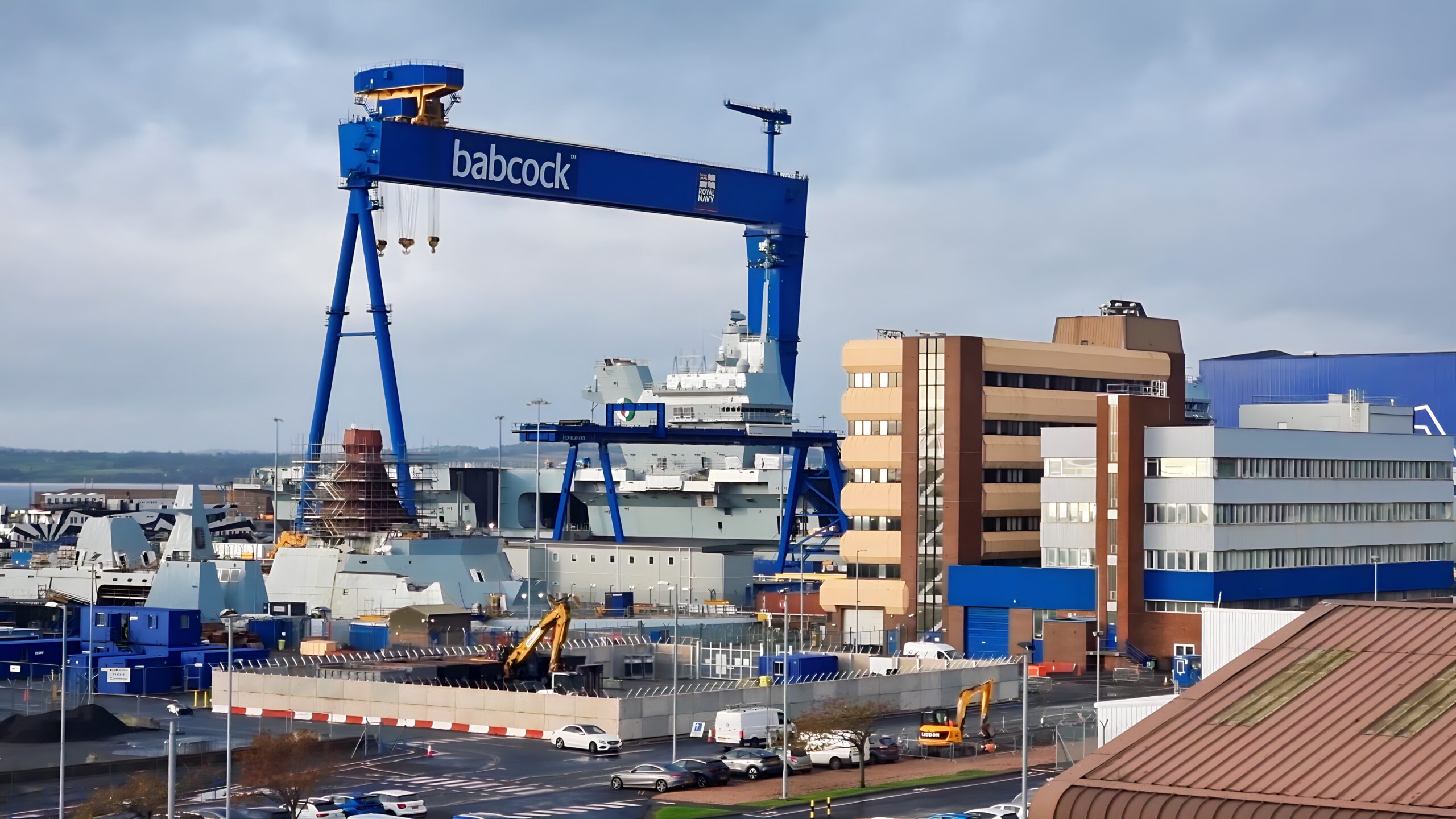
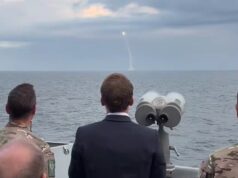
Defence Secretary Wes Streeting has visited Babcock’s Rosyth facility, where the Royal Navy’s Type 31 frigates are under construction, on his first trip to Scotland since taking the post.
The visit took in the shipyard and a separate stop in Edinburgh to see Service Family Accommodation, including a roofing project at Redford Gardens and homes undergoing full upgrades at the Adams Well Estate. At Rosyth, Streeting met workers and apprentices employed on the frigate programme.
According to the department, defence supports close to 12,000 jobs in Scotland. The Type 31 programme accounts for 2,500 skilled roles across Scotland and the wider UK supply chain, along with 400 apprenticeships created through partnerships with colleges in Fife and elsewhere.
Streeting said that “Scotland sits at the heart of our national security”, pointing to the workers and apprentices building the next generation of Royal Navy warships and to the families who support the armed forces. He said the combination of heritage and modern technology presented opportunities for jobs and reindustrialisation, and that the government was committed to delivering better homes for personnel and their families.
Harry Holt, chief executive of Babcock International Group, said that the company was pleased to welcome the Defence Secretary to see progress on the Type 31 programme, adding that “a capable and adaptable Royal Navy fleet is essential to the security of the UK, NATO and our allies”. He described the workforce and operations at Rosyth as delivering sovereign capability while supporting economic growth, and said Babcock looked forward to working with the department on implementing the Defence Investment Plan.
On accommodation, the government has committed £9 billion over the next decade to what it describes as a generational renewal of armed forces housing, covering 40,000 military homes, or nine in ten of the estate, for upgrade, modernisation or rebuild. A new Defence Housing Service has been established to meet modern property standards and to accelerate delivery on surplus defence land.
Nearly 10,000 armed forces personnel are stationed in Scotland. RAF Lossiemouth in Moray operates Typhoon fighters on quick reaction alert alongside the P-8A Poseidon maritime patrol fleet, while HMNB Clyde at Faslane houses the Royal Navy’s submarine force, including the Vanguard-class boats carrying the deterrent. Under the Defence Investment Plan, the government has confirmed £26 billion for naval base infrastructure, of which £15.1 billion is directed at regenerating HMNB Clyde with new waterfront infrastructure, maintenance and training facilities and accommodation.
The five Type 31 frigates, known as the Inspiration class, are being built at Rosyth under a contract placed in 2019, with the design derived from Denmark’s Iver Huitfeldt class. The class comprises Venturer, Active, Formidable, Bulldog and Campbeltown, assembled in a covered hall at the yard, and the ships are being fitted with Mk 41 vertical launch cells following a decision taken after the original contract was signed.







Hopefully he was briefed to ask some hard questions about T31 delivery dates and made plain that the shipyard isn’t a shoe-in for the CCV order without a considerable improvement in performance.
What about a few more T31s for greater mid level global spread, complement the B2 Rivers, and if the B1s won’t be replaced?
Others have said similar nefore, if the NSMs were put in a series configuration could they then put 4x mk41 and a CAMM farm mix as on T26 freeing up the mk41s?
Agree a second batch of type 31s is sorely needed. For UK home waters, monitoring Russian malignant activities, Falklands guardship etc.
Just buy more Mk.41, at around £7m a module (8 cells) they are hardly that expensive.
Disappointed by the images of Venturer on BBC news showing little obvious external progress. The previous posts about internal structural reworking are frustrating delivery.
It looks like an old pic as QE is in the dock ans she’s been out for some time.
Perhaps pointing out the lack of ASW Capabilites on the T31 would be High on that list…!
… of any T31 capabilities. They would struggle to defend the patch of water they sit in. Which would not need defending if they were not there.
I think with a lightweight towed array and a seadrone ASW as the Dutch are going with; she would be adequately able in dealing with a sub.
There is one question I’d love answered and it goes way back to when the 13 T26 Frigates were cut to 8 and 5 “cheaper and faster to deliver” subsituted.
When complete how much will these 5 T31 GP Frigates have cost compared to the last batch of 5 T26 (£826 million per hull). And I’d also add the right off costs Babcock have incurred ?
Anyone know or know anyone who can actually ask ?
I don’t think anyone would answer that ‘commercially confidential’ translation commercially embarrassing.
At the same time BAES hasn’t exactly sprinted to the line with T26 either.
On balance I think having a second yard building warships is the right thing to do and with Belfast building the larger RFAs then things look reasonably sensible.
I completely agree.. I think we sometimes forget the fact that if there is a high intensity peer on peer maritime conflict ships die and your navy even if you will may easily end up decimated in the traditional sense ( or worse).. even a short conflict like the Falklands cost the UK four major combatants and 2 landing ships..
If the pacific ever kicked off in a big way ( and it’s likely) and we send a carrier battle group and spares.. there is a reasonable chance it will not come home again.. infact if China and NATO go for it neither side will back off until they run out of warships.. then there will be a armistice and everyone and there mothers will be rebuilding their navies like the clappers…
Currently the Type 31 sits at £317m each.
Installing the mk.41 should cost about £28m each. Denmark recently purchased 8 modules for £10.25m a module, and the US their next 3 Burkes worth for £5m a module. Both deals included spare parts and support for an undisclosed number of years. We would be purchasing somewhere in between that number and so £7-8m a module would be a good estimate.
As for giving them a required sonar? CAPTAS 4 is £57m to purchase from what I have been able to find. They are cheaper options for towed Sonars. Hull mounted is cheaper still, the only number I have been able to find for our current hull sonar is £6m to purchase which does seem a bit on the cheap side and I’m not entirely sure about the validity of that claim.
All in all however if we are getting the mk.41 and a hull sonar they’ll cost £360-380m a ship. Not too bad given the abilities they would have by that point and below the average cost for that type of frigate.
Which is a great aspiration but you then need the additional crews etc… and that is expensive.
Slightly more expensive is better than costly and pointless.
An escort that has to be escorted might as well just have been made as an OPV.
And if we look at the Mogami, it’s very clearly possible to make cheap ships with decent radar, 32 mk.41 and a sonar.
One important point to consider was the dramatic cost reduction between the first three T26 ordered and the second five. That second order for five came at the same time the T31 was tendered and it certainly felt like competition was driving prices down from BAE. Unit prices were cut in half for T26 second order. BAE had also been expecting the government to pay for its frigate factory but the emergence of Babcock as an alternative then saw BAE invest heavily in infrastructure like the Janet Harvey hall.
Babcock has incurred a loss so far of £330 million on the T31 project but I think having BAE as a sole supplier of UK warships was a disaster.
What’s not been mentioned is the Norgie order and its impact on long term costs nor the CANUK/AUS deal, someone is raking it in and UK Govt should really be looking for better value from the suppliers such as… Rodders, looking at you… Rolls Royce.
Reducing long lead costs should see an opening on the Defence budget and pigs will fly…
Jim,
That is true and it is an important point to consider.
Batch 1; the first 3 ships, ordered in 2017 for £3.7 billion, translating to an estimated £1.23 billion to £1.31 billion per hull … first-in-class vessels always carry immense non recurring engineering fees, design maturity costs, and the expense of modernising the BAE Glasgow shipyards.
Batch 2; the next 5 ships, ordered in 2022 for £4.2 billion, dropping the price to £840 million per hull. The final five t26s were delivered at roughly two-thirds 64% to 68% the cost of the initial trio, not quite a 50% cut, but still a significant price drop. This reduction represents a massive, highly successful dividend from economies of scale, learning-curve efficiency and the fact that development costs were entirely paid off during Batch 1.
The MoD successfully leveraged the t31 programme to extract deep financial concessions from BAE. The structural evidence begins with the 2016 National Shipbuilding Strategy, commissioned by the government specifically to break BAE’s “de facto monopoly” on the Clyde. That monopoly had allowed the first three t26 hulls to rocket to an astronomical cost of well over one billion pounds each. By slashing the original plan for thirteen t26s down to eight and tendering the remainder as a separate, fiercely competed t31 competition, the government deliberately introduced market tension into a broken system.
The economic impact of this manoeuvre became undeniable when the contract for the final five t26 frigates was signed. Despite navigating severe post-pandemic inflation and supply chain crises, BAE suddenly dropped its per-ship price by roughly 30% down to £840 per hull … A price plummet of that magnitude on a highly complex warship is virtually unheard of unless a contractor knows its lunch is actively being eaten by a hungry competitor.
During the first batch, BAE supposedly shelved plans for a modern covered integration hall because their monopoly guaranteed them the work regardless of how inefficiently they built the ships outdoors. The moment Babcock won the t31 and immediately constructed an ultra modern enclosed hall at Rosyth to slash assembly hours, BAE completely reversed its position. They were forced to invest millions of pounds of their own corporate capital to build the new Janet Harvey Shipbuilding Hall just to prove they could match the manufacturing efficiency of their new domestic rival. Ultimately, parliamentary committee hearings have repeatedly highlighted that the threat of a cheaper, highly exportable t31 stripped BAE of its entitlement. The Ministry of Defence effectively weaponised Babcock’s success to force BAE to behave like a competitive commercial enterprise for the very first time, saving the British taxpayer billions in the process.
As Defence News wrote back in 2017 … during House of Commons Defence Committee hearings throughout the late 2010s and early 2020s, MoD procurement officials openly admitted that cutting the t26 order from 13 to 8 was a deliberate mechanism to inject market tension. Committee reports consistently noted that the threat of a successful, highly exportable t31 aka the Arrowhead 140 design, meant BAE could no longer assume it would automatically be awarded future Royal Navy surface combatant contracts. BAE had to behave like a competitive commercial entity rather than a protected state monopoly.
The true bottleneck in getting the t26’s delivered is the lack of highly qualified marine electricians, welders, and pipefitters. those that are available are currently being aggressively fought over within the commercial sector … the t31 programme, the ultra-high-priority nuclear submarine programs and North Sea oil and gas infrastructure, along with the massive boom in offshore wind farms.
Hi Magenta, thanks for the summation, all inline with what I remembered at the time.
You grovelling little faggot Jim you are so drugged up 90% of the time you can’t remember where the bog roll is in yout toilet
Back in 2015 BAE were talking about £11bn for 13 x T26. Some of those were GP spec, but it still shows small numbers and slow build speed had a lot to do with the crazy high prices of Batch 1. Far more influence than BAE monopoly.
Uterr, utter bollocks. The type 26s are being built under an open books cost plus contract.
Rewriting history in such a fanciful manner qualifies you to a professorship position at Cambridge. You should apply. I hear there is an opening.
Grinch,
… why so angry.
Looking back at the timeline myself, I realised the chronology in my previous post was backward anyway. The reduction to 8 ships was locked in during the 2015 SDSR, well before the 2017 Batch 1 contract or the Type 31 programme even started, so the ‘weaponised’ theory doesn’t hold up.
However … your assertion that the Type 26 is being built under an ‘open books cost plus’ contract is completely incorrect. The MoD strictly avoids pure cost-plus structures for major fleet builds because they put 100% of the financial risk on the taxpayer if things go wrong. The Type 26 is actually built under a Target Cost Incentive Fee (TCIF) framework. While it uses an ‘open books’ setup so the Single Source Regulations Office (SSRO) can audit BAE’s baseline finances, it relies on a strict pain-share/gain-share mechanism. If BAE hits delays or overruns through their own inefficiencies, they have to absorb a percentage of those extra costs out of their own corporate profit margins. It’s a risk-sharing model, not a blank-cheque cost-plus arrangement.
… and that’s a $25 fine for mentioning the “C” word.
Besides, I hold my Established Chair at Oxford; Regius Professor of Dealing with Plonkers.
More bollicks. You’ve stated it’s not a cost plus contract and then go on to describe a cost plus contract meanwhile ignoring the fact your original post described a completely different arrangement.
I fear you’re not going to last long at Oxford unless you deal with the biggest plonker f them all i.e. the one that watches you clean your teeth every day.
I’m sure some are going to Australia as well, where it seems a duplicate UK is being set up in defence terms. Next they will be building SSBNs. When they build Geelong House (Palace) you will know for sure.
Jonno,
Silly you, your defense facts are scrambled. The UK isn’t sending physical GCS Type 26 hulls to Australia; they exported the design blueprints to Australia so we can build our own modified T26 class variants locally in Adelaide. Australia isn’t setting up a ‘duplicate UK’ proxy defense force either; we are investing in our own sovereign industrial base for Indo-Pacific security. Furthermore, under AUKUS, we are explicitly building conventional-payload nuclear-powered attack submarines (SSNs), not nuclear-weapon-carrying ballistic missile submarines (SSBNs).
If you’re looking for ‘Geelong House’, it isn’t an imperial palace, BVN Architecture / Hansen Yuncken built Geelong House around 2010/11. It’s literally a modern, high-tech block of naval training classrooms at HMAS Creswell in Jervis Bay.
Jervis Bay … Gods Own Country; Hyams Beach; Jervis Bay is renowned for some of the whitest sand in the world like Hellfire Bay in Western Australia. It’s one of the premier whale-watching destinations in Australia because it serves as a stopover along the “Humpback Highway on the eastern coast.
… but I digress.
Why so angry? But then again, being an antipodean you do have plenty of cause 🙂
I can only say considerably cheaper. The issues are mostly to do with timing and delayed decision making. The biggest advantage of the Type 31 wasn’t the lower build cost or the competition forcing down BAE prices, it was the parallel build to shorten the frigate dip. We had needed new frigates ordered a decade earlier in 2008, but we wouldn’t be rushed. The T31 announcement was in 2015, the contract in 2019 and first steel cut in 2021. Those 6 years typify the problem.
I can say that all the critics back when the competition was run who said “you’ll never get a frigate for £250m” also said you’d need something closer to £400m. I’ll leave it at that.
Rubbish. The only advantage of the t31 was that it would be built by Babcocks and would cost 250 million each. The treasury under osborne couldnt give a hoot whether the ship had any significant military capability. And it hasn’t.
The jury is still out whether babcocks can actually deliver anything. Both the Polish and Indonesian type 31 variants are on track to be delivered earlier to a higher standard.
Rosyth has been unable to attract any orders. I doubt it will. Too slow, too poor quality, and too expensive. Scottish shipbuilding at its finest.😏
When Vospers was swallowed up that was the real disaster.
Sergeant First Class “Grinch”,
“…The treasury under osborne couldnt give a hoot whether the ship had any significant military capability. And it hasn’t.”
“And it hasn’t” … say’s ‘Platoon Daddy’, well, if you removed your baseball cap and tactical sunglasses, you might know that the t31’s will have plenty of bits that go Boom Bang-a-Bang.
Thales NS110 4D AESA Radar.
Thales TACTICOS Combat Management System.
Lockheed Martin Mk 41 VLS. x 32 strike-length cells.
Sea Ceptor Silos. 12 x cells.
Kongsberg Naval Strike Missile x 8 missiles.
Bofors 57mm Mk 3 Main Gun. x 1
3P Programmable Ammunition.
Bofors 40mm Mk 4 Close-In Weapon Systems. x 2 guns.
AgustaWestland AW159 Wildcat HMA2 (Primary Loadout.)
– Martlet Missile x 20.
– Sea Venom Missile x 4.
-M3M 12.7mm HMG.
AgustaWestland AW101 Merlin Mk2. (Heavy Option.)
– Sting Ray Light Weight Torpedoes x 4.
– Mk 11 Depth Charges.
– M60 or GPMG.
Flexible Mission Bay – Massive, structurally reinforced hangar, spacious enough to house either aircraft alongside a fleet of modular uncrewed autonomous surveillance drones, allowing the ship to extend its radar horizon and weapon targeting range by hundreds of miles.
DragonFire.
Thales Artemis IRST.
Thales Mirador Electro-Optical tracking systems x 2.
Dedicated Drone Boat Bays.
Chinook-Sized Flight Deck.
Stern Launch Ramp
MEWSIC (Maritime Electronic Warfare System Integrated Capability.)
Ancilia Decoy Launchers.
Heavy Combat Survivability Build.
The t31’s post-CIP will be a true multi-mission escorts, they will provide the Royal Navy with an adaptable, high end, ocean going asset capable of forward deploying independently to highly contested zones like the Indo-Pacific or Middle East, or integrating smoothly as a heavy hitter within a NATO carrier strike group. Instead of a basic patrol hull, the Royal Navy has engineered a highly adaptable surface striker that can confidently sail into contested environments and hold its own against contemporary peer threats. But you are so shackled by politics you can’t see the sea for the ocean.
I’ll celebrate these ships, even if you won’t.🏴☠️
G’Day mate,
You are describing a mythical ship so of course it has mythical powers. Good luck with that.
Even your government thought the type 31 wasn’t worthy of their consideration. Should tell you something.
Grinch,
The T31’s lack of operational history and an OTS mandate were the core objectives of Project SEA 3000. The Australian Government demanded an established, highly mature design already in active naval service. When the shortlist was formed, the UK Royal Navy’s Type 31 was still in the construction phase, probably 12/14 months from launching, and had not yet been operationally tested or fielded, thus, failing Australia’s strict zero-design-risk benchmark.
Talking about mythical “… Not a good day to be Delta.”
What I also think is interesting is the fact the Norwegians will be taking one of the 3 expensive batch 1 T26s.. I’m assuming they will be paying the full 1.2ish billion cost of that ship.
So the RN can then order its replacement as a cheaper later batch….which will be a nice saving.
Wanna bet? Norwegians aren’t stupid.
Nope but the cost of that ship was set in contract.. unless HMG are essentially taking that hit and selling the ship to Norway for 60% of what they paid for it.
To be pedantic, it was part of a contract.
Jonathan,
Norway is paying an estimated £2 billion per ship under its overarching £10 billion contract (Lunna House Agreement) for at least five identical, unmodified t26 frigates. This unit price appears higher than what the UK paid for Batch 1 ships, but the £2 billion per ship figure is an all inclusive programme cost, that includes amongst other things …
Hull construction on the Clyde.
Extensive weapon system outfitting.
British through life support package.
Personnel training.
Construction of a new specialised, covered naval maintenance facility in Harstad, Northern Norway.
The UK Government is paying approximately £1.23 billion for each ship in the first batch, based on the initial £3.7 billion manufacturing contract awarded to BAE for the first three vessels. When adjusted for subsequent inflation and engineering definitions, the estimate sits closer to £1.31 billion to £1.46 billion per ship.
The historic ten billion pound defence agreement is a major win for the UK, Norway, and NATO. For the UK, which bore the heavy initial development costs to secure a long term eight ship fleet, while Norway pays a premium for a smaller, fast tracked five ship fleet of identical clones to gain instant, high end interoperability.
The contract stands as an industrial success that injects billions into the economy, sustains thousands of skilled shipbuilding jobs across Glasgow, it achieves maximum manufacturing efficiency. For Norway, the deal allows the Royal Norwegian Navy to bypass the astronomical costs and chronic delays of designing a bespoke warship from scratch … delivering an immediate leap in maritime capability and granting access to a ready made global logistics network.
Ultimately, the greatest winner is NATO, which benefits from the creation of an integrated thirteen ship fleet that establishes a somewhat ‘impenetrable’ barrier across the strategic GIUK Gap, ensuring seamless interoperability and an unmatched capability to counter submarine threats along the critical northern flank.
But hey-ho they’re only mythical ships, like the t31s, according to M0-3’s (Grinch) line of thinking … those Norweigians must be pretty silly. ☺️
The ‘Peace Dividend’ left a long legacy. However, just think how much worse it might have been had Russia not collapsed and struggles to compete in much the same way.
At the end of the day the peace dividend only existed because Russia suffered financial collapsed… if it had not collapsed under the economic weight of the Afghan war and trying to keep up with the Reagan doctrine.. the Cold War would have kept on going.