

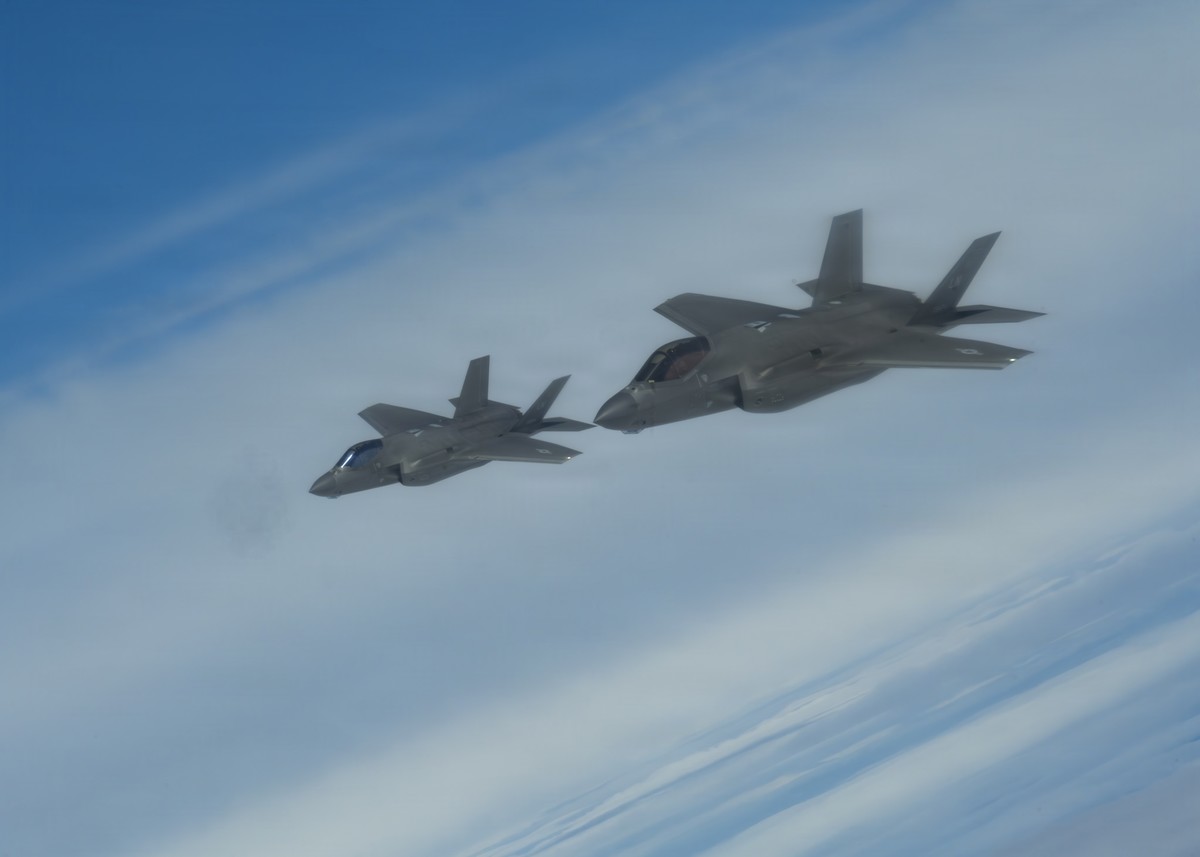
NATO’s Nuclear Planning Group has issued its first ministerial statement on the alliance’s nuclear deterrence mission since 2007, committing to modernise NATO’s nuclear capabilities and strengthen nuclear planning capacity.
The group, the alliance’s senior body for nuclear deterrence matters, met at ministerial level in Brussels and agreed a statement recalling that the alliance’s strategic nuclear forces remain “the supreme guarantee of Allied security” and underpin NATO’s extended deterrence architecture.
Ministers agreed to continue enhancing the nuclear deterrence mission by modernising capabilities, strengthening planning capacity, and adapting to “achieve its security interests”, with the alliance committed to maintaining what it called “a safe, secure, effective, and credible nuclear posture” to preserve peace, prevent coercion and deter aggression. Allies also reaffirmed their commitment to sharing the responsibilities, risks and burdens of collective defence by investing in the resources and forces needed to deliver the nuclear mission.
A senior NATO official said the statement, brief as it is, marked a significant moment, noting it was the first of its kind since 2007 and stressing that NATO remained “a nuclear alliance” even as it also remained fully committed to its non-proliferation obligations. The official linked the statement to a broader shift the alliance has been signalling under the banner of NATO 3.0, describing a move back from expeditionary warfare towards deterrence and defence of the Euro-Atlantic area, and arguing that such a shift inevitably puts the nuclear dimension back at the centre of allied thinking, since any conflict with a nuclear-armed adversary carries a nuclear dimension from the outset.
The official pushed back on suggestions that the United States Secretary of War Pete Hegseth had merely made opening remarks and left the day’s meetings, pointing out that his first engagement of the day, in plenary format, had been his attendance at the Nuclear Planning Group itself, and said the United States was “fully leaning in” to NATO’s nuclear sharing mission built around dual-capable aircraft. The official said the United States, the United Kingdom and France were all visibly modernising their nuclear forces, and that Washington had repeatedly reaffirmed its nuclear guarantee to allies regardless of separate changes to its conventional posture, including reported adjustments to its B-52 bomber fleet, which the official said had no bearing on the US nuclear commitment.
Asked by the UK Defence Journal what the statement’s reference to strengthening nuclear planning capacity actually involved, the official said it was about ensuring NATO’s nuclear capability remained fit for purpose, with the flexibility and credibility to deliver deterrence, and that this rested on having the right planning and communications in place so that allies could make decisions “at the speed of relevance”. Pressed on whether this meant NATO needed more tactical nuclear warheads given Russia’s development of lower-yield weapons, the official declined to be drawn into specifics, repeating that the goal was a credible, flexible nuclear posture able to make Moscow “think again” before any escalation to tactical nuclear use, and to restore deterrence if required.
On France’s separate nuclear forces, the official said Paris’s offer was different in nature from the arrangements under which the United States and the United Kingdom cooperate with allies, but that French nuclear forces nonetheless provided “another center of decision making” that added to overall deterrence, a development the official said had been broadly welcomed across the alliance, with a number of allies interested in exploring what working with France on this might mean in practice. On the American nuclear umbrella itself, the official said there had been no discussion of any change, dismissing any suggestion that the talks had touched on the United States transferring nuclear weapons to allies and describing the extended guarantee as reconfirmed “beyond doubt”.
Asked directly whether the statement amounted to a message to Moscow, the official said it was, first and foremost, a public statement that Russia would doubtless read alongside everyone else, calling it a signal of allied resolve that extends to the nuclear dimension, and one that reflects the position taken by the current United States administration on the importance of NATO as a nuclear alliance. Asked about Russia’s nuclear capabilities in the Arctic, the official declined to single out the region, saying the alliance’s response was to extended-range Russian capabilities generally rather than to any one theatre.
Pressed on the timing of the statement and the underlying report that ministers had agreed, the official declined to link it to any single event, such as the collapse of the Intermediate-Range Nuclear Forces treaty, the reduction of US conventional forces in Europe, or Europe’s deep-strike capability gap, attributing it instead to years of accumulated work given fresh impetus over the past year, and to the wider reorientation of the alliance towards deterrence and defence, alongside a need to manage escalation risk after repeated Russian nuclear rhetoric over Ukraine.
Closing the session, the official said the core message for Moscow was simple, that NATO remains a nuclear alliance and is taking deliberate steps to keep that capability credible, survivable and adaptable.









ERROR 404 fixed then.
M.A.D. It’s good to know we are still focused on the complete annihilation of the human race given It’s decades long success at preventing It.
I’ve gained $17,240 only within four weeks by comfortably working part-time from home. Immediately when I had lost my last business, I was very troubled and thankfully I’ve located this project now in this way I’m in a position to receive thousand USD directly from home. Each individual certainly can do this easy work & make more greenbacks online by visiting
following website—.,.,.,.,.—>>> JobatHome1.Com
I’ve gained $17,240 only within four weeks by comfortably working part-time from home. Immediately when I had lost my last business, I was very troubled and thankfully I’ve located this project now in this way I’m in a position to receive thousand USD directly from home. Each individual certainly can do this easy work & make more greenbacks online by visiting
following website—.,.,.,.,.,.,.,.—>>> PAYAtHOME1.COM
Consideration needs to be given to developing and deploying tactical nuclear weapons, to give the option of a like for like attack, rather than an all or nothing.
Earnest recommendation for ENATO: Develop and establish a complete and quasi-independent nuclear structure on an expedited schedule, including C(2)ISR and munitions/delivery systems (increased by an order of magnitude over current capabilities). Neither France nor the UK can independently, realistically finance this programme. Therefore, create a pan-ENATO funding structure. The NATO nuclear deterrent largely depends upon the credibility of the then current POTUS. All should draw their own conclusions re the longer-term viability of that policy. Probably idle speculation, but … 🤔😉
Problem is that for ENATO to do that it gets taken over by EU and turned into EuroFudge.
The other problem is Nuclear Non Proliferation Treaty obligations prevent the workshare being spread about so countries will be less interested in funding with no workshare…..
I’ve gained $17,240 only within four weeks by comfortably working part-time from home. Immediately when I had lost my last business, I was very troubled and thankfully I’ve located this project now in this way I’m in a position to receive thousand USD directly from home. Each individual certainly can do this easy work & make more greenbacks online by visiting
following website—.,……..,.,.,,.,.,.—>> LIVEJOB1.COM
SB,
Understand the caveats/objections. Suggested viable alternative(s)?
Uk only has deterrence at sea so for us we don’t need all the nuclear football infrastructure that goes with having a variety of nuclear responses. We don’t have pressure to get land based nukes into the air before they are wiped out.
The UK has nothing, even resembling an independent nuclear force. Let’s just stop with that. Silliness
@Halfwit
Listen, idiot, who’s side are you on? The Russians, particularly the war criminal Putin’s deranged toady, the alcoholic Medvedev, have been threatenig us with a nuclear strike since the beginning of the Ukraine war. So why havent they done it?
In case you havent noticed, the UK has a sovereign independent nuclear deterent that is continuously at sea. That’s why. My view is that we should rapidly re-introduce tactical nuclear weapons such as the proposed free-fall bombs as an added layer of deterrence. Putin is perfecting hypersonic nuclear missiles by testing their MIRV capability on Kyiv. We need to respond.
Due to international non-proliferation agreements, the gravity bombs will remain under US control, while the aircraft will be flown by RAF pilots
I’m on the side of the Human Race.
I’m just a nice person I guess.
I’m not sure you asked your Mum on you being a nice person. I asked my Mum and she replied you joined MP and should know even your Mum doesn’t love you. Harsh, very harsh.
Europe does need to becone a eNATO force with commensurate nuclear forces and as USAF posits, have that over arching command and intelligence structure.
That does mean paying for it and that might mean contributing to UK defence spending or, how aboutery just letting us join tbe £150Bn fund available at the moment?
As to the Russians, tell them to foxyrot oscar the next time they threaten us, but, definitely retalitate when they pull their stunts in London and Salisbury.
Meanwhile, a ship adrift in the English Channel should be taken under tow and salvage induced.
The UK has nothing even resembling an independent nuclear force. Just stop with that… You can only repeat it so many times and pretend it’s the truth but it’s not
May-be Nato can help pay for our Nuclear umbrella to help give the nuclear deterrent its own budget so we can put more money into conventional forces after all the US, UK and to some extent France has been funding this for the last 60 odd years to the detriment of our conventional forces with the UK at the moment spending nearly 50% of its defence budget on 4 new SSBNs. Is it not time to get the charity box out and ask the other nations to put some coin into it.
Well said, the rest of NATO should help fund these expensive programs and the upkeep of UK and French nuclear weapons if they are so worried about US reliability
They want our coverage? Then they can prove they aren’t total freeloaders and help pay for it.
I’ve gained $17,240 only within four weeks by comfortably working part-time from home. Immediately when I had lost my last business, I was very troubled and thankfully I’ve located this project now in this way I’m in a position to receive thousand USD directly from home. Each individual certainly can do this easy work & make more greenbacks online by visiting…
following website—.,.,.,.,.,.—>>> PAYAtHOME1.COM
Going off an a wee tangent, why does the UK not have a bomber?
Because Merlin production stopped.
Of course, NATO have always been a `first use1 defence pact, it’s Russia that has always wanted to ban first use, why would NATO change now, it’s not like their MAD is it ?
What I am missing from eNATO is a solemn communique to Russia to stop threatening us with their vacuos red lines and foxtrot oscar; and that we will happily treat Russian life as Putin treats it, should more threats follow:
Death
The only thing Russians understand.
I’m civilian and watched house of dynamite. It left me thinking that America believes it can mitigate/manage a nuclear exchange. A lot of the pressure to respond for America is to get vulnerable land missiles in the air before they are taken out. America has amazing infrastructure to monitor and track and some capacity to take down ballistic missiles. Uk only has one sub at sea, they hopefully remain hidden and can deliver revenge at their choosing.