

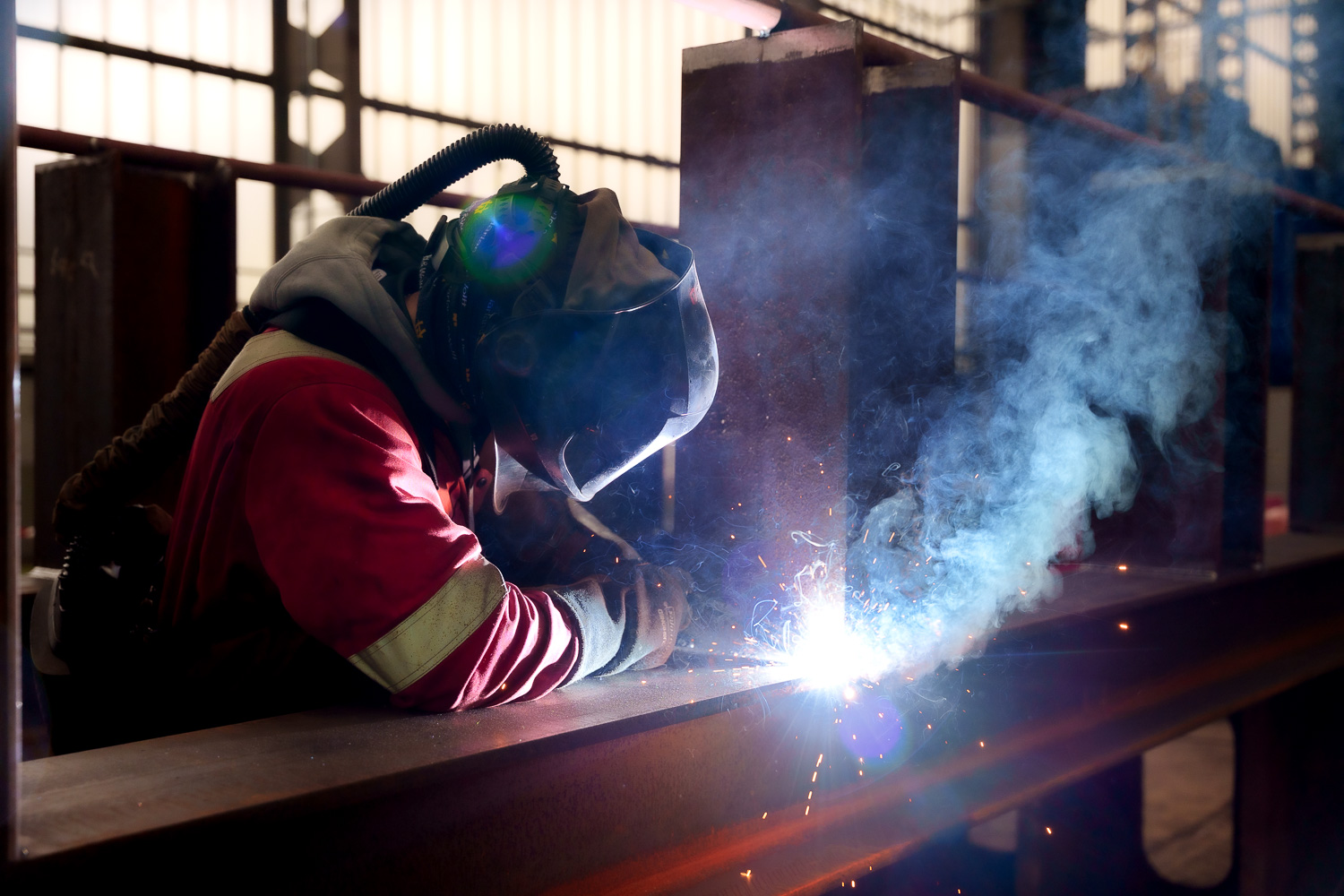
Navantia UK has positioned its Harland and Wolff shipyard in Belfast to build the new fleet of amphibious transport ships announced under the UK-Netherlands maritime partnership, with the government yet to name the yards that will construct the vessels.
The company issued a statement welcoming the £2.4 billion agreement signed by Prime Ministers Keir Starmer and Rob Jetten at the NATO summit in Ankara, under which British and Dutch forces will each operate four of the 160-metre, 15,000-tonne ships, built in UK shipyards to a Dutch design alongside Dutch industry.
Donato Martinez, Chief Executive of Navantia UK, said:
“Amphibious transport ships will be a vital component of Britain’s sovereign naval defence capability going forward. As outlined in the Defence Investment Plan, they will enable troops to be deployed around the world and are a necessary replacement for the Albion-class assault ships. The UK Government’s maritime partnership with the Netherlands is a logical step, enabling two NATO allies to work together both in the planning stage and in the deployment of naval force.”
The pitch for Belfast was direct, he said: “Navantia UK’s Harland and Wolff shipyard in Belfast gives the UK a proven, sovereign capability to build these vessels. Recapitalised with investment of more than £98.5 million, it is now one of the most advanced shipbuilding facilities in Europe,” Martinez said. “Navantia UK is fully committed to supporting this programme and stands ready to work with the UK and Dutch governments alongside other partners to deliver this 21st century naval capability.”
The UK Defence Journal understands there is capability in Belfast to build the amphibious transport ships featured in the government’s announcement.
Navantia UK, the British arm of the Spanish state-owned shipbuilder, acquired Harland and Wolff’s four yards at Belfast, Appledore, Methil and Arnish at the start of 2025 after the company entered administration, and Belfast is already building the Royal Fleet Auxiliary’s three Fleet Solid Support ships under the Team Resolute programme, the contract that anchored the yard’s rescue. A successful bid for the amphibious ships would add a second major naval programme to the order book of a yard that, before Team Resolute, had not built a warship in decades, and would keep Belfast loaded beyond the solid support ships, the first of which is expected in service in the early 2030s.
The government’s announcement stated the ships will be built in UK shipyards but named no builder, schedule or contract structure, and Navantia’s statement is the first public positioning by a British yard owner for the work. Minister for Defence Readiness and Industry Luke Pollard told the Commons on Monday that the ambition is for the first ship to enter service in the 2030s, with the vessels replacing the amphibious capability lost when HMS Albion and HMS Bulwark were retired in late 2024, a link Martinez’s statement draws explicitly in describing the new ships as a necessary replacement for the Albion class.







Pretty good for Belfast, biggest gripe with this is going to be having to wait until the mid 2030’s to get the first ship. Can the Bays keep going that long?
I think they are very well maintained Jim, so they should be good out to the late 2030s. Not perfect, but better than nothing…
Fingers crossed, I wonder if Australia would give us back the fourth one. 😀
We can ask nicely!
It took 6 years from order to launch + 2 years fiiring out for Albion and Bulwark. If these new platforms are supposed to be in service in the 2030s, HMG need to pull thier finger out.
All well and good but what about Project Euston and FSS? Will the yard not run out of space like Babcock?
Navantia have plenty space. They were pitching Methil for project Euston, the site used to build oil platforms so it’s massive. Belfast dock is also huge, it could accommodate 3-4 large hulls in build simultaneously. They also have plenty capacity for steel fabrication, it’s fit-out that will likely be the bottleneck.
I live in Methil mate and massive is not the word id use to describe it. I dont have knowledge of many of the other yards but it is only a fraction of the size of Babcock at Rosyth.
The outdoor space and quay is plenty big enough to assemble the floating docks.
Rosyth may be bigger, but it’s a cluttered site without the large load out space that Metil has.
Project Euston will be carried out at Methil not Belfast if they win it and I guess they will have to wait until the third FSSS is finished in 2032 before getting these built.
The dock at Harland and Wolf is 350 meters long and a Resurgence class FSSS is listed as 216m long while these amphibious ships are supposed to be 160m long so I don’t think they can build two concurrently in the same dry dock.
I would suppose they can build the blocks ready for final assembly alongside Jim??
So multiple new amphibious ships can effectively be ‘underway’ at the same time.
maybe, just never seen it done with ships this size. The USA builds two CVN in a massive dry dock at the same time and just puts a wall down the middle.
H&W has two docks: The main dock is 556M long and can be used to build multiple vessels at once by utilising an intermediate dock date.
Jim that’s the Dry Dock not the build Dock which has the 2 massive Yellow Gantry’s, it’s plenty big enough. Hence they don’t build in the Drydock as it’s used for refits, maintenance etc.
H&W has everything you need for efficient large ship building and refit, in fact I’m willing to bet when they are up and running with an experienced workforce they’ll take the QE contract off Rosyth.
As ABC says the 335m statistic is for the Belfast Dock, which is used for refitting cruise ships. The famous build dock (the Main Dock) just round the corner with the giant cranes is 556m long and is plenty large enough to build all four ATS in one go if we really wanted to. As long as the workforce can keep up once the solid support ships are delivered they can move on to ATS and get it done very quickly indeed.
So a foreign design built buy a foreign company! We have UK design jobs at risk and the biggest export succes has been UK design. I guess naval architects and mechanical engineers don’t fit the governments definition of working people so don’t get a look in.
Note I don’t relpy to comments, life’s too short 🙂
But you’re dead right.
What do you think the Bays are ? Dutch designed and UK built.
Expat,
Out of interest, where do you live? in the UK?
When you look at the ATS programme, it isn’t just a choice between designing it ourselves and buying someone else’s. It’s an exercise in crisis management. The Royal Navy is facing a genuine capability cliff with the Albion-class ships, and the previously planned MRSS had become a boutique project … too complex, too expensive and most importantly, too slow to materialise.
From a pragmatic, get-it-done perspective, the decision to pivot to the Damen-influenced design makes a certain cold, strategic sense. An original and proven Dutch design, the ‘requirements tailoring’ will be a British/Dutch affair, they’ll be built in Britain, out of many British bits n’ bobs … but some not.
Damen keeps the design clean and standard to ensure cost-efficiency and delivery speed, while, BMT/MoD adapt for the necessary “warship” features. The goal is to keep the Dutch base as the frame and only apply the British upgrades where it is operationally critical … rather than changing every bolt to a bespoke ‘Gold Plated” specification.
Hope that Rupert Pearce is on the ball.
There will be an inquiry, how dare the MOD sanction buying something built in the UK, the civil service must be livid