

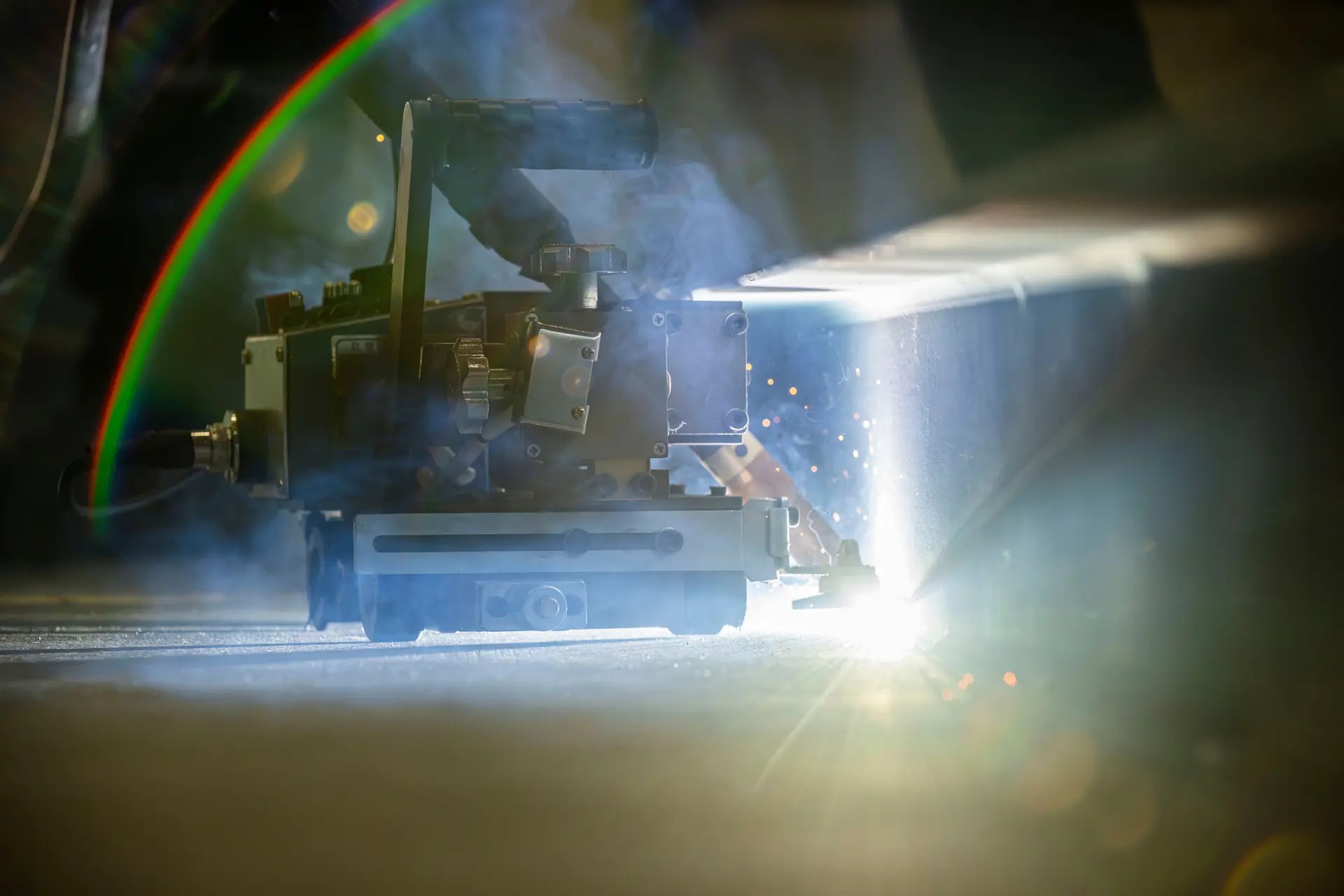
HII and HD Hyundai Heavy Industries are running a pilot programme to install intelligent mechanised welding equipment at HII’s Ingalls Shipbuilding yard in Mississippi, extending automation into areas of warship construction that currently rely on manual welding, the company stated.
The pilot follows a memorandum of understanding signed between the two firms in 2025 and places the systems in unit-fabrication areas of the yard. According to HII, the equipment recognises workpieces and welding conditions automatically, corrects welding positions in real time and captures process data that can feed quality control and traceability. Ingalls says the machines have been checked against existing US Navy fabrication standards, and the pilot will be used to identify where efficiency can be improved.
Brian Blanchette, president of Ingalls Shipbuilding, said the yard “operates one of the most advanced automated production lines in the U.S. shipbuilding industrial base”, listing automated panel lines, material handling and robotic bulkhead fabrication among existing investments, and said the pilot pushes that footprint further into the production process.
Dr Won-ho Joo, chief executive of the naval and special ship business unit at HHI, said the programme reflects a strengthening partnership and the advantages of open technical collaboration, adding that the company looks forward to working with HII “to enhance shipbuilding efficiency and deliver greater value to our customers”.
The initiative came out of a three-day technical exchange at Ingalls during which the two companies assessed technologies and automation opportunities across their yards. Ingalls demonstrated its hybrid laser welding process, robotics integration and facility layout during the visit.
HII lists a range of other automation work under way or under assessment across Ingalls and Newport News Shipbuilding, including robotic and collaborative robot fabrication cells, additive manufacturing, automated steel processing and integrated production control software. The company also recently announced a High-Yield Production Robotics initiative pairing it with physical AI firms, and signed production agreements with Path Robotics and GrayMatter Robotics on 6 August.
American naval shipbuilding has been under sustained scrutiny for schedule slippage and workforce shortages, with the Navy reporting delays across submarine, frigate and amphibious programmes and the Congressional Budget Office repeatedly questioning whether the industrial base can meet planned fleet targets. Skilled welders are among the hardest roles to recruit and retain, and yards have competed against one another and against commercial industry for the same labour pool.
South Korean involvement in that problem has grown quickly as HD Hyundai and Hanwha, the country’s two largest shipbuilders, deliver naval vessels on schedules and at costs American yards have struggled to match, and both have moved to establish a foothold in the United States. Hanwha purchased the Philly Shipyard in 2024, and Korean firms have taken US Navy vessels into their yards for maintenance and repair work under the Master Ship Repair Agreement framework. Legislation restricting the construction of US warships in foreign yards means cooperation has instead focused on technology transfer, repair work and investment on American soil.
Ingalls at Pascagoula builds amphibious warfare ships and Arleigh Burke-class destroyers as well as National Security Cutters for the Coast Guard, and is the sole builder of the Navy’s large-deck amphibious assault ships.






…and as usual where it matters Musk and co are no where to be seen.
Really! you arrogance is outstanding.
You’ve written al lot of stupid things but this has to be the stupidest.
Wonder if BAE and BABCOCK are taking note of this..
Perhaps MOD should set up a similar Exchange with Korea…
One day we’ll have robot ships built by robots