

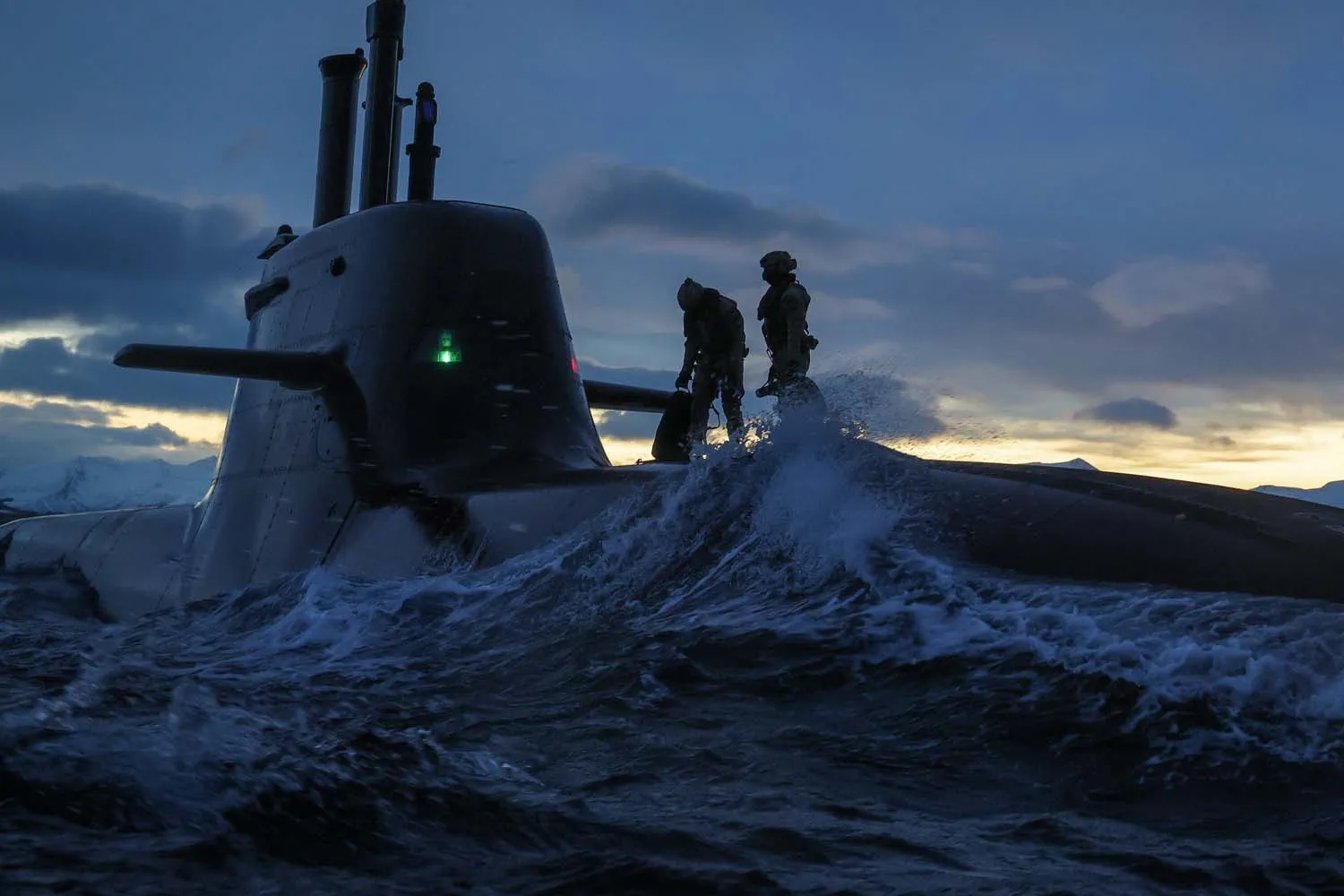
Royal Marines commandos conducted a covert raiding mission from a German submarine during NATO’s Cold Response 26 exercise in Norway, emerging from the icy waters of an Arctic fjord to reconnoitre enemy positions before directing naval gunfire, the Royal Navy said.
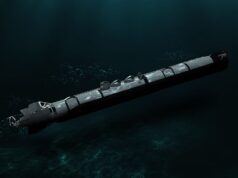
The operation took place around 200 miles inside the Arctic Circle aboard German Type 212A attack submarine U-35 as part of the large multinational exercise involving 14 nations and more than 25,000 troops.
Specialist Royal Marines units launched inflatable raiding craft from the submerged submarine before heading ashore under cover of darkness. The teams then established observation positions to identify and monitor simulated enemy targets before coordinating naval gunfire from allied warships. The mission involved elements of the Commando Force including the Surveillance and Reconnaissance Squadron (SRS), Shore Reconnaissance Troop (SRT) and 148 Commando Forward Observation Battery.
A senior officer from the SRS described submarine insertion as a critical capability for operations in the High North.
“In the High North’s harsh and unforgiving domain, where extreme climatic conditions and adversary vigilance dominate, the ability to covertly insert reconnaissance teams ashore via Inflatable Raiding Craft launched from a submarine is indispensable.”
“It delivers the stealthy edge needed to penetrate denied areas, deny the enemy sanctuary, collect vital intelligence on subsurface and littoral threats and shape the operational environment before any escalation.”
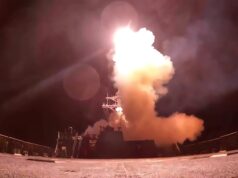
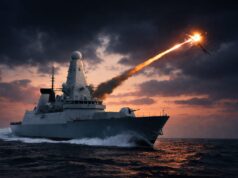
According to the Royal Navy, the commandos were tasked with observing a simulated enemy radar installation along Norway’s rugged coastline before directing naval gunfire to destroy the target and deny the adversary visibility of allied naval movements. 148 Battery, part of the Royal Artillery but embedded with the Royal Marines’ Commando Force, specialises in coordinating artillery, naval gunfire and air strikes while operating covertly behind enemy lines.
A team leader from the unit highlighted the importance of practising this form of insertion. “We regularly train with NATO Special Operations Forces partners to practise naval fire support, but it’s been great getting re-qualified in this insertion method.”
“Serials like this are similar to our historical roots dating back to the Falklands where 148 delivered naval gunfire prior to the retaking of the islands.”


I guess that answers people asking how the SRT arrived at their landing site from a recent article.
👍
Pity we could not use a BRITISH attack submarine, thanks to Super Starmer.
Not sure he’s the only one to blame for the entire saga of the Astutes.
You are of course correct ^.^
Well a German might (or might not) say “why haven’t we got any troops for this task?”.
In fairness they do have the KSM and Seebattalion, although neither is entirely the same capability.
The other RM Sub insertion capability remains with the SF, of which these are not, using the Chalfont DDS fitted to SSN, if we actually had any SSN to use.
I initially misread this as “Royal Marines launches raids ON German Submarines” and I was like, is this a historical article we’re looking at?
Cockleshell Heroes Redux. 😳😜.
“Kommen sie hier, Tommy.”
And if the RN had a small fleet 212CDs types the UK could do these and other type of useful ops independently and free up the Astutes.