

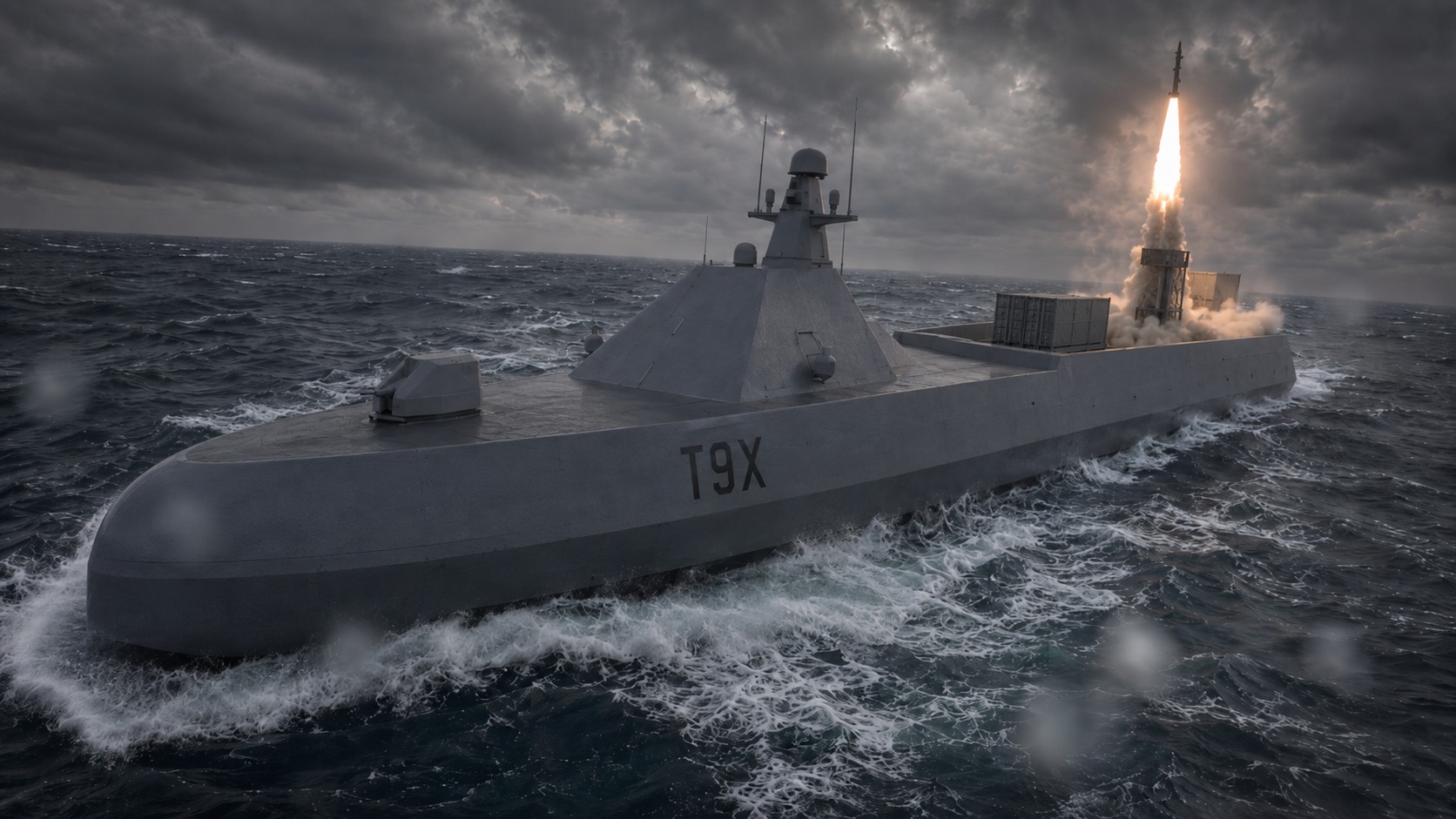
The Ministry of Defence is continuing work with the Defence Maritime Regulator to define how uncrewed surface vessels should be regulated and classified as the Royal Navy expands its use of maritime autonomous systems.
Defence Minister Luke Pollard provided the update in response to a written parliamentary question from Conservative MP Ben Obese-Jecty, who asked what progress had been made since July on the regulatory and classification framework for uncrewed surface vessels. Pollard said: “Work continues with the Defence Maritime Regulator to implement and inform the current regulatory and classification framework for uncrewed surface vessels.”
The MOD is also working with other parts of government to ensure that Defence arrangements do not develop in isolation from the wider UK regulatory system.
Pollard also said: “All RN operated Maritime Autonomous Systems are operated within Defence Maritime Regulations as the Ministry of Defence’s health, safety and environmental framework.”
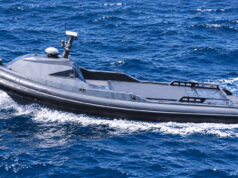
The issue is becoming increasingly important as the Royal Navy introduces more autonomous and remotely operated systems for roles including surveillance, mine countermeasures, experimentation and potentially wider operational tasks. Unlike conventional crewed warships, uncrewed surface vessels raise additional questions around classification, control, safety assurance, responsibility and how military systems interact with civilian maritime rules.


I’m concerned that we might be overreacting ourselves on this hybrid navy thing to me, a lot of the technology needed doesn’t even exist.
Soon, the RN will just be a website and 100 Adminrals with one unmanned drone ship that’s supposed to do everything
Yep, bar cook my dinner. Forecasting they will be as many as one is an optimistic tone for this website. Clever though, say we will do this and bury it in red tape. Of course we will have to expand the MOD numbers to cope with the new regs !
These will get captured in operation areas like Persian Gulf or almost anywhere. A single RHIB boarding party can take command.
Hmm, it is a concern but, given they’re always pictured with a whacking great gun on the front, presumably they could deal with anyone sailing up too close to them
Nope, because rules of engagement will mean they cannot really defend themselves unless it’s an active war zone..
It’s not just being boarded.. if I was the Russians I would just bribe a load of merchant captains to get a bit drunk and run straight over them….
Why are we assuming that the unmanned ship would not just…move out the way? They’re going to smaller and faster than most civilian ships.
Ships don’t move that easily to be honest, and these are not going to be marine gas turbine driven.. they will be simple diesel plodders or electric drives.
Good luck boarding a vessel with no wheelhouse, no manual helm, zero crew to take hostage, and an operator watching you through a high-res thermal camera who can remotely scuttle or disable the boat in two seconds.
Easy if not being controlled by line of sight from a mothership. Sniper takes out the camera, along with using a jammer transmitting white noise on a satellite comms frequency. The drone ship is effectively isolated, probably!
That works against a commercial drone, but military USVs run edge AI designed for heavy jamming. Loss of link just means the boat defaults to autonomous navigation and evasive maneuvers. Isolating it doesn’t leave it helpless—it just leaves you bobbing in a RHIB next to a moving 15-tonne robot while the mother ship dispatches a Martlet-armed Wildcat to investigate why the feed went dark.
The problem is it shackles the drones to the mothership.. essentially they are nothing more than adjuncts to a major surface combatant.. now that’s not a bad thing it will add considerable capabilities to the major surface combatants… but they will not be able to operate independently at any distance.. due to grey warfare risks..
Personally I think it’s a more practical idea to make them essentially autonomous, but provide a small bridge as well and workshop and some bunk and food preparation space so you can have a small essentially custodian crew.. CO and a few engineers, Technicians etc..
A small crew area does make a lot of sense, particularly for maintenance but these boats are not designed to be used independently. By separating functions, you are essentially de-risking your fleet. In the past you’d have just have to hit the one t45 escort and your CSG would be defenceless from the air. Under the drone model you would have to hit a number of radar boats and the CCV to achieve the same effect. And they could be quickly replaced.
In addition to the defence de-risking you’re also financially de-risking the fleet. If you lost one drone it’s not as big a financial hit as loosing a billion pound t45.
Not really if the command and control is on the CCV all you need to do is mission kill the CVV… then the radar picks are doing nothing.. kill the spider and the web becomes pointless.
It’s a fair point, but it’d be a poor architect who designed a modern networked combat system with a single point of failure.
There’s no way this is a centralized hub-and-spoke network—those went out in the late ’60s with early ARPANET. A resilient uncrewed surface fleet relies on a dynamic, self-healing mesh topology.
In reality, command and control software stacks are lightweight and modular. If a dedicated CCV suffers a mission kill, command and control simply handshakes over to another ship in the CSG—whether that’s a Type 26, Type 31, Type 45, or the carrier itself.
And in the absolute worst-case scenario—where line-of-sight datalinks to the fleet are severed, SatCom is jammed, and no crewed vessel is in range—the assets don’t instantly drop dead. Edge AI takes over to execute pre-programmed fallback behaviors: gathering local sensor data, executing evasive maneuvers, holding a secure station, or, if completely isolated for an extended duration, autonomously executing a transit back to a pre-designated safe haven or home port.
The whole point of distributed lethality is to eliminate single points of failure, not create a new one!
It will not work like that, because the command and control are the people.. unless you have essentially every ship essentially running a back up you have a problem.. your T45 or CCV will be running your AAW screen and your T26 will be running your ASW screen and all your experience and expertise will be on those ships..
So what is more resilient 2 T45 or other AAW destroyers or 1 T45 and 2 drones that need the command and control of the T45 ?
You’re mixing up human decision-making with backend network routing. Nobody would design a radar boat that needed an operator sitting at a joystick micro-managing it like an arcade game.
In a modern combat management system, these boats would operate on delegated intent and edge computing. A radar USV would process its own raw data locally and just broadcast light, compressed track data (bearing, velocity, object classification) back to the fleet over directional, low-probability-of-intercept datalinks. To the tactical team in an ops room, a track coming off an off-board drone would populate on their radar display identically to a contact from the ship’s own primary radar mast. It wouldn’t add UI drag or require extra bodies staring at dedicated drone video feeds.
Because that data layer would be decoupled from any single hull, the tactical picture would be shared across the entire strike group. Command software stacks could be lightweight and containerized—if a primary command vessel took a hit, the control plane would simply handshake over to another escort ship or the carrier. The humans would stay in the loop for target validation and weapons release approval, while the edge AI would handle navigation, station-keeping, and local sensor processing.
Nobody is talking about swapping a major warship for two small boats. But pushing a couple of autonomous radar nodes 30 miles over the horizon would quadruple your radar line-of-sight and expand your defensive bubble, all while keeping your multi-billion-pound crewed ship further back out of harm’s way. The human expertise stays in the Ops Room—the drones would essentially just be mobile, distributed antenna masts.
And a CCV with a group of lusvs around it is certainly going to be advertising itself. If lusvs are going to be built as big as 80-100m+ are they really worth all the fuss? For a bit more you could get a decent and multi-purpose OPV/Frigate platform.
” By separating functions, you are essentially de-risking your fleet”
False. You are replacing several risks by one giant risk.
And why can’t ships like the T31 have two radars? A Primary/Secondary or even 2 same NS110/NS200s? Cost more but duplicate but give a simultaneous 360 coverage? Might even be cheaper that AESA panels? All this money going into T91/92/94s, which could be invested into up-speccing the T31s and even ordering a few more to complement T45/T26s. Build up the fleet with something more useful smd resilient that can support helo/uavs and drones and still do port visits, humanitarian relief.
QuentinD63 if RN cannot have fixed panels while everyone can – some even dual band-, it should question what is doing.
I am not necessarily against a drone fleet, just asking for answers about new risks and what assumptions is based on to assess if it is valid.
So your solution to defend your 100M+ drone is to blow it up?
Hi Alex, is that question directed towards me?
No. It was to CousinAvi
“Good luck boarding a vessel with no wheelhouse, no manual helm, zero crew to take hostage, and an operator watching you through a high-res thermal camera who can remotely scuttle or disable the boat in two seconds.”
And boom that’s mission success. Say we have 10 of these , how may mystery boardings or rammings do you think Russia could organise per year…
Rules of engagement need to be carefully consider otherwise these vessels are dead once the first round is fired. Threat to life is very different to threat to unmanned vessel? Under what scenario could a USV open fire first?
And that’s the problem, ROE are going to be a nightmare.. Russia is going to go gang busters on grey warfare with these things..
Random boats boarding them.. because even if your pretty sure it’s a grey warfare attack.. whose going to fire on a family in a yacht.. waving at the drone in distress until they get aside and board.. or the Tanker that’s “accidentally “ not seen you and rams the drone…
Russia is going to have a field day..
Some really good examples of the grey zone with lots of opportunities for ‘accidents’ or boardings/ capture
Many years and millions of pounds later the MOD announces..”we’re going to call it an unmanned surface vessel”…. maybe? Moments later the programme is cancelled.
Might not having a few more crewed ships in addition to the drones make everything a bit more resilient then? Why only six CCVs, go for 8, plus 3 more T31s. Get the fleet to 20+ ships, then add drones. Hope the powers that be are watching what other navies are planning to build, like Germany, US, China, North Korea and Russia and not go too “lite” on everything for the RN. Its not all drone ships.
The laptop has been around since the late 1980’s and co-incidentally that has driven our political elite and our CS into thinking that a war can be won with a guy in a suit sitting on a park bench with his laptop at the ready. But as then, even today we are going to need bods on the ground, in the air and at sea to control these computer driven war drones for at least the next 50 years (probably for a lot longer than that) so we need to have a strong Army, Navy and Airforce with guys capable of overseeing these drones until we develop a system that cannot be hacked, has reliable failsafe built in and last but not least we can trust to do the job. So we need more people in the armed forces that will have to put themselves in harms way and a government that is going to look after those people (not what is happening at the moment).
How about start building the platforms and work on rules as they get built.
Feels like the AI bubble, every firm talking about AI without an actual viable product. All fine and good to replace the navy with drones on paper but it requires actual designs/money and construction before existing platforms are all gone.