

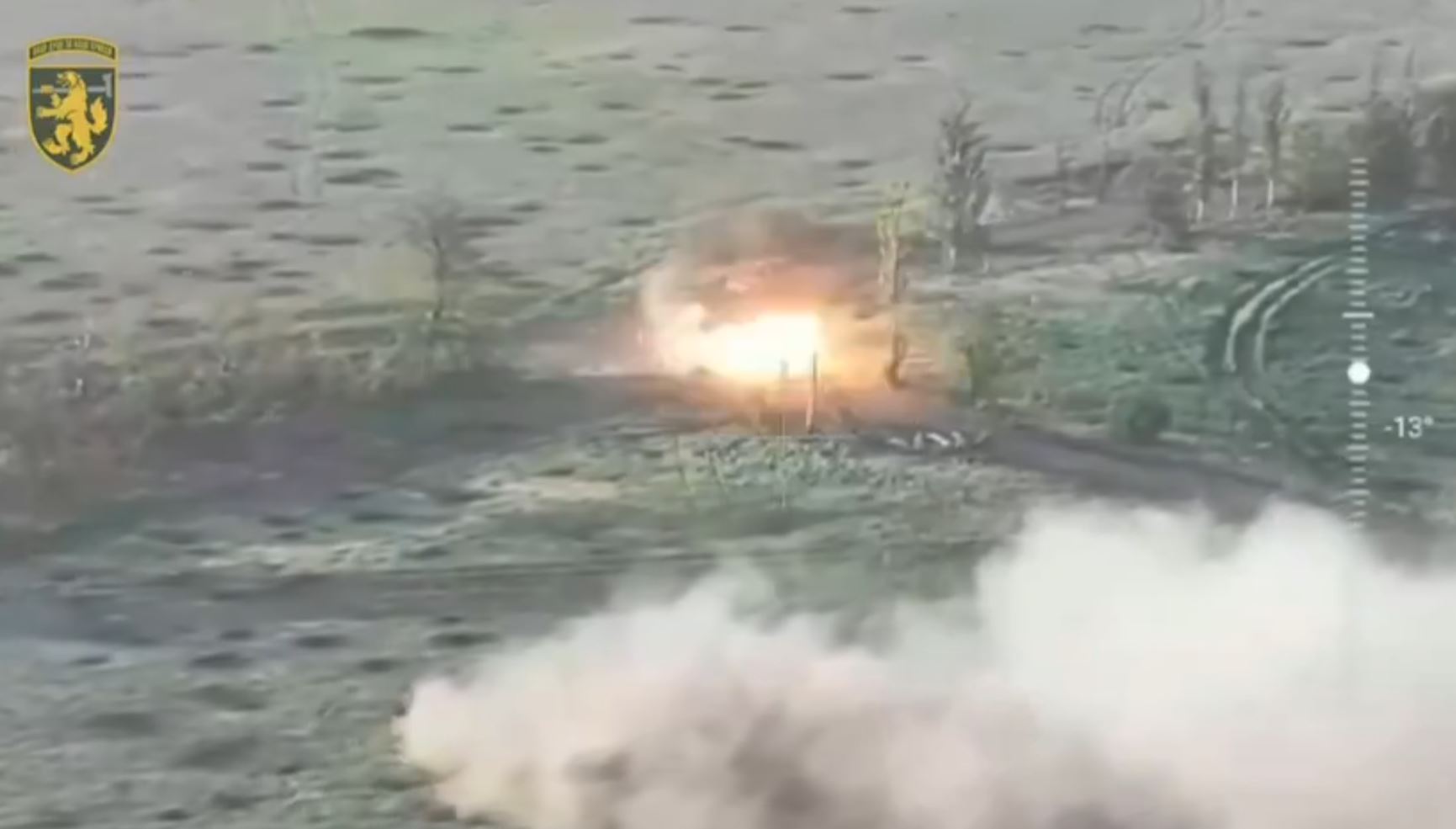
Russia is continuing to make slow but costly gains in the most politically significant terrain of eastern Ukraine, the Donetsk “fortress belt”, and now controls around 80% of the urban centre of Kostiantynivka, according to a Western official.
Speaking on the war in Ukraine, the official said Ukraine had achieved a number of tactical successes over recent weeks and months, but that in the fortress belt the initiative remained with Russia. “In the most politically impactful terrain, the fortress belt in Donetsk Oblast, that is where the Russians are still making gains, albeit, as we know, still torturously, slowly, and with excruciating casualties,” the official said.
The official described the fortress belt as a cluster of four towns, naming Sloviansk, Kramatorsk and Kostiantynivka among them. In the latter, “Russia now controls approximately 80% of the urban centre,” the official said, while cautioning that firm figures were difficult. “The very fragmented and intermingled character of the front line means that any metric of territorial control is at best imprecise, and, as we know, it remains drone dominated.”
Russia’s defence ministry declared earlier in July that Kostiantynivka had fallen, a claim contradicted by Ukrainian troops still fighting inside it. The independent Russian outlet Meduza, analysing the battle in early July, judged that both Moscow’s claim of capture and Kyiv’s insistence that it held the city were wrong, reporting that Russian assault troops had appeared in every part of Kostiantynivka except the western outskirts while Ukrainian forces continued to hold positions, including in the centre. The Institute for the Study of War has separately assessed that Ukraine’s ability to defend the city is deteriorating, while noting that Moscow’s detailed announcements were designed to create a greater impression of Russian presence than actually existed.
At the northern anchor of the belt, Sloviansk, the official said Russia continued to make incremental gains and was contesting the key pivot town of Lyman. That matches recent battlefield reporting: Meduza reported that Russian forces have pressed a determined assault on Lyman since late June, with assault troops appearing across much of the city while Ukrainian defenders hold on, and that separate Russian forces were pushing along the Siverskyi Donets river towards Sloviansk itself.
To the south-west, Russia was said to be heavily set on seizing Dobropillia, which the official described as “an important fulcrum town, which could potentially give Russia the platform and the ability to flank the fortress belt from the west.” Ukrainian military spokesman Victor Tregubov of the Khortytsia group of forces told the broadcaster Suspilne on 27 July that Russian troops had achieved a partial wedge between Pokrovsk and Kostiantynivka and were trying to develop it, with the Pokrovsk direction remaining the main vector of the Russian offensive.
The fortress belt has been central to Russia’s stated war aims since the full-scale invasion began in February 2022. The chain of urban areas running through Donetsk Oblast forms the most heavily fortified Ukrainian defensive line in the east, developed over more than a decade since fighting first broke out in the Donbas in 2014. Kramatorsk, the largest city in the belt, has served as the main administrative and military hub for Ukrainian-held Donetsk Oblast, and capturing the belt would give Moscow effective control of the remainder of the oblast, one of four regions Russia claims to have annexed in September 2022.
Kostiantynivka itself had a pre-war population of roughly 67,000 and has long been one of the key logistical hubs for the Ukrainian military in the east. Lyman, the pivot town the official identified as contested, changed hands twice earlier in the war, falling to Russia in May 2022 before being retaken by Ukraine that October during the Kharkiv counteroffensive.
Elsewhere along the front, the official reported little change. Russia’s attempt to create a buffer zone on the border of Sumy and Kharkiv oblasts was “only making very incremental inroads,” the official said, while in the south, below Zaporizhzhia city, Russia had “effectively deprioritised that sector,” although fighting remained heavy around Huliaipole.





300-500,000 more Russians to be Mobilised after the September elections.
Ho hum. They’ll be going the way of the last 300-500k orcs.
Such a waste of life. They have achieved absolutely nothing.
It’s the Russian way of war.
As long as the Germans retained tactical mobility and a fluid defence, they defeated the Russians every time right through WWII right to the end.
But when they fixed in place by Russia, they simply ground them down in meatwave attacks – this was how they won in WWII.
Yes, it’s costing the Russians 1000 men to advance just 10 metres, but they don’t care – they have millions to throw into the meatwaves.
And it’s that mentality which is why they are losing. Fighting like it’s still 1980 instead of 2026 is massively costing them. Poor tech and training/logistics and tactics seem like something from the dark ages.
‘We always destroyed 5 enemy tanks before they destroyed 1 of ours.
Unfortunately, the enemy always had 6 tanks’
Not any more. They are all in pieces.
1980?
More like 1945.
Let’s be honest, Russia hasn’t moved on a single day since May 1945. I doubt they ever will.
I I think that’s the problem.. drones have essentially added massively more lethality into that meat wall mix. Just as heavy artillery and machine guns added massive lethality in the early 20c that forced a change to armour and protected mobility..
What is interesting is the urban area and combat allows the meat wave to continue and even through they are bleeding out they get the impression they are moving forward.. but with all ability to manoeuvre removed, all they seem to have left is to bleed troops into the urban areas.
Although we often think of Russia as an infantry centric army.. it’s not… it tends to absorb whatever idea killed it the most in the last war and layers it on, since the early 19c it’s very much been an artillery centric army.. with the 20c essentially seeing it become an artillery centric army with tanks and the 21c seeing it become an artillery centric army with tanks and drones…. . Consider at its hight Russia was using 60,000 artillery shells a day .. its now down to a high of 27,000.
They’ve largely moved from artillery to glide bombs, drones and short range ballistic missiles.
They’re using those glide bombs, drones and short-range ballistic missiles the same way they do artillery, though; en masse, for effect, to basically flatten an area before they plant the Russian flag, take a few photos and claim they’ve “liberated” it.
And if Ukraine knows where the latge concentrations of Russian troops and assets are they can future plan for any counter attacks and flush these sods out of their country!
Things have changed – ‘The Soviet Union in 1941 had a population of approximately 195.4 million people, spanning 15 different republics. Today, the modern Russian Federation has an estimated population of about 143.4 million people. This means Russia’s current population is roughly 52 million fewer than the pre-WWII Soviet Union.’ – so Russia today has a smaller population than they did then. Further, the population of Russia is falling – ‘Russia’s population is shrinking at an annual rate of approximately 0.3% to 0.35%, which translates to a natural decline of roughly 300,000 to 500,000 people per year.This demographic contraction is driven by two main factors:Excess Mortality: The death rate consistently outpaces the birth rate, with the latter recently hitting historic lows.Low Fertility: The total fertility rate sits at around 1.37 children per woman, which is well below the replacement level of 2.1’ – Russia may not accept it but they can’t afford to lose millions.
Of course, there is a difference in population between Ukraine and Russia today – ‘Ukraine’s modern population of roughly 36 to 40 million people is significantly smaller than the population of Germany in 1941, which stood at approximately 79 to 82 million people within the expanded borders of the Nazi German Reich at that time’ – but when the Soviets were facing Russia in 1941 Germany was also facing the British Empire and, from December, the US. On that basis I would say Ukraine is possibly in a stronger position than Germany was – I don’t think Russia is in quite the position of strength they would like everyone to believe.
Russia using Kontractniki is achieving a steady force level. The war in Ukraine is not being fought by their regular army.
Russia is able to increase its recruitment base via 3rd world recruitment, and of course Kim Jong Il is happy to send large numbers of Nork Regulars to Ukraine to get first hand warfighting experience, turning his huge comic opera Army into a much more formidable military. And now Iran is minded to send manpower to Ukraine.
Ukraines big fear is a Belorussian Front opening using regular Russian army all arms manouvere units – 300-500,000 mobilised troops will provide the backup muscle, and Ukraine doesn’t have a spare army to counter this threat.
North Koreans and Iranians are a very small part of it – a couple of percent at most. Doubt they will ever get up to a game changing force. Kontractniki and volunteers may make up the bulk, but they are not inexhaustible and are expensive. From what I gather they ARE the regular army!
Belorussians are trying to keep out of it. Intelligence reports suggest that the Ukrainians are already preparing for this and are holding back about 115 to 120,000 troops are assigned to this border, with about 15,000 on the front line and the rest in secondary lines and as reserves.
If so, smart move by Ukraine. Strength to them 🇺🇦!
Yes, they are trying to step up on the Belorussian border, but that’s cutting reinforcements to the Donbas allowing the Russians to finally break into the Fortress Belt.
As for the Norks and Iranians – as they found, the Norks learn fast and are a much more credible force than the cannon fodder that started out. The Ukrainians have a developed a grudging respect for the NK troops.
But we digress, the Russians still haven’t deployed their regular units from the Moscow and St Peterburg military districts. I would not be surprised to see another move to go after Kiev. Putin needs to end the war – but on his terms.
The war in Ukraine was started using Russias entire regular army.. around 150,000 professional contracted soldiers, it sent almost every professional it had anc a huge number of them ended up as casualties.. its regular army no longer fights in Ukraine because it died in Ukraine.. it has had to rebuild it.
Yes, and it’s learned, and learned well. Its drone and EW units are better than anything in the west, they have leveraged SRBMs as a key battlefield shaping tool.
It would be foolish to think Russian Army 2026 is the same one that blundered over the border in 2022.
They learn, slowly, but they learn – and they have far more manpower than Ukraine.
Using Kontraktniki as meatwaves in the Donbass looks insane to us, but it’s killing relentlessly the better trained UA army while their regular army rebuilds and retrains.
While the fuedal elites remain in their palaces and offices.
There is a lot of questions around whether that is still even viable, Russia is running out of combat aged men that it can call on that aren’t from the medium or upper class families. Calling people up from wealther families would cause Putin political issues
It’s not running out of volunteer combat aged men, it’s expensive, but they are signing them up.
Putin has not deployed formally mobilized Regular Russian forces – politically arkward? Yes, hence he’ll get elections out if the way first.
Meanwhile, Ukraine very much has run out of manpower.
Shockingly you’re pro Russia. We’d never have guessed. /s
Ukraine hasn’t run out of manpower, but it is absolutely trying to manage it’s population to avoid a demographic bomb like Russia is creating for itself. That’s why they are shifting to such a drone intensive method of defence.
I think this is the key issue for Ukraine. They simply don’t have the manpower for a large scale and sustained counter offensive. Unless they are secretly building up their forces in reserve, bit like the UK did in 1918. Russia, sadly will always have the demographic advantage over Ukraine, even if it continually sends its young population on mindless attacks. The so called flexibility that Russia were developing with their battalion tactical groups failed catastrophically on day 1 of the invasion. It seems their only alternative is a return to the WW2 tactic of sending meat waves to grind down the opposition.
Are you congenitally thick?
Russia: 143 million population
Ukraine: 30 million population in non occupied UA territory
Those are hard demographic facts.
1 million Russians reach 18 every year and are conscripted.
Ukraine CAN NOT win a war of attrition.
Yeah, and Russia still can’t win. Because you are useless.
And this is the kind of moronic thinking that sees over 1,000 Russian soldiers die every day.
Ukraine has switched to drone warfare so that they don’t have to fight a Russian-style war of attrition.
Of course, hard to convince thicko Vatniks of this.
Yo thicko, Putin don’t care – and the Vatniks keep signing up.
Ukraine can’t meet its manpower targets, the Russians do with ease – and they have many millions more vatniks to call on than Ukraine.
And top hint – Ukraines manpower loses are brutal, desertions and fleeing the country is up.
Do they? Is that why they empty their prisons and recruit from abroad? That’s strange behaviour for a country with a large number willing victims. You may want to ask yourself where all these millions of recruits actually are?Meanwhile Ukraine benefits from increasing numbers of drones being manufactured in Europe. With half a billion population and a gigantic industrial base that dwarves Russia, I wouldn’t bet on Ukraine losing.
Dwarfs.🤣
And they are keeping Russia at bay with vastly superior kit. And have embraced a new form of warfare. If Russia can’t invade Ukraine after 4 years, then NATO would decimate Russian forces.
That’s NATO that couldn’t bring itself to shoot down a Russian cruise missile over Poland the other day?
Ah this response does not raise concerns about NATO, just a conformation you are a bit of a sad russki troll! How sad!
Oh teh noes! He said ruski troll!🤣🤣🤣🤦♀️
2 out of 10, see me after school.
If Russia wins, are they going to have anyone left to live there?
If you can call small infiltration groups who wave a flag and claim they have captured somewhere before they are blatted by a drone an ‘advance’ so be it!
That’s the case on a lot of the front, but in Konstantyivka they are actually advancing, it’s one of the few places Russia is still capable of sustaining offensive action.
@ Dern
The first-class ISW website exposes much of the talk of Russian advances as classic “dezinformatsia”. This from today’s update:-
“The Russian Northern Grouping of Forces and high military command are likely lying to the Kremlin about the extent of Russian gains in northern Ukraine, in order to further the narrative that Russian forces are actively advancing across the entire theatre, including parts of the frontline that has been largely stagnant for nearly two years”
“The Kremlin is using these exaggerated claims of advance as part of its ongoing cognitive warfare effort to falsely portray Russian forces as advancing across the battlefield in order to convince Ukraine’s partners to abandon their support”
“Available battlefield evidence does not corroborate Russian claims of advances in northern Sumy and Kharkiv oblasts. The Ukrainian Northern Grouping of Forces refuted on July 30 the Russian MoD’s claims that Russian forces seized Mala Slobidka and Mohrytsya, stating that these claims are part of a wider Russian informational effort. The Ukrainian Kursk Grouping of Forces also refuted Russian MoD claims on July 30 that Russian forces seized Nova Sich, stating that Ukrainian forces maintain full control of the settlement”
“Ukrainian forces are counterattacking in some areas of northern Ukraine, contradicting the Russian narrative of theatre-wide and unchallenged advances”
“Prominent Kremlin co-opted milbloggers are notably refuting the official Russian military narrative about the situation in northern Ukraine. A prominent Kremlin-affiliated milblogger criticized Russian forces for using AI to create or alter footage fabricating Russian advances, particularly in the Velykyi Burluk direction”
The Russians are masters of inserting FSB propaganda into Western media outlets. Despite all the crap (worthy of that lying little faggot Jim) after four years of savage warfare, the Ukraine military are holding their ground in the Donetz region, have isolated Crimea and are laying waste to Russian rear areas, the Russian oil refineries, military factories and ground lines of communication
The long running Look On The Fields Christian publication which has never engaged in political affairs and operates worldwide from Angola to Panama and in this case Ukraine with missionaries based in Lviv and Lutsk. Their sole purpose to share the Christian Gospel and help and support the people. The reports from Lviv a city of 220,000 highlight days where there is no power.sometimes up to 18 hrs a day .There are many refugees from Donetsk , the Donbas and Dnipro people with literally nothing but the clothes on their backs. From donations here in the U.K. the missionaries purchase large quantities of dried foods, soups , porridge and wet wipes for the Ukrainian soldiers on the front line . These soldiers are largely in trenches and operating underground for weeks at a time in appalling conditions
In Lutsk the 5th biggest city in Ukraine sirens sound daily for incoming missiles and drones. Military funerals are a daily occurrence with a minutes silence every day at 9a.m . There is a daily curfew which isn’t easy for people. The police and military have the authority to lift any man they see on the street or driving and forcibly transport them to the military enlistment office where staff are ruthless. One of the local church assembly Sasha who has partial disability due to a head injury was accosted whilst dropping his wife and children off to do craft work at the local Children’s home and now forcibly enlisted. Another who was enlisted Kostja served 300 days with only 10 days leave it is highly doubtful this is an isolated case and probably the norm for those called up.
The reality is the recruitment offices have set the bar so low for recruitment that really anyone is called up no matter their physical condition This disgusting practice of how the Ukrainian authorities operate in press ganging any and every poor sod they can regardless of physical or mental condition is something no civilised nation should ever stoop to. The delusional idea that Ukrainian men are leapfrogging down to the local recruitment offices and playing tiddlywinks in the queue as the BS MSM propaganda would have you believe couldn’t be further from the truth.
People seem to forget the human cost to this war something this publication highlights and brings home with the experiences of the locals living through this disaster.
A lot of interesting activity in the comments section following these official pronouncements which are fast becoming the norm.
For a while, not just a day, Russian troops are in some cases less than 5 KM away from parts of Sloviansk, Kramatorsk and Kostantinovka. Bombing and supply line cuts are the order of the day, tactics minimising Russian casualties, before a final assault. These slow tactics have been the hallmark of Russian advances now back to up to 10KM per day – similar to the summer of 2024 and 25.
E3 is also under pressure: US have distanced themselves from Weisbaden UA HQ, Macron soon to be replaced by a non-believer, Merz under serious pressure and may be forced to stand down if AfD win the two regional elections due and Andy Burnham had to be strong armed to call and then meet Zelensky with his dress code showing his annoyance. Burnham has told Healey that significant extra defence spend is not his administrations priority. Establishment types are begging to twitch with irritation at him.
It is quite clear where this is heading and I wonder what effort is being made to consider whether any part of the current Ukraine will remain an independent state at the end of this.