

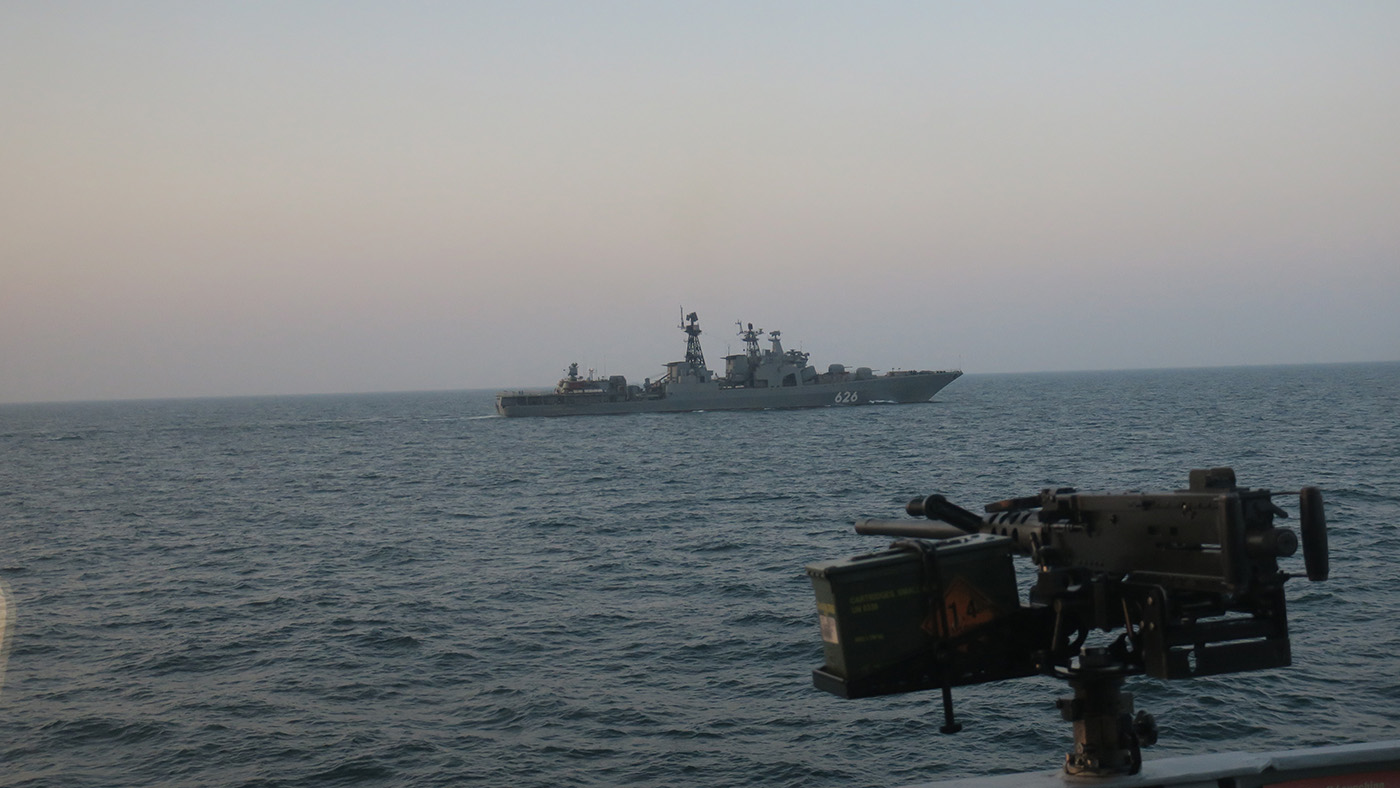
Ministers were pressed in the Commons to clarify whether the government is reassessing the strategic significance of Shetland and surrounding waters, amid heightened Russian maritime activity and a renewed focus on the High North.
Liberal Democrat MP Alistair Carmichael, whose Orkney and Shetland constituency includes the former RAF Saxa Vord site on Unst, said the islands had once formed the “front line” of UK defences during the Cold War. He noted that the base was drawn down two decades ago and is now home to the Shetland spaceport, but argued that recent events suggested the region’s importance was again growing.
Referring to the activities of the Russian tanker Yantar and recent maritime interceptions, Carmichael asked whether, with space identified as a priority area in the Strategic Defence Review, the government would now reassess Shetland’s role as the security environment in the far north evolves.
Responding, Defence Secretary John Healey emphasised the continuing importance of Scotland, and Shetland in particular, to UK security. He highlighted the scale of the current defence footprint north of the border, telling MPs that “we deeply value the role that Shetland and Scotland in general plays to reinforce the security of the United Kingdom.” Healey said there were around 9,500 full-time troops and 3,000 civilian defence personnel based in Scotland, adding that more than £2 billion had been invested in the Scottish economy over the past year in support of defence activity.
He framed defence investment as both a security and economic issue, describing it as “part of keeping this country safer, but also defence driving economic growth throughout the UK.”
Labour MP Torcuil Crichton, representing Na h-Eileanan an Iar, broadened the discussion to include subsea infrastructure. Welcoming a recently announced £40 million investment in sonar systems and Operation Bastion to protect transatlantic undersea cables, he sought reassurance that similar attention would be paid to cables and communications links serving island communities across areas such as the Pentland Firth, the Minch, the Irish Sea and even the Isle of Wight.
Healey acknowledged the concern, pointing directly to Russian behaviour. He said Crichton was “quite rightly” highlighting “a growing level of Russian activity in particular, that monitors and potentially threatens our critical undersea infrastructure.” The Defence Secretary said the UK was demonstrating that it could see, understand and track these threats, and was working closely with allies to counter them. He added that the government intended to intensify its efforts, telling MPs that “we will step up that further in the months ahead,” signalling a continued focus on maritime surveillance, undersea protection and the security of the UK’s northern approaches.










RRH Saxa Vord would be taken out in minutes. Most RRH were automated to save money yesrs ago, whose going to defend tje local area to stop a Russian team flying a Drone or loitering munition into the radome?
Yes, HMG do not take defence seriously, but the cost to protect so many places from all types of threats isn’t realistic.
Noted, Healey coming out with the usual “safe” cobblers and quoting how many staff and how much we spend in Scotland nonsense.
What are you doing to DEFEND KPs?
Why can’t they even procure a few more decent patrol boats to cover underdone areas around the UK and complement the 3 B1s? And any Sea Guardian’s being bought? Any Peregrine for B2 OPVs?