

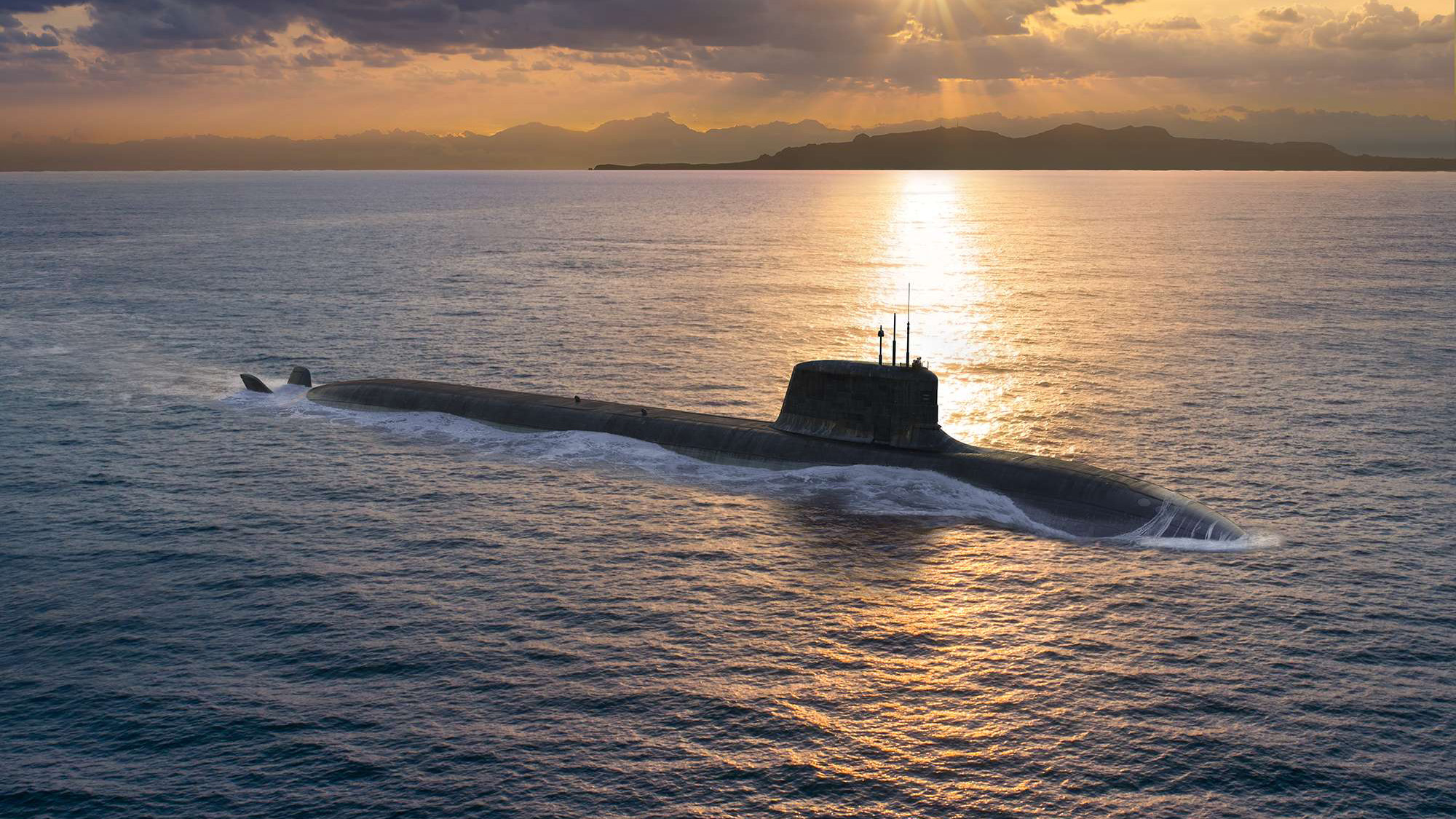
The UK and Australia are examining ways to strengthen cooperation between their steel industries to support the AUKUS submarine programme, according to a written parliamentary answer from Defence Minister Luke Pollard.
Responding to Conservative MP Ben Obese-Jecty, Pollard said the issue was discussed during the first Australia–UK Defence Industry Dialogue since 2018, held with Australian Defence Industry Minister Pat Conroy.
“I was pleased to host Minister Pat Conroy for the first Australia-UK Defence Industry Dialogue since 2018,” Pollard said. “As one of our closest allies, we had constructive discussions on how we can work together towards a safer and prosperous future.”
Pollard said cooperation through the AUKUS partnership would help strengthen defence industrial capacity across the three participating countries. “A cornerstone of doing so is the AUKUS partnership, which will drive growth, create thousands of jobs and provide new opportunities across the trilateral submarine supply chain, building essential resilience into this vital area of our Defence industry.”
The UK and Australia are now working together to determine how their respective steel industries can best support construction of the next generation SSN-AUKUS submarines. “We continue to work with Australia to understand how each country’s steel industry can provide optimal support for our respective SSN-AUKUS build programmes,” Pollard said.
He added that British industry is already contributing to the programme, with Sheffield Forgemasters manufacturing components for Australia’s future nuclear-powered submarines.
“Opportunities for the UK steel industry have already been realised, with Sheffield Forgemasters producing components for Australia’s SSN-AUKUS submarines.”
Pollard said the work is supported by significant investment in submarine manufacturing capacity, including £6 billion committed by the UK government to submarine infrastructure and a further £2.4 billion from Australia to expand production capacity at Rolls-Royce Submarines and Sheffield Forgemasters.




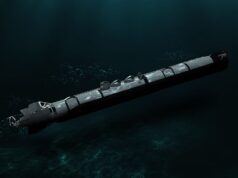


An AUKUS submarine will cost around $5 billion to build. The steel on the ship will be worth around $8 million.
Why would anyone give a s**t about such a low value part of the contract and with some many alternative sources when they were more than happy to outsource the combat management system (a high value almost irreplaceable component) to a foreign power with unknown intent.
I don’t know what the obsession with anyone over the age of 60 is with Iron carbon alloys. Can someone please explain it to me. Why is no one concerned about the origins of the copper or aluminium on the boat.
Because it’s a easy way for politicians and commentators, predominantly on the right-wing, to play of existing pain points in national pride, to create rage.
👍
Are you at all concerned where the rare earth minerals come from to make your car battery?
Jim it’s actually very important, in fact it’s crucial that you have the correct steel for building Submarines and that means HY80/90/100. Fact is we don’t make any in UK these days so we have to import from Sweden or France, it just so happens that Australia does and they are our partners.
I get the point regarding the CMS and you actually hit the nail on the head with “almost irreplaceable” but that’s the big problem, we don’t build in volume and it’s practically bespoke software and hardware and hence very expensive.
Fact is we are in a 3 way partnership with US and Australia and 2 of them use the same CMS, so we were never going to get either to adopt ours. So it’s a done deal and we have to accept
As for a foreign power with unknown intent, blimey there is 15/20 years to go before we ever see an SSN(A) and to be perfectly honest if I was a yank I would more concerned about the U.K present leadership and intent.
And the alloys for the ‘interesting’ bits of the submarine are secret sauce.
So, yes, we buy from France and Sweden who both have mature submarine industries and still make steel even though Sweden started down the green path a long time ago.
The £8m for the speciality alloys is a huge underestimate. Speciality alloys are many times that and can be an order of magnitude or more once other treatments are involved.
Yes but it’s all small potatoes compared to major systems.
How many jobs specifically in steel will AUKUS create or even protect, almost none and the few it will protect will be in small specialty places like Forge Masters.
It the low resolution thinking of politicians that see Iron alloys as some form of major industrial job creator that gets me. Steel industry employs almost no one any where because steel mills needs few people and their output is increasingly irrelevant in the modern age.
It’s the politics and media living in some “golden age” when steel mills employed proper men and most children had rickets.
The Australian steel in question has also been purchased by HII (Newport News Shipbuilding) to run tests on to see if they can use it in Virginia submarine hulls. This steel has also been tested in France (due to the now cancelled Attack class) & Sweden (due to Collins class). Going on the price HII paid for a testing sample (not enough to build a hull), this steel is scary expensive.
Even so, it will still be a minor (but noticeable) cost of the build of one submarine. However if UK do end up with 12, that adds up to a serious amount of money. Australia will be spending a lot of money in UK (especially RR) & will be pushing for every opportunity to claw some back.
The proof of Australias expertise in steel making and fabrication was pretty well proven when they rejected the early Swedish supplied hull sections for the Collins class. As I heard it the steel was slightly inferior to the Australian supplied steel, way more expensive and every weld was substandard (no pun intended).
Some of those Secret Sauce steel alloys undergo decades of continuous testing in a purpose built test environment to see how their composition and attributes change when exposed in close proximity to a reactor. The nickname for elements within the alloys that go awry was “naughty daughters”.
The cost of some of those alloys are absolutely mind blowing !
“Neptune” should be proud of what it has achieved over decades.
A bit of context wrt our CMS being ‘almost irreplaceable ‘ and the rest of the angst surrounding the decision to not select it.
SMCS is over 30 yo, its most modern iteration is SMCS-NG, which is itself some 20 odd yo. It has had so many upgrades , that it is no longer viable,eventually to keep upgrading it and is fast approaching its end of life. We will need a replacement in the not to distant future, so, instead of funding a complete new design CMS the decision was made to go with a newer more modern US system BYG-1. However, the UK have had some input into the variant going into those future SM builds.
We have taken the best bits from both systems and have/are integrating them into a newer version of BYG-1 that suits all. Don’t know what the technology split is, but the UK has had a big input. The system can handle all the different sensor types/variants including weapons. It’s not all doom and gloom like some think.
Also the Collins version had already introduced a whole heap of additional sensors to the system, since most of Collins class sensors are European, but most (not all) the weapons are US.
Don’t know but having recently listened to Carney’s speech to the Australian Parliament, it is clear just how much of the Worlds minerals, metals and precious materials are being mined in these two Countries with massively greater potential for expansion. Indeed being over 60 I note a great deal of the World’s iron ore deposits exist in Australia. Certainly seems sensible to widen ties with both of them under these circumstances if we wish to be part of the new alliances forming to cut out the US from the picture.
The problem is not iron, it’s rare earths. Australia & Canada have mines (& more in the pipeline). Processing however is concentrated in China. The methods are well known, but only PRC is game to do it en mass because they don’t care how many it eventually kills. Doing it the non Chinese way is super expensive (using even the best of modern tech). This is where the real game is.
AUKUS should really be just AUK, the US part is unreliable and giving the rising cost of the current war, i really don’t see how they will honor their obligations in AUKUS
They already are honouring the agreement and the underlying reason is it actually serves their self interest to make this work. AUKUS isn’t just about Nuclear Submarines it’s already bearing fruit with cooperation on Drones, Hypersonic weapons and UAVs.
I agree, never publicised much, but a fair amount of the rise of the Californian tech success (in ai and chip design) originated from the work of two (originally at least) uk companies. They are well aware of the capabilities of the uk (and indeed in recent times Australian too) hi tech research and how to take advantage of it on the cheap too. Even America only Trump seems to be advised of that. They would do well to understand how much is going on in Canada too especially in Fusion so might be intelligent to not piss them off either.
Whenever we participate in joint R&D efforts with the US we end up contributing a fraction of the money that they do, but at the end of the process we glean the same benefit that they do. That is why it remains an overwhelmingly good idea to maintain a constructive security relationship with the US. And as ABCRodney points out, cooperation on SSNs is only part of a bigger picture to which the US remains very heavily committed, regardless of any rhetoric coming out of the White House, because ultimately it’s the cornerstone of their China containment strategy.
It didn’t make sense to collaborate when it had ITAR slapped on it.
If it is in the AUKUS framework it doesn’t automatically have ITAR on it. Which makes collaboration easier to justify.
What very few people realise is that although we tend to run ourselves down we really are a partner and not a supplicant when it comes to cooperation with the US.
I suspect “the Donald” would have a meltdown if he knew just how much tech we have contributed and the specialised kit that is made in the UK and ends up in US boats.