

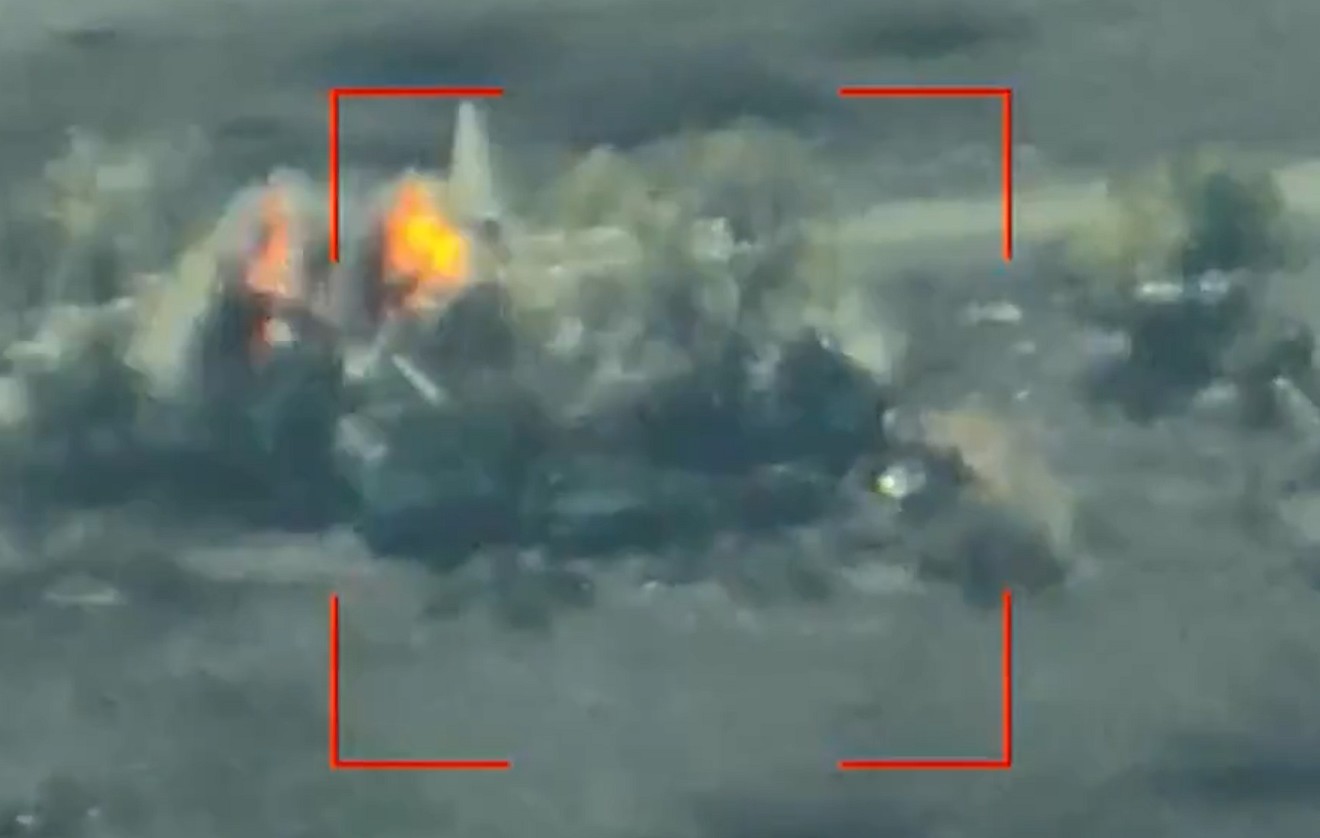
The Ministry of Defence is exploring how machine vision technology could be used to improve targeting in one-way effectors, the expendable strike drones increasingly central to modern warfare.
The position was set out by the Minister for Defence Readiness and Industry, Luke Pollard, in response to a written question from the Conservative MP for Huntingdon, Ben Obese-Jecty, who had asked what progress had been made in developing the use of machine vision for lock-on and the terminal phase of one-way effectors.
Pollard said the department “continues to explore how machine vision technologies may enhance targeting processes”, including in one-way effectors, “to improve operational effectiveness”. He added that “policy development is ongoing”, in consultation with MoD legal teams, to ensure compliance with the United Kingdom’s “legal and ethical obligations”.
Machine vision refers to systems that use onboard cameras and algorithms to recognise and track a target visually, allowing a weapon to lock on and guide itself through the final, terminal phase of an attack without relying on satellite navigation, which can be jammed or spoofed. For one-way effectors, the cheap, single-use drones that fly into their targets, such a capability would let them complete a strike even where positioning signals are denied, an increasingly common feature of the war in Ukraine.
The reference to one-way effectors comes as Britain pushes to field sovereign deep-strike capabilities, with firms showcasing systems such as MGI Engineering’s TigerShark and Rotron’s SkyLance under the MoD’s Project BRAKESTOP this week, several of them designed to operate in GNSS-denied conditions.








I’m guessing that Moderators don’t get paid $17,240 then 🤔🫡😁
👀🤣🤣🤣💥💥
“machine vision for lock-on and the terminal phase of one-way effectors”
As Roy puts it on X …Terminal target recognition and autonomous final attack for FPVs to defeat jamming
Meanwhile, we are still asking if it’s ok with the health and safety chaps!
I’m puzzled as using image/signature libraries is nothing new.
Maybe the issue is with using simpler camera based technology that is used on EVs maybe with LIDAR.
I’m less concerned with knowing they will never ever target the wrong thing (which can never be guaranteed) than I am with knowing they will only target things in the right place at the right time.
I think that’s the reasonable concern here with such cheap and long range munitions: that they might fly off course and happily level civilian infrastructure in Georgia.
I was thinking that as well, been involved in laser based triangulations machine vision systems for 20 years and it wasn’t new when I started. Camera technology has moved on quite a bit over that time TBF
“machine vision”
WOW!
Is that better than “AI”, or just cheaper.
I learnt a long time ago not to let the gullible near salesmen.
In fact, we had specially trained dogs, for both.
Dear George,
why did you not mention this in an appropriately derogatory way?
Machine vision is the capability to recognise specific objects and forms, from video and still imagery, whereas AI tends to relate to reasoning,analysis, inference and insight.
This was available in the 1990s, it was not given this new fancy name then. The optronic fire control systems of the day introduced this.
If your name is John Connor, you might want to change it.
“legal and ethical obligations”.
We really aren’t a serious military 🙄
All very nice, but RN missile systems and Phalanx have had an ‘it flies, it dies’ no one in the loop option since the 80’s.
It’s a perfectly reasonable concern. For example, we wouldn’t want a missile to fly off course and hit a girls elemantary school would we?
FWIW, the Ukrainians cracked this in 2023 and after live fire trials filed it away under ‘when you have to unleash real hell on Orcs’.
This is not WMD, but an AI enabled autonomous drone swarm can and will kill every living human thing in a grid square – even the wounded.
Have I missed something? TLAM, Storm Shadow, etc. have been using ‘machine vision’ for the last mile of flight for years, haven’t they? Or is this the same technology re-packaged and sold as ‘new’…
The argument ab adsurdum by the pols and lawyers is these drone target humans, but won’t take a surrender – aka, these drone might conduct an ‘unlawful killing’…. 🤷♂️
I don’t think so, they have a pre-programmed location to strike fixed targets, and will complete their flight without remote updates. Computer vision involves recognising a target rather than a location, which implies potential autonomous course correction in the terminal phase.
Hmm… thanks Craig. My understanding (and I stand corrected) was that current cruise missiles, as you said, “have a pre-programmed location to strike fixed targets, and will complete their flight without remote updates”.
So, I’ve always understood this to mean that, on approaching the target, they call up an image of not only the target building but a specific part of the building, pre-programmed in their memory, enabling them to recognise a precise part of the target. Hence, when you see a photo of a building hit by a cruise missile, there is usually a very precise hole in the building.
Which is why I thought ‘computer vision’ was a new name for old technology. Again, I stand corrected.
Cheers
The argument ab adsurdum by the pols and lawyers is these drone target humans, but won’t take a surrender – aka, these drone might conduct an ‘unlawful killing’…. 🤷♂️
FWIW, the Ukrainians cracked all this in 2023 and after live fire trials filed it away under ‘when you have to unleash real hell on Orcs’.
This is not WMD, but an AI enabled autonomous drone swarm can and will kill every living human thing in a grid square – even the wounded.
We used machine vision in my Robotics/UGV R&D division in RARDE some 30 years ago on a number of our autonomous Technology Demonstrators, but for navigation rather than targeting.
Indeed, but it’s now refined to the point that very cheap and small attack drones can be sent off in swarms to patrol roads and kill zones, their AI library seeking out humanoid targets – think a very smart cluster munition. We are tying ourselves in lrknots over these systems hunting human targets autonomously. The sight of UAF drones finishing off wounded Russians seems to have particularly stressed the Hermeratti.