

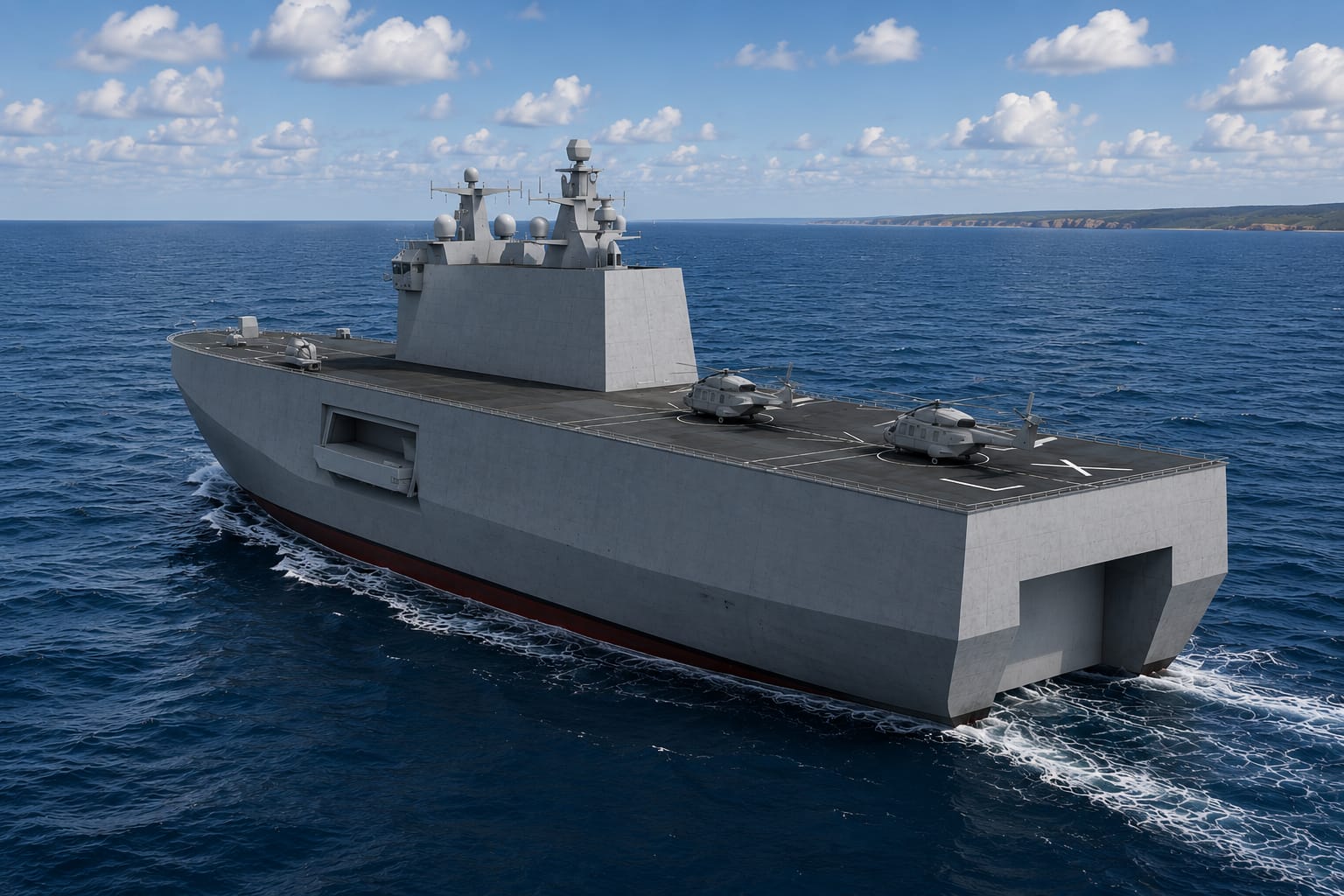
British shipyards will build a new fleet of amphibious transport ships under a £2.4 billion partnership with the Netherlands, with each nation to operate four of the vessels, the government has announced.
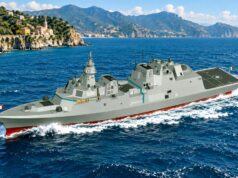
Prime Minister Keir Starmer and Dutch Prime Minister Rob Jetten signed the agreement on 7 July during the meeting of NATO leaders in Ankara, in a deal Downing Street said sets the path to building next-generation amphibious ships for both nations’ forces while supporting hundreds of high-skilled UK jobs. Based on a Dutch design, the ships will be built in UK shipyards alongside Dutch industry, and at 160 metres long and 15,000 tonnes they will transport troops, vehicles and equipment including drones, with flight decks designed to operate current and future long-range drones and autonomous systems in support of the Royal Navy’s transition to a hybrid fleet.
“This partnership is not just about building ships, it is also about delivering long term security for both the UK and The Netherlands, ensuring we are able to stay ahead of the threats of tomorrow,” the Prime Minister said. “Combining the UK’s industrial expertise with The Netherlands’ design and sea-faring experience to deliver first-rate platforms for our elite amphibious forces, this partnership will strengthen NATO. I am incredibly proud that British shipyards will help deliver these ships, creating and sustaining good jobs here at home in the UK.”
Defence Secretary Dan Jarvis said: “We are building an even stronger amphibious force with the Netherlands, strengthening our defence and deterrence as close NATO allies and JEF partners. Our forces will operate the same equipment and deploy on exercises together, so if they need to, we can fight and win together. In close partnership, we are responding to the threats we face to make our nations and Europe safer.”
The agreement gives shape to the commitment in the Defence Investment Plan, which dropped the Royal Navy’s planned Multi-Role Strike Ship in favour of joining the Netherlands-led Amphibious Transport Ship programme, and follows Minister for Defence Readiness and Industry Luke Pollard telling the Commons on Monday that the ambition is for the first ship to enter service in the 2030s. The new vessels will form the backbone of a strengthened UK-Netherlands amphibious force, building on more than 50 years of cooperation through what the government describes as Europe’s longest-running integrated military force, with the two navies to train, deploy and operate together increasingly and common ships central to that integration alongside the drone and uncrewed technology the two nations will develop together. The partners will also work to protect critical undersea infrastructure and deter threats in the North Atlantic and High North.
For the Royal Navy, the ships restore a dedicated amphibious fleet for the first time since HMS Albion and HMS Bulwark were retired in late 2024 and subsequently sold to Brazil, and four hulls would exceed the two assault ships the service previously operated, though the announcement does not name the shipyards involved, the build schedule or the in-service dates beyond the ambition already stated.
The government said the deal builds on the recent agreement with Norway to deliver five Type 26 frigates built in UK yards to the Norwegian Navy, supporting 4,000 British jobs, and comes as billions are invested in the hybrid navy through the Defence Investment Plan, combining warships with autonomous surface and undersea drones.



Another direct cut. Six MRSS to four ATS. Each ATS is smaller than any of the six amphibs they replace.
its not a direct cut as there was only a plan for three MRSS, ‘up to 6 was mentioned as an aspiration but industry consultation was based on 3.
With Four of these plus two CVF we will have significantly more amphibious capability than we have marines to fill them.
It’s a direct cut from the previous amphibious force of six ships. I think overall it’ll be fine, but given just how often Argus and the Bays were called on to do a host of other things outside of amphibious operations, having a couple more of these smaller platforms seems like it would’ve been useful.
They could’ve been forward based in the South Atlantic alongside an OPV to produce a sort of emergency response group for disaster relief, anti-smuggling, et cetera.
Anyway, glad the RM are getting something.
Honestly I think the best we can hope for is that Argus gets replaced with another civilian conversion to a PCRS.
Only an idiot would use a CVF [or two 😅] as an amphibious asset over fast air strike and air defence operations.
.
.
To have any serious amphibious capability the UK needs to replace Ocean, the 2 LPDs withdrawn prematurely [I guess the mod and hmg get that a lot 😂]; the 4 Bays and Argus [as a hospital ship/ quasi LHA/D]. That’s actually 8 assets* the UK needs to have a capability that would make an adversary think twice – assuming you have the hardware and personnel to fill them – senior service and grunt wise!
.
.
Anything else, you might as well not bother, which kinda seems that way with the current decision making [sic].
.
.
*Ignores the fact your fighting maritimes forces, destroyers and frigates programmes [I didn’t include the F-35 as they are light blue owned due to some half-wit idea] are a complete mess/joke/embarrassment/liability-steel-coffins [take your pick] to the UK.
“only an idiot” – Jim or this government?? or both?? Asking for a friend.
..Well it equally applies to those in government; the military*; and quite frankly anyone else who thinks [sic] it would be a good idea / solution to proceed with.
.
.
There is such things as internal thoughts, things one should not share, or contemplate actioning.
.
.
* The military would only consider it probably due to not having the dedicated amphibious assets in the first place -which does not make it a right decision [sic] just because it is the only option.
I think the “up to 6” MRSS was faerie land mate, I never expected that many.
I expected only 3.
Much simpler, but with the RM raiding role and changing nature of warfare I think this is ok, specs dependant of course!
Pollards weasel words “first in the 30s” replacing all by x date annoy me more
Of course, but it is a cut from the six previous LPD/LRS-type vessels (not to mention Ocean).
Pointless comparing to the past and what’s long gone.
It is. Dressing it up any other way won’t change that.
Your point above regards the utility of Bays for other than their primary role is a good one.
More with less, as always.
Six yeh right of course there will. They won’t cut the order sizes would they? surely not look for the real order being four. In 2940.
Leh,
it’s eight ships not four. The UK is actively pursuing a model of “Interoperability through Pooling” with partners, most notably the Netherlands. The UK and the Netherlands are looking to “pool” the maintenance, training, and logistical support for these vessels. By using the same core platform, the Damen Enforcer, both navies can share spare parts, training simulators, and even dry-dock facilities. While each ship will remain under its own national flag, as it is not a jointly owned fleet, the operational planning will be pooled. If the UK needs a ship in the Pacific and the Netherlands has a spare in the Atlantic, there is a mechanism to coordinate that “presence” so they aren’t doubling up.
The Royal Navy simply cannot afford to maintain a fleet of these ships solely on its own and sustain the rest of the fleet; T26s, T31s, carriers.
Pooling allows the UK to share the R&D load, by splitting the development costs of the militarised version with the Dutch, the UK reduces the per-unit cost. They share the maintenance burden, as a small fleet is expensive to maintain because you need a dedicated, specialised support chain. A pooled fleet with the Dutch … who also use Damen, creates a larger, more efficient supply chain.
Pooling has its risks and downsides, such as sovereignty conflicts; what happens if the Dutch decide they need the ship for a European mission exactly when the UK needs it for an Indo-Pacific mission? The pooling agreement relies on political alignment … which can be fickle.
If the UK insists on militarising the ship to a standard the Dutch don’t need, like adding unique British defensive systems or specialized combat hardware, the shared logistics dream starts to fall apart. You can’t share parts if the ships are no longer the same.
The official line is “sovereign ships in a collaborative framework.” The reality is an attempt to create a virtual fleet that is larger than the sum of its parts.
If it fails, it will be due to the inevitable friction between sovereign mission requirements and the shared maintenance reality.
If this pooling works, it could be the blueprint for all future European naval procurement … a catalyst for a future European Navy. 🙀
We can only deploy 2 companies of Royal Marines
yes so no point in having 6 X LPD’s and 2 large carriers.
Four of these at 15,000 (t) each seems like the right amount. The Queen Elizabeth class, Points and FSSS can all provide additional capacity if we ever need to carry more troops or vehicle’s for a larger operation.
We don’t need 6 X LPD’s each costings £800 million when converted ferries can to the additional carriage at a quarter of the price.
Four is fine for the commando force and that’s what they are for.
Then why not just use Ferries ? 🫡
Useful to have at least some vessels with well decks but you don’t need that many. We sent a division 8,000 miles to the Falklands with only two vessels with well decks on them.
The littoral strike ships concept of one or two leased and converted ferries is well worth looking at again.
That was binned as it was instantly Gold Plated and unaffordable.
gold plate has sunk more Royal Navy ships than U boats. The US still use there one, MV Ocean Trader. Showed up recently in Venezuela.
Probably where trump keeps the discombobulator 🙂
Ahh, that’s the fella. When I was texting you I had the USSOCOMM vessel in mind but couldn’t recall her name.
Well, just use SD Victoria, if you want low profile, non warship grey.
‘When I was texting you’
What??? You guys are having ‘extra-UKDJ’ comversations? Disgraceful.
Yep, lol, messaging became texting.🙄
“.. gold plate has sunk more Royal Navy ships than U boats ..”
What an amazingly stupid and inaccurate comment to make. Typical.
NL did an article on it, but with practically zero capacity for large boats and a compromised flight deck arrangement it isn’t a very good carrier for either Commandos or UXVs.
The actual ATS design hasn’t been chosen yet or it’s still under wraps? Isn’t the UK building a CIC with Norway which I assume would be carried on these new ATS? If this ship type isn’t replacing the Bays they’ll be more smaller types still to come so the combined fleet may end up bigger.
Wonder if NZ might like one to replace their Canterbury? Get in early.
Halfwit have you seen the state of the Woolwich ferries.
Ah but at least they are Free !
Only because we choose to. The Corps is thousands strong.
Forty and Four Five are set up that way, it’s not a hard and fast rule of nature.
If we needed to, what does it take to allocate more if the need arose.
I’d we are deploying a bigger force on an operation the additional troops are more likely to be 16 AAB, Rangers or maybe one of the light mechanised brigades and they are either going to be flying in from the carrier on helicopters or coming in the point class.
I think we can handle most conceivable operations with four of these in the fleet.
Yes, agree mate. I was replying to Just Me with the “only 2 Companies” as if that were a physical impossibility to allocate more, which is worded to make us seem as feeble as possible.
If we wanted to set up to land more, we would, as you say, improvise! There are 2 Commando available, not 2 Companies.
In NATO Northern Flank role some kit is already there at Camp Viking, and you could fly in or take a ferry.
These ATS I see being used for raiding beyond the European theatre. Not the capability the LPDs had but more in keeping with the UKCF now, so I’m OK with this, specs dependent of course.
Assume ability to deploy Drones, take Chinook, Merlin, and CAC.
There are many comments on here as you say, worded to make us look as feeble as possible.
Well spotted, comments like “how will we crew them” ” what will they be armed with” one liners with the sole purpose of implying that the UK is incapable of deploying anything useful. They aren’t real questions just throw away one liners.
Morning.
I know. Now I moan about lack of numbers with the best of them. But yes, some are designed to undermine.
Some might have an agenda, some might be genuine and just so pissed off with constant cuts it becomes a sort of default setting.
One poster keeps saying we are a laughing stock and 3rd world.
Right…..with the fantastic assets and capabilities we have which so many others don’t, which I cannot be bothered to list.
A balance is needed. Less capabilty than we had, but better than nothing, and balanced against the need to fund a Brigade amphibious force against so many other priorities.
Yeah, like It really matters what people write on here….. 😁🤦♂️
Of course it doesn’t, but then why do you bother commenting?
The clue Is in my name .. as you previously rather cleverly mentioned 🤦♂️
I come here mostly to take the piss and add the odd sarcastic comment (or 50). It’s fun on here and I love to be a big part of it rather than just a Sniper 👊
Do keep up the good work.
Thanks, It means a lot 🫂
Ahh, you are doing the “Face Palm.”
I got a telling off from Spock on the A400 thread for being a fossil and calling it a “head slap.”
😆
Starting to use it myself, which I’d never done before. Spock’s not happy that I’m younger than him.
These are great, these! 🙆🙆♀️🙅🙅♀️🙋♂️🤦♀️🤦🤷♂️🤷♀️🤷
It’s a great Emoji Daniele, I “spotted Spock” using It a lot when he couldn’t seem to add any words….
I think It’s some sort of Martial Art where the purpose Is to try to hurt one’s head by way of a Slap… either way I do like Spock’s Incredibly Informative and In depth contributions.
🤦♂️ (ouch, I just hurt my head).
🤣
Maybe a new name for “Jap Slapping.”
Or maybe a Vulcan Claw Poke… 🫴🖖
fingers crossed it has all the capabilities you outline
“I think we can handle most conceivable operations with four of these in the fleet”
Good god and I thought his previous comment was stupid.
No.
We can have two companies *persistently deployed.*
That means two companies are always overseas, the remainder are either on leave/career courses/etc or training to take over from the currently deployed companies. Very little stopping 40 and 45 deploying in their entirety except for the harmony guidelines designed to protect soldiers over a 20 year career.
Would the deck be able to handle an F35 or two?
Not F35’s, but certainly capable of the full range of helos, plus a range of drones, with its through deck.
I’m assuming no dedicated hanger deck, but perhaps a convertible hanger/ vehicle deck🤔🤔
Pity. Could have been a good ‘support’ option – two or three F35s in situations where an actual carrier is overkill or to extend the reach of carrier force – 21stC equivalent of the WW2 escort carrier concept.
TBH this through deck looks about as safe and spacious as HMS Furious 110 year ago. 15k tonnes is poor, Ocean managed on 20k but anything less is a glorified unarmed cruiser. I’d rather have 2 Juan Carlos sized ships that 3 of these tug boats 🙂
Wonder what they will be armed with.
So are these also to replace the three Bay ships and Argus as well as the two Albion class?
Assume CIWS plus usual assortment of GPMG, .50, and ESM.
Yes, probably.
No just three Bay class as the other ships have ready been cut and these won’t arrive for a decade.
Can’t wait until the other 960 Ships are announced. 😇
I think the word “ship” might be doing some heavy lifting. 😀
I think we have had allot already delivered this year but in the form of kraken drones and others.
How are the RN going to crew them?
Let’s hope by 2040 we haven’t sold one and put one in reserve…
Crewing is minimum and also crews numbers increased 1-2% last year so if that continues it’s fine
By recruiting sailors?
I heard there are at least 100 potential Crew crossing the Channel every day !
Low skilled mate. I doubt they would be much use to anyone
Only good at rape and murder, as is fitting for their vile cultures
Resident racist spews his nonsense once again.
Hi labour bootlicker. You Spock today? Bring back Jim, he’s way more fun.
Paranoid delusional as well as racist? Is there no end to your mental-health issues? 🤣
By that logic we can’t crew the ships at all, as the stats show local British nationals are far more likely to be rapist or murders per capita than immigrants. Leaving no one.
Really, because the stats I’ve seen tell another story. Afghans are way more likely to commit sexual assault than brits or even pakis. But you keep pushing your false numbers to further your agenda. You plan on asking your MP to take any of these animals into your neighbourhood? 🙂
I’m guessing them stats are from reform UK and not the police / national audit officer. Stop the silly racism and check data.
I think the underlying issue is that women dressing the way they do in our western culture isn’t the norm in Islamic lands. So, they see these women as fair game, as is the way in their male dominated world.
As usual, numbers, assimilation and integration are the main issues regards legal and illegal immigration.
So while Clunker has an underlying point, of course, rape and sexual assault is widespread.
Forget stats, look at the mainstream news. Bad enough when we have people like that in our society, importing them in makes no sense at all. Then, how to deport with all the barriers put in the way.
The jail system is full of foreign criminals not a goid thing, they should be deported.
Having said all that, as usual, Clunker is way OTT with the language.
I think your point about women’s dress culture is right. If you aren’t raised in a culture where women bare their head, arms and some leg you don’t learn how to say ‘no’ when provoked by the sight. That said, worth remembering it wasn’t that long ago that single sex schools were the norm in the UK.
I just think Women should stop wearing clothes, It’s for the best.
Disagree!
The whole point of certain outfits is to tease and to stimulate the imagination as to what is underneath!
Boring if ones naked all the time.
That’s the point, and why some members of the cultures we are happily importing react to it as if it’s a free pass.
😉😆
Simply not true by any metric. And that is despite HMG deliberately refusing to collect the data showing immigration status to ‘preserve community cohesion’.
That’s why the country is so divided. Until people like you can acknowledge there is an issue, how can you expect to be treated like an adult?
While Clunker is a little robust in his language he is correct insofar that by percentage of nationality, Afghans and one or two other nationalities far outstrip our own local home grown scum bag rapists and sex offenders. Any and all is wrong, but why import more, without checks or secure locations to house them? In my view if you are an open borders supporter (not implying you are) then those people are facilitating and empowering these offences to happen, and those supporters are part of this issue and many probably need their PCs/phone history checked.
Quite right. A guest should be on their best behaviour when visiting someone’s home and so I would expect as a minimum requirement for an immigrant to commit less crime than the average British person. However, as a country we are committing acts of self-harm by allowing large numbers of people who lack manners and don’t know how to behave as a good guest and worse still made the rules so dumb that we can’t even kick them out of the front door. Meanwhile the daughter has to lock her bedroom door to feel safe.
160m and 15,000 tons sounds like the RN have got something closer to what they wanted on the issue of scale but I’m not clear whether these are mini LHDs or ‘ Enforcers’.
Note the name. Amphib TRANSPORT ships.
The name suggests a simple design to get stuff from A-B. Side ramp, possibly a 2 LCU dock., spots for 3 Merlin/ 2 chinook.
Best guess its going to be a Bay class type design not that that is a bad thing. But I doubt it’s going to have the C4 or STOM capability of an Albion.
Dont forget Royal is now invested in Raiding and the High North. It has prepositioned kit in Norway and a big buffer now with Finland and Sweden in NATO. Royal can fly to Norway and match up to kit. It doesn’t need to fight it’s way in to a port or landing.
That’s doesn’t sounds that bad, i really don’t think you want the C4 on this platform. Much more survivable further back on the carriers.
The history of amphib command on warships in WW2 was not happy.
On one occasion it was on a cruiser, it had to sail away to do cruiser things, leaving the amphib operation.
Major lesson learnt.
While c3 is important, I wonder how much at sea command is really needed given that there may be about 250 troops and perhaps 2 or 3 Insertion craft? All the big decisions will be made in Whitehall and Northwood. Managing the movement and logistics for so small a force could be done by 2 people and a spreadsheet perhaps? Albions had a lot of their space and accommodation given over to HQ functions.
Comms now allows this.
Until some clever dick interferes.
“ambition”; “first ship in the 2030’s”: £300 million per ship?. It’ll be very interesting to see the design and what they are for.
I think it’s 4x£600m for UK.
At least it isn’t” up to 4” which could mean just one.
It says £2.4 ina partnership with the Netherlands for 8 ships, but you may well be right. Everything is a bit ambiguous thee days.🤔
It’s a bit vague on all the sites reporting the agreement. £300m each would be consistent with the cost of the Bays 20+ years ago.
Navy lookout refers to £600m per ship
This announcement seems to have been rushed out to meet the NATO meeting timing.
That probably does make more sense. Double a “Bay” 20 years ago.
As GB says, not proper LPDs by any means and unable to command a landing like an Albion did. With a hypothetical major op out if Europe assume a QEC is used there. Otherwise, no need if moving to Scandinavia.
4 is better than the 3 I thought we’d get.
To balance that, in 2010 we had 2 Albions, 4 Bays, Argus, and the LPH Ocean, and these are smaller, but that might not be such an issue now given the RM new roles.
Ocean’s capability is effectively taken by a QEC.
With loss of Argus, we’d still lack a PCRS, and assume with simulation and costs the aviation training ship need is long gone.
So a straight swap for the original 4 Bays.
Given the lower emphasis on bigger amphibious landings and the new RM raiding doctrine I think this is OK.
They’re bigger than I thought, though, considering we were hearing from all corners that big ships are obsolete.
Clearly not.
Finally, delays slipping in, judging by the wording Pollard uses which differs from before. “In the 30s” rather than “all in service by x” date.
If its a Bay / Enforcer design I think 160m is the minimum you need for 3 Merlin landing spots. I don’t think anything smaller would have been acceptable to the RN.
Yes, they’re smaller than a Bay, apparently.
Be interested to read info on crew size and armament. The Netherlands want these as replacements for their 4 Holland class OPVs, which are really a light patrol frigate.
The devil is always in the detail.
Grand announcement for the good news. The not so good hidden in the small print.
HMS rather than RFA too, I assume? Interesting, for a transport ship.
15000 tons light or fully loaded
On the face of it it seems like good news. Having an equal number of hulls with the Netherlands does seem remarkably unambitious though.
Still – good for the RM, good for shipbuilding, good for NATO, and better than the three we thought we’d get. Not a bad day
This is excellent news. A new class of common Assault Ships, alongside the Netherlands, with our Royals and Dutch Marines working together seamlessly, which they have been doing anyway for decades. It’s a no brainier.
The history of amphib command on warships in WW2 was not happy.
On one occasion it was on a cruiser, it had to sail away to do cruiser things, leaving the amphib operation.
Major lesson learnt.
Cannot delete.
The DIP only allocates £240 million for ‘initial investment in new amphibious shipping’. The current funding settlement runs to financial year 2029/2030, so the bulk of the procurement costs would fall into the next funding period.
That makes Pollard’s wording interesting:
‘Our ambition is for the first ship to enter service in the 2030s.’
If the main construction funding comes in the next settlement, a first UK ship entering service in the late 2030s would not be surprising, with the remaining ships following into the 2040s.
The Netherlands have previously been aiming for their first ATS to enter service around 2032.
But the Netherlands already had its own ATS programme underway, while the UK has only now moved from MRSS into the joint ATS project. Even with a common design, establishing UK shipbuilding arrangements, any UK specific requirements, and waiting for the main procurement funding explains the different timelines.
Build the Dutch ships first and then the RN ones. Will benefit from knowledge gained in first of class trials.
I don’t know if 2032 is still realistic, but either way your point still stands. The Dutch ships will enter service earlier, so we will benefit from the knowledge gained through the build process and first of class trials.
Say 4 get 2.
How many do the Dutch have now? Nobody seems to have talked about tis being a joint force with 8 ships.
Hi Wyn.
You do know that the RM and Dutch Marines have long formed a NATO force? They would fall under 3 Cdo Bde in war next to the Commandos.
I know 3 Cdo is no more but it still makes sense to me to jointly buy a ship class.
No idea on the current Dutch orbat.
Thanks, I had forgotten – but it kind of underlines my point – we have to look at Nato as whole – it doesn’t excuse underfunding, of course!
Yes mate, joint is fine, as long as it is not used as an excuse to cut numbers and the UK retains sovereign control of assets as and when needed.
I thought the whole Idea of going Dutch, Is that they pay 🫡
And there, my friend, is where it all goes wrong… pay you’re own way, I think….
this is going to be a fight between Babcock, Balaena and Navantia ,and really it would better if the order was spilt between yards instead of only one getting all the work preferably Babcock and Balaena, Balaena are the only ones how could start work sooner then the other two
Dream world would of been
3 Stellar Systems Fearless Class Multi-Role ships (32-40 cells) could of self protected itself and therefore could of cancelled Type 32 Frigates into this project
3 Ellida Strike Ship’s