

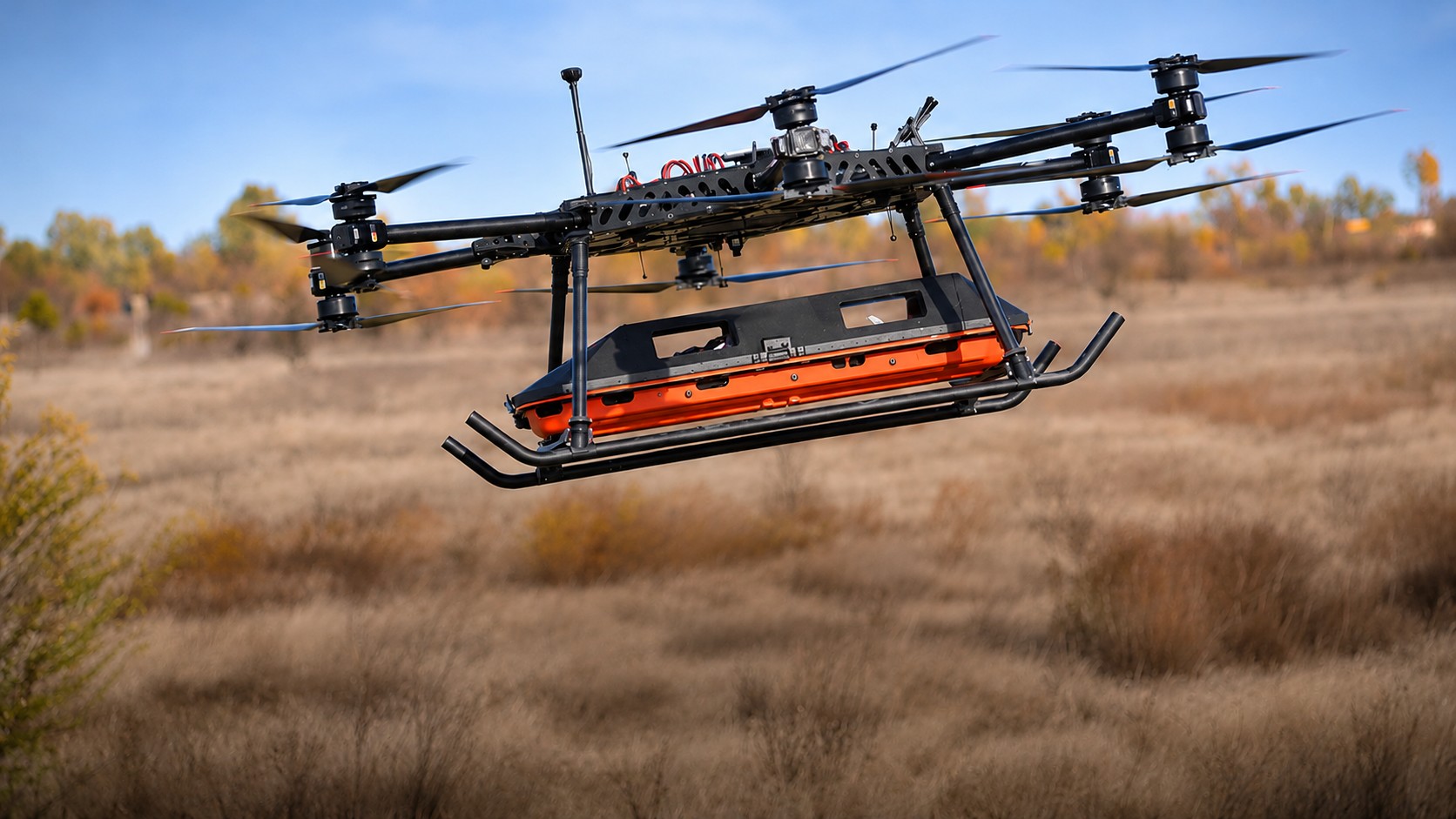
Ukraine has carried out the world’s first medical evacuations by heavy uncrewed aircraft, lifting wounded soldiers out of positions that could not be reached from the ground, and is developing evacuation drones as a dedicated capability of its own, according to the Ukrainian defence ministry.
Brave1, the defence innovation cluster working with the Ministry of Defence, set the requirement in 2024 after working with the military to define what such an aircraft would have to do. The criteria given to the defence technology market were that the aircraft must reliably carry 130 kilograms over a distance of at least fifteen kilometres and must carry an integrated communication system with at least three alternative types to survive in an electronic warfare environment, with lidar, optical stabilisation and navigation that works without satellites listed as options.
The first of those evacuations took place in October, when an infantryman of the 30th Separate Mechanised Brigade was lifted out of a position the enemy had blocked. A Heavy Shot Ayudag-6 hexacopter built by a Brave1 participant flew the mission, an aircraft weighing 98 kilograms with a payload capacity of 130 kilograms, and it covered more than fifteen kilometres on the outbound leg.
Preparation ran to months and drew on the experience of the uncrewed ground vehicle company of the 92nd Separate Assault Brigade. Equipment had been dropped to the soldier in advance and he had to secure himself to the aircraft’s winch without help, while adjacent units launched bomber drones to pull enemy interceptors away from the rescue aircraft.
A second system, Stargate, was built specifically for evacuation at the request of assault troops. It deploys in ten minutes, carries 150 kilograms at speeds up to 105 kilometres an hour and holds a medical module with a stretcher, and its software can plot a route and return to a safe area without help if navigation is completely jammed.
Assault troops of the CODE 9.2 regiment used it twice in a single week to bring out severely wounded soldiers from the grey zone five kilometres from the Russian border, where terrain, water obstacles and first person view drones ruled out any ground rescue. The aircraft flew nearly thirty kilometres each way and came back with the casualties aboard while under electronic attack, relying on artificial intelligence alone for navigation, with heavy strike drones suppressing enemy positions to cover the run.
Conventional casualty evacuation has become close to impossible along much of the front because the density of drone coverage turns any vehicle movement into a target, and uncrewed ground vehicles took over much of the work at the cost of speed. Survival after serious trauma depends heavily on reaching surgical care quickly, and a crawling robot moving along a mined route can take many hours to cover ground a helicopter would cross in minutes.
Ukraine’s Defence Procurement Agency has contracted three times as many uncrewed systems of all types this year as it did last year.
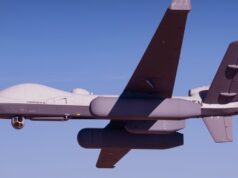



This in truth goes beyond desperate measure and into suicide. Strapping a major trauma casualty into a drone with no medical assistance in place is beyond bonkers and shows how precarious a drone saturated battlefield is.
To save a life, so they live to fight another day
Just like in August, when the commander, Vladyslav Polskyi , with no body armour, drove a pickup to a disabled robot, loaded both wounded troops himself, and evacuated them to cover… 👀
It’s getting the job done!
Here, Here !
It’s still a profoundly desperate measure.. rule one for a trauma case, you ALWAYS have someone looking after and keeping an eye on their airway… they are never left, it’s why we wear lead coats so we can ensure someone stays while X-rays happen.
Its use will be medic on the ground making the call, I presume, casualty can be made stable, then flown out. High tempo tactical area, can see its uses to take people back to the Regimental aid post. However we are changing our tactics in line with the lessons (again) learned in Ukraine and the surgical team are no longer in one big location way back, but small medical/surgical teams closer to the frontline, doctrine yet to be confirmed but looking at doing the blood work much closer, using “screens” to assist with the more complicated surgery remotely. Things are changing at the tactical level so much its going to be hard to keep up methinks. Cheers.
To be honest it’s still a desperate measure, you never leave a trauma case on their own ever. The situation that forces an operational care pathway in which your strapping a major trauma to a drone without an emergency care practitioner is something else… these people are essentially fighting in a cut off state caused by drone saturation.
They certainly have been operating in drone saturation environment! This is another option open to planners and is probably the start of yet more, larger casevac type drones! Ukraine is certainly showing the necessary speed of change in modern warfare, and we as bystanders (but with a horse in the race) are certainly learning (and maybe dismissing) many lessons. Cheers.
To be honest the way to go would be a drone big enough for two, that way you fly them out with an emergency care practitioner, far less likely to lose the casualty to some random airway issue ( which happen all the time).
If you want to have the medic on the drone then wouldn’t sending a crewed helicopter be better? If the evacuation trip is going to be very dangerous then maybe you’d rather not expose the medic to that danger also? It’s brutal but I can see the logic. The casualty gets a better chance on the evac drone than remaining mobile in the combat zone. The medic isn’t exposed to the dangerous trip to the combat zone?
Yep, but that’s what I said at the beginning, essentially it’s a Hail Mary… put them on and pray.
The problem is you cannot do the research to see if your better off with
1) a slow low profile ground drone and medic.
2) a fast air drone with only the casualty
3 a fast air drone with medic and casualty
You can then assess which is going to kill more people.. but without research your just sort of shooting and hoping..
It’s sort of like fluids for casualties.. in the 1980s and 1990s the habit was aggressive fluids to prevent shock. This was a real factor in the Falklands where trauma management focused on massive fluid resuscitation.. this then filtered through into the civilian ATLS guidelines and in the 1990s and early 2000s if you ended up in front of me you would get 2 16G grey cannula and a litre of Ringer’s lactate on each arm with them flowing open or even pushed.
But it turned out we were killing people that did not need die.. and after a massive review of the trauma registers in the late 2000s the Military realised their earlier trauma management has caused deaths.. they then moved to a managed fluid model in which you kept the patient in a state of managed hypotension so as to keep clots in place..
So modern management of trauma is very subtle and it would need research on death rates to see how this plays out.
475th Assault Regiment “Code 9.2” … busy as usual 👀🫡
A written requirement from the soldiers aka “Flint”…to the boffins in the workshops to create it