

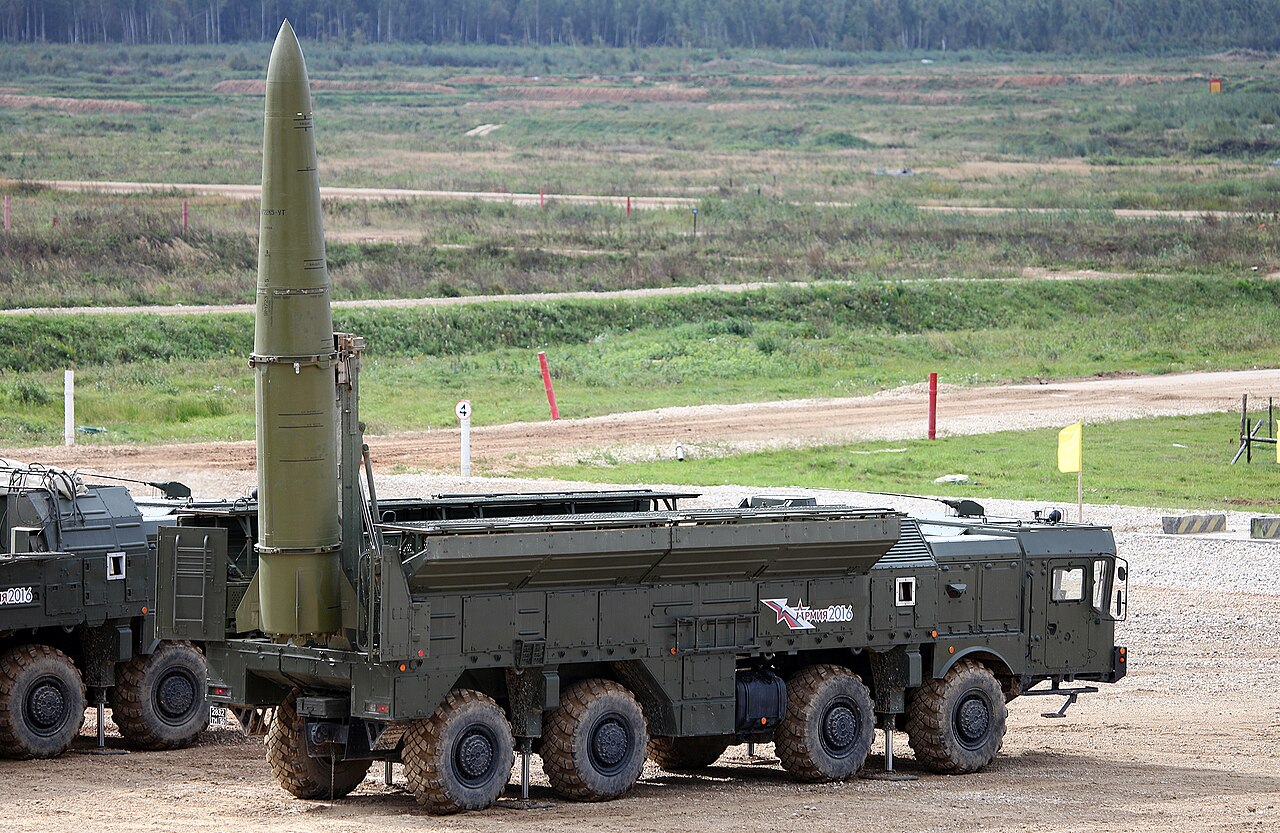
Ukraine’s military intelligence has published new data identifying components, companies and individuals it says are connected to production of Russia’s 9M723 Iskander-M ballistic missile, including dozens of foreign-made electronic parts found in recovered weapons.
The Main Intelligence Directorate of Ukraine’s Ministry of Defence, known as the GUR, said in a statement published on Telegram that the latest release adds information on 140 Russian and foreign components, 35 enterprises and 108 officials and employees associated with the missile’s production chain.
The information has also been added to Ukraine’s War&Sanctions database, where the GUR is beginning a wider series examining Russian ballistic missile production and the industrial networks supporting it.
The combined database presented by Ukrainian intelligence is broader than the newly released material. According to the GUR, it now contains an interactive model of the 9M723 and information on more than 170 identified components, 82 Russian and two Belarusian companies involved in the production chain, 108 officials and employees, and 121 pieces of foreign-made manufacturing equipment used by the companies concerned.
Of the 140 components newly disclosed, Ukrainian intelligence said only around a quarter were manufactured by Russian companies. It attributed 63 components to US manufacturers, eight each to Switzerland and Belarus, four each to Germany and Taiwan, and three to China.
The GUR drew particular attention to electronics used in a flight-information processing unit associated with the missile’s laser gyroscope. According to the Ukrainian agency, five of 43 identified components in that unit were Russian-made.
Foreign components identified by the GUR include microprocessors, field-programmable gate arrays, memory devices and digital-to-analogue and analogue-to-digital converters. Manufacturers named by the agency include DM&P Electronics, Xilinx, now part of AMD, Atmel, now part of Microchip Technology, Winbond Electronics, Micron Technology and Analog Devices.
The presence of a commercially produced component inside a Russian weapon does not by itself establish that the manufacturer supplied the Russian defence industry directly. Electronic components can move through distributors, intermediaries and secondary markets before reaching their eventual end user, while Western governments have progressively tightened export controls intended to restrict Russian access to sensitive technology since the full-scale invasion of Ukraine in 2022.
Ukrainian intelligence said the latest disclosure was intended to provide governments with additional information for sanctions and export-control measures targeting Russia’s ballistic missile supply chain.
The GUR also used the publication to make new claims about an updated version of the Iskander missile. It said Russian forces had employed an upgraded weapon designated 9M723-2 during a combined missile attack on Kyiv during the summer, describing the missile as also being known as “Iskander-1000” and associating it with a system called “Bora-M”.
According to the Ukrainian intelligence assessment, the modified missile uses a larger propulsion section and launcher and has a claimed range of up to 550 kilometres, compared with approximately 390 kilometres for the 9M723-1 configuration cited by the agency. The GUR said other elements of the missile remained largely identical to those of the earlier version.
Those details represent the Ukrainian intelligence service’s assessment of the recovered weapon and have been presented by the agency as part of its analysis of Russian ballistic missile development.
The 9M723 is the ballistic missile associated with Russia’s road-mobile Iskander-M operational-tactical missile system. Russia has used Iskander ballistic missiles extensively against targets in Ukraine, alongside air-launched missiles, cruise missiles and increasingly large numbers of uncrewed attack aircraft.
Image Vitaly V. Kuzmin.




To stop this balastic missile, we need to respond via Ukrainian balastic missile.