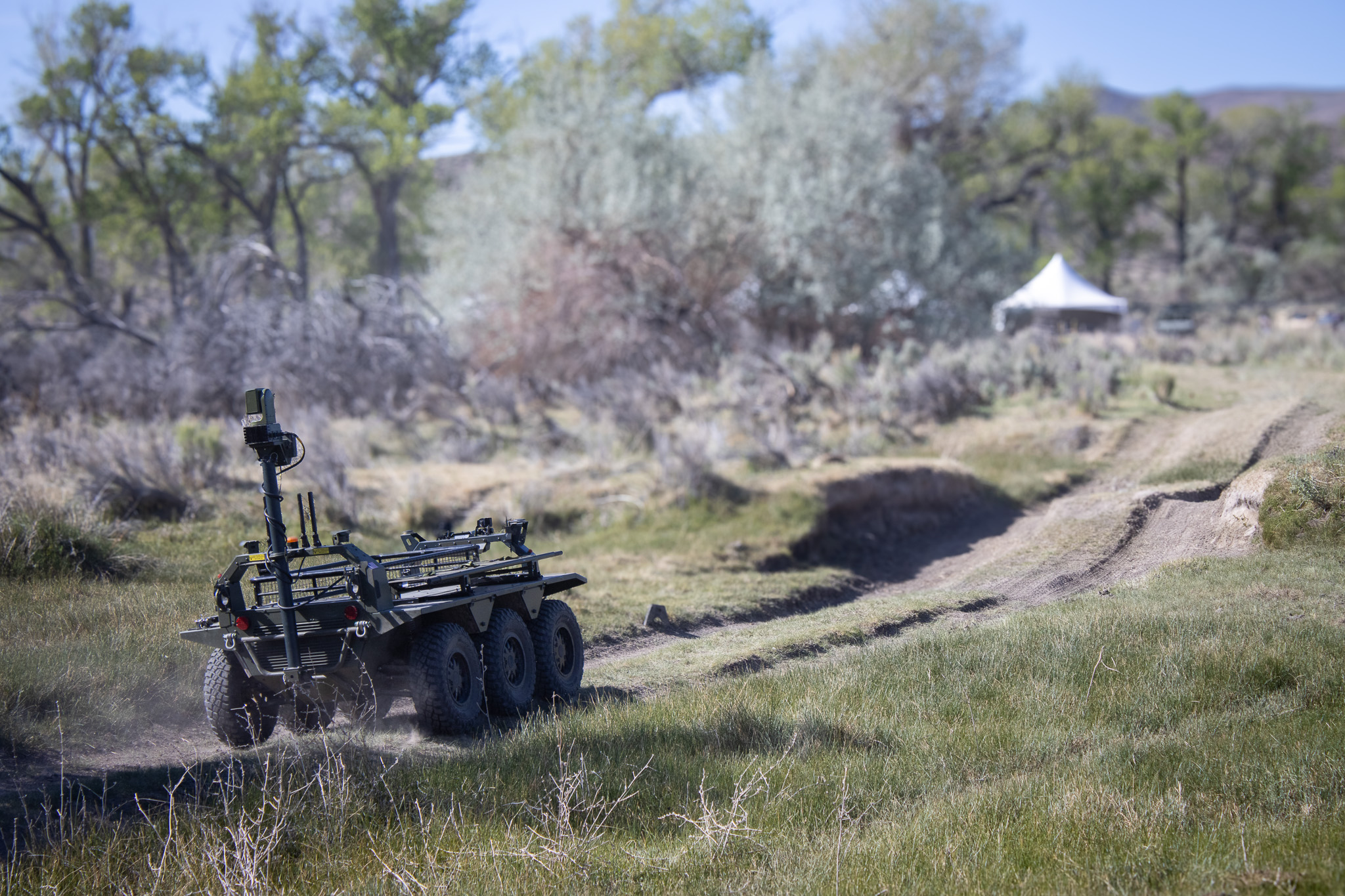
The US Army has selected IDV USA as one of four industry participants in a programme exploring autonomous vehicles capable of breaching complex obstacles and minefields while reducing the exposure of soldiers to direct fire, according to the company.
The Engineer Autonomous Breaching Capability initiative, known as EABC, is being led by the Army’s Capability Program Executive Office Mission Autonomy and is intended to examine how robotic systems could support engineering forces during some of the most dangerous phases of ground manoeuvre.
IDV USA, the American subsidiary of Leonardo-owned IDV, is offering a solution based around its VIKING Uncrewed Ground Vehicle.
The vehicle is being paired with ground autonomy software intended to support the integration of different mission systems and payloads, as well as autonomous navigation in environments where access to satellite navigation is degraded or denied.
According to IDV, the combination is intended to provide a common autonomy architecture that could eventually support missions beyond breaching, including other engineering and manoeuvre tasks.
The EABC requirement is focused on the particular problem of penetrating defended obstacle belts and minefields. Such operations can require engineering vehicles and personnel to work in areas deliberately covered by enemy observation and weapons, making the ability to push uncrewed systems forward potentially valuable.
IDV said the Army is seeking autonomous systems capable of carrying out those tasks “under direct observation and fire, minimising risk for human personnel.”
Corey Kashner, CEO of IDV USA, said: “We are honoured to be selected by the U.S. Army for the EABC initiative. The EABC program aligns directly with IDV’s vision for autonomous systems and robotic manoeuvre support.”
He added: “By combining the proven VIKING UGV platform with our autonomy framework, we are delivering a solution designed to enhance mission effectiveness while reducing risks to soldiers. We look forward to supporting the Army’s modernisation objectives.”
The selection does not represent a decision to field the VIKING system across the Army. IDV is one of four companies chosen to participate in the initiative, with the competing approaches expected to undergo further testing before the service decides how it wants to proceed. Following contract awards, the programme is expected to move through a series of demonstrations and operational assessments in environments intended to replicate realistic military conditions.
The process is planned to culminate in an assessment involving an Army unit, allowing soldiers to provide feedback on how the autonomous systems perform and how they could be employed in future breaching operations. That feedback will then inform subsequent decisions on next-generation autonomous engineer systems rather than immediately leading to a large-scale procurement.
The VIKING platform forms part of IDV’s wider work on autonomous military ground vehicles, with the company investing in mobility, autonomous navigation and the integration of mission-specific payloads. A key element of the proposed EABC configuration is the ability to continue operating in contested electromagnetic environments. IDV says the navigation architecture has been designed with GNSS-degraded operations in mind, reducing dependence on continuous access to satellite positioning during battlefield manoeuvre.
The Army’s interest in autonomous breaching reflects a wider effort to use uncrewed vehicles for missions where conventional engineering forces face particularly high exposure to enemy fire, mines and other obstacles.
For IDV, the next stage will be demonstrating whether VIKING and its autonomy software can translate that concept into a system usable by soldiers during realistic breaching operations, alongside the three other industry teams selected for the EABC initiative.