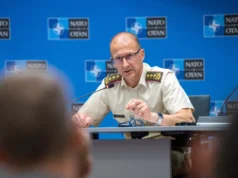
NATO Secretary General Mark Rutte praised Germany’s defence commitments and outlined alliance priorities during a joint press conference with German Federal Chancellor Friedrich Merz in Berlin.
Rutte said decisions taken at the NATO summit in The Hague had set a new benchmark for allied defence spending, with members agreeing to invest 5 percent of GDP in defence and related areas, according to NATO. He highlighted Germany’s plan to earmark more than €108 billion for security and defence in 2026 and its intention to reach 3.5 percent of GDP for core defence requirements by 2029.
Speaking alongside Merz, Rutte described Germany as setting a precedent for other European allies. He said, “Germany is leading by example and sending an important signal,” citing what NATO views as a shift toward greater European responsibility and burden sharing within the alliance.
Rutte outlined Germany’s military contributions across NATO’s eastern flank, including its role as the framework nation for Forward Land Forces in Lithuania, air participation in Baltic Air Policing, and naval activities in the Baltic Sea. According to NATO, these deployments are intended to strengthen deterrence and protect critical infrastructure.
He also pointed to Germany’s continued support for Ukraine, which he said contributes to both Ukraine’s defence and wider Euro-Atlantic security. Rutte described this support as essential to efforts aimed at ending the war in a manner NATO considers just and lasting.
Responding to questions about the US National Security Strategy and NATO enlargement, Rutte said his reading of the document emphasised continued US commitment to Europe and the alliance. He argued that recent NATO decisions, particularly on defence spending, address long-standing US concerns about unequal burden sharing. “We decided collectively to go to this 5%,” he said, adding that the new targets align European and Canadian spending more closely with US levels, according to NATO.
Rutte also referenced initiatives such as the Prioritised Ukraine Requirements List, or PURL, and European-led efforts described as the Coalition of the Willing. According to NATO, these measures are designed to sustain military assistance to Ukraine and prepare for long-term security arrangements.