


The United Kingdom and Norway are considering a joint acquisition of up to 30 new vessels designed for coastal operations, as part of a wider effort to strengthen interoperability and capability in the North Atlantic and High North.
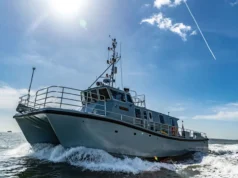
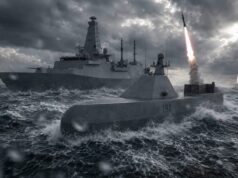
The initiative, known as the Joint Commando Craft programme, is intended to deliver a new class of vessels capable of transporting personnel and equipment, including insertion and extraction in demanding littoral environments. The vessels are expected to offer improvements in speed, endurance, survivability and manoeuvrability over existing platforms, while also supporting sensor operations, target designation and enhanced situational awareness.
For the UK, the vessels would support the Royal Marines under the UK Commando Force construct, while Norway intends to use them within its Coastal Ranger Command. The capability is designed to enable operations across a wide range of environments, from open ocean to shallow coastal waters.
“Norway and the United Kingdom have a very close defence cooperation. By developing a joint capacity for coastal operations, we strengthen our ability to operate together in the North Atlantic and the High North,” said Norwegian Defence Minister Tore O. Sandvik.
The proposed vessels are expected to be up to 24 metres in length, with a displacement of up to 60 tonnes, and capable of operating independently for several days. The programme aims to extend operational reach and flexibility for both nations’ commando forces.
A Request for Information has been issued to industry as part of the early-stage market engagement process, seeking data on available designs, technical solutions, cost estimates and delivery timelines. The vessels are expected to be built in Norway, with the RFI also assessing the capacity of domestic shipyards.
“The issuance of the Request for Information is an important step forward for the Joint Commando Craft project, as we now consider possible solutions for this important capability,” said Lieutenant Colonel Rob Ginn.
The programme sits within a broader framework of UK-Norway defence cooperation under the Lunna House Agreement, which includes collaboration on maritime systems, uncrewed mine-hunting, underwater warfare and wider interoperability initiatives.


As with T26 it makes so much sense to do this with Norway. It’s probably also worth the UK looking at some form of joint defence bonds with Norway or simply issuing UK defence bonds that Norway’s sovereign wealth fund can by.
The UK seems to have gone out of its way to Allie and assist most nations around the world from Singapore to Qatar and Norway that have sovereign wealth funds. Defence bonds would seem like a natural way to leverage that for both sides.
Norway is the key to our defence even if the average bodin the street would look blankly at such a motion. The greater cooperation with them and Scandinavian Countries generally the better, we just have to get capability sorted to do so. I fear the only action we will get from Trump now should Russia try it on in Scandinavia is to use it as an excuse to take Greenland.
Fortunately the Nordics have £££££ and the will generated by Mad Vlad antics coupled with a lack of desire to return to Cold War power play.
Liebore wont even pay for the postage on this. Any project with them is window dressing to fool you into thinking they are interested in defending the country. They are letting UK Fall as we blog. They are only interested in remaining in Power so they can Change the country for ever with mass immigration of single young men from non European Counties who they hope to manipulate with Benefits Bribery Money.
They Hate us our History and Culture. Remember how they ridiculed the Whit Van Man who flew a St Georges Cross Flag all those years ago. They are the enemy within the UK as was Quisling in Norway.
I like the sound of that, especially Norwegian finance for our projects.
Now we need to sell them GCAP.
Bigger than the Archer and Cutlass-class, will they be commissioned ships?
No, from the requirements I would conclude that this JCC supersedes the requirement for the Commando Insertion Craft. These will theoretically replace LCVP and so be RM boats not ships, though the operating concept is of course very different.
The requirements are similar enough that all of the CIC competitors’ (BAE, Leidos, Griffon and sort of BMT) designs will still be applicable, though the upper limit on size is slightly greater. I would even say that the new requirements are closer to the published concepts than CIC was (particularly BAE and Leidos) given the equal weighting given to non-transport roles, though the separate variants of A for ISR, B for transport and C for training and trials are different from the way those two did it with dedicated compartments within each hull for drones and cargo.
They sound promising. I worry how many we get with the “up to 30” shared with Norway though.
We only ever had 23 LCVP shared between the Albions, Ocean and the Bays so a unlikely half and half split would be sufficient for 4×3 active MRSS. Even a 3:2 split is low given Norway’s lack of shipping, but it would give us 3 ISR ‘A’ variants, 15 transport ‘B’s and 3 training ‘C’s.
I’m optimistic but those who know a lot more than I do about actual ship design and operation (N-A-B and our own SB on NL) have pointed out that 60t is a vast amount for davit operation and 40t is sketchy given the davits on Albion and Ocean struggled with 24t LCVPs at the levels of maintenance they ensured. BAE’s fore and aft ramps allows 4 to fit in a well dock but that would entirely eliminate the Marines’ ability to lift proper vehicles ashore with utility craft or Mexeflote.
Correct, I too list 23 LCVP.
We also had 10 LCU, 4 LCAC, and at least 4 RCL, no idea if they’re still about.
NAB was on UK Defence Management long ago, the site pre 2010 which was the UKDJ type go to site. I’ve never seen him on here but boy, he knows his stuff like GB.
LCAC are gone, I think. So too the LCUs, they don’t fit in a Bay, Brazil need them and I am worried we will never replace them. Raiding craft are nice but if we ever need to move a BVS10 over the long standoff distances MRSS is supposed to use we’d be stuffed without it. BMT Caimen exists but for maximum cool we should get the Wyvern LCAC if it has sufficient range. Incidentally one of the payload options for JCC is an ‘ultralight air cushion vehicle’ so the Marines may be moving back into hovercraft- Norway certainly don’t have any.
I knew about the LCACs, Bangladesh I recall.
Not heard of the LCUs going, disgraceful stealth cut if so as I’m sure GB once told me in conversation that a Bay could fit a single LCU or a single LCVP. One of many reasons why the crap that HMG came out with that having the Bays only “does not reduce amphibious capability” is just that, crap.
Assume the BARVs are also gone, then.
Just looked up the RCL’s!
I’m massively out of date on those, all 9 long gone.
So much of the armed forces kit has vanished these last 20 years, much my stealth with no real replacement.
Might not be LCUs entirely gone, as you say they do fit in a Bay. But if Brazil get both Albion and Bulwark they will want at least 6 of them to rotate onto whichever one they have active, most likely. We would need new ones if MRSS wants LCUs.
Not heard of RCLs and googles with a few extra keywords didn’t show anything?
Ramped Class Logistic. Looked like LCUs but bigger?
17 PMR had some, and they were in Cyprus too. I still had 2 based at Cape Gata until I checked yesterday and they were sold a decade ago!
An LCU does fit in a Bay and they still have a few in use and we can’t afford to loose them all that’s for sure.
We will of course need a replacement and other countries have some good examples including catamaran types.
Yes, as I recall it.
A Bay can carry 1 LCU, 1 LCVP plus 4 Mexe. Unless it’s 1 LCU OR 1 LCVP.
LPD, 4 LCU and 4 LCVP, plus C3 facilities, plus ammunition stores.
Different planet.
Ocean carried 4 LCVP as well.
17 PMR still has aome LCVP i believe, and has the Mexe.
BMT also have their Caimen, which would do a perfectly good job.
Any LCU replacement is going to be a fight between them as the sensible option and Griffon Wyvern as the maximum capability option.
Our specs for cranes have reduced over the years as well. Ft Victoria and the River B1s have 25 ton cranes, but none of the newer ships can match that. Type 26 and RB2s can take about 15-16 tons. FSSS doesn’t seem to be specified to handle anything close, just up to 5 tons.
If a requirement to be davit or crane launchable is to be met it will have to be from some hypothetical amphibious ship that the RN/RFA doesn’t have and doesn’t plan on getting. That really is a limitation on the launch ship. If we plan to waste money strengthening the boats in a particular way to allow them to be davit-launched, the requirement should be dropped as it will never be used.
Oops, missed out mentioning the 30 ton cranes on the Bays. Still not close to 60 tons.
There is a real risk here of these craft becoming too big and consequently less stealthy, complex and of course expensive in the usual MoD model. Given there use they need to be simple, robust and ultimately expendable craft not a high end piece of kit you can’t afford to loose.
How you square this with the required speed, sea keeping, range, accommodation and an ability to be self sufficient for a week is going to be interesting.
To be practical they ideally need to stick to something like the size of the existing LCVP or else it will be one per Bay in the well deck for the foreseeable future. Let’s not talk about davits!
The answer is about 3 boats. HMS Diversity, HMS Equality and HMS Inclusion. That should do it nicely!
I own a 37′ 7 ton Motor Launch that was a Commissioned ship 1941-1944 as Echo Sounding Boat on the River Clyde. HMS Amy 2. The RN Confirmed it.
She is from 1921 and a contemporary with HMS Hood. In Top 10 oldest RN Commissioned ships.
A northern alliance makes sense – personally, I have always had more of an affiliation to the likes of Norway and Denmark that with France/Germany, add in links with the Baltic countries and the UK has a definite North Atlantic/North Sea/Baltic Sea bias. That’s our main security area – especially as it’s becoming more and more likely that we need to keep an eye on American imperialism! Quite happy to include Canada, Iceland, Finland and Sweden in the mix!
Agreed, the mirror image of the UK’s (and in particular the RNs) withdraw from global blue water ops is that the UK leading the building of an alliance within an alliance in NE Europe. However, when the SDR team surveyed the UKs NATO and other key allies in 2024 to ask what UK military capabilities they valued most, and I suspect that some of the replies suggesting that UK concentrated on Northern Europe had a large element of bias and self serving motives.
Of course – every country will give answers based on putting their own country first. I feel the same way myself. However, tighter cooperation with local allies doesn’t preclude operations further afield. Just as I feel that a government’s first priority is defence, I also feel that we have reponsibilities to the defence of other dependencies – the Falklands, Gibraltar – and oher allies – especially Australia, Canada and New Zealand. I basically consider those countries to be ‘family’. But the main responsibility is to keep the UK safe. Frankly, UK land forces can add little to the defence of mainland Europe countries such as France or Germany, our strengths and position make us much more useful helping protect the northern flanks.
Ahh, those magic government words, Up To.
United Kingdom and Norway are considering, i wonder which nation orders any thing? not ours. We do love a lot considering. Be nice to see the MOD do something rather talk abput doing it, its right think things out and trial and test ideas and kit.
We do a lot of that but final order seems to be on hold for any thing, hopefully the much delayed DIP will see this change not that it will please every one but it will fix a lot of the problems of the last 30 years and stop us being embrassed around the world.
The sorry state of things and the dithering about orders is not of this governments making its been a long term issue, how ever it seems that doing next to nothing and braging about it is the new MOD way.
The Armed forces of the UK can not defend the UK from every threat no matter what but given the right help they can do a lot better.