

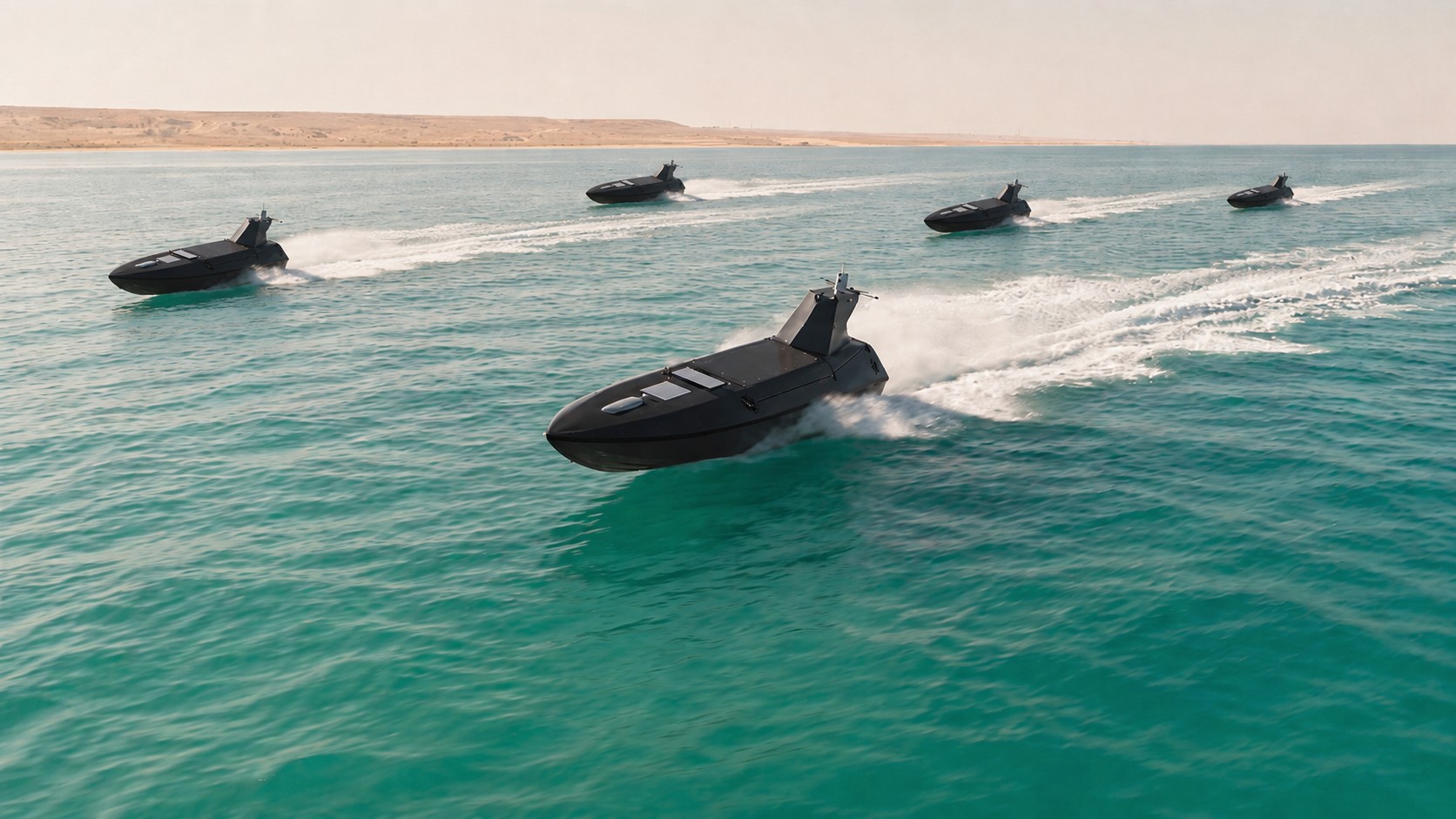
The Royal Navy’s modular Beehive system, which deploys high-speed autonomous Kraken drone boats, forms part of Britain’s announced contribution to the multinational mission to secure the Strait of Hormuz, the first operational deployment of the service’s emerging autonomous surface capability.
According to the MoD, the Beehive system is designed to allow a multinational force to sense, track, identify, and engage potential threats using autonomous platforms rather than crewed vessels. The system is modular in nature, meaning it can be fitted to and operated from a range of host ships, and forms a central part of the Royal Navy’s broader shift toward what it describes as a Hybrid Navy, a force that integrates crewed and uncrewed platforms across its operations.
RFA Lyme Bay, a Bay-class landing ship auxiliary, is currently being upgraded to serve as a dedicated mothership for autonomous systems should it be required for Strait of Hormuz operations. The conversion of an existing vessel to carry and operate uncrewed platforms really hits home the Royal Navy’s approach of building autonomous capability around its current fleet rather than waiting for purpose-built platforms.
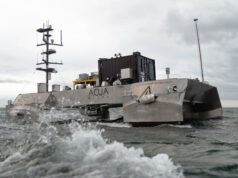
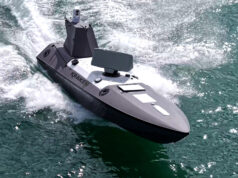
The Kraken drone boats at the heart of the Beehive system are high-speed autonomous uncrewed surface vessels. In a strait environment, where the threat picture can include fast inshore attack craft, mines, and subsurface threats in confined and heavily trafficked waters, the ability to deploy large numbers of autonomous sensors and effectors offers a significant operational advantage. Uncrewed platforms can operate in areas too dangerous or too confined for crewed ships, and can maintain persistent coverage without the fatigue and logistical demands associated with crewed patrols.
The £115 million in new funding announced alongside the broader Hormuz package is directed at mine-hunting drones and counter-drone systems, suggesting the autonomous element of Britain’s contribution extends beyond surface vessels to include aerial and subsurface uncrewed capabilities. Mine hunting has historically been one of the most hazardous and time-consuming naval tasks, and the shift toward autonomous systems for that role has been a priority for the Royal Navy for several years.


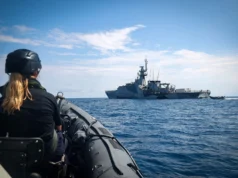


is this what our armed forces have been reduced to Ai pictures of imaginary drones
You know image editing without AI is a thing right
This is a composite of a real picture of a real USV on a real picture of a desert background.
I’ve gained $17,240 only within four weeks by comfortably working part-time from home. Immediately when I had lost my last business, I was very troubled and thankfully I’ve located this project now in this way I’m in a position to receive thousand USD directly from home. Each individual certainly can do this easy work & make more greenbacks online by visiting
following website—.,.,.,.,.—>>> JobatHome1.Com
You know the drones are real right not imaginary 🤦♂️
Britain should mind it’s own business Bad enoigh they invaded Iran a nuetral country like Swotzerland, Spain and Argentina in WWII. Then helped Amerca overthrow.a democraticly electred government that both orinally revognized. The strait o hormoz is not international waters, it is completely in Iran and Omans territorial waters
The straight of Hormuz is however an international straight meaning it’s got an international shipping lane that runs through it.
And whether you like it or not, Iran and the US aren’t interested in removing the mines from those waters.
UNCLOS Determines international laws of the sea, however regarding the straits of Hormozs America did not even sign that treaty Iran did but did not ratify it.So again Hormoz is in territorial waters.
Knew this would get the ‘No self checkouts’ people’s attention.
Britain should mind it’s own business Bad enoigh they invaded Iran a nuetral country like Swotzerland, Spain and Argentina in WWII. Then helped Amerca overthrow.a democraticly electred government that both orinally revognized. The strait o hormoz is not international waters, it is completely in Iran and Omans territorial waters
Oh gawd, here we go again !
🚀🚤😅
So the 20 boats was a £12 million order.
We now have £115 million of NEW FUNDING!
Can we confirm what this is going on and if this includes a new batch of drone boats? Those 20 seemed to be delivered rapidly within 2 months
It was only last year the RN had an MCM base in the gulf ,we had MCM boats out there since 87 .If we had waited then a Hunt and Sandown would already be there ready too sweep the strait .
Come on everyone, did not one of you see the intro to “Terminator: Dark Fate”, this is just like that? Oh wait maybe not, no central organisation or mission :/
This is ridiculous, the UK is so s**t being the first navy in history to deploy a large fleet of AI drones to a war zone. It’s even more ridiculous that the navy has been able to rapidly build out a world leading capability onto an existing landing platform dock which will now deploy world leading mine sweeping capabilities along side armed reconnaissance drones.
What we need are “proper” minesweepers. Plastic hulled boats armed with 30mm cannons that can only deploy to the Middle East on the back of specialist civilian sea lifts ships that take six months to charter and sail.
You can keep all this new fangled crap 🧐
😂
‘the UK is so s**t being the first navy in history to deploy a large fleet of AI drones to a war zone.’
Are you renting that rock you’ve been living under, or did you buy it outright?
🧐
Surely the accolade you attribute to the UK would be better attributed to Ukraine or Russia, both of which have operated large AI drone fleets in all three domains since 2022? Or the Iranians?
No, they have operated multiple USV guided by satellite or radio control. Neither side as yet has released a fully autonomous AI platform and nothing acting on swarm logic like kraken beehive.
This is truly a world leading capability and the fact they are deploying it just 6 months after it was unveiled is astounding.
Hang on, there’s nothing to suggest that the Kraken systems are operating independently of their controllers. Trials involved the boats being controlled using StarLink terminals, and the trials of Rattlers back in 2025 also retained human-in-the-loop controls. Even when acting as nodes, they were still receiving over-arching directives and sometimes specific instructions from human operators. These are not autonomous platforms, just less man-power intensive ones.
These are systems that Ukraine is already well-versed in, and supplied much of the information from that operational context to the UK (as I’m sure the Russians will have been asked to by Iran).
See below
Yes, Kraken drones—specifically the K3 Scout and K4 Manta uncrewed surface vessels (USVs) developed by Kraken Technology Group—are designed to be highly autonomous. They are designed for roles like surveillance, coastal patrol, and mine hunting, featuring autonomous navigation and modular payload capabilities.
Navy Lookout
+4
Key Autonomous Features:
Autonomy System: They use advanced AI-based, low-cost autonomy software, including AuterionOS and Skynode X.
Fair enough, I was unaware. AuterionOS is interesting, though from what I can see on their website, they’re still working towards fully autonomous operations. Skynode X is the hardware side. That said, obviously all the usual caveats apply with regards to disclosed information.
I did do a bit of research on the Ukrainians though, and their later variants of the Magura V5-V7 have been equipped with land-based autonomous control systems, all the way back in 2023. Three years on, I would be really surprised if the UkrN haven’t significantly advanced their operations.
The Americans have deployed their Lightfish USV for several months without human intervention. That was sent directly into the path of the PLAN warships for surveillance.
😂😂😂 pleb.
Jim has a Sarcastic/humourous side too ! 😁😁😁
Just checking who reads the comments 😜
I believe virtually everyone reads some of the comments.
Only about 10% read them properly.
50% of those are more likely one and the same person with different personas.
the other 50% are made up of Alcoholics, drug users, Keyboard Warriors (retired) and a bunch of Halfwits !
Of the 100% who see the nice article Picture, 90% see the headline.
just about 5% actually read the article.
And normally of that 5%, just a handful actually read It properly enough to actually understand what It actually said.
Being a Halfwit on here does elevate me towards the top of the Intellect table though, by all accounts.
Happy Wednesday to you Jim from the Doone Valley, Exmoor.
I’d suggest a stop at the café there, had lovely cakes last I visited!
“ … 50% of those are more likely one and the same person with different personas.”
How George most likely tackles sockpuppets and ISPs, and I don’t think much gets past George.
Because of his cybersecurity training, George looks for fingerprints in comments. This includes identifying when multiple accounts are coming from the same ISP ranges or using specific VPNs known to be associated with state-sponsored troll farms. On the UKDJ site, George and his moderators use technical cues like Gravatar pixel patterns. Since these pixelated profile pictures are often unique to an email address, they can quickly spot if one person is using multiple sock accounts to create a fake consensus.
George has been vocal about how disinformation agents use sockpuppets to create echo chambers. He has mentioned in interviews that these accounts often try to block or drown out factual information that contradicts their specific narrative. Like many defense oriented sites, they monitor IP traffic. If a sudden surge of comments defending a specific foreign policy comes from a concentrated set of IPs that don’t match the typical reader profile, they are flagged or nuked.
–
I’m part of the 5% you noted, like cool …Hic!… man. ✌🏽☮️🌿🍺
Note re- the shitty/annoying posts that go something like –
“I’ve gained $17,240 only within four weeks by comfortably working part-time from home … “ as seen above.
Ignore and report them.
Do not reply to them!
Never reply to them! as that sometimes tells the bot’s algorithm that the thread is active, which keeps it at the top of the page.
Calm down let’s see how they actually work in the real world before you get ahead of yourself🙄exercises and scenarios where the others might shoot first are a tad different!
RFA lime bay is still be fitted out, accepted it takes time but which warships are going to escort it the straight as Dragon has already left or is it sailing in escorted
Which strait does she need escorted in?
Jacket ?
Dover! He means the Dover Strait. Plenty of angry Iranians there!
Hormuz maybe?
Geez it’s like the Strait of Hormuz in here.
Feck me 🤦♂️🤦♂️🤦♂️
It’s OK chaps, HMS Vanguard will be acting as Tow Vehicle. 🤦♂️🤦♂️🤦♂️
New funding?
Where is the funding for MHC phase 2, which includes more Autonomous minehunting systems and 3 mother vessels?
One of my first thoughts was Iranian interference, and the debacle of HMS Cornwalls RIB.
Tech headed to China soon if Iranian boats come and take them, or will there be air cover?⁹
China almost certainly is ahead of British USV technology.
Is it, wow you sound so confident 😂
Yep. We’ve seen them field several large scale USVs, with some now being armed. Given their advances in artificial intelligence and the frankly astounding level of STEM progress and capital they’ve acquired, it stands to reason that they’re more advanced than the British equivalents.
So where you from Leh ? US , China , Russia?
I’m from near Hull. Sits on the same tier as the others, though.
Random dude never seen before tries to tell longstanding commenter they’re a troll.
Many such cases.
Dave 12 has been around for many, many years, long before you and Leh mate.
Pre Russian invasion of Ukraine, I’d on occasion in my posts try to see the Russian side of things. It may not always show, but I try to be balanced in my posts, including in my accusations to HMG!!
As I’m well read on Russian history, I have sympathy for them regards WW2 as well and what they suffered. It showed in my posts.
Result. Troll. Someone wlse called me a “Red under the Bed”!
So, according to Dave and a rew other random, anonymous posters, I was a Russian Troll.
Leh is from near Hull, I’m in Surrey, it’s all the same. You say something others dislike, you run the risk of getting shot down with baseless accusations.
At the moment, as I agree with plenty of Reform policy and loathe the established parties for their endless failure, continuing mass immigration, and prioritising themselves, I’m a current enemy for that, and the Russian things ended.
All water off a ducks back.
After Russia went all in on Ukraine, I was pissed off, and condemned them like everyone else, rightly. Dave 12 posted
“I knew you’d come to my side.”
Scary, eh? I have a VERY long memory of what is said here, and by whom.
Rereading Leh’s piece, not sure how Dave has deduced he’s from any of those places. It’s well known China is highly advanced,. My original comment was influenced by the F117 shoot down in the Balkans, high tech western kit gets transfered. Just like any Russisn Chinese kit ended up in America.
My apologies to Dave then, he must keep quite under the radar.
Still end result mate.
Random commentator never or but rarely seen, and now a lurker, pulls up established poster in Leh, who is not only knowledgeable but also very polite with it as well.
Not a good look, thus the retorts.
Kind of you to say 🙂
You have a reputation to uphold now!
My honour is at stake! Bring forth the jousting equipment!
Daniele.
Just been checking out your oils, very nice indeed. I especially like the mood and transparency in “…Montreux”.
Hi Magenta.
Oh! That’s sweet of you to look. That websites old, a gift from my wife for my 40th. Done many, many, more paintings since.
Yes, I did several of those Montreux, lovely place we went on honeymoon.
You say transparency, if you mean the sail on that boat infront of the distant mountains, yes. That boat was actually photographed on the Baltic between Tallin and Helsinki. But, artistic licence, it ended up on Lake Geneva. Proud to say, it sold in the first exhibition it was in. 😉
Thank you.
Been and had a look
I would point out that in the painting with the transparent sail, the jib appears to be set for downwind sailing while the mainsail is close-hauled? 🙂
I love ‘Arundel Castle’ though, if you’ve improved since that’s very impressive.
Haha! Something I’ve laughed plenty with my wife about. I paint, but know little about the ins and outs of sailing boats, thus they’re not always technically accurate, unless for a commission.
So I’m not surprised someone of your knowledge points it out. 😅
Arundel Castle, yes, painted over a decade ago
I have. 😉
Leh.
Hull, love Hull and its awesome Maritime Museum, visited it way back in 1998, so looking forward to its reopening after the massive £30 million restoration. it’s included in my museums/art/ ‘world tour’ 26/27 and this bloody Gulf war better be over by then, as I have a lot of places to visit in the Gulf.
I’ve always thought you might have a Polish connection … expat?, However I might be muddling you up with Dern.
Anyway … “Forefathers of Democracy”.
I’ll second that. We visited Hull when my dear mother in law was in the hospital there, which specialised in aneurisms I recall. Great old architecture. The place gets a bad rep but we liked the city centre at least, but didn’t get to the aquarium.
Another regular poster of ours here, Robert, lives near there as well.
Thanks, it’s a lovely museum. It’s had a mammoth restoration and refurbishment project recently, so I’m looking forward to getting back in there.
Dave is a retard that thinks that anyone saying anything he doesn’t like is Russian.
The argument of 20 year old labour voters🤡
The money announced is operational funding rather than acquisition funding.
Is it? Thanks, yes seems to fit.
More likely that the Iranians would have taken one the USN drone boats, given they’ve been sailing up and down the Iranian coast since this started. Also while the Krakens are significantly faster than the IRGC’s Boghammers, the GARCs are slower.
Thanks, I wasn’t aware that USN boats had even deployed.
Hi Daniele, the USN has been operating USVs and autonomous surveillance systems in and around the Strait of Hormuz for years now. I think our deployment is a good idea, as surely that strait is the best place to test and develop this kind of capability, much like Ukraine has become for aerial drone warfare.
Look up ‘Task Force 59’ if you want to read more about the US unit.
Hi JJ.
Thanks, I will. I’d missed all that completely. So the USN has had them for years, and there I was believing the “World leading” bit on our autonomous stuff.
Agree with the deployment. I believe they can take a RWS, pity, as I still feel they should be able to defend themselves.
Embarrassing for the RN if they’re not defendable.
Is this a new permanent role for Lyme Bay or just a loadable modular capability for now as it will mean one less Bay available for its usual roles?
If this is successful not go the whole hog and re-jig the Albion to be the mother of all drone motherships? Has the dock and deck and control facilities.
*why not go…
Let it go FFS 🤦🏻♂️
It’s not meant to be.
There are 3 purpose built mother vessels planned for autonomous mine systems.
A Bay has been used for many years in the Gulf to support the 4 MCMV there, the usual robbing Peter to pay Paul exercise. Great, adaptable vessels.
On the Albions, would have been nice, if it were possible. From what I read on NL, big cranes are needed for the mothers, where on the Albion you have the welldock in place. Assume a RNMB USV could use them with no issues?
Who knows.
But I don’t think it’s ever going to happen.
All depends where and how the poop hits next. Lyme Bay has one thing going for it that most of our ships don’t. She floats and can exert forward momentum. That means she is at risk of being all things.
This is impressive turnaround of a new tech, good to see and hope it marks the start of further change in this direction.
Concern for me though, is that this deployment seems to be linked to them going out with Lyme Bay. If this is still in fit out, when will these actually arrive on theatre..? Or are we shipping them out some other way, with control stations put on something else, until Lyme Bay finishes refit and sails out to meet them? We could see a situation where the Kraken swarm arrives after everything has gone back to (mostly) normal.
The drone boats themselves can fit in an A400.
Yes, and seeing as the Marines have been using them on exercise, I presume that whatever the control stations look like (containerised is my guess), they’ll be pretty easy to move as well.
My only concern is that, in the MOD’s wisdom, they’ve decided to send them out with Lyme Bay regardless- and so won’t deploy until She’s finished refit (I’ve no idea when that is supposed to be- days/weeks/months).
Whatever happens it’ll be a useful test of the whole systems capabilities.
Agreed, and let’s face it: even if they only end up in place at the end of the summer, that’s a faster route from development, to integration, to testing, to deployment than anything we’ve seen for a while.
Maybe the “agile procurement” is starting to pay dividends, time will tell I guess. If the control stations are containerised then hopefully in the future it’ll be a relatively quick fit in the T31 mission bay.
The timeline for the Kraken K3 Scouts is one of the most aggressive “order-to-deployment” turnarounds in recent Ministry of Defence history. They were delivered in exactly two months.
March 11, 2026.
The Royal Navy officially announced the £12.3 million contract for 20 Kraken K3 Scout USVs under Project Beehive.
April 2026.
Kraken’s partner, Rheinmetall, launched series production at the Blohm+Voss site in Hamburg to meet the demand.
May 11-12, 2026.
Reports confirmed that the full fleet of 20 boats had been delivered and was already being deployed to the Strait of Hormuz.
The reason they could move this fast is because the UK absorbed the lessons learned from USV operations in the Black Sea. The hardware was already market-ready, allowing the MoD to skip the usual decade-long procurement cycle. While the boats were delivered in 2 months, the Beehive software is still being treated as an experimental layer. This is why they are being sent with HMS Dragon and Typhoons, the heavy metal is there to protect the cheap drones if the AI has a bad day.
A large chunk of that money is going toward weaponisation. While the Kraken are scouts, the Navy wants them to have teeth. They are integrating the Brimstone missile launchers onto a subset of the Kraken fleet. To give the swarm the ability to neutralise an Iranian minelayer or suicide boat from several kilometres away. This prevents the Iranian IRGC from even getting close enough to test the Beehive’s hull.
The basic Krakens are relatively blind in complex environments, the £115m buys the premium high end sensor suites sensor packages –
– The Side-Scan Sonar, allows them to do Acoustic Pathfinding, detecting objects on the seabed, potential mines while moving at speed. It also allows a Kraken to act as a “Mine Trigger.” With 20 spares, the Navy can afford to let a Kraken ‘accidentally’ find a mine the hard way to clear a path for HMS Dragon. It’s a grim but effective use of the built in redundancy.
– Electronic Warfare Chassis, is crucial, it buys equipment that allows the Krakens to “jam” the signals of Iranian drones. If an Iranian drone tries to spot for their artillery, the Kraken can essentially blind it.
Beehive” Software Scaling, the original software was designed for small groups. Part of this money pays for the Enterprise Level of the AI, including –
– Multi-Domain Linkage, this allows the Krakens to talk directly to the Typhoon jets overhead and the HMS Dragon’s Sea Viper missile system. As of 2026 Beehive upgrades included Link 22, which is specifically designed for long-range, beyond-line-of-sight communication that is much harder for the IRGC to touch.
– Resilience, by improving the AI’s ability to operate if the satellite link (Starlink/Skynet) is jammed. It buys “Edge Computing” power, so the boat can finish its mission even if it loses touch with the human in the UK.
Logistics and mothership refits. You can’t run 20 drones off a standard ship without some tweaks, thus RFA Lyme Bay gets a refit, part of the money went into installing the launch/recovery cradles and the high-bandwidth “Control Room” containers on the deck of the RFA ship.
It also buys Mobile Support … all the spares and repairs packages; basically 20 sets of extra engines and hulls so that if one is lost or broken, they can “hot-swap” it in the theatre. By having 20 spares, the RN takes the negotiating power away from Iran. If the IRGC captures one Kraken, they haven’t defeated a British warship, they’ve just taken one of 40 disposable assets. The mission continues without a pause.
It’s a massive psychological shift … for the first time, the Royal Navy has mass that they can afford to lose.
The £115 million isn’t just buying hardware, it also covers the Legal and Rules of Engagement (ROE) Software. Because Beehive is “experimental,” the most expensive part of putting missiles on a drone isn’t the launcher, it’s the safety architecture that ensures a rogue AI doesn’t fire on a civilian dhow. The MoD is obsessed with “Human-in-the-Loop” for lethal strikes; even though technically, there is no specific “Act of Parliament” that says a human must pull the trigger.
It’s also buying redundancy, there isn’t a “centre of gravity”, the Beehive AI is designed to be decentralised. There is no command boat, if the IRGC targets the boat that seems to be leading the pack, the The hive mind software simply migrates the leadership functions to the next Kraken in the chain.
While they use Starlink and Skynet for human-in-the-loop oversight, the drones have enough edge computing to continue a set patrol or defensive pattern even if the Iranians jam the satellite signal … Link Resilience means you can’t kill the mission by just jamming a frequency.
It’s a disposable mentality, if the Iranians figure out the vital piece, the Navy’s answer to that is … make the pieces worthless. Each Kraken K3 Scout costs about £800,000. That sounds like a lot, but in naval terms, it’s pocket change.
The Iranians are used to fighting $1 billion Destroyers where every hit is a national crisis. When they realise that sinking a Kraken only results in a C-17 flying in a spare hull 24 hours later, their leverage disappears. The”vital piece is actually the UK’s industrial capacity to keep shipping them out, which isn’t something they can hit in the Strait.
The only real “vital piece” is RFA Lyme Bay, the mothership. The IRGC knows this. That’s why HMS Dragon is there. The Destroyer isn’t there to hunt speedboats; it’s there to be a 9,000-ton bodyguard for the ship that’s launching the drones. If the Iranians can get past the Type 45’s Sea Viper missiles to hit the Lyme Bay, then yes, the puzzle falls apart. But at that point, we aren’t in a “Strait Crisis” anymore, we’re in a total state of war.
If Iran deploys “Blink Jamming.” Where they turn the jammer on for 5 seconds, then off for 20, then move the truck, the Kraken drones, because they are low-profile and “disposable,” they can get close enough to the Iranian coast to spot these mobile jammer trucks visually or with thermal cameras, then send the coordinates back to HMS Dragon or the Typhoons to finish the job with a precision strike.
Besides HMS Dragon acting as the primary air defence shield. HMS Lancaster is already in the region, focusing on the low-end threats like the IRGC speedboats that the Krakens are scouting.
USS Gravely (Arleigh Burke-class) is currently operating in a “Support and Coordination” role with the British, they provide the massive Aegis radar umbrella that links into the UK’s Beehive data.
The French frigate Languedoc is currently patrolling the southern entrance of the Strait. They aren’t using the Kraken drones, but they are sharing real-time “Tactical Data Links” with the British swarm.
The Australian Navy (RAN) have committed a Hobart class destroyer, most likely HMAS Sydney (DDG 42) to the mission, she’s likely to act as the Battle Manager.
HMAS Sydney can talk natively through its Aegis Combat System to the US Navy’s Arleigh Burke destroyers and to the UK’s T45 HMS Dragon via Link 16 translators.
HMAS Sydney also has the CEAFAR radar system, arguably the best drone-killer radar in the world. While the US ships have the massive power of Aegis and HMS Dragon has the long-range precision of SAMPSON, HMAS Sydney is currently being integrated with the CEAFAR2-L/S/X suite as part of its 2026 upgrades. It’s the ‘Micro-Contact’ expert, It can distinguish a 2 foot drone from a wave crest with terrifying accuracy. In the Week 11 reality of the Strait, where Iran is using mosquito tactics, CEAFAR is the only thing that can see the whole picture without getting blinded by the sea state.
The Australians are using this deployment as a live-fire classroom to see how the British made Kraken drones integrate with the Aegis air defence umbrella, they’re particularly interested in the Kraken tech, as they are facing similar “Strait” issues in the Indo-Pacific.
Great post, enjoyed absorbing those details.
But, HMS Lancaster?? She’s long gone?
I’ve read the Boats are currently unarmed, and to be used as ISTAR assets. Even a RWS would be useful.
You’re correct Daniele, I’ve have inadvertently ghost shipped HMS Lancaster back into the line of duty, when in fact she bowed out in Bahrain at the end of 2025. Instead of returning to the UK, she remained in the Middle East to be prepared for disposal at the UK Naval Support Facility; HMS Juffair in Bahrain. Apparently she was the longest serving Type 23 frigate in the fleet, often called The Queen’s Frigate.
No milk and biscuits for me tonight!
Not at all, the rest of the post makes that slip irrelevant. Just being picky as I like the little details.
Thanks.
Where did you hear about the Brimstone, sonar, EW etc? As far as I can find there’s very little information on what Beehive is actually going to do, so any extra detail would be welcome. Not to mention that this would be the first use of Sea Spear by the RN which is significant.
TorpedoJ.
Im sure you already know this … but for others.
Project Wolfram was the Royal Navy’s official program to navalise Brimstone. They successfully tested Brimstone launchers on small, mobile platforms specifically to counter Fast Inshore Attack Craft, the exact threat in the Strait of Hormuz. This resulted in the Kraken/Brimstone combo, simply the Wolfram missile system placed onto a Beehive autonomous boat. Kraken K3/K5, confirmed Royal Navy contract March 11, 2026.
Wolfram is the official Royal Navy program name for the mobile, surface-launched Brimstone missile SYSTEM, originally developed as a ground-launched / launcher-on-a-truck to provide rapid anti-armor and anti-ship capabilities. But now when you see Wolfram mentioned in a naval context, it specifically refers to the modular canister-launchers and the fire-control software that allows a navalised Brimstone missile aka “Sea Spear” to be fired from a small boat like the K5 platform or from a pier.
Standard Brimstone was designed for point targets, like tanks. Sea Spear software is designed for Swarm vs. Swarm engagement. It allows the Kraken drones to fire a salvo that talk to each other to ensure they don’t all hit the same boat, but instead spread the damage across a whole cluster of fast-attack craft.
The “Millimetre Wave” (mmW) Seeker, the Gulf is a nightmare for sensors due to heat haze and clutter from civilian dhows. Sea Spear’s seeker is specifically tuned to filter out the sea state and focus on the metallic signature of a fast-moving combatant hull.
The ‘Hive’ integration is where it links to Beehive, Sea Spear is designed to be third-party designated. HMS Dragon can identify a target from 20 miles away and hand off the kill to a Kraken drone’s Sea Spear missile via the Link 22.
Only a small group, likely 5 or 6 of the 15-metre K5 Krakens are being fitted with the Wolfram/Sea Spear combo, carrying the modular quad-cell launchers. The logic being you don’t need 20 boats firing missiles; you need a picket line. These 5-6 boats act as the muscles of the swarm. They loiter behind the scouts, waiting for a target to be painted by the others.
The majority of the 20 boats are K3 Scouts. These are the ones carrying the Side-Scan Sonar and the Electronic Warfare (EW) chassis. Their job is Acoustic Pathfinding, looking for mines and Target Acquisition. if they find the Iranian fast attack craft they hand off the coordinates to the strike boats via the Link 22 network.
This was the Royal Navy’s official program to navalise Brimstone. They successfully tested Brimstone launchers on small, mobile platforms specifically to counter Fast Inshore Attack Craft, the exact threat in the Strait of Hormuz. This resulted in the Kraken/Brimstone combo is simply the Wolfram missile system placed onto a Beehive autonomous boat. Kraken K3/K5, confirmed Royal Navy contract March 11, 2026.
Kraken Technology Group, the boat builder, partnered with L3Harris and Kraken Robotics; the sonar specialists, in their 2026 technical briefings, they specify that the Mine Counter-Measures version of the Kraken drone is fitted with AquaPix® InSAS … Interferometric Synthetic Aperture Sonar.
Acoustic Pathfinding, this term appears in Navy Lookout and Tectonic Defense reports from March/April 2026, describing the payload integration phase of Project Beehive. It refers to the drone’s ability to use sonar to scout a safe lane for a manned ship.
The Mine Trigger concept has been discussed in Royal Navy “Lessons Learned” papers from the Black Sea. The UKDJ article here mentions that the drones are “expendable,” the specific tactical description of using them as “Mine Triggers” to clear a path for HMS Dragon is an analytical conclusion drawn from those papers and the high spare count of 20 extra hulls.
Interesting, I’ve never heard about Wolfram having associations with the Navy nor that part of our purchase is K5 Kraken rather than K3 Scout. It’s good if we are doing things on the quiet.
Drone boats AND Victories new/repaired masts eh? Look out Iran.
I made $4000 a day from selling used toe nail clippings, you just pretend they were Taylor Swifts, easy money.
John……Lol, almost spat my stir fry out reading that!
Chinese food eh? Watching you closely 🤣
Love it mate!
This one was my own sad effort.
But, vermicelli spicy noodles and special fried rice and I’m content.
My stomach is rumbling at the thought!